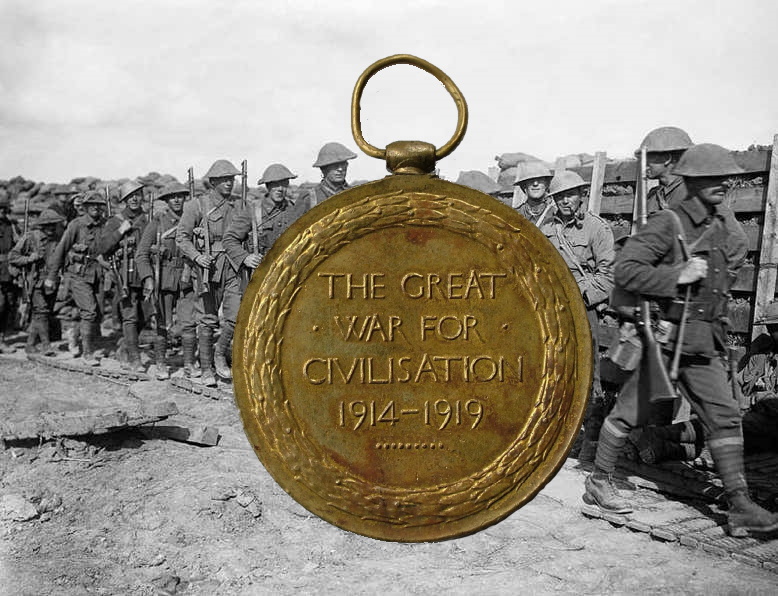
The inscription on the Victory Medal, awarded to the armed servicemen of all the victor nations who were still alive at the end of the war reads simply “The Great War for Civilisation,” a claim which seems difficult to justify. And when I say were still alive, it is because the figures are staggering. They are also uncertain, because of the nature of the war, in which bodies were blown to pieces or buried by shell fire. For example, the 2014 Annual Report of the Commonwealth War Graves Commission states that there are 187,744 unidentified Commonwealth war burials from the First World War.[1] Yes, that’s right: nearly 188,000 bodies still unidentified a century after the outbreak of that war. And that’s only the ones from the British Empire. In Bertrand Tavernier’s wonderful film la vie et rien d’autre/Life and nothing but a general tells the officer in charge of trying to identify forty thousand anonymous corpses to select one to become the unknown soldier buried under the Arc de Triomphe in Paris, but to be careful not to get a British, German, or American one by mistake.[2]
The first estimate of the casualties was made by the United States War Department in 1924. It calculated that the total number of armed forces, that is of all the combatant nations, was 65,038,810. That’s right, over 65 million armed personnel from Russia, the British Empire, France, Italy, the United States, Japan, Romania, Serbia, Belgium, Greece, Portugal, Montenegro, Germany, Austro-Hungary, Turkey, and Bulgaria were engaged in killing and maiming each other. Of those 65 million, 8 and a half million were killed, and 21 million were wounded, that’s a casualty rate of 46%. If you add the armed personnel taken prisoner or “missing” (i.e. probably dead) the casualty figures rise to 40 million, which is 57.5%. In other words nearly two thirds of all serving armed personnel were casualties. But 57.5% is the average figure, the French casualty rate was 73.3%, The Russian 76.3% and the Austro-Hungarian a staggering 90%. The heaviest loss of life in a single day was suffered by the British Army, which lost 57,470 men on 1 July 1916 at the Battle of the Somme. That’s the equivalent of the population of Aldershot or Tunbridge Wells today. A more recent estimate, published ten years ago by the Centre Robert Schuman, increased the number of military deaths to 9.7 million, and Wikipedia estimates them to somewhere between eight and a half to nearly eleven million. But that’s just the armed forces. For a truer picture you have to add approximately 10 million civilian deaths from war crimes, accidents, famine and disease, a figure that excludes those who died immediately afterwards as a result of the ‘flu pandemic, whose number the Welcome Foundation estimates at between 50 and 100 million. [3]
So the question remains, what could possibly justify that extraordinary amount of death, maiming and disease? How could this possibly be about civilisation? How can this be defined? And which side represented it? Was Germany, the country of Goethe, Bach and the philosopher Kant, not civilised? Austria, the country of Mozart, Haydn, Klimt, and Kokoschka not civilised? It beggars’ belief. The emphasis is sometimes subtly changed to a war for democracy. But that too is difficult. Germany was in some ways more democratic that Britain, in that all German men over 25 years of age were eligible to vote, and members of the Reichstag were elected by general, universal, and secret male suffrage, and Austria had universal male suffrage since 1896, whereas Britain did not have it until 1918. The only country in the British Empire to enjoy universal suffrage was New Zealand. German and Austrian women enjoyed universal suffrage from 1918, but British women did not have this until 1928 and French women only got the vote in 1946. Canada only achieved universal suffrage in 1960, Australia in 1967, and South Africa in 1994. Female suffrage did not become universal in the USA until 1965, when it became illegal for states to disenfranchise black women,[4] and as I write this the Texas legislature is passing laws restricting voting rights. In any case, how can a war be described as ‘for democracy’ when one of the belligerents was the Russian autocracy? So what other reason could there be to justify such large-scale butchery?
Well, of course we have been systematically lied to by governments about the reasons for the first world war. If it wasn’t about civilisation or democracy, what was it about? What did those 21 million service men and women, and all those civilians, die for? This is not the place to analyse the various reasons the different belligerents sent their armies out to kill and to die. I shall simply talk about Britain, as this is what we British ex-service people have to think about on Remembrance day.
Since the eighteenth century India was the source of the British elite’s wealth and power. The amount of wealth was unbelievable, as was how it was obtained. It is not by chance that one of the first Hindustani words to enter the English language was loot, the Hindustani for plunder. The crown benefitted as the revenue from India transformed Britain from a minor European power that had been defeated by Holland in the Seventeenth century, into a powerful country that could take on and ultimately defeat Napoleon’s France and be recognised throughout the 19th century as one of the European “Great Power”.[5] Everybody involved with India became fabulously wealthy returning to buy themselves large estates and seats in Parliament. What these people feared most was that this wealth would be taken away from them. We know now that the British retained a grip on India until 1947, but this was not a given, as throughout the period before that date the British hold on India was precarious. British troops in India had to fight wars against the Portuguese, the Dutch, the French as well as against hostile Indian rulers and warlike frontier tribes and the Afghans. The Indian army was prone to mutiny, the uprising known by the British the Indian mutiny of 1857-58, and by the Indians as the First War of Independence, was only the greatest of these.[6]
But the great threat in the century before the First World War was Russia. Throughout the 19th century Russia waged a covert war against Britain, the so-called “Great Game,” threatening, but never quite doing, an invasion of India. By 1885, the Russian conquests in Central Asia had given them borders with China, Afghanistan, and in Persia, divided into two spheres of interest, the British and Russians could look at each other over the dividing line. By the end of the century the British elite realised that the cost of maintaining an army in India big enough to counter the Russian threat, would turn the very agreeable income from that source into a deficit. So they decided that the best option was to befriend Russia, to try to keep her on board. In 1907, they signed the Anglo-Russian convention, hoping that they would be able to keep Russia on side. Yet, the British elite were still worried. Anxious questions about Russia were being in asked Parliament right up to August 1914, and civil servants sent worried memos to and fro between government departments and the government of India.
On two occasions on 10 March 1913[7] and 24 March 1913,[8] the Prime Minister, denied in Parliament that Britain had any obligations compelling her to enter a European war. This denial was repeated by Edward Grey, the Foreign Secretary on 28 April1914,[9] and again on 11 June 1914,[10] that is a little over a month before Britain entered the war. The Foreign Secretary assured the House of Commons that : if a war arose between European Powers there were no unpublished agreements which would hamper or restrict the freedom of the Government or of Parliament to decide whether or not Great Britain should participate in a war. No agreement, therefore, to defend Belgium, no agreement to defend France and no agreement to support Russia.
Yet, when he addressed Parliament on 3 August, the day before Britain declared war, the Foreign Secretary suddenly found, to his fellow MPs astonishment, that Britain did have these obligations.[11] In the debate that followed his statement, only two speakers supported going to war. Even the cabinet was divided, with a number of ministers threatening to resign, and some actually doing so.[12] So there was no vote in the Cabinet for war, and no vote in Parliament. War was declared at 11 p.m. on 4 August by order of Council, that is by the King and three members of the House of Lords.[13]
So, what led to this change of mind, and the decision to override the Cabinet and Parliament? Why had Belgium suddenly become so important? Why was the German offer to Belgium to march through without fighting or threatening Belgian independence so unacceptable to Britain? After all, as one MP said, Belgium might be better off allowing the Germans to pass through peacefully rather become the battleground of Europe. And why was the Foreign Secretary unwilling to continue negotiating with Germany, as so many MPs urged him to do during the debate? What was so urgent?
On 2 August, Grey received a cable from our ambassador in St. Petersburg, containing the words:
I would venture to submit with all respect that if we do not respond to the [Tsar’s][14] appeal for our support, we shall at the end of the war, whatever be its issue, find ourselves without a friend in Europe while our Indian Empire will no longer be secure from attack by Russia. . .[15]
So that’s what all those 57,470 British soldiers died for at the Somme: to keep the loot coming in. Belgium was the acceptable story, put about with much use of the word “honour”, to cover up the real motive.[16] Belgian claims were even ignored at the Peace Conference after the war.
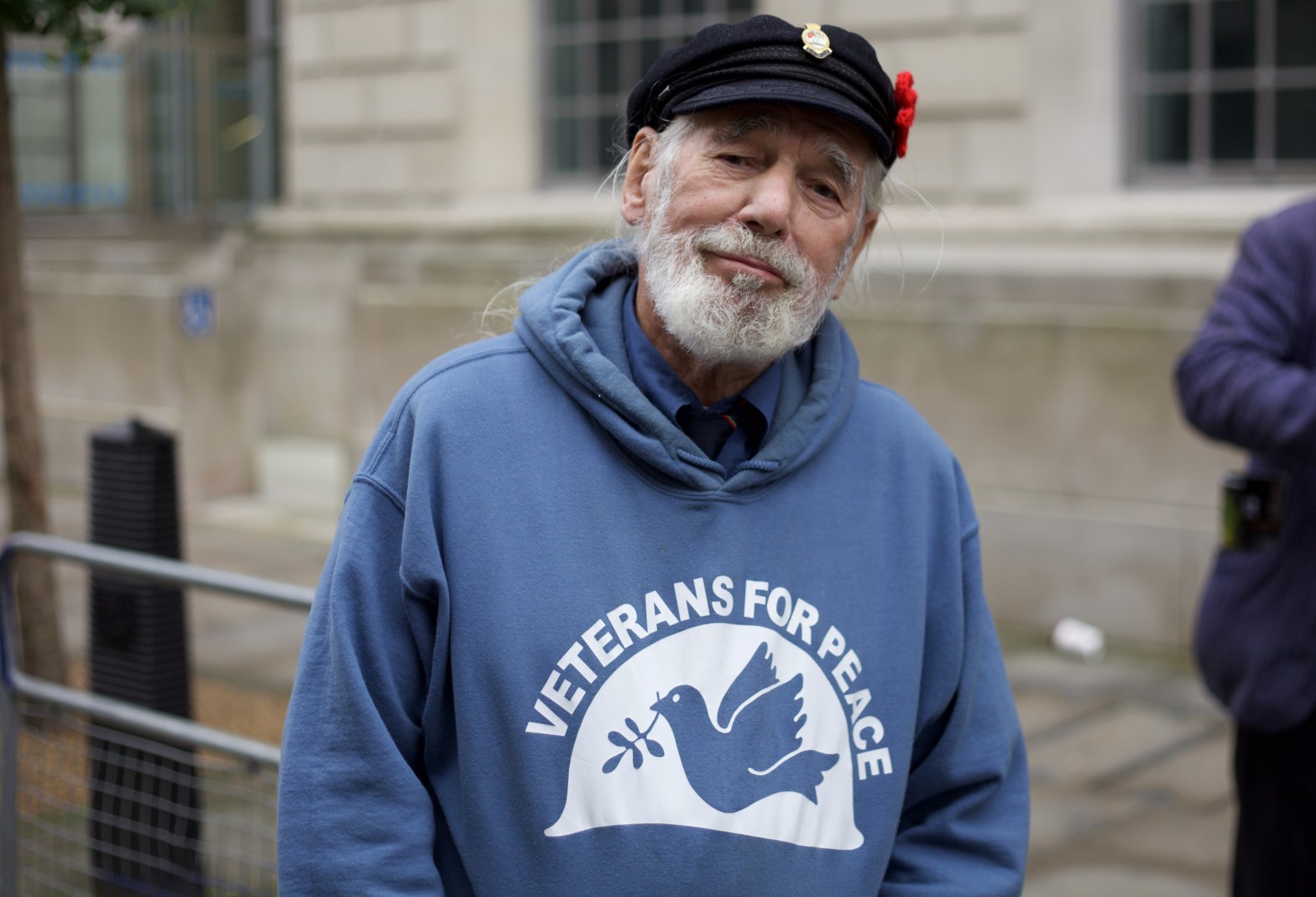
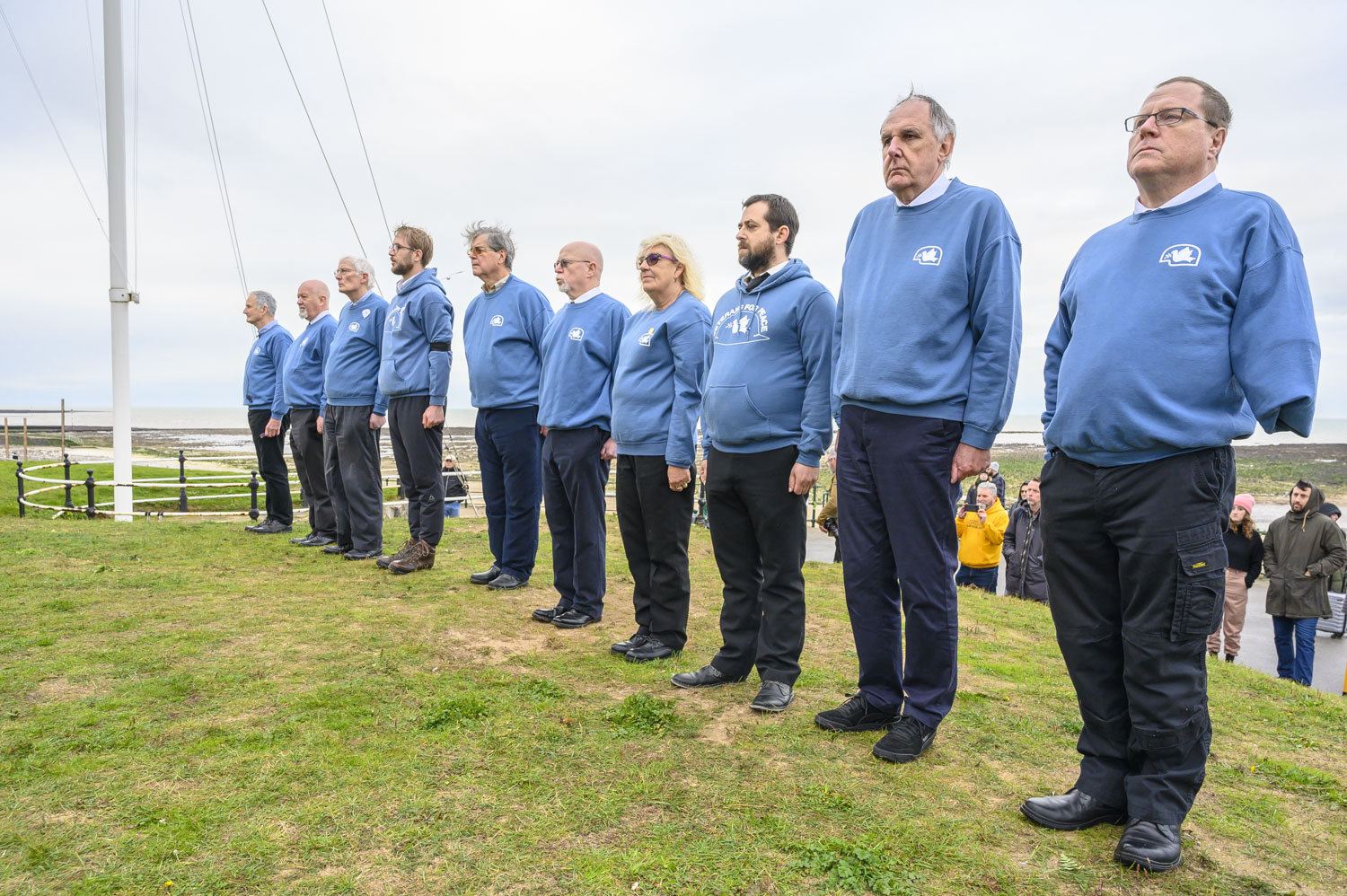
Ours not to reason why, ours but to do and die? It’s about time we did do some reasoning why. In my opinion that is what Veterans For Peace is all about. I hope you agree.
Oh, just a few final words about civilisation. Edward Grey, clearly troubled by the horrors of the war he had unleashed, has a telling passage in his autobiography about a Japanese response to Japan’s new popularity with Europeans after its victory against Russia in 1905:
“After the war Japan was extremely popular. The smaller nation had beaten the giant; British sporting instincts were gratified; we admired the efficiency to which the Japanese had attained and the rapidity with which they had learnt what we had to teach of naval construction and equipment, and the handling of things so complicated as modern ships of war. This feeling seemed to us natural, reasonable, and right. Not long afterwards I was told a story that put it in another light. The story ran that a Japanese in England, finding himself and his nation to be objects of admiration, reflected thus upon the course of events: “Yes,” he said, “we used to be a nation of artists; our art was really very good; you called us barbarians then. Now our art is not so good as it was, but we have learned how to kill, and you say we are civilised.”
The story was familiar to me long before the Great War; whether it is a true story I never knew, but there was a truth in it that gave a feeling of discomfort, of question. What was the answer to such an observation? Was there something very wrong about our civilisation and the virtues of which we felt so secure? The Great War has given a terrible answer.”[17]
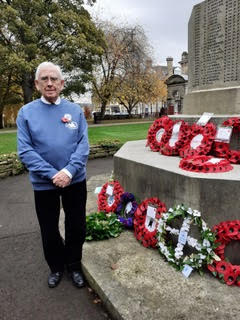
This is a question and answer we should be thinking about at every Remembrance ceremony, and, indeed, in between.
[1] http://archive.cwgc.org/GetMultimedia.ashx?db=Catalog&type=default&fname=CWGC_2_1_ADD+6_2_96.pdf, retrieved 27 August 2021.
[2] A DVD of this film, with English subtitles is readily available.
[3] https://www.britannica.com/event/World-War-I/Killed-wounded-and-missing, ; http://www.centre-robert-schuman.org/userfiles/files/REPERES%20–%20module%2 ; https://wellcomecollection.org/articles/W7TfGRAAAP5F0eKS? retrieved 26 August 2021.
[4] https://en.wikipedia.org/wiki/Universal_suffrage;
[5] The anonymous booklet, The Present State of the British Interest in India, London1773, pp. 5-6: “No nation nor state ever acquired an accession or dominion so truly valuable and beneficial, as are the acquisitions lately made by Britain in India. . . . Oppressed by a grievous debt, . . .her commerce . . . daily falling into decay . . . an she was every year approaching towards a state of national poverty and bankruptcy. In such circumstances did Britain acquire the sovereign dominion of Bengal, and other rich manufacturing and trading countries in India; which, at the time they fell to her, were capable of not only defraying every charge of their own government and defence, but over and above that, of yielding annually to the sovereign a sum equal to £1,300,000 sterling. . .
[6] There were mutinies in 1683, 1751, 1766, 1806, 1809, 1824, 1849, 1857-58, 1859-61, 1915, 1919, 1946,
[7] Hansard, HC Deb 10 March 1913 vol 50 cc42-43.
[8] Hansard, HC Deb 24 March 1913 vol 50 cc1316-7.
[9] Hansard, HC Deb 28 April 1914 vol 61 c1499.
[10] Hansard, HC Deb 03 August 1914 vol 65 c. 1850.
[11] Hansard, HC Deb 03 August 1914 vol 65 c. 1825.
[12] Keith Wilson, ‘Britain’, in Decisions for War, 1914, edited by Keith Wilson, London 1995, pp. 179-181, 201-202. Margot Asquith’s Great War Diary, 1914-1916, Oxford 2014, p. 12: “I asked H. at night if he had had a bad day. He said ‘Six of my men have resigned: John Morley, Burns, Simon, Beauchamp and Trevelyan.’
[13] A. J. P. Taylor, English History 1914-1945, Oxford 1975, pp. 3-4. They were George V, Earl Granard, Earl Beauchamp, Viscount Allendale.
[14] Emperor in the original. I changed this to Tsar so that the audience have no doubt which emperor.
[15] British Documents on the Origins of the War, 1898-1914, edited by G. P. Gooch and Harold Temperley, vol. 11, London 1926, Document No. 490, p. 277.
[16] Ramsay MacDonald recorded that “ . . . Grey’s Foreign policy responsible for war. Belgium did not determine Grey’s attitude.” An undated note passed during a Cabinet meeting from Harcourt to LLoyd George: “. . . . Grey wishes to go to War without any violation of Belgium.” Keith Wilson, ‘Britain,’ in Keith Wilson (ed.), Decisions for War 1914, p. 177 Keith Wilson, ‘Britain,’ in Keith Wilson (ed.), Decisions for War 1914, pp. 177-178.
[17] Viscount Grey of Fallodon, Twenty-Five Years 1892-1916, volume 1, New York 1925, p. 55.









 Veterans For Peace UK