During long discussions with founding members, serving and former Policy/Admin Group members, Trustees, and other long-term members of the organisation, the same observations kept cropping up.
That participation at organised meetings and events is down to minimal numbers.
That disruptive elements have embedded themselves within the organisation.
That maintaining the infrastructure of the organisation diverts our energy away from our stated purpose; To serve the cause of World Peace.
That the organisation is a shadow of its former self.
With these observations in mind the decision was taken to close down the organisation by executive action in a calm and peaceful manner.
This action is now complete, the organisation Veterans For Peace UK has been dismantled.
Beyond the organisation, many of our former members will continue to serve the cause of world peace in a variety of ways.
MEMBERSHIP
All members are hereby released from membership of Veterans For Peace UK. All membership databases and records have been deleted.
ACCOUNTS
All outstanding bills have been paid and the Bank Accounts have been closed. If you donate to VFP UK by standing order, then please cancel your standing order through your bank. All donations via paypal have been stopped. Our closing financial statement can be read here: Final Accounts
All residual funds held by the organisation Veterans For Peace UK have been donated to the charity Veterans Aid who give practical help and housing to homeless veterans. A significant number of our membership have been helped by Veterans Aid over the years.
WEBSITE
The website veteransforpeace.org.uk will be maintained online as an archive. If you wish to receive the occasional legacy update from the website, please subscribe at the base of the homepage.
SOCIAL MEDIA ACCOUNTS
Our social media accounts on Facebook, Twitter, Instagram, YouTube, and Vimeo, have been frozen in time and will remain accessible to the public.
AFTER VFP
There is a strong demand among former members to maintain the friendships forged during service within the organisation. There will be occasional AFTER VFP social gatherings & reunions posted to this website. If you want to recieve these posts, please subscribe at the base of the homepage.
THANK YOU
There are far too many people who have contributed to this organisation over the years to name here. Whatever it was we did, we could not have done it without you all.
To all of you who have contributed, in every possible way, we thank you.
On Saturday 21 January 2023 former members of Veterans For Peace UK and friends of the organisation are invited to attend a big social gathering at the Crown Tavern in Clerkenwell, London.
The upstairs Apollo Room has been booked which seats 50 (more standing) and has its own bar. There is plenty more room downstairs and outside.
We will gather there from midday (1200) til close (2330).
The pub is a short walk from Farringdon Railway Station which is on Metropolitan, Circle, Hammersmith & City, Thameslink, and Elizabeth Line services.
Please spread the word to those not online.
Arrangement: Ben Griffin bsggriffin@gmail.com
Come out of Farringdon Station and head north on Turnmill Street, cross over Clerkenwell Road and enter Clerkenwell Green. The pub is across the square (red marker on map).
“I wanted to do my bit for my country but now I feel let down: There needs to be a system of taking care of racism – teaching people the do’s and don’ts – but that is the last thing the Army worries about.” Winston Clay, a black Scottish Royal Artillery soldier, who was called ‘Porridge Wog’ by his fellow soldiers.
Over 400 years ago, under the first Queen Elizabeth, the ‘troubles’ in Ireland seemed endemic. Anti-Irish propaganda was used to justify the ongoing conflict, with the Irish being described as ‘beasts, void of law and all good order’ and being ‘brutish in their customs’. Originally, the Anglo-Normans had justified their wars of conquest in Ireland by denigrating the native Irish and this was to continue over successive centuries:
“In 1483 a monk named Giraldus Cambrensis, a member of one of the main Norman families colonizing Ireland, wrote a book entitled The History and Topography of Ireland. It was a work of fiction designed to justify the Norman Conquest in Ireland. Accordingly, Cambrensis accused the Irish of various vices, including laziness, treachery, blasphemy, idolatry, ignorance of Christian beliefs, incest and cannibalism. Remarkably, this bizarre and fictional account was the mainstay of English views of Ireland for the next 500 years.” [The New Internationalist, No. 255 / May 1994, in article, The Riotous and the Righteous, by Bill Rolston].
Brainwashed by this anti-Irish propaganda the soldiers hunted down any resistance to English rule. In 1594 a revolt occurred in Ulster in the north of Ireland and Sir Arthur Chichester sent this dispatch about his pursuit of Irish rebels at Lough Neagh:
“We have killed, burnt, and spoiled all along the Lough … in which journeys we have killed above 100 people of all sorts … We spare none of what quality or sex soever, and it hath bred much terror in the people … The last service was upon Patrick O’Quin, whose house and town was burnt, wife, son, children and people slain …”
Ireland became a testing and training ground for the use of repressive colonial tactics and measures, which were then applied in other areas of the Empire. While the history of today’s British Army can be traced back to the Civil War in England and Oliver Cromwell’s New Model Army, its enduring character was forged, and the hierarchy strengthened, during the Victorian colonial wars to hold and extend the Empire. It was then that the British Army acquired its contemporary reputation among the armies of the major powers of the world as a ‘counter-insurgency’ force.
While the foot soldiers in the British Armed Forces came mainly from the poor and colonised, the officer corps – produced by the public-school system – ensured the perpetuation of the status quo. And throughout its history the usage of derogatory and racially offence terms persisted, mainly to demonise those people in the Empire that the Army, Navy and Airforce were used against.
So, defaming and stereotyping became one of the main tactic to make sure the troops would ‘do the business’ against the natives and racism became deeply rooted in Britain’s empire military. The history of 45 Commando Royal Marines, for instance, which was formed in 1943, stated that at the end of WW2 one of its ‘favourite marching songs’ was: ‘Sambo was a Lazy Coon’. [FourFive – The Story of 45 Commando Royal Marines 1943-1971, by David Young, Leo Cooper Ltd 1972].
Post WW2, a number of racially derogatory terms were in common usage in Britain’s Armed Forces for any of the people in the British Empire who had a darker skin colour – and therefore thought to be of a lower-grade to the white rulers and their soldiers. Probably, the most common offensive term was ‘Wog’, which originated in the Victorian period among the British Raj troops serving in southeast Asia. This word is still in use among some civilians and serving personal in the Armed Forces.
Douglas Valder Duff, who served as a ‘Black and Tan’ in Ireland and later as a colonial-style policeman in Palestine, afterwards stated: “To us all non-Europeans were ‘wogs’, and Western non-Britons only slightly more worthy”. The great-and-the-good in Britain often kowtowed in the usage of this racial slur – and it was even used against other Europeans, who were thought to be inferior. In 1949, George Wigg, the Labour MP for Dudley, stated in Parliament that: “The right hon. Member for Woodford [Mr. Churchill] thinks that the ‘wogs’ start at Calais.”
In July 1958, the Prime Minster, Harold Macmillan, who had succeeded Sir Anthony Eden as the Tory leader after the Suez debacle, visited Cyprus during ‘The Emergency’. His trip included several meetings with the troops, who were tasked with putting down the rebellion:
“One of the Premier’s calls was to Lyssi village, which lay under a ten-day curfew, but he spoke to no one there except soldiers and police, departing with ten copies of ‘The Grenadier’, a Guards magazine for Guards. Breaking into verse at one point, the cyclostyled magazine declared:
Sergeant Clerk is the Acorn’s clerk But is prone to get in rages. If the Wogs give any trouble He puts them into cages.
The cages were the barbed-wire pens where men waited their turn for questioning – another name for them was ‘play-pens’; the Wogs, of course, were the Cypriots. The visitor wrote across a souvenir copy: ‘With best wishes from an old Grenadier – Harold Macmillan, Prime Minister’.” [Legacy of Strife – Cyprus from rebellion to civil war, by Charles Foley, A Penguin Special 1964].
Similar things occurred in places like Malaya, Aden and Kenya, but towards the end of the 1960s conflict was starting to breakout again in Ireland and General Sir Walter Walker, a former commander of NATO, who had fought against the native peoples in Malaya and Brunei, made a call: ‘To save Britain from the Communist Trojan Horse in our midst’. He then claimed that Harold Wilson, the Labour Party leader was a ‘proven communist’ – and about the north of Ireland Walker said:
“I have engaged in campaigns against blacks, yellows and slant eyes. Why should we have one rule for whites and one for coloureds? We have to decide if Northern Ireland is part of Britain or not – and if so, act accordingly.”
In early 1977 a serving, but anonymous, Welsh officer wrote about the past colonisation of Wales and contrasted it with his experiences during a tour-of-duty in the north of Ireland – for a series of articles that appeared in the Irish Press:
“As in years gone by, ‘Taffy was a Welshman … Taffy was a thief’ could have been a possible cri de coeur for the army of Edward I, so, today ‘Paddy or Mick or Bogwog’ has become synonymous with things which are loathsome, evil, stupid or more simply, ‘typical’. We have resurrected our oldest scapegoat and like some battered golliwog we have dragged him out of the cupboard, to vilify him all over again.
There is a cartoon strip entitled ‘Seamus’ in the Army magazine ‘Visor’ – a weekly publication for troops serving in the North. ‘Seamus’ is an IRA-man and, as you’d expect, a pretty stupid one at that. He is continually blowing himself up on his own bombs, or else being shot or arrested by soldiers. In many ways, he is an exact crib from the ‘Bill and Ben – the IRA men’ comic feature of a well-known UDA broadsheet. He’s a figure of fun. And yet, despite all his weekly disasters, he still reappears with monotonous insistence. Beneath the superficial humour lies the reality of our current situation …” [Irish Press, 24th, 25th Jan. 1977, written by a British officer while serving in Northern Ireland].
Black Soldiers & Racism
In more recent times the ‘Micks’, ‘Paddies’ and ‘Bogwogs’ in Northern Ireland, had given way to the ‘Rag-heads’, ‘Jinglies’ and ‘Chogies’ in Afghanistan and Iraq. At present about ten-per-cent of those serving in the British armed forces are black, Asian, or minority ethnic (BAME). Many have experienced some sort of discrimination, or been subject to racist abuse.
Even after they left the army BAME soldiers recruited from the Commonwealth were discriminated against, especially if they wanted to stay in the UK – the country they fought for. Gracie-Ann Kelly’s Remembrance ‘Where Is the Love’ Message asked for a fair deal for Commonwealth veterans:
Due to the campaign around this issue the Government announced in February 2022 that: ‘Visa fees would be waived for overseas UK veterans who had served for a minimum of six years.’ But racial abuse and discrimination is still experienced by many BAME soldiers while serving. And this has been going on for far too long inside the UK Armed Forces.
Forty years ago, in 1981, the journalist Ian Jack visited the Green Jackets regiment while writing a series of articles on British youth: “The dozen boys I spoke to were all white, from working-class homes in London, the Midlands and the West Country. The Green Jackets, however, do recruit a fair number of black youths. Slowly the conversation drifted through patriotism (‘We’re English, aren’t we? I mean, we’re God’s gift’) and the riots of this summer (‘daft – just to get yourself noticed’) towards the thorny and ever-present subject of race. ‘Yeah we got coloured geezers, sambos and that,’ said one of the louder boys, ‘but we take the piss. I mean last month we pretended to be the Ku Klux Klan. We put pillow cases over our heads and went around the barracks at night moaning and wailing and telling them that Maggie Thatcher was going to kick ’em all out. But everybody gets the piss taken out of them, they know it’s only a joke like. There’s this Paki, we call him Abdul. We say, ‘Give us a fag, Abdul, you nig-nog’ and he says, ‘Aw piss off or I’ll get my tribe down to have a go at you’, ‘I mean it’s a joke for him as well. We all do it. The corporals take the piss just as bad’.
They do. The next day Donald McCullin was photographing a black recruit behind the parade ground. A corporal passed them. ‘Oi’, he shouted, ‘remember to show ’im your lips’. I asked a young officer if this kind of behaviour presented problems. He said: ‘Well occasionally we do get blacks ganging up together in a black power kind of thing – we call them coon clans – but fortunately we’ve got some excellent black NCOs and they sort things out pretty quickly’.
In fact the Green Jackets tend to be regarded as a sloppy, pinko outfit by other units in the British Army; by, for example, the Household Regiments who appear to such stunning effect in royal pageants. The Household Regiments do not accept black recruits. ‘It’s not official policy, you understand’, said a cavalry officer, ‘it’s just that we won’t have them’.” [The Sunday Times Magazine, 1st Nov. 1981, report on British youth by Ian Jack].
The attitudes described in the Jack article should come as no surprise, when the dehumanising of whole races still plays a major part in ensuring that soldiers will use their force of arms against those denigrated. Many recruits will also have picked up racist, sexist and homophobic biases, which were current in society at the time they joined-up – and they will have found that those prejudices were often encouraged in subtle, and sometimes not so subtle, ways, during their training and service.
Not all recruits take easily to this type of military life, however, and the first casualties of the military system often occur inside the training units themselves:
“A bullying corporal made life hell for army recruits, it was claimed yesterday … At barracks where three young soldiers have died in the last three months … The incidents are alleged to have taken place at Shorncliffe Barracks, Kent, last summer. At the barracks in December, 17-year-old soldier Nicholas Burnup apparently shot dead a corporal and turned the gun on himself. A month later another 17-year-old, Jeffrey Singh, was found hanging dead.” [Daily Record, 5th March 1987].
Many recruits, of any skin colour, often find that Basic Training has a competitive edge that can see the process getting more and more fanatical. In extreme cases, as with Shorncliffe Barracks in the 1980s, or Deepcut in the 1990s, it can get out of control. And this has reoccurred from time to time at other training locations, especially if the supervision is lax and the excesses covered-up – rather than being sorted out.
Anyone considered an outsider, however, can experience hostility in the Regimental System, which glorifies past colonial battles and is steeped in the traditions of Britain’s imperial legacy. And all military units still stereotype and encourage denigrating nicknames for opponents in overseas conflicts. Therefore, racist feelings towards foreigners, or anyone considered inferior, can also breakout inside military units to target recruits of a different skin colour, or other differences, who sometimes have their lives destroyed because of it.
In the past, this has come to light, when, in times of recruitment difficulties, the military has targeted the UK’s ethnic minorities, or the Commonwealth, to fulfil enlistment quotas. And this did lead to some of those BAME recruited soldiers being subjected to harassment and attacks. The inquest into the death of private Jeffrey Singh at Shorncliffe Barracks, for instance, heard allegations of racist bullying and that he had been called a ‘black bastard’. [Independent, 12th Oct. 1987].
Towards the end of the last century, in the media there appeared many stories of BAME soldiers in the British Army being subjected to racist maltreatment, like Stephen Anderson, who was subjected to abuse and discrimination while serving with the Devon and Dorset Regiment in Berlin and Wiltshire. He was beaten up for refusing to go drinking with white soldiers, and his life was threatened:
“He had to lock himself in a bathroom to sleep at night, and was called ‘nigger’ or ‘coon’ by NCOs. He is serving 112 days at the Army’s correction centre in Colchester after being court martialled in December for absence without leave. His mother, Mrs. Joyce Anderson, said yesterday that ‘he had absconded because officers had refused to listen to his complaints’.” [Guardian, 5th Feb. 1988].
After his discharge, Anderson fought for justice with the help of the Commission for Racial Equality. After a four year battle he was awarded just £500 compensation and the black paper, ‘The Voice’, reported his ordeal:
“Stephen Anderson phoned a local radio station while he was wandering about Birmingham city centre last week in a distressed state. Thousands of listeners to BBC Radio WM heard him say: ‘I can’t cope, I’ve had enough’. He told of the injustices he suffered at the hands of fellow soldiers in the Devon and Dorset Regiment. Anderson had just been awarded £500 by the Army for the verbal and physical abuse he suffered while serving in Germany. He had been called a ‘black bastard’, ‘nigger’, ‘coon’, and ‘Rastus’ by some of his colleagues, a corporal and a sergeant. He also claimed the corporal held a knife at his throat.
By September 1987 Anderson had brought 13 complaints of serious racial abuse to the notice of his commanding officer, but in 1989 a military hearing dismissed his claims. In November 1990 a High Court judicial hearing, held in response to pressure from the Commission for Racial Equality, quashed the Army’s decision. Five of the complaints were proved, but only one of the incidents took place while Anderson was on duty.” [The Voice, 22nd Oct. 1991].
Just after that incident, Winston Clay, who served in the Royal Artillery, was also subjected to ongoing racial abuse:
“A black soldier who went AWOL after racist bullying said yesterday: ‘Being in jail was better than my regiment’. Scot Winston Clay put up with the abuse for several years – but eventually he couldn’t take any more. He went on the run for six months before being captured … And the 23-year-old squaddie was banged up in the glasshouse for 56 days.
He said: ‘It was better in prison because people knew they couldn’t get away with racism’. … Winston, whose dad comes from Sierra Leone, joined the regular Army in 1992 after a spell as a boy soldier. But racist bully-boys made his life hell and picked on him because he was black – and Scottish. He was told he couldn’t march because of the colour of his skin and fellow soldiers’ sick taunts included the name ‘Porridge Wog’. He said: ‘I wanted to do my bit for my country but now I feel let down: There needs to be a system of taking care of racism – teaching people the do’s and don’ts – but that is the last thing the Army worries about’.” [Daily Record, 13th Jan. 1997].
In 1989 it was reported that a secret report into ‘why black and coloured people shun the Armed Forces’ was ‘sending shock waves through the Ministry of Defence’:
“It is said to contain ‘unpalatable facts’ about racial discrimination in all three branches of the Services. Armed Forces Minister Archie Hamilton admitted last night that a massive marketing campaign was needed in ethnic communities to counter the ‘alienation’ felt by black and Asian groups.” [Daily Mail, 12th June 1989, full-page report by Paul Maurice].
A week after the secret report was presented, journalist Kate Muir visited the Guards as they rehearsed for Trooping the Colour. A guardsman was telling her about a recent posting:
“He is interrupted by another soldier who has clearly not been invited to speak by the press officer. ‘We didn’t really like Belize ’cos of all the coloured people’. The others laugh. ‘Notice that I say coloured, not Pakis and wogs. That’s because the army isn’t racist any more’.” [Independent, 19th June 1989].
While the Armed Forces still stereotype and denigrate enemies that are often people of colour, it should come as no surprise that some soldiers will attempt to apply the same treatment to others within their own ranks whom they considered to be different and/or inferior. For a recent view on the issue of racist abuse in the British Army, BBC three Reporter Callum Tulley speaks to former soldier David, who feels that speaking out about racism made his life in the army worse and drove him to leave the Armed Forces:
Homophobia in Macho Land
In America in 1979 representatives of a popular music band asked the US Navy if they could provide the use of a frigate and a few sailors to form the background of the video for a new song. On hearing that the song would be about the navy the Admirals agreed, but insisted that an agreement was made giving the US Navy the right to use the footage for recruitment and publicity purposes. It might have proved interesting to have been the proverbial fly on the wall as a pack of the crusty navy top-brass eagerly viewed the finished product – the Village People performing ‘In The Navy’:
The video was made aboard the frigate ‘USS Reasoner’ at the San Diego Naval Base and the song later reached number 3 on the US Billboard Hot 100 charts. The US Navy declined to use the video, because at that time the US armed forces barred gay men, bisexuals and lesbians from service.
It wasn’t until 1993 that the US Congress passed a law commonly referred to as: ‘Don’t ask, don’t tell’ (DADT), which allowed gays, lesbians and bisexuals to serve as long as they did not reveal their sexual orientation. Those openly gay were still banned till DADT was suspended in 2010 and the restrictions on service by gays, lesbians and bisexuals was ended in 2011.
In England, during the time of King Henry VIII, sodomy was criminalised in 1533 and could be punished by a death sentence. This was changed to life imprisonment in 1861, but 24 years later many other homosexual acts also became open to prosecution and punishment. Under this legislation the Irish writer Oscar Wilde served 2 years hard labour from 1895.
Later, after WW2, Alan Turing, who had played a leading part in cracking the Nazi Enigma code at Bletchley Park, was hounded to his death by police and the authorities. Gay sex acts were partly decriminalised in 1967, but in the decades that followed many other facets of anti-gay laws were still in force and were applied forcefully by the state. Over this period there were struggles in many areas of society to remove discrimination and bring equality.
The reforms in 1967 had excluded the Armed Forces, where sex between males continued to be a criminal offence. So, the outright ban on gays in the services carried on. Inside the army, male squaddies who were deemed to be effeminate were often subjected to abuse and ill-treatment by their fellow soldiers.
In September 1990, Guardsman Alex Ireland was on a tour of duty in Northern Ireland. A bit of a loner, he had difficulty fitting in with the enclosed, macho-land of a professional army regiment. Admitting to being a virgin, he was teased unmercifully by his fellow soldiers, who regaled him with graphic details of their own sexual exploits. Even on patrol in the Tyrone countryside, Alex was the victim of abuse.
His NCOs were the worst, he was ‘useless’, said his sergeant. ‘He’s not cut out for the Guards’ and ‘He walks like a fruit’. After a ten-hour patrol, through which Alex was incessantly goaded, the soldiers were flown back to barracks by helicopter and settled down to sleep. The next morning the riot gun, which Alex had been responsible for, could not be found.
He knew he had brought the gun back and thought someone had hidden it as a prank. But he was summoned before some of his NCOs and told he would be sent to the military prison at Colchester if he did not find it. This was the last straw, because shortly afterwards Alex went to his room and shot himself below the heart with his SA 80 rifle.
Alex Ireland had found the combination of constant abuse from fellow soldiers and a tour-of-duty in the north of Ireland too much to bear. He left a note, with a special message for his mother:
“Tell mother I love her, tell mother I need her, tell mother not to cry, my love for her will never die. I could not hack it any longer. Your loving son, Alex.” [Mail on Sunday, 14th July 1991].
At that time any soldier discovered to be gay would experience an even harder time. Homosexuality was – and sometimes still is – thought by many hard-line militarists to be incompatible with the macho ideology that they think any armed forces should be instilled with. Subsequent anti-gay prejudice often resulted in savage persecution and even suicides:
“A gay private in the Drum Corps, James Darkin, was driven to take his own life in 1980 after months of bullying which the coroner at the inquest into his death described as a ‘living hell’. The inquest heard how Darkin had been thrown into a duck pond, kicked, forcibly bathed, urinated over, and scrubbed down with scouring powder. Despite repeated complaints to senior officers, they took no action and told him he should ‘stand up and be like a man’.” [Tribune, 17th July 1987, by Peter Tatchell].
Until 2000, soldiers who had been convicted for being gay were often sentenced to periods in army prisons. They were then dismissed from the service:
“A 21-year-old private in the King’s Regiment was convicted and jailed for life after strangling a friend who had threatened to tell the Army about their homosexual affair. Sentences of nine months’ imprisonment for having a homosexual affair are not unknown. Such conduct would not be punishable under the general law.” [NCCL Report].
Sometimes, attacks were launched on gay civilians by serving and ex-soldiers. In 1977, serving soldiers Dale Martin and Anthony Bottril were jailed for killing two homosexual men:
“Two Coldstream Guardsmen who allowed themselves to be ‘picked up’ in a pub frequented by homosexuals intending to rob their victim finished up with a blood bath in which two men were stabbed to death, an Old Bailey jury was told yesterday. One of the slaughtered men was the Lord Mayor’s valet, Dennis Chalke (39), and the other John Fore (48), a tour operator. Their bodies were found in a blood-spattered flat …
… Prosecuting counsel told the jury that both guardsmen left their barracks on Saturday, May 21, to go on weekend leave and they called at a military shop in Eton where Martin bought a Bowie knife and Bottril a throwing knife. They then went to London and in the evening went to the ‘Golden Lion’, Dean Street, Soho, a pub said to be frequented by homosexuals. They struck up a conversation with Mr. Fore who bought them drinks and took them back to the flat where Mr. Chalke was staying the weekend. ‘The guardsmen allowed themselves to be invited to the flat, probably for homosexual purposes, and they went with the intention of robbing, each armed with a knife’, said counsel. When the bodies were found both had numerous wounds to their backs and chests and Mr. Fore’s jugular vein had been slit …” [South London Press, 8th Nov. 1977].
In 1996, an ex-soldier was jailed for life for trying to kill a man who had picked him up in a bar:
“George Rees, from Manchester, who suffered homosexual rape and abuse during his career in the Blues and Royals Cavalry Regiment, taunted Tony Grundy about his sexual tastes and then stabbed him three times with a large kitchen knife. When police arrested him he told them he had also wanted to kill the former East Enders actor and gay activist Michael Cashman for his campaign to end the controversial ban on homosexuals in the armed forces. He said that during his time in the army he was raped by a male colleague and frequently bullied, tortured and abused … Passing sentence, judge Richard Hawkins, QC, said the motive for his attack had been a combination of: ‘homophobia and a desire to steal’.” [Guardian, 24th May 1996].
While homosexuality was still illegal in the armed forces any service personnel found to be gay were arrested, punished and then thrown out. At that time an ex-officer who disagreed with this policy said:
“Another example to me of the outmoded ideas in the Army was the subject of homosexuality. Whisper it quietly, but more than one famous Army figure of the past has been, as we’re now slowly learning from time to time, homosexual. But the official line within the Army in present day terms is that it doesn’t exist. At the first suggestion of homosexual behaviour between any of the men, they’re thrown out. The Army not only doesn’t condone homosexuality … it closes its eyes and goes blue in the face and swears it doesn’t exist. I’ve known more than a few soldiers who’ve been turfed out for homosexual behaviour. I think most people nowadays would agree that a man’s sexual inclinations have nothing to do with his qualities as a soldier. This is something I think the Army certainly needs to bring itself into the twentieth century about.” [Soldier, Soldier, ex-officer Malcolm Grant interviewed by Tony Parker, William Heinemann Ltd 1985].
Around the world nearly 70 countries have laws making it illegal to be gay and about two-thirds of them were under British rule, or had UK connections, when these laws were first introduced. Often in the past, under British rule, anti-gay laws had been enacted throughout the Empire in attempts to impose a puritanical Victorian Christian ethos on the natives. Officials often said they were being imposed because British soldiers serving overseas might easily be led astray if there were no regulations: “They wanted to protect innocent British soldiers from the ‘exotic, mystical Orient’ – there was this very orientalised view of Asia and the Middle East that they were overly erotic.”
During this same Victorian period, London was awash with back-street brothels, into which vulnerable women and children of both sexes were trafficked to become prostitutes, who often found they had members of the British establishment as clients. People might think little has changed today, with prostitution with trafficked women still rife in the UK. And the imposition of anti-gay sex laws are also still happening around the world.
In March 2019 the Morning Star reported on new repressive laws about to introduced in Brunei:
“BRITAIN’S military presence in the south-east Asian nation of Brunei is facing fresh criticism from campaigners after the country’s autocratic ruler passed a new law making adultery and homosexuality punishable by death. The group ForcesWatch reacted: ‘Given the British military’s claims to be progressive on LGBT+ will they be taking this issue up with Brunei’s Sandhurst-trained sultan? We have personnel permanently based in the country … withdrawing would be a powerful bargaining chip, unless [the Ministry of Defence is] happy to prop up a brutal autocracy?’ The Sultan of Brunei has said stoning and whipping of homosexuals will come into force on Wednesday. The British army has three military bases in Brunei at Sittang Camp, Medicina Lines and Tuker Lines, housing around 2,000 troops under an agreement signed by then prime minister David Cameron in 2015.” [Morning Star, article by Phil Miller, 31st March 2019].
Robert Ely had joined the British Army as a musician in 1967 and by 1979 he was appointed the Bandmaster of the 2nd Battalion of the Parachute Regiment. In 1986 Ely was the Senior Bandmaster when he was the subject of an investigation, which discovered his sexual orientation and he was thrown out of the army for being gay. Ely then went to Stonewall, a British LGBT (lesbian, gay, bisexual and transgender) rights Pressure group, who agreed to take up this issue.
In 1998 Stonewall also took up the case of two other veterans, Jeanette Smith, who had been thrown out of the RAF, and Duncan Lustig Prean, a Royal Navy Commander, who was about to be dismissed. They won their case in the High Court and the Court of Appeal, but the judges stated, that although the ban was not justified they could not overturn it. Stonewall then took the case to the European Court of Human Rights in Strasbourg, and after the case was won again the Labour Government finally lifted the ban in early 2000.
In the last decade of the 20th Century the debate about the ban on gays in the UK Armed Forces had been intense. With the MoD fighting to maintain the ban, saying that homosexuality was ‘incompatible with military service’, could ‘cause offence’, induce ‘ill-discipline’ and ‘damage morale and unit effectiveness’. The MoD’s 1996 ‘Report of the Homosexuality Policy Assessment Team’ also claimed that a survey of attitudes among serving personnel found resistance against lifting the ban, but it also indicated evidence of institutionalised homophobia in the Armed Forces.
In the UK, since the ban was overturned, gays have been allowed to openly serve in the Armed Forces and now can march in full uniform on Gay Pride marches. In 2008 General Sir Richard Dannatt, the Chief of the General Staff, told members of the Army-sponsored Fourth Joint Conference on Lesbian, Gay, Bisexual and Transsexuals Matters that homosexuals were welcome to serve in the Army.
The General went on to state that respect for gay, lesbian, bisexual and transsexual officers and rank-and-file was now ‘a command responsibility’ and was vital for ‘operational effectiveness’. However, at least two other senior officer, both Brigadiers, resigned because the ban had been lifted – and the rank-and-file opposition was regarded by some to be even stronger. So, it would be foolish to think that homophobia has entirely disappeared within the UK Armed Forces.
‘Real Men’, ‘Grot Boards’ & Sexism
Most recruits who stay the course and qualify as ‘Professionals’ become distanced from their old life and society outside. Prevalent military culture encourages the soldiers to see themselves as ‘real men’. This macho ideology often leads squaddies into increasingly sexist views, which becomes a part of their army life:
“Walk into any British military barracks and often there exists a culture of sexism fuelled by an under-ground market of hard-core pornography. Porn may not have the approval of senior officers but in trouble spots like Bosnia and Ulster, where virile young soldiers are often confined to barracks because of the hostility of locals, it is regarded as acceptable entertainment … The seeds of female debasement are sown at an early stage in a serviceman’s career. Recruits undergoing training are sometimes encouraged, if not ordered, to produce salacious pictures of girlfriends for inclusion on so-called grot boards. A grot is military-speak for a woman, and the grot boards are hung in the barrack room. The recruit who produces a picture of his girlfriend indulging in the most lurid sexual act wins a prize …” [Express, by Sean Rayment, 11th Oct. 1997].
There is probably no stronger tribe of ‘real men’, clan, or even cult, in Britain than that of a regiment in the British Army. The feminist writer Marilyn French pointed out the characteristics of such organisations:
“Men seem unable to feel equal to women: they must be superior or they are inferior. They seek a centre in other men, in male solidarity through male cults (in simple societies), priesthoods, military or paramilitary groups, academies, professions, teams, religious brotherhoods, or the new male cults. All of these exalt not men-as-a-caste but group members, posited as superior to most other men and all women. All such priesthoods teach xenophobia – hatred of strangers – and bigotry; all exalt some form of self-denial – austerity in living, denial of feeling or need – and all worship aggression and violence because all worship domination. Only the ability to dominate others makes them superior to women. And superiority to women is the very foundation of this kind of male identity.” [The War Against Women, by Marilyn French, Penguin Books 1993].
Lance Corporal Vincent Bramley wrote a book called ‘Excursion To Hell’ about his experiences with the Third Battalion of the Parachute Regiment in the Falklands War. Aboard the SS Canberra sailing to the islands he tells about the letters of support the soldiers received:
“At home, the massive support had produced in hundreds of females a sudden liking for both the Army and Navy and they all wanted penfriends. This amused us very much. The daily sacksful of letters were dumped in our rooms and we picked out the ones we fancied.
The whole platoon would gather in one room, grab armfuls of letters and retreat to our cabins. There we would first feel an envelope to see if there was a photo in it, then gather around the growing pile of snaps and pick the best lookers. Some of the lads, even myself, found some right beauties, though writing back to hundreds of women was out of the question … Naturally, not all the photos were of beauties, and the platoons took to keeping personal ‘grot boards’. You could visit another platoon to view their board for the ‘Ugly Pig Contest’. Some of the pictures that found their way on to the boards made you wonder if England had anything worthy of Miss World. You would hear a scream of delight when someone found a ‘grot’ photo, and this would bring the rest of the platoon crashing into the cabin to look, making comments like, ‘Fuck me, who’d love that beast?’ or, ‘Pig in knickers!’.” [Excursion To Hell – The Battle for Mount Longdon, by Vincent Bramley, Pan Books 1992].
In 1991, Gerard Lamb, an ex-para, was jailed for five years at the Old Bailey for a bayonet attack on his ex-girlfriend and her lover as they lay in bed:
“Gerard Lamb, aged 31, was convicted of causing grievous bodily harm, with intent, to actress Patricia Minskoff, 23, and Warren McCormack, 24. The court was told how Mr Lamb stabbed the couple repeatedly … Police, alerted by a lodger, arrived to find Miss Minskoff bleeding heavily.” [Guardian, 30th July 1991].
In 1996, a similar violent tragedy happened on the Goose Green army estate in Aldershot:
“A Paratrooper butchered his wife and her best pal – then leapt to his death from a car park. Darran Mallia is thought to have been distraught over the break-up of his marriage five weeks ago. Police found his wife Alexia and her best pal Allison Williams stabbed to death at the Mallias’ Army married quarters. Both were still in their night clothes. A kitchen knife was found lying nearby. Allison, 34, had moved in with Alexia, 27, after Darran had left.
Just minutes before the bodies were found, Darran had been seen launching himself off a multi-storey car park. A witness said he dived with his hands behind his back and splattered onto the ground below.
… A fellow Para said: ‘All Paras are wild but Taff was known as a bit of a nutter. He had tattoos all over him and liked to walk around with his shirt off. He had just come back from the Purple Star exercise in the US, he’d been in Ireland recently and was going to Ireland again. The pressure of Ireland and the fact that his relationship was up the spout must have been too much’.” [Daily Record, 24th Aug. 1996].
In October 2020, the ‘Mail’ online carried the following article:
“MP Sarah Atherton denounces a ‘culture of silence’ over Army rapes as she says servicewomen should be allowed to speak to Parliament about sexual abuse and discrimination in the military.
MP says too many incidences of bullying, harassment and rape slipping through.
Campaigners say there is a ‘culture of silence’ where alleged victims’ lives are ‘made hell’.
By law servicemen and women need permission from superiors to speak to MPs.
Servicewomen should be given special dispensation to speak to Parliament about sexual abuse and discrimination in the Armed Forces, MPs have said amid concerns over a ‘broken’ system.
Sarah Atherton, the Conservative MP who sits on the Commons Defence Committee, is leading calls for reforming how alleged victims are treated. Ms Atherton, who served in the Intelligence Corps, said: ‘Too many incidences of bullying, harassment and rape in the military are slipping through a system of military justice that, many veterans say, is not fit for purpose, and which often leaves victims feeling more traumatised, angry and anxious than they were when they reported the incident in the first place’. She added: ‘Women in the military aren’t getting the justice they deserve and simply don’t feel that the military complaints system supports them. The widely held view is that it suppresses complaints rather than properly and impartially scrutinising them.’
Campaigners have told The Mail on Sunday of a culture of silence where alleged victims’ lives – and the people who speak up as witnesses to back them up – are ‘made hell’ – while investigations are stonewalled for years, allowing perpetrators to retire on full pensions.
The law requires servicemen and women to obtain permission from their superiors to speak to their MP. Ms Atherton has written to Ben Wallace, the Defence Secretary, asking to waive this law for the purpose of the inquiry. It is understood Mr Wallace is open to the committee’s request.
William Billington of DPAS, an organisation providing advice from veterans, said he typically receives eight calls a month from current and former service people. He said some complainants receive death threats for speaking out. Others are ‘ostracised and know they will never get promoted’, he said. ‘The complaints system is broken. There is no trust in it. This is an old boys’ network that looks after old boys.’ Lieutenant Colonel Diane Allen, who resigned in February and said that the British Army needs its own MeToo movement, also stated that an independent regulator should be set up to monitor ‘toxic hotspots for defence’. She has also called for a ‘Speak out’ system that would allow troops to rate their unit and how well complaints are handled. One woman who quit the Army last year, speaking on the condition of anonymity, said: ‘I’ve lost track of the number of men at Army dinner nights who put their hands up my skirt, groped my bum, stroked my thighs and told me they want sex’.” [Mail online Friday Oct. 16th 2020].
Sky News took a look at Lieutenant Colonel Diane Allen’s idea that the British Army needs its own MeToo movement:
In the last 30 years, or so, there has been dramatic increase in the recruitment, training and serving of women in Britain’s Armed Forces. Unfortunately, there has also been an equally dramatic increase in incidents of verbal and physical abuse against them. This has included:
An entrenched attitude by some male serving personnel that women are not capable of operating like men in the Armed Forces.
Older male trainers (often married) harassing young women recruits and coercing / grooming some into sexual acts, or having affairs, with them.
Women soldiers being called ‘fresh meat’ when they join their regiments and being considered by some male soldiers that their function is to provide sexual services for ‘the lads’.
Many female soldiers being verbally harassed and/or subjected to attacks of sexual abuse, including rape.
End Abuse & Discrimination in the Ranks
Sometimes in the military, basic or other forms of training, can get out of control. An example occurred between 1995 and 2002, when, on four separate occasions, young soldiers were found dead at a training barracks in Surrey. Recruits Sean Benton, Cheryl James, Geoff Gray and James Collinson all suffered gunshot wounds at the Princess Royal Barracks at Deepcut. Benton was found with five bullet wounds to his chest:
The inquests, which took place amid allegations of bullying and extreme abuse at Deepcut, returned three open verdicts and one of suicide. Further claims were made regarding the brutal training regime at the depot, including about racial abuse and sexual assaults – including rape – of female recruits:
“Senior army officers presided over a ‘catastrophic’ failure in their duty of care towards recruits, an influential Commons committee will reveal tomorrow. Following a major inquiry into abuse allegations in the army, the entire chain of command will be strongly criticised in a report by the Commons defence select committee. It will recommend the introduction of an independent complaints body to investigate abuse claims.” [The Observer, 13th Mar. 2005, by Mark Townsend].
In 2016 the BBC made the documentary, The Army’s Shame, about the events at the Deepcut Barracks:
Despite various police and judge-led reviews, the circumstances around the training methods and deaths at Deepcut still remain hushed-up and obscured. Every time an incident like this happens the MoD will get a serving, or former high-ranking officer, to rush out a statement deploring ‘the excesses’ and saying ‘changes must, and will, be made’. But the incident will be covered-up – and then, after a while, it will all happen again – leaving the families of the victims a long and hard fight for truth and justice.
Lest anyone thinks that these sort of problems have been sorted out, in May 2022 Sean Rayment writing in the Scottish Daily Record revealed that the MoD’s 2021 official annual report: ‘Murder, Manslaughter and Sexual Offences in the Services Justice System’, showed that:
“The number of rapes reported on Britain’s military bases has doubled in the past six years. The overall numbers of sex attacks on female personnel have soared by more than 50 per cent since 2015, according to official figures. The rise comes despite the MoD putting up posters at barracks reminding soldiers they must seek consent. The overall numbers of sex attacks on female personnel have soared by more than 50 per cent over the same period. Emma Norton, founder of the Centre for Military Justice, represents dozens of former and serving members of the Armed Forces who have been assaulted by colleagues … said: ‘The victim, usually a woman, is almost always seen as a problem – interfering with the unit’s so called operational effectiveness by reporting her assault and insisting on some sort of accountability either by reporting the crime or trying to raise an internal complaint. In almost all of our cases, the experiences for victims have been career-ending and life-changing’.” [Daily Record, article by Sean Rayment, 8th May 2022].
Anyone who has been through the processes deployed by military instructors to make soldiers, will know, that at times, it can become problematic and difficult for any individual to complete their training and service. So, surely, anyone with even a shred of compassion should be able to see that the process ought not to be made more difficult, just because a recruit has a different race, religion, skin colour, gender or sexual preference.
Those who seek to blame the victims of racist, sexist or homophobic abuse for ‘being a problem’ or ‘interfering with operational effectiveness’ should be reprimanded and brought to book. It is manifestations of racist, sexist or homophobic behaviour that are not conducive to developing high morale in military detachments, or for building unity in the ranks – and, therefore, can be detrimental to unit effectiveness in operations. That is why some senior serving or ex-officers of more enlightened views will speak out strongly against outbursts of bullying, abuse and discrimination.
Inside the Armed Forces there are probably about the same percentage of racists, sexists and homophobes as there are in Civvy Street. In the latter, however, no one has been indoctrinated by systematic training – and the stereotyping of foes – into hating ‘the other’ as enemies. While the Armed Forces in the UK continues to do this to prepare its combatants for tours-of-duty in other people’s countries there will be some soldiers who will internalise it, and in turn, use it against fellow soldiers they consider to be different, or ‘the other’.
Racist, sexist and homophobic views are still common in army units, although this is now often hidden under the counter, rather than above it in plain view, as they were before. The confined, extreme and tribal atmosphere of a British Army regiment, is one where prejudicial and bullying behaviour, if not stopped, can become malignant and grow into discrimination, victimisation, abuse and harassment – and in extreme cases can end up with assaults, suicide or murder.
A closer look must be taken, not just into the details of the overly excessive and constantly repeating instances of discrimination and abuse, but also into those aspects of the military ethos, training, operations and tactics that helps to cause these cases to happen in the first place. Only then will all the aspects to these problems start to appear and allow for solutions to be worked out. The instances of racist, sexist and homophobic discrimination, bullying and ill-treatment in the services system have gone on for far too long – and must be ended NOW!
Information compiled and written by VFP member, Aly Renwick, who joined-up aged 16 and served for 8 years in the British Army from 1960-8. His books are available from the VFP Shop.
Veterans For Peace UK
Veterans For Peace UK is a voluntary and politically independent ex-services organisation. As a result of our collective experiences we firmly believe that: ‘War is not the solution to the problems we face in the 21st century’.
On Thursday 16 June Alan Chick and Malcolm Meredith participated in a series of half-hour vigils at the Russian, French and German Embassies and at 10 Downing Street calling on the four countries to renounce the threat of nuclear weapon use and to sign the Treaty on the Prohibition of Nuclear Weapons (TPNW).
These vigils were organised by Trident Ploughshares in the run up to the first review meeting of the 60 countries who have so-far ratified the Treaty on the Prohibition of Nuclear Weapons (TPNW) taking place from 21-23 June 2022 in Vienna.
Alan and Malcolm both spoke at the vigils, here is a transcript of what Alan said…
Good morning to everyone and thank you for coming. My name is Alan Chick and I am a Veteran for Peace. I served for 7 years in the Royal Navy, from 1965 to 1972. I served on 4 ships HMS Forth, Torquay, Puma and Fox.
Firstly I would like to thank David Polden, Trident Ploughshares and CND for inviting us to be here and for inviting us to speak.
I am not particularly knowledgeable about the Treaty on the Prohibition of Nuclear Weapons. However it appears to be a treaty that has been signed by countries that do not have nuclear weapons and not signed by those countries that do have nuclear weapons.
How has this come about? The Treaty on the Prohibition of Nuclear Weapons has been approved by the UN General Assembly, it was adopted on 7 July 2017, opened for signature on 20 September 2017, and entered into force on 22 January 2021.
For those nations that are party to it, the treaty prohibits the development, testing, production, stockpiling, stationing, transfer, use and threat of use of nuclear weapons, as well as assistance and encouragement to the prohibited activities. For nuclear armed states joining the treaty, it provides for a time-bound framework for negotiations leading to the verified and irreversible elimination of its nuclear weapons programme.
As of 19 May 2022, the TPNW has 61 states parties while a further 28 states have signed but not yet ratified. Thus, in total, 89 states (or 45% of all states) are either states parties or signatories to the Treaty. This means that we are approaching a situation where half of all states will have accepted binding obligations in international law under the TPNW.
However the United Nations is not just the General Assembly, it also consists of the Security Council. The United Nations Security Council is not representative of the world in which we live, it is something which grew out of the Second World War. It has 5 permanent members and 10 non-permanent members elected for two-year terms by the General Assembly. The 5 permanent members are, China, France, Russia, The United Kingdom and the United States. All of the 5 permanent members are nuclear powers and all 5 are opposed to the Treaty.
If they took the vote at the General Assembly then this treaty would be approved. However it is the UN Security Council that is blocking it.
So the reason for the United Kingdom wanting to have nuclear weapons is that it is a status symbol which gives the UK a seat at the top table, the UN Security Council. We are spending £100 million a year on a status symbol in order to continue the pretence that we are a global super power.
We are a country in which in the past an elite got very rich by using slavery, repression and invasion to exploit other nations, using our armed forces as a tool for that repression. However we need to adjust our thinking and accept that we need to adapt our role according to changing circumstances.
In 1066 we were invaded by the Normans and all the land was stolen. The descendants of those people who stole the land are still the major land owners, the establishment and the ruling class to this day.
We have an unelected head of state, an unelected House of Lords and a House of Commons where the ruling party always has more people that voted against it than voted for it. As long as we carry on doing things as we are, we cannot expect to get a different result.
We need a system of government that truly reflects the will of the people.
The Admin Group met via video link on Sunday 12 June 2022
Attendees: Phillip Clarke – Chair Ben Griffin – Administrator Alan Chick – Treasurer Brad Oliver – Sweeper
Apologies Neil Harvey – Membership Secretary
Contents 1. VFP Pledge 2. Chair update 3. Administrator update 4. Treasurer update 5. Membership Secretary update 6. Sweeper update 7. Any other business 8. Necessary decisions 9. Outstanding tasks
VFP Pledge
The following pledge was made at the start of the meeting:
We, veterans of the armed forces, having dutifully served our nation, do hereby affirm our greater responsibility to serve the cause of world peace. We are peaceful in our words, methods, and actions.
Chair update– Phillip Clarke
Phillip has been focussing on work commitments and new job.
Administrator update – Ben Griffin
All day to day tasks are in hand.
Dale Smith is arranging a regular VFP coffee morning in Mansfield that will begin on Saturday 18 June at 10am. It will be held every following Saturday at 10am in The Widow Frost (pub), 41 Leeming St, NG18 1NB for more info go to https://vfpuk.org/posts/vfp-in-mansfield/.
Any Veteran For Peace can start an Outreach Group. Please email me (admin@vfpuk.org) or call Ben on 07866 559 312 for help and advice.
Treasurer update – Alan Chick
Our financial situation continues to improve since the AGM with our total balance standing at £5647.14
Thank you kindly to Gerry Osborne for the kind donation of £200.
Monthly report has been sent out to Admin Group members.
Membership Secretary update – Neil Harvey
308 Members at this time.
If you have joined VFP UK and are yet to submit Proof of Service please do so by sending a copy to membership@vfpuk.org
Sweeper update – Brad Oliver
Still working on encouraging participation in Scotland.
Any other business
VFP were sad to hear the news that Bruce Kent passed away on Wednesday 8 June. Bruce joined VFP UK at our inaugural Annual Gathering in 2012 and attended VFP London meetings regularly. Always a breath of fresh air and willing to pass on his extensive experience, Bruce will be greatly missed by his friends and colleagues in VFP. An obituary can be read here: https://www.theguardian.com/world/2022/jun/09/bruce-kent-obituary
Contents 1. VFP Pledge 2. Chair update 3. Administrator update 4. Treasurer update 5. Membership Secretary update 6. Sweeper update 7. Any other business 8. Necessary decisions 9. Outstanding tasks
VFP Pledge
The following pledge was made at the start of the meeting:
We, veterans of the armed forces, having dutifully served our nation, do hereby affirm our greater responsibility to serve the cause of world peace. We are peaceful in our words, methods, and actions.
Chair update– Phillip Clarke
Phil was unable to attend due to work commitments.
Phil has been reaching out to points of contact in other organisations with future VFP podcasts in mind.
Phil has run some initial test recordings of the VFP podcast.
The filming of the VFP podcast and recording of VFP testimonies has now began at Housmans.
Administrator update – Ben Griffin
All day to day tasks are in hand.
An Outreach Group has reformed in the North of England and is meeting regularly in Leeds.
There is an Outreach Group meeting regularly in London.
At present there are no other Outreach Groups preparing to form.
Any Veteran For Peace can start an Outreach Group. Please email me (admin@vfpuk.org) or call me on 07866 559 312 for help and advice.
Treasurer update – Alan Chick
Our financial situation continues to improve since the AGM with our total balance standing at £5320.30
Monthly repost has been sent out to Admin Group members.
Annual Financial Report has been prepared and will be available before the AGM.
Membership Secretary update – Neil Harvey
310 Members with 132 having provided Proof of Service.
The website has been updated to help members access Proof of Service.
A handbook change is being worked on that will require members of VFP to carry Proof of Service when representing VFP or attending meetings and events.
If you have joined VFP UK and are yet to submit Proof of Service please do so by sending a copy to membership@vfpuk.org
Sweeper update – Brad Oliver
Emails were sent out to VFP members in Scotland some replies coming in.
Brad to call round members in Scotland.
Contacted VFP in the North to organise around Durham Miners Gala.
Any other business
Annual Gathering There are no plans at present for an Annual Gathering in London in November.
There is the possibility of a gathering in London on International Peace Day, Wednesday 21 September. Ben is giving a public talk in the evening and we may be able to use the venue in the daytime. If there is interest we will also pursue online access. Ben is to meet with David Collins to discuss the arrangements.
We feel that the way forward for VFP is to concentrate our efforts on Peace (rather than Remembrance) and therefore International Peace Day (Sep 21) seems like the most obvious date to organise around.
The Cenotaph We last attended The Cenotaph en-masse in 2019. The circumstances and energies that drove our attendance at The Cenotaph in previous years (2013-2019) have passed. It is felt that in this decade (the 2020s) we would like to shift our focus and energy to International Peace Day in September. There are presently no plans to attend the Cenotaph this year.
Remembrance Sunday We still encourage Veterans For Peace to attend their local Remembrance ceremonies and events in VFP Blue.
Annual General Meeting AGM is planned to be held online on Sunday 20 November. This will give folk the opportunity to attend Remembrance events the previous weekend and report to the AGM.
8. Necessary decisions
See any other business.
Outstanding tasks
Handbook addition to cover Proof of Service will be drafted before the September deadline.
Confirmation will be made shortly on the possible gathering in September.
The Admin Group met via video link on Sunday 13 March 2022
Attendees: Phillip Clarke – Chair Ben Griffin – Administrator Alan Chick – Treasurer Neil Harvey – Membership Secretary Brad Oliver – Sweeper
Contents 1. VFP Pledge 2. Chair update 3. Administrator update 4. Treasurer update 5. Membership Secretary update 6. Sweeper update 7. Any other business 8. Necessary decisions 9. Outstanding tasks
VFP Pledge
The following pledge was made at the start of the meeting:
We, veterans of the armed forces, having dutifully served our nation, do hereby affirm our greater responsibility to serve the cause of world peace. We are peaceful in our words, methods, and actions.
Chair update– Phillip Clarke
Has been reaching out to Rethink Security and will represent VFP on a round table discussion.
Has been reaching out to points of contacts in other organisations with future VFP podcasts in mind.
In contact with the Bishopsgate Archive who hold the VFP UK archive. Will be visiting in person along with Aly Renwick at some point later in the year. Waiting for a date to visit.
Location agreed with Housmans for VFP podcast and recording of VFP testimonies.
Administrator update – Ben Griffin
All day to day tasks are in hand.
Outreach Groups are reforming in the North of England.
Any Veteran For Peace can start an Outreach Group. Please email me (admin@vfpuk.org) or call me on 07866 559 312 for help and advice.
I met with Mic Dixon and debriefed on the on the War School film project project.
I will be reaching out to individuals and organisations who may be able to assist VFP London in the development and execution of their planned Embassy Peace Prize competition and subsequent Embassy presentations.
Treasurer update – Alan Chick
Our financial situation continues to improve since the AGM with our total balance standing at £5279.72
Google bill has reduced from £ 73.60 to £24.84 per month
Assessed that £2500 should be held in reserve to cover the annual running costs of the organisation.
Membership Secretary update – Neil Harvey
306 Members with 126 having provided Proof of Service.
The website has been updated to help members access Proof of Service.
A handbook change is being worked on that will require members of VFP to carry Proof of Service when representing VFP or attending meetings and events.
If you have joined VFP UK and are yet to submit Proof of Service please do so by sending a copy to membership@vfpuk.org
Sweeper update – Brad Oliver
Emails sent out to VFP members in Scotland no replies yet.
Any other business
None
8. Necessary decisions
The VFP UK Statement on all wars, invasions, conflicts and sabre rattling is and remains: “War is not the solution to the problems we face in the 21st century.”
Outstanding tasks
Handbook addition to cover Proof of Service will be drafted before the April meeting.
The Admin Group met via video link on Sunday 13 February 2022
Attendees: Phillip Clarke – Chair Ben Griffin – Administrator Alan Chick – Treasurer Neil Harvey – Membership Secretary Brad Oliver – Sweeper
Contents 1. VFP Pledge 2. Chair update 3. Administrator update 4. Treasurer update 5. Membership Secretary update 6. Sweeper update 7. Any other business 8. Necessary decisions 9. Outstanding tasks
VFP Pledge
The following pledge was made at the start of the meeting:
We, veterans of the armed forces, having dutifully served our nation, do hereby affirm our greater responsibility to serve the cause of world peace. We are peaceful in our words, methods, and actions.
Chair update– Phillip Clarke
Has been reaching out to Rethink Security and will represent VFP on a round table discussion.
Has been reaching out to points of contacts in other organisations with future VFP podcasts in mind.
In contact with the Bishopsgate Archive who hold the VFP UK archive. Will be visiting in person along with Aly Renwick at some point later in the year. Waiting for a date to visit.
Location agreed with Housmans for VFP podcast and recording of VFP testimonies.
Administrator update – Ben Griffin
All day to day tasks are in hand.
Outreach Groups are reforming in the North of England.
Any Veteran For Peace can start an Outreach Group. Please email me (admin@vfpuk.org) or call me on 07866 559 312 for help and advice.
I met with Mic Dixon and debriefed on the/feedback on the War Project project.
I will be reaching out to individuals and organisations who may be able to assist VFP London in the development and execution of their planned Embassy Peace Prize competition and subsequent Embassy presentations.
Treasurer update – Alan Chick
Our financial situation continues to improve since the AGM with our total balance standing at £5279.72
Google bill has reduced from £ 73.60 to £24.84 per month
Assessed that £2500 should be held in reserve to cover the annual running costs of the organisation.
Membership Secretary update – Neil Harvey
306 Members with 126 having provided Proof of Service.
The website has been updated to help members access Proof of Service.
A handbook change is being worked on that will require members of VFP to carry Proof of Service when representing VFP or attending meetings and events.
If you have joined VFP UK and are yet to submit Proof of Service please do so by sending a copy to membership@vfpuk.org
Sweeper update – Brad Oliver
Emails sent out to VFP members in Scotland no replies yet.
Any other business
None
8. Necessary decisions
The VFP UK Statement on all wars, invasions, conflicts and sabre rattling is and remains: “War is not the solution to the problems we face in the 21st century.”
Outstanding tasks
Draft Handbook addition to cover Proof of Service.
After a change in our structure at the 2021 AGM the basic building block of our organisation is now the Outreach Group.
Each Outreach Group is responsible for working out for itself how to serve the cause of world peace.
Outreach Groups can be formed in a specific location or around a specific project. In the past we have had groups in Belfast, Birmingham, Exeter, Glasgow, York and Manchester. At present we have just one functioning Outreach Group; Veterans For Peace London (VFP London).
VFP London began in 2011 and has held a regular, in person, monthly meeting at Housmans Books since 2012. These meetings are attended by individual veteran’s for peace (vfp) from all over the South East of England with many travelling for over an hour to get to the meeting and another hour plus to get home. In the past vfp have regularly travelled from York to attend. We use these meetings to catch up with each other, report back on recent activity and to plan future activity.
Our meetings have a fixed agenda so that those attending become familiar with the flow of our meetings. We run our meetings in a circular manner, each veteran for peace (vfp) has the opportunity to contribute to the discussion, when they have spoken they pass on to the vfp sat to their left.
Within and in-between the meetings there is an ongoing process of working through, or working out, what it means for each of us to be a veteran for peace (vfp). VFP London uses a mini website to post the details of upcoming meetings and events.
Everything we do, say or plan is governed by the pledge we all make at the beginning of each meeting:
We, veterans of the armed forces, having dutifully served our nation, do hereby affirm our greater responsibility to serve the cause of world peace. We are peaceful in our words, methods, and actions.
How to form an Outreach Group
I have found that organising a regular meeting is key to maintaining an Outreach Group in the long term and so I will focus on setting up a regular meeting as the starting point in the formation of an Outreach Group.
We have held plenty of VFP London actions, meetings and events where only a few vfp have turned up, this can be dis-heartening. We have arrived at our meeting place only to find that the room was double booked, this can be frustrating.
Any veteran for peace (vfp) can form an Outreach Group.
Forming an Outreach Group requires persistence and patience.
Choose a location
If you are trying to get a group up and running then chose a location that is convenient for you. A place with good transport links, parking and a venue. Don’t be pressured by others who have no intention of doing any of the organising to chose a different location, if they want an Outreach Group somewhere else let them organise one there. You don’t have to meet in a town or city, you can meet at a motorway service station, a beach, a park, wherever is convenient!
Find a venue
When we started out in London we met in a cafe, an old church, a Quaker hall, at Occupy London and each others houses until we settled on Housmans Books. Some places you can meet for free, some places will charge you a small fee. Our present location is on the ground floor and step free, so easier to access.
Choose a regular date and time
Setting regular a date and time for the meeting will help people to organise their lives so that they can attend every week, month, quarter or however often you meet. We meet in London on the second Wednesday of every month at 1830hrs.
As your group grows it will become impossible to chose a date and time to suit everyone, so just pick a date/time/venue and stick with it.
Publicise the meeting
Once you have the Date, Time, Location and Venue sorted you will be ready to publicise your brand new Outreach Group. Email the details to me (Ben Griffin admin@vfpuk.org) so I can publish the information on this website as a post. Every post to the website is automatically shared with all our members.
You can then share the post on social media.
Online
As we have found out through the pandemic it is possible to arrange and hold meetings online. This approach may well suit anyone looking to form an Outreach Group around a specific project where those vfp involved live too far apart to meet in person regularly. Bear in mind that not all vfp have access to the internet.
Help
If you would like any help or advice please get in touch with me Ben Griffin (admin@vfpuk.org)
FAQ
Feel free to ask questions in the comments below, they will be added to this section…
Meeting Template
Date: ________
Time: ________
Location: ________
Arrangement: Your name, email and or phone number
Do you live near ___________?
Are you a veteran of the armed forces?
Are you ready to serve the cause of world peace?
Then this meeting is for you.
If it is your first meeting please bring proof of military service.
Sequence
Set up chairs in a circle
Introductions
VFP Pledge
Personal updates
Recent VFP activity
Upcoming VFP activity
Any other business
Group decisions
Next meeting
Tidy away chairs
This article will be updated with more information over time.
I use the abbreviation VFP (Veterans For Peace) in capitals when referring to a group. I use the abbreviation vfp (veteran/veteran’s for peace) in lower case when referring to individuals.
The Admin Group met via video link on Sunday 09 January 2022
Attendees: Ben Griffin – Administrator Alan Chick – Treasurer Brad Oliver – Sweeper
Apologies: Phillip Clarke – Chair Neil Harvey – Membership Secretary
Contents 1. VFP Pledge 2. Chair update 3. Administrator update 4. Treasurer update 5. Membership Secretary update 6. Sweeper update 7. Any other business 8. Necessary decisions 9. Outstanding tasks
VFP Pledge
The following pledge was made at the start of the meeting:
We, veterans of the armed forces, having dutifully served our nation, do hereby affirm our greater responsibility to serve the cause of world peace.We are peaceful in our words, methods, and actions.
Chair update– Phillip Clarke
Phillip was unable to attend the meeting, nothing to report.
Administrator update – Ben Griffin
All day to day tasks are in hand, my main focus is on supporting members who want to start Outreach Groups.
A new Outreach Group for veterans of Northern Ireland is in development. Lee Lavis will be sending information in for publication on the website soon.
If members feel passionately about a certain issue or events, they are encouraged to form an Outreach Group and begin organising.
If members want a VFP Outreach Group based in their local area then they are encouraged to start one, please get in touch for advice and or assistance.
Help and advice on how to form an Outreach Group in your local area or around a specific issue is available to any Veteran For Peace. Please email me (admin@vfpuk.org) or call me on 07866 559 312.
Treasurer update – Alan Chick
Our financial situation has improved since the AGM with our total balance standing at £4909.38
It is assessed that we will have the funds to cover the costs of an two day Annual Gathering in November.
Membership Secretary update – Neil Harvey
303 Members with 124 having provided Proof of Service
If you have joined VFP UK and are yet to submit Proof of Service please do so by sending a copy to membership@vfpuk.org
Sweeper update – Brad Oliver
The Sweeper carries out unforeseen tasks and assists the Admin Group where required. At present all of the work of the Admin Group is covered and so the Sweeper (Brad Oliver) has had time to look into a few possible events and projects that might be of interest to members.
VFP to attend the Durham Miners Gala on Saturday 9 July. Details have been published on the website.
VFP Scotland. If you want to get involved with VFP in Scotland please email Brad (scotland@vfpuk.org).
Brad is working on an article/briefing for the website on the arms company Raytheon.
Any other business
Ben will look into the possibility of VFP London hosting the VFP UK Annual Gathering at Friends House, Euston in November 2022.
Necessary decisions
None required at this time.
Outstanding tasks
Proof of Service rates in our organisation need to be improved.
Post needs to go up on how to form an Outreach Group.
The following pledge was made at the start of the meeting:
We, veterans of the armed forces, having dutifully served our nation, do hereby affirm our greater responsibility to serve the cause of world peace.We are peaceful in our words, methods, and actions.
Chair update
An email has been sent to Shrewsbury House thanking them for the concert they organised in memory of Jim Radford and for the donation raised on the night.
Administrator update
Work has been carried out on our website, updating information, creating a Find Us page, publishing the Handbook and publishing new articles.
The “rogues gallery” of members has been updated on our About page. If you would like to be added please email a picture to admin@vfpuk.org
We hold a number of domain names that are surplus to our requirements they will be sold or let go of in the coming weeks to reduce our financial obligations.
Our email accounts supplied through Google have been rationalised following the decisions at our AGM.
Treasurer update
Monthly financial report has been presented to the Admin Group, Anyone wanting a copy can email accounts@vfpuk.og
We currently have £4470 held in our accounts.
A donation from VFP USA of $250 was received for the work carried out by David Collins at COP 26.
Rationalisation of our email accounts has saved us £552 per annum.
We are now using Google meet for video meetings as it is included in our monthly package and so Zoom will not be renewed saving us £119 per annum.
It is suggested that we open a savings account and put aside enough money to cover the running costs of our organisation for one year.
Membership Secretary update
303 Memeber with 124 having provided Proof of Service
If you have joined VFP UK and are yet to submit Proof of Service please do so by sending a copy to membership@vfpuk.org
Sweeper update
Brad Oliver took part in a study led by UWE Bristol to explore how defence sector could be decarbonised. They are looking for more interviewees. Any member interested in taking part can email Dr Karen Bell (Karen.Bell@uwe.ac.uk)
Aims for 2022
It was agreed that in line with the Handbook changes made at our AGM the priority for our organisation is to encourage the formation of Outreach Groups.
Outreach Groups can be centred around a location (eg London), around a specific project (eg Nuclear Weapons), or around a specific event (eg Durham Miners Gala on Saturday 9 July).
A specific page on the website FIND US has been set aside for the publication of information on our Outreach Groups.
The page also features ongoing Outreach activity carried out by individual members.
If you are looking to start an Outreach Group or if you have one to publicise please email admin@vfpuk.org
—
Given the success of our online AGM in 2020 and 2021 it is proposed that the Annual General Meeting for 2022 be held online.
—
A discussion was held on holding an Annual Gathering in 2022. The present consensus was that we would gather in London on the Remembrance Weekend and hold a Ceremony at The Cenotaph. As yet no formal decision has been made. We will be canvassing the membership in early 2022 as to the demand for such an event.
Vacancies
We have the following social media accounts;
Youtube – Vacant Facebook Page – Steve Metcalf Twitter – Phil Clarke Instagram – Daniel Taylor
Each platform is essentially an Outreach Group.
If anyone is interested in taking on our Youtube channel please email admin@vfpuk.org
The Neutral Country campaign, whilst no longer a priority for our organisation, still has a website and social media accounts. If anyone is interested in taking on the campaign then please email admin@vfpuk.org
Necessary decisionson behalf of the AGM
None required at this time
Outstanding tasks
Next meeting of the Admin Group will be on Sunday 9 January at 1700hrs
Close
For corrections or clarification please email admin@vfpuk.org
This AGM saw significant changes made to the way our organisation operates.
We have changed our organisational structure away from a centralised top down approach to one in which each Veteran For Peace is encouraged to observe the world around them, pay attention to what is happening and discern for themselves how best to; Serve the cause of World Peace.
We have renamed the Policy Group, the Admin Group. A new Admin group was elected to make decisions on behalf of the AGM throughout the year and to maintain our organisation at the national level. The Admin Group is no longer expected to organise VFP activity around the country.
Regional Coordinators no longer exist. As we move into 2022 each Veteran For Peace and the Outreach Groups they form will be responsible for organising VFP activity. We encourage you all to form Outreach Groups in your local areas and around specific projects.
Our Statement of Conduct has a new first sentence;
We are peaceful in our words, methods, and actions.
This simple sentence is not a future intention or ideal.
It is what we do, how we behave, what is expected of us, as Veterans For Peace.
Ben Griffin Administrator admin@vfpuk.org
VFP UK ANNUAL GENERAL MEETING 2021
Our Annual General Meeting took place on Sunday 28 November 2021 and for the second year in a row was held via Zoom.
1. Statement of Purpose
Recited by Ben Griffin
2. Welcome Address
Phillip Clarke, Chair, gave the welcome address and set out the agenda for the day.
3. Financial Report
Alan Chick, Treasurer, submitted the Financial Report which can be viewed on our website: Financial Report PDF
Our finances are in a healthy state with a reserve big enough to cover our obligations for over a year if necessary.
There will be a culling of unused email accounts and unused domain names to lower our monthly costs.
Donations from members remains our number one source of income and is key to our independence.
Neil Harvey, Membership Secretary, reported that we have 302 members of which only 123 have supplied Proof of Service (PoS), this is the lowest ratio ever reported at an AGM.
Proof of Service is a condition of membership, every new member is asked via email to submit their PoS electronically. There seems to be some reticence in doing this.
In the past the Annual Gathering was a key opportunity for members to submit PoS in person, we have not met nationally since November 2019.
If you have not supplied Proof of Service then please email a copy to membership@vfpuk.org
5. Handbook Amendments
Ben Griffin, Administrator, guided the AGM through each page of the Handbook and the proposed amendments. Questions were raised and answered, comments were made and heard, explanations were given. The Handbook Amendments were voted through one page at a time.
Outreach Groups were given prominence / priority and moved to the top of Section 5: Structure.
The Policy Group was renamed the Admin Group.
Regional Coordinators were removed.
Neutral Country was removed as the priority campaign and will become the responsibility of an Outreach Group, if there are members willing and able to take it on.
The Ceremony at The Cenotaph was removed as an obligation from the Handbook and will become the responsibility of an Outreach Group, if there are members willing and able to take it on.
Trustees are named in our Handbook and so their appointment is through a Handbook Amendment.
Ben Griffin, having stood for election to the Admin Group, was removed from the Trustees.
Michael Elstub, having served as Chair, was appointed to the Trustees.
He joins John Bourton and Kathryn Piquette.
7. Election to the Admin Group
Thanks were given to outgoing members David Collins, Julio Torres and Michael Elstub for their service in 2021.
The candidates were introduced by David Collins and each gave a brief address outlying why they were standing for election.
The floor was opened for questions to the candidates.
As only one person stood for each position there was no election, via a show of hands the AGM affirmed the candidates unanimously.
Role
Responsibility
Veteran For Peace
Chair
Coordinates the Admin Group ensuring all roles and tasks are fulfilled.
Phillip Clarke
Administrator
Responsible for day-to-day business and the delegation of administrative work required for VFP UK to function on the national level. Is the point of contact for outside organisations.
Ben Griffin
Treasurer
Ensures the integrity of our financial records.
Alan Chick
Membership Secretary
Ensures the integrity of our membership records.
Neil Harvey
Sweeper
Carries out unforeseen tasks and assists where required.
Brad Oliver
8. Discussion on VFP UK in 2022
A good natured discussion was chaired by Phillip Clarke and included any other business.
It was noted that an Annual Gathering was a highlight of the year for a lot of members, providing the opportunity to meet other VFP from around the country.
It was noted that any Annual Gathering should incorporate an event or occasion that would provide an underlying reason for members to travel from afar.
It was proposed that some sort of buddy system be put into operation to assist new members.
It was noted that a podcast called “Aspects of War” would be launched in 2022.
It was raised that the present ratio of members who have supplied Proof of Service was too low and should be addressed in the coming year.
9. Corrections
If you attended the AGM and notice any corrections required or you have additional information missing from the report please comment below or email Ben Griffin admin@vfpuk.org
Set up chairs in a circle Introductions VFP Pledge Personal updates Recent VFP activity Upcoming VFP activity Any other business Group decisions Next meeting Tidy away chairs
If it is your first meeting please bring along proof of military service.
Location: The Old Kings Head, King’s Head Yard, London Bridge , SE1 1NA
Arrangement: Ben Griffin (admin@vfpuk.org)
In the run up to Christmas, VFP London is hosting this gathering in memory of Veteran For Peace Jim Radford who passed away in November 2020 during the second lockdown.
VFP London extend a warm welcome to all who would like to join with us on the evening of 16 December to celebrate Jim’s life.
Find us in the upstairs function room of The Old Kings Head which can be found within a short walk from London Bridge.
The inscription on the Victory Medal, awarded to the armed servicemen of all the victor nations who were still alive at the end of the war reads simply “The Great War for Civilisation,” a claim which seems difficult to justify. And when I say were still alive, it is because the figures are staggering. They are also uncertain, because of the nature of the war, in which bodies were blown to pieces or buried by shell fire. For example, the 2014 Annual Report of the Commonwealth War Graves Commission states that there are 187,744 unidentified Commonwealth war burials from the First World War.[1] Yes, that’s right: nearly 188,000 bodies still unidentified a century after the outbreak of that war. And that’s only the ones from the British Empire. In Bertrand Tavernier’s wonderful film la vie et rien d’autre/Life and nothing but a general tells the officer in charge of trying to identify forty thousand anonymous corpses to select one to become the unknown soldier buried under the Arc de Triomphe in Paris, but to be careful not to get a British, German, or American one by mistake.[2]
The first estimate of the casualties was made by the United States War Department in 1924. It calculated that the total number of armed forces, that is of all the combatant nations, was 65,038,810. That’s right, over 65 million armed personnel from Russia, the British Empire, France, Italy, the United States, Japan, Romania, Serbia, Belgium, Greece, Portugal, Montenegro, Germany, Austro-Hungary, Turkey, and Bulgaria were engaged in killing and maiming each other. Of those 65 million, 8 and a half million were killed, and 21 million were wounded, that’s a casualty rate of 46%. If you add the armed personnel taken prisoner or “missing” (i.e. probably dead) the casualty figures rise to 40 million, which is 57.5%. In other words nearly two thirds of all serving armed personnel were casualties. But 57.5% is the average figure, the French casualty rate was 73.3%, The Russian 76.3% and the Austro-Hungarian a staggering 90%. The heaviest loss of life in a single day was suffered by the British Army, which lost 57,470 men on 1 July 1916 at the Battle of the Somme. That’s the equivalent of the population of Aldershot or Tunbridge Wells today. A more recent estimate, published ten years ago by the Centre Robert Schuman, increased the number of military deaths to 9.7 million, and Wikipedia estimates them to somewhere between eight and a half to nearly eleven million. But that’s just the armed forces. For a truer picture you have to add approximately 10 million civilian deaths from war crimes, accidents, famine and disease, a figure that excludes those who died immediately afterwards as a result of the ‘flu pandemic, whose number the Welcome Foundation estimates at between 50 and 100 million. [3]
So the question remains, what could possibly justify that extraordinary amount of death, maiming and disease? How could this possibly be about civilisation? How can this be defined? And which side represented it? Was Germany, the country of Goethe, Bach and the philosopher Kant, not civilised? Austria, the country of Mozart, Haydn, Klimt, and Kokoschka not civilised? It beggars’ belief. The emphasis is sometimes subtly changed to a war for democracy. But that too is difficult. Germany was in some ways more democratic that Britain, in that all German men over 25 years of age were eligible to vote, and members of the Reichstag were elected by general, universal, and secret male suffrage, and Austria had universal male suffrage since 1896, whereas Britain did not have it until 1918. The only country in the British Empire to enjoy universal suffrage was New Zealand. German and Austrian women enjoyed universal suffrage from 1918, but British women did not have this until 1928 and French women only got the vote in 1946. Canada only achieved universal suffrage in 1960, Australia in 1967, and South Africa in 1994. Female suffrage did not become universal in the USA until 1965, when it became illegal for states to disenfranchise black women,[4] and as I write this the Texas legislature is passing laws restricting voting rights. In any case, how can a war be described as ‘for democracy’ when one of the belligerents was the Russian autocracy? So what other reason could there be to justify such large-scale butchery?
Well, of course we have been systematically lied to by governments about the reasons for the first world war. If it wasn’t about civilisation or democracy, what was it about? What did those 21 million service men and women, and all those civilians, die for? This is not the place to analyse the various reasons the different belligerents sent their armies out to kill and to die. I shall simply talk about Britain, as this is what we British ex-service people have to think about on Remembrance day.
Since the eighteenth century India was the source of the British elite’s wealth and power. The amount of wealth was unbelievable, as was how it was obtained. It is not by chance that one of the first Hindustani words to enter the English language was loot, the Hindustani for plunder. The crown benefitted as the revenue from India transformed Britain from a minor European power that had been defeated by Holland in the Seventeenth century, into a powerful country that could take on and ultimately defeat Napoleon’s France and be recognised throughout the 19th century as one of the European “Great Power”.[5] Everybody involved with India became fabulously wealthy returning to buy themselves large estates and seats in Parliament. What these people feared most was that this wealth would be taken away from them. We know now that the British retained a grip on India until 1947, but this was not a given, as throughout the period before that date the British hold on India was precarious. British troops in India had to fight wars against the Portuguese, the Dutch, the French as well as against hostile Indian rulers and warlike frontier tribes and the Afghans. The Indian army was prone to mutiny, the uprising known by the British the Indian mutiny of 1857-58, and by the Indians as the First War of Independence, was only the greatest of these.[6]
But the great threat in the century before the First World War was Russia. Throughout the 19th century Russia waged a covert war against Britain, the so-called “Great Game,” threatening, but never quite doing, an invasion of India. By 1885, the Russian conquests in Central Asia had given them borders with China, Afghanistan, and in Persia, divided into two spheres of interest, the British and Russians could look at each other over the dividing line. By the end of the century the British elite realised that the cost of maintaining an army in India big enough to counter the Russian threat, would turn the very agreeable income from that source into a deficit. So they decided that the best option was to befriend Russia, to try to keep her on board. In 1907, they signed the Anglo-Russian convention, hoping that they would be able to keep Russia on side. Yet, the British elite were still worried. Anxious questions about Russia were being in asked Parliament right up to August 1914, and civil servants sent worried memos to and fro between government departments and the government of India.
On two occasions on 10 March 1913[7] and 24 March 1913,[8] the Prime Minister, denied in Parliament that Britain had any obligations compelling her to enter a European war. This denial was repeated by Edward Grey, the Foreign Secretary on 28 April1914,[9] and again on 11 June 1914,[10] that is a little over a month before Britain entered the war. The Foreign Secretary assured the House of Commons that : if a war arose between European Powers there were no unpublished agreements which would hamper or restrict the freedom of the Government or of Parliament to decide whether or not Great Britain should participate in a war. No agreement, therefore, to defend Belgium, no agreement to defend France and no agreement to support Russia.
Yet, when he addressed Parliament on 3 August, the day before Britain declared war, the Foreign Secretary suddenly found, to his fellow MPs astonishment, that Britain did have these obligations.[11] In the debate that followed his statement, only two speakers supported going to war. Even the cabinet was divided, with a number of ministers threatening to resign, and some actually doing so.[12] So there was no vote in the Cabinet for war, and no vote in Parliament. War was declared at 11 p.m. on 4 August by order of Council, that is by the King and three members of the House of Lords.[13]
So, what led to this change of mind, and the decision to override the Cabinet and Parliament? Why had Belgium suddenly become so important? Why was the German offer to Belgium to march through without fighting or threatening Belgian independence so unacceptable to Britain? After all, as one MP said, Belgium might be better off allowing the Germans to pass through peacefully rather become the battleground of Europe. And why was the Foreign Secretary unwilling to continue negotiating with Germany, as so many MPs urged him to do during the debate? What was so urgent?
On 2 August, Grey received a cable from our ambassador in St. Petersburg, containing the words:
I would venture to submit with all respect that if we do not respond to the [Tsar’s][14] appeal for our support, we shall at the end of the war, whatever be its issue, find ourselves without a friend in Europe while our Indian Empire will no longer be secure from attack by Russia. . .[15]
So that’s what all those 57,470 British soldiers died for at the Somme: to keep the loot coming in. Belgium was the acceptable story, put about with much use of the word “honour”, to cover up the real motive.[16] Belgian claims were even ignored at the Peace Conference after the war.
Ours not to reason why, ours but to do and die? It’s about time we did do some reasoning why. In my opinion that is what Veterans For Peace is all about. I hope you agree.
Oh, just a few final words about civilisation. Edward Grey, clearly troubled by the horrors of the war he had unleashed, has a telling passage in his autobiography about a Japanese response to Japan’s new popularity with Europeans after its victory against Russia in 1905:
“After the war Japan was extremely popular. The smaller nation had beaten the giant; British sporting instincts were gratified; we admired the efficiency to which the Japanese had attained and the rapidity with which they had learnt what we had to teach of naval construction and equipment, and the handling of things so complicated as modern ships of war. This feeling seemed to us natural, reasonable, and right. Not long afterwards I was told a story that put it in another light. The story ran that a Japanese in England, finding himself and his nation to be objects of admiration, reflected thus upon the course of events: “Yes,” he said, “we used to be a nation of artists; our art was really very good; you called us barbarians then. Now our art is not so good as it was, but we have learned how to kill, and you say we are civilised.”
The story was familiar to me long before the Great War; whether it is a true story I never knew, but there was a truth in it that gave a feeling of discomfort, of question. What was the answer to such an observation? Was there something very wrong about our civilisation and the virtues of which we felt so secure? The Great War has given a terrible answer.”[17]
This is a question and answer we should be thinking about at every Remembrance ceremony, and, indeed, in between.
[5] The anonymous booklet, The Present State of the British Interest in India, London1773, pp. 5-6: “No nation nor state ever acquired an accession or dominion so truly valuable and beneficial, as are the acquisitions lately made by Britain in India. . . . Oppressed by a grievous debt, . . .her commerce . . . daily falling into decay . . . an she was every year approaching towards a state of national poverty and bankruptcy. In such circumstances did Britain acquire the sovereign dominion of Bengal, and other rich manufacturing and trading countries in India; which, at the time they fell to her, were capable of not only defraying every charge of their own government and defence, but over and above that, of yielding annually to the sovereign a sum equal to £1,300,000 sterling. . .
[6] There were mutinies in 1683, 1751, 1766, 1806, 1809, 1824, 1849, 1857-58, 1859-61, 1915, 1919, 1946,
[10]Hansard, HC Deb 03 August 1914 vol 65 c. 1850.
[11]Hansard, HC Deb 03 August 1914 vol 65 c. 1825.
[12] Keith Wilson, ‘Britain’, in Decisions for War, 1914, edited by Keith Wilson, London 1995, pp. 179-181, 201-202. MargotAsquith’s Great War Diary, 1914-1916, Oxford 2014, p. 12: “I asked H. at night if he had had a bad day. He said ‘Six of my men have resigned: John Morley, Burns, Simon, Beauchamp and Trevelyan.’
[13] A. J. P. Taylor, English History 1914-1945, Oxford 1975, pp. 3-4. They were George V, Earl Granard, Earl Beauchamp, Viscount Allendale.
[14] Emperor in the original. I changed this to Tsar so that the audience have no doubt which emperor.
[15]British Documents on the Origins of the War, 1898-1914, edited by G. P. Gooch and Harold Temperley, vol. 11, London 1926, Document No. 490, p. 277.
[16] Ramsay MacDonald recorded that “ . . . Grey’s Foreign policy responsible for war. Belgium did not determine Grey’s attitude.” An undated note passed during a Cabinet meeting from Harcourt to LLoyd George: “. . . . Grey wishes to go to War without any violation of Belgium.” Keith Wilson, ‘Britain,’ in Keith Wilson (ed.), Decisions for War 1914, p. 177 Keith Wilson, ‘Britain,’ in Keith Wilson (ed.), Decisions for War 1914, pp. 177-178.
[17] Viscount Grey of Fallodon, Twenty-Five Years 1892-1916, volume 1, New York 1925, p. 55.
Location: The Old Kings Head, King’s Head Yard, London Bridge , SE1 1NA
Arrangement: Ben Griffin (admin@vfpuk.org)
In the run up to Christmas, VFP London is hosting this gathering in memory of Veteran For Peace Jim Radford who passed away in November 2020 during the second lockdown.
VFP London extend a warm welcome to all who would like to join with us on the evening of 16 December to celebrate Jim’s life.
Find us in the upstairs function room of The Old Kings Head which is a short walk from London Bridge.
Last weekend Veterans For Peace organised and attended Remembrance events around the country…
HEXHAM
Just a brief report on VfP involvement in the Remembrance Day event at Hexham, Northumberland. In May, a more sympathetic town council was elected. The council – rather than the RBL – has responsibility for organising the remembrance Day event, which this year was planned and carried out with much less military character.
Wreath-layers were of more varied persuasions than previously, among them myself. I was listed on the programme as acting on behalf of VfP. Preliminary speeches (eg that of the Mayor) included mentions of peaceful aspirations in the future, of national policy as well as for subsequent memorial events.
Conversations within and after the event were encouragingly sympathetic.
At 1100 as the cannon fired we observed a minute’s silence.
After the minutes silence there was a couple of anti-war poems read and a period of reflection.
When everyone was ready we walked in procession to the Garden of Remembrance in the East Princes Street Gardens at the Scott monument .
When we arrived at the garden of remembrance, we were met with the RBL who were very nice to us and showed us to the garden and the site of the wreaths.
I laid the wreath and paused for a few minutes then said a few words of remembrance.
We then retired to the pathway for debrief, the supporters were very keen to organise an event next year to coincide with the main event, but I stated that I and VFP in Scotland would be uneasy to be in a military setting along with the main event.
We then departed as friends to meet again.
Brad Oliver VFP in Scotland
LONDON
Before the weekend members of VFP London had already decided to prioritise attendance at Margate on Saturday. So on Sunday 14th of November I went to Whitehall Place without expectation. It was a pleasant surprise to be joined by a group of four supporters; Paul Steel, Helen, Paul’s son Lawrence and David Vincent.
At 1430hrs we walked down Whitehall to lay the VFP Wreath at the Cenotaph. It was surrounded by barriers, with many people looking at the wreaths that had been laid earlier. We asked a group of police if we could lay our wreath, as we normally do on Remembrance Sunday. One of the police, a lady, was very helpful and went to ask her superior. Eventually she told us that one of us could go through the barrier and lay the wreath. She moved a barrier to one side and I went through and laid the wreath at the end of a row of red poppy wreaths, beneath the wreaths laid by the Royal Family.
To keep up to date with VFP London activity please subscribe to our mini website veteransforpeace.london
Alan Chick
MARGATE
Veterans For Peace London headed to Margate to hold a Remembrance Ceremony at the statue April is the Cruellest Month. Speeches were made by the sculptor Michael Rakowitz, Dan Taylor and David Longley.
Dan Taylor who is the subject of the sculpture laid a wreath at the statue, the last post was played and the silence was observed.
We were delighted to be joined by Jo Radcliff, daughter of Veteran For Peace Jim Radford.
Please keep an eye on our mini website for details of our next meeting and our Christmas Party.
On Remembrance Sunday fellow Veterans For Peace in Ireland attended Shannon airport in an ongoing protest at it’s use by the US Military in breach of Irish Neutrality.
In September 2021 the Policy Group requested support from the Trustees following the departure of the Chair, Michael Elstub and National Coordinator, Julio Torres. Both had changes in their personal circumstances which made service on the Policy Group untenable.
The Trustees decided that Phillip Clarke and I (Ben Griffin) would assist the Policy Group through to the end of 2021.
After the first meeting it was clear that organising an Annual Gathering this year was beyond our capacity and that it was too late in the year to begin liaising with the police to ensure a ceremony at The Cenotaph.
We have focussed on righting the ship ready for a fresh start in 2022.
Work has been carried out behind the scenes, speaking with members, clarifying expectations, rebuilding relationships and trust.
Candidates have been sought to fill the vacancies on the Policy Group and stand for election at the AGM.
Handbook changes have been formulated and submitted that will re-focus the responsibilities, obligations and workload of the Policy Group, which will be renamed the Admin Group.
A significant addition has also been proposed to the Statement of Conduct:
1. We will be peaceful in our words, methods and actions.
If passed, this sentence will provide clarity for all members as to what is expected of a Veteran For Peace and guide everything that we do.
At present the agenda is as follows but is subject to change.
VFPUK AGM AGENDA
Time
Item
Name
1200-1205
Statement of Purpose
Ben Griffin
1205-1215
Welcome Address & houskeeping
Phillip Clarke
1215-1230
Financial Report
Alan Chick
1230-1250
Membership Report
Neil Harvey
1250-1330
Handbook Changes
Ben Griffin
1340-1355
Election Addresses
All Candidates
1355-1400
Election
Chaired by David Collins
1400-1440
VFP UK in 2022
Chaired by Phillip Clarke
1440-1500
Any Other Business
Chaired by Phillip Clarke
1500-1600
Online Social
3. Margate Expenses
The Turner Gallery in Margate has agreed to cover the travelling expenses of any Veteran For Peace who travelled to Margate for our Remembrance Ceremony on Saturday 13 November.
Please email Alan Chick accounts@vfpuk.org including your name and any tickets or receipts you have.
4. Submit Remembrance Reports
There was Remembrance activity carried out by Veterans For Peace all over the country last weekend. Please email any reports or photos to Ben Griffin admin@vfpuk.org for publication on our website.
After consulting with my family, Trustees and members of the Policy Group, I have volunteered to fill the vacant National Coordinator role until the AGM and then stand for election.
I am available to assist members of VFP UK and answer any queries via the email address admin@vfpuk.org (I am not on any social media or messenger services).
Set up chairs in a circle Introductions VFP Pledge Personal updates Recent VFP activity Upcoming VFP activity Any other business Group decisions Next meeting Tidy away chairs
If it is your first meeting please bring along proof of military service.
Veterans For Peace will be heading to Margate to participate in a closing ceremony of the statue April is the Cruellest Month.
This event is our main contribution to Remembrance this year. A good turnout will be impressive and moving.
14:00 —14:30 Closing Ceremony
Brief Introduction by David Collins. Speech by Michael Rakowitz Speech by Dan Taylor Poem/Speech by David Longley Verses 1 and 7 of “The Iraqi Nights” by Dunya Mikhail Poem by Alan Chick Last Post – Laura Garwin Laying of the wreath by Dan Taylor Reveille
15.00 – 17.00 Reception Held at the Turner Contemporary Margate Gallery
17.00 Gallery closes
Dress
VFP Blue sweater, shirt, tie, dark trousers, dark shoes.
Transport
If you are travelling from London, please feel free to join us on the following trains.
Outward: Depart St Pancras 11.12 Arrive Margate 12.38
Return: Depart Margate 17.55 Arrive St Pancras 19.21
Train travel will be refunded for VFP members and there is no charge for the reception.
Arrangement
Please confirm your attendance as soon as possible to projects@vfpuk.org
There’s nothing wrong in remembrance, in fact it’s to be encouraged!
It’s the way that remembrance is commemorated that needs to be discussed and explored.
There is no need to decorate a Jet fighter with an image of a poppy
Lets bomb while we remember !
Also, there is no need to drop poppies from a WW2 bomber
To me this is blood of the 20 million + who died in WW2.
Or to bedeck the Tower of London with poppies.
Or a gunshot wound in the shape of a Poppy! my personal least favourite.
Then we have the so called “celebrity’s” trying to outdo each other as to who can wear their poppy first and who has the most garish Ott poppy on their lapel, whose manufacture gives only 10% to RBL. Charity.
When I visited Palestine/Israel I walked along some of the Apartheid wall and met a guy who spoke English, I chatted to him about things and the wall I said it was nice that people had painted nice images on the wall. He rebuked me strongly, stating that we don’t want the wall to look nice as it is an ugly wall and an ugly idea to isolate people from each other.
This is now my view of the modern-day poppy it has been “white washed” to look beautiful with art installations and events to “celebrate”. There is nothing to celebrate in war only its ending!
The original poppy was a symbol from WW1 where nothing grew except the poppy in the Dante’s hell that was Flanders/Somme etc.
Over the years it has become a fund-raising emblem for ex services charity, there should be NO ex-services charities. The government put those service people in harm’s way so the government should pay for their care and rehabilitation.
When I watched the remembrance parades in the early 60s as child it was mostly what I would call citizens army e.g., the majority of WW2 guys were conscripts either willing or otherwise.
These guys [mostly guys} didn’t think they were heroes they were just fighting fascism in Europe. A fight that may be rerun in years to come?
When I was growing up, WW2 was basically all around, my grandad on my mother’s side had died in WW2, my grandad on my father’s side was a sub mariner {not a job I would like to do}
In my innocent 5-year-old brain I thought that eventually there would not be any veterans marching past the Cenotaph, little did I realise that there were already thousands of veterans from Korea and Britain’s colonial exit strategy wars in, Palestine, Malaya, Aden and Suez to name but a few.
In recent years the numbers at the cenotaph have swollen on Remembrance Day with the veterans from N. Ireland the 30 years [police action} in the “Troubles”. The Malvinas/Falklands, Bosnia, and Gulf war 1 and 2 and good old Afghanistan a country fought over by imperialist powers for 200 years.
In the last 25 to 30 years the poppy has become more and more politicised mainly by the right and the far right.
With footballers and newsreaders etc having death threats given against them for not wearing the poppy.
The very war fought for freedom dictates that wearing of a poppy is your freedom of choice and not a dictate from a totalitarian state. So, the guys who died for freedom are being dishonoured by the poppy fascists who demand people wear a poppy to show “respect”
The far right and the main stream media has jumped on the band wagon sending out false news re Muslim areas banning the poppy etc whilst the far right give the Hitler salute whilst wearing a poppy.
Fascists wearing a poppy! Would that be called an oxymoron or just a moron?
The truth is that as its significance fades Remembrance Sunday has become less an anthem for doomed youth and ever more a celebration of a wider, mostly male, seemingly infinite obsession with the two wars. The second conflict may have ended over 70 years ago but you wouldn’t know it. WWII is everywhere: it’s on the telly, it’s in our cinemas, it’s on our minds and on our lips more than might be healthy.
When terrorist incidents happen, or the bus is delayed, we talk about “The Blitz Spirit” or “The Dunkirk Spirit”. [I bet in Germany or Hiroshima they don’t say the bombing spirit?] No matter that none of the people invoking it were even there. No matter that equating a late bus to the carpet bombing of a city is just plain dumb.
The poppy has gone from a small act of remembrance to a virtual whip that is deployed to beat non-conformists into line.
The vocabulary used by politicians and news pundits does not lend its self to the promotion of peace.
Things like surrender monkey French, traitors, the enemy etc etc.
I will always remember the Thatcher “government” saying that the striking miners who were only trying to save their job as “the enemy within “
Let is now look at the power behind the throne so to speak!
The Royal British Legion, on paper an organisation supposedly dedicated to veterans’ charity?
The shift in both the presentation and significance of the ‘poppy’, and its increasing use by the Legion not “just” to remember past wars but to be actively co-opted in order to advocate support for current and future wars – “support for our troops”, “proper respect for the Armed Forces” – is part of a much wider shift towards militarism in this country, as many commentators and organisations have noticed. Quaker Peace & Social Witness (QPSW), in their remarkable document ‘The New Tide of Militarism’, have documented this new presentation of militarism, and how it is being developed: “there is a new and different tide of militarisation that has developed over the last five years. The general public do not seem to be aware of it, and it is not being discussed or scrutinised.”
As they suggest, our general lack of awareness of this “new and different tide of militarism” is due to the subtlety and care with which it is being introduced, and the unexpected forms it takes. As QPSW note, “The involvement of the military in the Royal British Legion’s campaign has also increased. Whereas in the past the role was mainly to participate in the ceremonies around Remembrance Day, now troops and cadets sell poppies”, often with the cry of “Support our troops!”.
The 2008 Government report ‘National Recognition of our Armed Forces’ aimed to eliminate the “separation of the Armed Forces from civilian life”, which it seeks to do through such means as: encouraging “a greater relationship between the military and the media”; fostering “greater engagement between Parliament and the military”; increasing the presence of the military in schools through expansion of the Combined Cadet Forces (CCF); “to do everything possible to encourage more comprehensive Schools and City .
This is the worrying thing getting “troops” into schools something that happened in 1930s Germany.
Today, poppies are sold on railway stations by current forces personnel calling, ‘Support the troops?’ Surely the poppy cannot carry both meanings without contradiction” These contradictions only deepen when you start to investigate the extensive links between the British Legion and contemporary arms companies.
Many of these policies are enabled by the weaponry that BAE Systems, the platinum sponsor of the British Legion Poppy Appeal, supplies. As CAAT research shows, “Saudi Arabia is the largest buyer of UK weapons in the world.” It adds, “It is also one of the worst human rights abusers.” BAE Systems armoured vehicles were used by Saudi troops to suppress pro-democracy protests in Bahrain in 2011.
Indeed, BAE has had an extensive history of sales involvement with the Saudi dictatorships and was at the centre of one of the biggest arms trade scandals ever: the notorious £43billion ‘Al-Yamamah’ (the word means ‘dove’ – arms traders, it seems, are not without a sense of irony) deal with Saudi Arabia in the 1980s. In the words of the Financial Times, this arms deal was “the biggest [UK] sale ever of anything to anyone.”, It included not only sales of extensive weaponry but also training and advice for the Saudi military.
The deal eventually led to BAE Systems being sentenced to pay a $400 million criminal fine, one of the largest criminal fines in the history of the international arms trade. As the Guardian noted, “BAE admitted to false accounting and making misleading statements. The company ran a global money laundering system: a network of secret cash payments amounting to billions of pounds that went on for years with the connivance of the British government.
In 2003, the Royal British Legion chose this company to be their major financial sponsor for their Festival of Remembrance.
An annual military uniform fetish ball!
We are forgetting one of the major drivers of the First World War, and indeed of all wars: the arms market. “The British arms company Vickers-Armstrong, later to become BAE, sold arms to the Ottoman Empire that were used later against British troops, this points us again to the curious process through which poppies are worn to commemorate soldiers killed by weapons made by arms companies which sponsor the manufacture of poppies which are worn to commemorate!!!!
The words we use to describe warfare and killing profoundly shape how we think about them. This is why governments, arms companies, and the media have become skilled in how they speak about war. As Orwell noted, we must be wary of their lexicons of doublethink: “Political language is designed to make lies sound truthful and murder respectable, and to give an appearance of solidity to pure wind.”
We are all familiar with this duplicitous language of making murder respectable: “collateral damage” (the slaughter of innocents), “friendly fire” (having a fellow-soldier accidentally blow your face off), “extraordinary rendition” (illegal torture), “dynamic room entries” (blowing up your front door in the middle of the night). But equally insidious and sanitising are the words routinely marched out on Armistice Day to cover the shocking and often unnecessary slaughter of men and women in the armed forces today: “sacrifice”, “heroes”, “the fallen”. As one veteran noted, “Why do we call them “the fallen”? It’s not as if they just fell over.
The re taking of remembrance.
In recent years there has been a light at the end of the tunnel namely Veterans for Peace UK.
Who have organised alternative events to remember the slaughter of all wars and all casualty’s whether military or civilian?
We, veterans of the armed forces, having dutifully served our nation, do hereby affirm our greater responsibility to serve the cause of world peace. To this end:
We will work toward increasing public awareness of the costs of war.
We will work to restrain our government from intervening, overtly and covertly, in the internal affairs of other nations
We will work to end the arms race and to reduce and eventually eliminate nuclear weapons.
To achieve these goals, members of Veterans for Peace pledge to use non-violent means and to maintain an organisation that is both democratic and open with the understanding that all members are trusted to act in the best interests of the group for the larger purpose of world peace.
We urge all veterans who share this vision to join us.
The film ‘Breaker Morant’ will be shown next Friday (5th Nov. 2021) on the ‘Great! Movies Action’ TV channel at 9.55am. ‘Breaker Morant’ features events during the Boer War, when Australian mounted troops were ordered ‘to take no prisoners’ by the British high command. But, subsequently, to facilitate peace talks starting, some were charged with ‘war crimes’ and two were shot by a military firing-squad – the trailer can be viewed here:
A Wikipedia article about the film can be seen at:
In our own time ‘Private Eye’ have just published the following article about another soldier, Colin Wallace, who served in a ‘psychological operations’ unit in Northern Ireland:
A Wikipedia article about Colin Wallace can be seen at:
‘The Man Who Knew Too Much’ is a documentary film by Michael Oswald about Colin Wallace, a former Senior Information Officer at the Ministry of Defence, UK. As part of his work Colin Wallace spread fake news, created a witchcraft scare, smeared politicians and attempted to divide and create conflict amongst communities, organisations and individuals. The film shows what happened when Colin Wallace objected to some of his tasks and he had a falling-out with sections of the British intelligence community. See the trailer:
Most people will know about some of the killings carried out by British Troops throughout their history, like the massacres at Amritsar in India 1919, Batang Kali in Malaya 1948 and Bloody Sunday in Derry 1972. There were various other allegations of killing, abuse, cruelty and torture towards native peoples and detainees, many were raised post WW2 in Malaya, Kenya, Aden and Cyprus – later, they surfaced again in Northern Ireland, Iraq and then Afghanistan. While there were differences in the locations and circumstances, the details of the allegations of brutality and torture were remarkably similar.
It is clear there is a chasm between the ‘official version’ of what happens in these kind of conflicts and what actually occurs. All this points to the fact that this type of oppression is systematic and is covertly instigated and sanctioned by those in authority – Westminster Governments, the MoD and the top-brass. Extreme violence is used to get the desired results, with a blind eye being turned towards it by the higher-ups – with denials issued and cover-ups attempted, if any wrong-doing, or ill-treatment, threatens to be exposed.
If the exposures of killings and brutal treatment becomes difficult to refute, however, it is apparent that those at the top do not really care if a few lower-rank soldiers end up in the dock for ‘getting carried away’ and using ‘excessive force’. All steps will be taken, though, to ensure that the role of the politicians and the top-brass in the process stays hidden. And while their role remains obscured, you can be sure that these events will continue to happen again and again.
Therefore, if we want to stop such killings, brutality and torture happening, the most important link to expose is how the orders and sanctions come down the chain-of-command. And serving members of the Armed Forces, along with veterans, can play a unique and principal role in doing this. Which could help to prevent such tragedies happening again – to both civilians and troops.
………………………………………
Information compiled and written by VFP member, Aly Renwick, who joined-up aged 16 and served for 8 years in the British Army from 1960-68.
Veterans For Peace will be heading to Margate to participate in a closing ceremony of the statue April is the Cruellest Month.
This event represents our main contribution to Remembrance this year.
A good turnout will be impressive and moving.
14:00 to 14:30 Closing Ceremony
Brief Introduction by David Collins. Speech by Michael Rakowitz Speech by Dan Taylor Poem/Speech by David Longley Verses 1 and 7 of “The Iraqi Nights” by Dunya Mikhail Poem by Alan Chick Last Post played by Laura Garwin Laying of the wreath by Dan Taylor Reveille
15.00 to 17.00 Reception
Held at the Turner Contemporary Margate Gallery
17.00 Gallery closes
Dress
VFP Blue sweater, shirt, tie, dark trousers, dark shoes.
Transport
If you are travelling from London, please feel free to join us on the following trains.
Outward: Depart St Pancras 11.12 Arrive Margate 12.38
Return: Depart Margate 17.55 Arrive St Pancras 19.21
Train travel will be refunded for VFP members and there is no charge for the reception.
After a long stretch of time without meeting, VFP London will be rebooting a monthly meeting at Housmans Books.
We will be going back to basics, discussing what it means to be a veteran for peace, what we can do as a group to “serve the cause of World Peace” and getting to know each other all over again.
If it is your first meeting please bring proof of military service.
UK Chief of the Defence Staff Sir Mark Carleton-Smith, speaking at the Defence and Security Equipment International (DSEI) – [The Arms Fair] – Excel Centre, London
Born in a British Army base in Bielefeld, Germany, son of a Major General, Eton, Guards Regiment, lower second class BA from Durham University and an officer with experience in virtually every war involving the UK including service as an SAS commander and former Director Special Forces; who could be more qualified to give the opening speech at DSEI last week than the UK Chief of the Defence Staff Sir Mark Carleton-Smith KCB CBE, with the established right of direct access to advise the Secretary of State for Defence and the Prime Minister?
Reporting by media at the Defence and Security Equipment International arms fair (DSEI) is by strict selection, as are passes to attend; potential critics are filtered out, but Shephard Media, whose mission is stated as “to provide the best marketing solutions and business information services to the defence sector”, helpfully published extracts of the General’s speech.
An accompanying photo showed the General, in full uniform and medals, apparently ill at ease with himself in his role as chief salesman for the UK Arms industry, his speech laced with big chief talk such as “establishing advantage over potential adversaries”, “prioritising investment in deep battle”, “creating a sharper and harder and more dangerous army with a more dynamic global posture”, “the adoption of disruptive technologies including Artificial Intelligence, and finally the use of “Autonomous weapons and Quantum Mechanics”. Native English speakers, let alone foreign visitors, must have struggled to understand this ominous gobbledegook.
The UK has a dedicated department for UK Defence and Security Exports, part of the Department for International Trade, which uses taxpayers money to promote DSEI and UK arms exporting companies around the word, the largest of which is BAE Systems, which provides the technology, technicians and armaments which are essential to maintain the murderous war by Saudi against Yemen. BAE chair, Sir Roger Carr, is shown on Twitter at DSEI hosting the Saudi ambassador to the UK, Khalid bin Bandar el Saud, a member of the Saudi royal family, educated at Eton, Oxford and Sandhurst, and whose wife is Lucy Cuthbert of Beaufront Castle, niece of the Duke of Northumberland.
Given that it was exactly one month after President Ashraf Ghani fled Afghanistan, following 21 years of George Bush’s “War on Terror”, the professional Head of the Army, with responsibility for developing and generating military capability would appear to be a man well worth listening to at this pivotal moment. However the armourers and arms dealers of the world were not to hear any regrets nor lessons to be learned from the multiple human catastrophes in Afghanistan, or the wars in Iraq, Syria, Yemen and Libya. Not even a word on the link between war and global warming, the vital role of peacekeeping at the United Nations, serious diplomacy or the devastating effects of war on civilians – the “collateral damage” as these war crimes are described. No call even to mourn “the children of war who have experienced more trauma — physical and emotional — than the medical professionals who care for them have ever seen: the shredded remains of their mum or dad, blown apart by bombs……” 1
How prescient were the words of US President Dwight D. Eisenhower’s farewell speech on 17th January 1961; “In the councils of government, we must guard against the acquisition of unwarranted influence, whether sought or unsought, by the military-industrial complex. The potential for the disastrous rise of misplaced power exists and will persist.” 2
Eisenhower would probably have appreciated reading the 4th of Keir Starmer’s, now abandoned, original ten election pledges, entitled “To promote peace and human rights”: “No more illegal wars. Introduce a Prevention of Military Intervention Act and put human rights at the heart of foreign policy. Review all UK arms sales and make us a force for international peace and justice.” 3
Back at DSEI, Mark Carleton-Smith could only complain that “today’s threats feel much more hybrid; the cycle of competition is heating up and the real challenge is to simply keep up.”, revealing that he appears incapable of understanding the threat to world peace and the environment from the diversion of technology and vast resources to make war, the insanity of the new arms race developing before his very eyes, or even the technology itself.
Here are Neil Harvey’s photos from our Action at the Arms Fair on Tuesday 14th September.
This year the DSEI (Defence and Security Equipment International) Arms Fair is taking place at the Excel Exhibition Centre, in East London.
The exhibition is attended by arms dealers and representatives from regimes all round the world, looking for weapons to fight wars and to subdue internal opposition, often at the expense of causing civilian deaths and injuries and displacing people as refugees.
We are proposing to join up with the some of “Stop The Arms Fair” protests on September 14th, 2021.
There will be an Arms Fair Protest Walk, starting at 11am at Stratford Station, not Stratford International.
The walk will assemble outside Stratford Station (not Stratford International!) at 11am, and go via Plaistow to the ExCeL Exhibition Centre in Docklands to join other protesters at Tank the Arms Fair on the opening day of the DSEI arms fair 14th to 17th September. The walk is expected to take around 2 hours.
The organisers were delighted when contacted and have offered for VFP members in VFP tops to carry their wreaths at the head of the walk. They have three wreaths for the dead of Afghanistan, Iraq and Yemen respectively, in memory of the many, many victims of the arms trade in these countries.
They plan later in the day to walk round the back of the Royal Victoria Dock opposite the Excel Centre to cast the wreaths into the dock. Our group are invited to join this action also.
If you do not fancy walking 4 miles, you can go direct to the Tank the Arms Fair Day of Action.
Tank the Arms Fair is a BIG day of action to resist the opening of the DSEI arms fair.
This day of action will take place at the west entrance to the arms fair (near the Royal Victoria DLR station) on its opening day, as arms buyers and dealers and state and military delegations from 100+ countries arrive to browse the weaponry on sale – from guns and bombs to fighter jets and warships – to listen to keynote speakers and watch live action demos in the Royal Victoria Dock, but most of all to network and make deals.
Head straight to the site, or join Mad Hatters and Trident Ploughshares at Stratford Station (not Stratford International!) to walk to the site via Plaistow talking to East Londoners on the way about the huge arms fair taking place on their doorstep.
“Civvies is an open wound … Nothing in Civvies hadn’t happened. It wasn’t a fictional drama. It was fact, all of it. The shoals of letters I still get: ‘That was my brother, that was my father, that was my uncle, that was my husband’.”
Lynda La Plante – award-winning writer, talking about her TV drama, ‘Civvies’, which was broadcast in 1992.
All serving personnel will eventually leave the Forces and become veterans in Civvy Street, many will still have a high-regard for their old unit – ‘The Regiment’, or equivalent – and their military life-style may continue in a regimental blazer and tie. Other will be critical of aspects of their life in the forces and sometimes of the conflicts they were deployed in. Some will believe they have suffered moral, or psychological, injuries due to the various forms of training and/or the tours-of-duty in hostile situations.
All of these veterans, however, can end-up with problems, which are often kept personal to them and their families. 1968, ironically called the year of revolution, was claimed to be the first year since the end of WW2 that British troops were not officially involved in armed actions somewhere overseas. But even then, some covert operations were still being undertaken.
In Oman for instance, seconded British military personnel, ‘advisers’ and mercenary units were engaged in a conflict to ensure the rule of an imperious Sultan. One year later, regular British troops were sent out onto the streets of Derry in Northern Ireland, where, from 1969 to 2007, Operation Banner was to become the longest continuous deployment in British military history. During which troop numbers rose markedly over the duration of the conflict.
Two decades later, in 1989, violence from ‘the Troubles’ disturbed the peace in an idyllic part of the English countryside. As gunfire rang out in a tranquil Suffolk village, the local people scurried for cover and requested help. This incident, however, did not involve the IRA, the violence came from an ex-British soldier:
“When Corporal Michael King bought himself out of the British Army in 1988 he left the barracks in County Armagh with only one intention: to escape from what seemed to him an intolerable life. His two years of infantry service in Northern Ireland – street patrols, mortar attacks, deaths of fellow soldiers – had stretched his nerves to breaking point. He had resolved to abandon an eight-year military career, his friends in the regiment and to start anew on the mainland.”
[Observer Magazine, 10th June 1990, by Peter Nasmyth].
Michael King had settled happily into civilian life, living with his wife in the village of Nayland and all was going well until a day in April 1989. Strolling home one Sunday afternoon, King suddenly believed he was back in the war zone on active service. Imagining IRA men in the surrounding area he ran home and took out his shotgun and what he had left of his old army equipment.
With his terrified wife hiding in a cupboard, King then set up a firing position at the front window of their flat and started shooting. His first shots hit the vicarage, attracting the attention of other villagers who summoned help. Soon he was surrounded by police squads, which including armed marksmen prepared to shoot.
Michael King had suffered a ‘Flashback’ – a symptom of combat-related Post Traumatic Stress Disorder (PTSD). But without any knowledge then of this condition, King desperately tried to come to terms with what was happening:
“Worst of all he could find no explanation for his loss of control. Knowing nothing of PTSD or its treatment, he concluded himself to be ‘beyond help’, a danger to society, and called on the police marksmen to shoot him – ‘take me out’. But the police had sensed that the threat to the public had ceased, and that the only life in grave danger was King’s – at his own hand. Throughout the night two police officers talked to him and finally convinced him of the option of surrender.”
[Observer Magazine, 10th June 1990, by Peter Nasmyth].
In April 1990, Michael King appeared before Ipswich Crown Court and pleaded guilty to charges of criminal damage. He entered a plea of mitigation that he had been suffering from PTSD, the first time this argument had been used in a British court. Sentencing King to a three- year probation order, contingent upon him continuing a course of therapy, Justice John Turner said:
“I am now satisfied you were suffering from a serious condition of trauma associated with your service with Her Majesty’s Army… and there is no real risk of a repeat providing you undertake therapy.”
[Observer Magazine, 10th June 1990, by Peter Nasmyth].
Around that time there had been a continual series of other incidents in Britain involving Northern Ireland veterans. Often described as soldiers ‘cracking-up’, the occurrences involved veterans committing act of violence, sometimes with family members, or to strangers outside. The following are two examples of the type of problems that were happening.
In February 1990, fourteen-year-old Jamie McSloy was train-spotting on a school outing from Walkley, Yorkshire, to a rail museum in Reading. The railway platform was crowded and Jamie picked up what he thought was his sports bag. In fact, he had picked up a bag belonging to Ireland veteran, Scott Purnell, a twenty-year-old paratrooper. The Sun reported that Purnell:
“Gripped the terrified schoolboy in a headlock and punched him in the face at least eight times. When helpless Jamie collapsed, the para jumped on him with both feet and stamped on his head. Jamie – who had a similar bag to Purnell – has a fractured skull and internal bleeding.”
[Sun, 21st July 1990].
At his trial a year later, after the Judge was shown a secret report from the Army, Purnell escaped jail:
“Instead, Private Scott Purnell, who works in Army intelligence and has a medal for service in Ulster, was given two years’ probation and ordered to pay his victim £2,000, after admitting grievous bodily harm … Assistant Recorder Peter Cooper told Purnell, of the 1st Battalion of the Parachute Regiment, Aldershot: ‘I accept that you lost your reason and sense of control. The matters which caused this have not been touched on in open court but I accept them’.”
[Daily Mail, 21st July 1991].
In 1991, Gary Roberts was sent to the Gulf with his unit, the 1st Battalion of the Staffordshire Regiment. He was there six months and took part in the conflict, helping to overrun Iraqi trenches. Roberts received a leg wound in a ‘friendly fire’ incident, but soldiered on till the fighting stopped. Afterwards, he required three operations for his wounds, then he was granted leave:
“Back home his mother, Maureen, commented: ‘It was clear immediately that something was terribly wrong. He drank masses. All he did was get up, go out, drink and shout … Half-way through his seven-week leave, he broke down watching television pictures of the Kurdish refugees in northern Iraq … He kept saying: ‘We’ve done that, it’s our fault’. Then his eyes glazed over and he started to strangle me. I lay on the floor because I couldn’t fight my own son and he was too strong; he just got up and ran out’. After a night sleeping rough, Gary returned home and poured out his heart to his parents: ‘He was sobbing. He said, I need help, mum, I need help. He told my husband what he had done, that he’d gone into the Iraqi trenches and found men with no feet, and others dead, the same age as his sister, who was then 13. And an old man dead, clutching a shopping bag with his possessions’. Mrs Roberts rang an army careers office and asked for advice. ‘They simply told me, tell us who it is and we’ll come and get the little bastard. He needs to be locked up’.
Back with his unit in Germany, Gary and a number of other soldiers were travelling in two cars which were stopped and searched by the Military Police, and a quantity of cannabis was found. In order to help her son Maureen Roberts contacted his unit, but she was reassured by those in charge. Officers and other soldiers told Mrs Roberts that Gary and the others had ‘nothing to worry about’. The regiment, she was told ‘was awash with cannabis after the Gulf war’. In light of this, Gary and four other soldiers pleaded guilty at their court martial, which was held at Long Kesh in Northern Ireland. However, the soldiers’ Gulf war experiences were not accepted as mitigation and they were sentenced to seven months imprisonment, then dismissal from service. In the draconian environment of an army prison, Gary’s condition deteriorated … The prison psychiatrist at Colchester has prescribed daily doses of tranquillisers and anti-depressant drugs. His mother, Maureen Roberts, yesterday described a visit to her son last week: ‘He was smiling but his eyes were dead. It was as if he was there but not there at the same time … They tell me that, on the day of Gary’s release, they will give him his breakfast and his medication and discharge him, and leave it up to me to seek further help. When it came to the crunch and he had to serve his country he was not found wanting. Now the army couldn’t care less’.”
[Observer, 30th August 1992].
While many of these violent incidents involving veterans were reported, the media tended to be cautious and each example, more often than not, was conveyed as a one off. So, very few accounts put a string of these incidents together. Therefore, the cumulative effect of these occurrences was missing and the problem for affected veterans remained largely unrecognised, undiagnosed and untreated.
The Michael King episode at Nayland was just the tip of an iceberg of such events. As incidents continued to happen, however, the predicament of some ex-forces members began gradually to come to public attention. Veterans also started to take up the issue and Mick Furey wrote the following poem about his experiences about trying to live with combat-related PTSD:
POST-TRAUMATIC STRESS DISORDER
We are the secret casualties
The walking, talking wounded
No visible scars
Missing limbs
Or sightless eyes,
Just sudden starts
Wakeful nights
Mood-shifts
And numbed emotions
We cope with life
As if it’s just milk spilt
Mopped up, wrung out
Then swilled away
We carefully unwrap old memories
As if they are too fragile
Or too awful to examine
Victimised by our own dreams
We forever re-live old horrors
Cherishing life
Yet unafraid of death
Somehow dead
Around the time of the ex-Corporal Michael King incident in Nayland, British people had recently witnessed a series of accidental disasters. Graphic press and TV coverage had created an indelible image of the tragedies: the sinking of the ‘Herald of Free Enterprise’ at Zeebrugge and the ‘Marchioness’ on the Thames; rail disasters at King’s Cross and Clapham; football tragedies at Bradford and Hillsborough; and Pan Am flight 103 exploding from the skies onto Lockerbie.
With the public feeling sympathy, sorrow and sometimes anger, there was also a growing realisation that survivors – and often rescuers and witnesses – could afterwards suffer severe psychological problems. Gradually, in some civilian cases, official recognition of PTSD meant that short and long-term counselling was often provided and compensation sometimes paid for mental suffering.
Thankfully, most of us go through life without having to face such situations. Veterans, however, thrust into conflicts which continually throw up violent and bloody actions, can not only expect to experience traumatic events, but their whole raison d’être is to train for and take part in them. Tragically, the authorities prefer to ignore and hide the problems of veterans who are suffering from conflict-related PTSD – rather that confront the issue and do something about it.
Because of the macho army culture many soldiers think it would be a sign of weakness to admit to showing symptoms of ‘mental issues’ and veterans can be very suspicious of outside interest in them and are often averse to answering questions. Michael King was just one of many soldiers who have suffered from this condition after tours-of-duty in Northern Ireland, or elsewhere. They need help, but King’s experiences proved that this was just not happening:
“In 1984, just after the Harrods bombing, King had experienced an earlier, lesser episode of PTSD. It happened while he was on leave from his battalion’s intelligence section. He was arrested in an abandoned house which he deludedly believed to be the base of the bombers. ‘It came from all the same symptoms, lack of sleep, isolation, and a sense of guilt at why the English police, in the capital city of my country, should have to deal with a problem I should be dealing with as a member of the military’. The civilian psychiatrist put it down to depression but told me to consult my battalion’s medical officer on return to base. When I told him the symptoms, he said: ‘Yeah, no problem, we’re being posted to Ireland, let’s just leave it there’. So, instead of a medical discharge, King received a two-year tour in Northern Ireland. Of the mental agony leading up to his second episode, King says: ‘If there had been a place, a person or even a telephone line I could have called when my life was ruled by PTSD symptoms, then all this would probably never have happened’.”
[Observer Magazine, 10th June 1990, by Peter Nasmyth].
Veterans suffering from combat-related PTSD are often ‘on-edge’ and they can become prone to having flashbacks, which can sometimes lead to them becoming involved in violent incidents. The problem is complicated, however, by the fact that many veterans themselves do not want to know, or consider, that they might be suffering from ‘mental problems’. Surely, hard, tough soldiers would not succumb to a condition like PTSD, they think – and sadly this helps the MoD and successive Governments to continually turn a blind eye to their plight.
The Hidden Wounds of Psychological Problems after Wars
From very early times, physical conflict between peoples has induced shock among many of the combatants, which can cause problems for veterans long after the conflict has ended. Many centuries ago Roman historians, like Suetonius, had recorded incidents of soldiers’ adverse reactions to battle. In the Civil War in the US (1861-65) a condition called ‘nostalgia’, ‘soldier’s heart’, or ‘camp disease’ was noted that was marked by a ‘lassitude of the spirit’, which soldiers might be ‘laughed out of’ by his comrades, or by ‘appeals to his manhood’.
William Shakespeare (1564-1616), who is often called the greatest writer in the English language, did not have a name for this condition that affected many veterans, but he knew and wrote about it. In his Henry IV – Part One, Shakespeare has Lady Percy express concern about her warrior husband Hotspur:
“O, my good lord, why are you thus alone?
For what offence have I this fortnight been
A banish’d woman from my Harry’s bed?
Tell me, sweet lord, what is’t that takes from thee
Thy stomach, pleasure and thy golden sleep?
Why dost thou bend thine eyes upon the earth,
And start so often when thou sit’st alone?
Why hast thou lost the fresh blood in thy cheeks;
And given my treasures and my rights of thee
To thick-eyed musing and cursed melancholy?
In thy faint slumbers I thee have watch’d,
And heard thee murmur tales of iron wars,
Speak terms of manage to thy bounding steed,
Cry ‘Courage! To the field!’ And thou hast talk’d
Of sallies and retires, of trenches, tents,
frontiers, parapets, of cannon,
Of prisoners’ ransom, and of soldiers slain,
And all the currents of a heady fight.
Thy spirit within thee hath been so at war,
And thus hath so bestirr’d thee in thy sleep,
That beads of sweat have stood upon thy brow
Like bubbles in a late-disturbed stream;
And in thy face strange motions have appear’d.
Such as we see when men restrain their breath
On some great sudden hest.
O, what portents are these?
Some heavy business hath my lord in hand,
And I must know it, else he loves me not.”
Those close to a veteran are usually the first to see how different they are from before they went off to war, as to how they can become after their return. So, Lady Percy was expressing anxieties often felt by family members on the return of a veteran from conflict and her description of Hotspur’s condition indicates that:
He was anxious, tense and preferred to be alone and had lost his appetite for food and sex.
He appeared depressed, was easily startled and his mind was still in ‘a heady fight’.
He was experiencing problems sleeping and when sleep came it was troubled, with murmurings and nightmares about the wars.
All these suggest he was suffering from post-battle trauma, which we would now call PTSD. The condition was not recognised during the time of Shakespeare. He did, however, provide us with one of the first accounts of this type of combat-related psychological disorder, which often occurs among those who fight in brutal wars.
In our recent past, the early years of the conflict in Northern Ireland had coincided with the latter years of the Vietnam War – and one legacy of the USA’s involvement in Vietnam was the psychological problems that afflicted many of the GIs after they returned home. In 1990, fifteen years after the ending of the Vietnam War, a study in the US found that over fifteen-per-cent of Vietnam veterans were still suffering from PTSD. Many with this condition were unemployed and liable to abuse alcohol or drugs, seventy-per-cent had failed marriages and almost half had served terms in prison.
Four years later, in 1994, a study by CRISIS into homeless people in London found that: ‘Around one-quarter of all single homeless people have served in the forces’. Twenty-nine per-cent of the ex-service people interviewed said they were suffering from nerves, depression and stress and forty-one per-cent of them had spent time in prison.
These were mainly veterans of Northern Ireland and the Falklands, with a few from WW2, Malaya, Korea, Kenya, Cyprus and Aden. After, they were joined by veterans from the Gulf War, Bosnia, Iraq and Afghanistan.
In 1990 I’d received a letter from Frankland maximum security Prison in Durham written by a ‘Category A’ prisoner, who was serving a life sentence for murder. The writer, ex-corporal Jimmy Johnson, had served two tours of duty with the Royal Tank Regiment in Northern Ireland in the early 70s. Operation Banner (1969-2007) was the army name for its Northern Ireland deployment, which is sometimes referred to in the military as the ‘Corporals’ War’.
Before his tours-of-duty, Johnson’s unit had spent many weeks sharpening their combat skills at the ‘Killymurphy’ Tin City complex at Sennelager in West Germany. On tours-of-duty in Northern Ireland, Johnston, as a corporal, commanded patrols that headed out into hostile ‘Indian territory’, which often ended up in unfriendly actions against the locals. During a bombing, Jimmy had been awarded ‘A Mention in Dispatches’ (MID) for attempting to rescue a woman who unfortunately died during this incident.
After leaving the army with his MID gallantry award, Jimmy had gone from Hero to Zero and killed two civilians at different times in Civvy Street. In prison, he’d been aware that his service in Ireland had changed him. He could not work out how or why, however, till a chance meeting in prison, when he’d made friends with a doctor, who was also serving a long sentence, who kept asking Jimmy about his tours-of-duty and the army preparations and training for them.
Then one day the doctor said that he thought Jimmy was probably suffering from PTSD. Not having heard about this condition before, a mystified Johnson had shrugged his shoulders and asked the doctor what he was on about. The doctor had explained by saying that from what Jimmy had told him it was obvious that the soldiers were wound up before a tour-of-duty and that the situation, once there, probably wound them up even more – the doctor had added that it was apparent that there was no process for winding down afterwards.
The doctor also suggested that some soldiers would no doubt be unaffected, but others, like Jimmy, might leave Northern Ireland, but Northern Ireland would never leave them. At that moment Johnson was not sure what to think, but the more he thought about his army service and his life after, the more he believed that the doctor might be right. In different prisons Jimmy had met a considerable number of other veterans, most of whom had also served tours-of-duty in Northern Ireland and since leaving the Army, many had also gone down a similar path to Jimmy – that had led them to prison also.
Desperate for help, Jimmy wrote to the MoD and to a now high-ranking officer he had served with. But he received noncommittal replies that were little more than polite brush-offs. Jimmy was also reading anything he could get his hands on that might give him a further understanding of past actions, and by chance came across a copy of my first novel ‘Last night another soldier’ in the prison library.
I had served in Northern Ireland too, but that was in 1968 a year before the troops were first sent out onto the streets in Derry. I’d left the army soon after that, but, Jimmy, thinking that as an ex-soldier I might at least understand, wrote to me asking for assistance in taking up this issue. These are extracts from Jimmy’s letter:
“I have served in the army for ten years, 14 months in Aden (1965-1966) and a 4 month and a 12 month tour of duty in N. Ireland. … Immediately after my 12 months tour in Ireland I bought myself out of the army, for family reasons. Upon returning to civilian life I found I could not settle in or indeed adjust in any way. Although I had the offer of several steady and permanent jobs I simply could not cope. My marriage which had been under great strain whilst I was in Ireland now fell apart. After that it was all downhill and within a mere four months of leaving the army, and my chosen career, I found myself in prison with a long sentence, hence the address. Once in prison I was surprised to find quite a number of ex-soldiers and N. Ireland veterans as fellow inmates. A much higher percentage I would suspect than average for any other profession. This has set me to thinking of the American experience in Viet-Nam and the major adjustment problems their veterans have had upon their return, also the more recent but similar problems the Russians have experienced with their vets from Afghanistan. Now it really would be too much to believe that the British Soldier had come unscathed through 20 years of stress and trauma … Now the Americans have made no secret of their findings and problems, nor indeed have the Russians. But from us the British there is a total deafening silence. Consequently I would greatly appreciate any comment or opinion you might have on this whole aspect of what might best be described as post-Northern Ireland Trauma.”
After receiving his letter and overcoming my initial scepticism, I gradually realised that Jimmy was highlighting a major hidden issue of the conflict. I’d started by looking for other examples of veterans, who, like Jimmy, had become involved in violent acts back in Britain after their return from tours-of-duty in Northern Ireland. After monitoring a few newspapers and a little bit of research, I was surprised at how quickly my file of cases built up and I realised that this was just the tip of the iceberg of a very large problem.
I then started working with Jimmy, a collaboration that has now gone on for over 30 years. We set up Veterans In Prison (VIP) to campaign on the issue and Jimmy wrote many hundreds of letters that strikingly outlined the problem, which we posted off to the great and the good. Via their replies, we gradually realised that the MoD and successive Governments were fully aware of the problem – but rather that do something about it, they preferred to obscure the issues and keep them hidden.
At first, campaigning about combat-related PTSD seemed like banging your head against a brick wall. So, in 1999, based on our ongoing work and research, I wrote ‘Hidden Wounds: The problems of Northern Ireland veterans in Civvy Street’ in an attempt to raise public awareness about the issue. Continually, there were reports of violent incidents involving veterans and, gradually, cracks in the wall started to appear, with others starting to show interest and some beginning to take up the issue.
In 2010, a feature article by Erwin James appeared in the Guardian, which questioned ‘Why are so many former soldiers in prison?’ The article detailed the devastating effects of PTSD on the life of one veteran – Jimmy Johnson. Through Jimmy’s story the article, which was read by an international audience, reflected on the hidden suffering of countless veterans struggling with this disorder and its debilitating consequences (a link to the Erwin James Guardian article is given at the end of this post).
One reader inspired to action by the article was Tom Barman, frontman of the Belgian band dEUS, and he wrote a song called ‘Hidden Wounds’ that was based on Jimmy Johnson’s story:
After hearing the song, Dutch filmmaker Tomas Kaan and production group Prospektor (duo Arnold van Bruggen and Eefje Blankevoort) decided to delve further into the issue. Fuelled by the power of dEUS’s musical work, the team created an interactive music video for the track made up of interviews with 24 veterans suffering from PTSD. Men of all ages, from across the US and Europe, speak about their shared but profoundly isolating experience of returning home but never shaking the memories of battle:
It was no coincidence that interest had been taken up in Belgium and Holland about this issue. Like Britain, both these countries once had empires too, with post-WW2 memories of facing similar problems trying to maintain their colonial rule. So, there is a shared experience and interest in the hidden wounds of psychological problems, which occurred after our soldiers of empire had come home from colonial wars.
The Cannon Fodder Syndrome
Throughout past centuries, British soldiers and sailors were engaged in many conflicts across the world. After wars, the streets back home were usually filled with discharged veterans. Many were wounded, either physically or psychologically, who the authorities did very little to help and even targeted because they often regarded discharged servicemen as an internal threat to social order.
In the old days many civilians were often coerced, or duped, into joining the armed forces. Resistance to this type of recruitment became commonplace, especially in places like Ireland, which for a time was supplying a large number of the soldiers and sailors for the British Army and Navy. An Irish protest song, ‘Arthur McBride’, from the early 1800s, vividly expressed this opposition to recruitment into England’s armed forces:
The army and navy turned to the press-gang and increasing numbers of civilians were forcibly turned into soldiers and sailors. Once in Barracks, or on ship, the servicemen were immediately subject to a totally undemocratic military system, with harsh laws and extreme punishments, like flogging, for the slightest hint of disobedience. Britain’s empire and the country’s standing as a world power ensured there were almost continuous wars that the soldiers and sailors were thrust into, which were usually brutal and often inhumane.
In 1870, ‘Poetry of the Pavement’ carried a poem called ‘The Hulks’, with this introduction: ‘The Hulks are old vessels kept for the convenience of imprisoning disobedient sailors, who presume to have a conscience opposed to the destruction of foreigners who have no wish on their part to interfere with the private affairs of other countries. But a warrior should never think, and if he keeps a conscience he must soon learn to surrender it to the call of duty (which means the doing of acts contrary to his inclinations, and which may therefore be defined as unnatural morality), or he will soon feel the reason why’. The poem followed:
The youth now leaves his home, his work, his friends;
All social happiness on earth he ends,
And learns assassination as a trade,
Which does his Christian feelings deep degrade.
Conscience at last will claim the power to speak,
And now for conscience brave, for duty weak,
In calm refusal to engender strife,
He earns with conscience clear the hulks for life.
Awake – free trade! and teach us better things;
Show earth is for the people, not for kings;
Show man should send his produce to exchange,
Not armies over other lands to range,
And claim possession through success in war.
Free trade! we ask that you at once restore
The Nation’s sense of justice, and disperse
Kings, Priests, and Warriors, every nation’s curse.
Even after they were discharged veterans were persecuted. In 1824 the Vagrancy Act in Britain had decreed to: ‘act for the punishment of idle and disorderly persons, and rogues and vagabonds’. Actually, it was enacted mainly to deal with the problems that were occurring in England following the Napoleonic Wars of 1803-1815, because of the large numbers of soldiers and sailors that had been discharged with no job or accommodation and little help to settle back into Civvy Street.
The 1824 Vagrancy Act specifically targeted injured veterans by stating that: ‘Every person wandering abroad, and endeavouring by the exposure of wounds or deformities to obtain or gather alms … shall be deemed a rogue and a vagabond’. Thus soldiers and sailors who had fought for their country – and suffered wounds in battle – were criminalised on their return home. The Act, which also made it an offence to ‘sleep on the streets’ or ‘to beg’ is still in force, although it has been amended in places by later legislation.
At the time the act was introduced veterans were feared, with some being quick to fly into rages and liable to use violence. They’d received little reward for their service, or help for disabilities and settling back into civilian life. This continued to happen and Henry Mayhew, who wrote many articles about the poor, described some veterans from the Crimea War (1853-6) who were now in Civvy Street:
“The first, or soldier proper, has all the evidence of drill and barrack life about him; the eye that always ‘fronts’ the person he addresses; the spare habit, high cheekbones, regulation whisker, stiff chin … He carries his papers with him, and when he has been wounded or seen service, is modest and retiring as to his share of glory … The second sort of soldier-beggar is one of the most dangerous and violent mendicants. Untameable even by regimental discipline, insubordinate by nature, he has been thrust out from the army to prey on society and is dangerous to meet with after dark on a lonely road.”
During WW1, sixty years after the war in Crimea, over 300 British soldiers were shot at dawn by firing squads from their own side. A few were accused of crimes, but most had been charged with cowardice and desertion. Many, however, due to the horrific nature of the warfare, were suffering from ‘shellshock’ – the name used then for PTSD. ‘King and Country’ was a film made about this issue:
Given the numbers of physically injured, perhaps it is not surprising that little sympathy would be spared for those suffering from hidden wounds. This harsh view was alleviated, to some extent, by the realisation that the officers appeared to be more susceptible to shellshock than ordinary soldiers. By the end of the first year of the war reports from the Army Medical Corps revealed that 7 – 10% of all officer patients and 3 – 4% of ordinary soldiers undergoing treatment were suffering from mental problems.
The percentages mentioned for shell shock cases were very low estimates anyway, but special shellshock hospitals, like Craiglockhart in Edinburgh, were opened for officers. Here they were subjected to brow beatings and coercion from the doctors; rank-and-file soldiers often ended up with more brutal treatment, where electric shocks and other forms of violence were used. The same objective was in mind for both, however, to force them back to the trenches as cannon-fodder.
Siegfried Sassoon, a patient at Craiglockhart for a time, was a model front-line officer, leading with such bravado that he had won a Military Cross. In his poem ‘Suicide in the Trenches’, Sassoon showed his attitude towards the war and those who cheered on from the side-lines:
Known as ‘mad Jack’ to his men in the Royal Welsh Fusiliers, Sassoon, while recovering at Craiglockhart, clearly felt deeply about the suffering of his fellow soldiers and expressed anger against those who had caused it:
“Shell shock. How many a brief bombardment had its long-delayed after-effect in the minds of these survivors, many of whom had looked at their companions and laughed while inferno did its best to destroy them. Not then was their evil hour; but now; now, in the sweating suffocation of nightmare, in paralysis of limbs, in the stammering of dislocated speech. Worst of all, in the disintegration of those qualities through which they had been so gallant and selfless and uncomplaining – this, in the finer types of men, was the unspeakable tragedy of shell-shock; it was in this that their humanity had been outraged by those explosives which were sanctioned and glorified by the Churches; it was thus that their self-sacrifice was mocked and maltreated – they, who in the name of righteousness had been sent out to maim and slaughter their fellow-men. In the name of civilisation these soldiers had been martyred, and it remained for civilisation to prove that their martyrdom wasn’t a dirty swindle.”
All those countries who fought in the ‘Great War’ had veterans who suffered from ‘Shell Shock’. These were some of the French causalities from the Battle of Verdun in 1916:
Through the gradual realisation of what conditions at the front were really like and the evident effects this had on their returning men, the British public started to accept shellshock as a condition that could affect any soldier. In Europe, people like Sigmund Freud, the father of psychoanalysis, took up this issue:
“The war, as Freud noted in the introduction to a psychoanalytic study of shellshock, ‘was not without an important influence on the spread of psychoanalysis,’ because medical men ‘who had hitherto held back from any approach to psychoanalytic theory were brought into close contact with them when in the course of their duty as army doctors they were obliged to deal with war neuroses’. The book had arisen from contributions to the fifth International Psychoanalytical Congress held in Budapest in late September 1918. A symposium had been held on ‘The Psychoanalysis of War Neuroses’ … official observers from the highest quarters of the Central European Powers were present as observers at the Budapest Congress. In Freud’s words, ‘The hopeful result of this contact was that the establishment of psychoanalytic Centres was promised, at which analytically trained physicians would have leisure and opportunity for studying the nature of these puzzling disorders [the war neuroses] and the therapeutic effect exercised on them by psychoanalysis.’ Before these proposals could be put into effect, however, ‘the war came to an end, the state organisations collapsed and interest in the war neuroses gave place to other concerns.”
[From War Machine – The Rationalisation of Slaughter in the Modern Age, by Daniel Pick, Yale University Press 1993].
In London in 1922, on the anniversary of Armistice Day, 25,000 unemployed First World War veterans marched past the Cenotaph in remembrance of the dead. To protest about their own plight, many pinned pawn tickets beside their medals. Ex-soldier George Coppard recalled: ‘Lloyd George and company had been full of big talk about making the country fit for heroes to live in, but it was just so much hot air. No practical steps were taken to rehabilitate the broad mass of de-mobbed men’.
At the end of WW1, all over Europe, there were many young men who had gone straight into the trenches and who knew no life save that of soldiers, some who had served at the front, were left traumatised and brutalised by their experiences. In Germany disillusioned veterans were recruited into the anti-revolutionary ‘Freikorps’ by their former officers, who used these veterans to crush the political Left. Some were later to join Hitler’s paramilitary SA, or ‘Brownshirts’, in the Nazi party; in Italy they marched on Rome with Mussolini and in Russia they fought on both sides in the civil war.
In Britain, the establishment also recruited some veterans again, this time to fight against the Irish people, who were seeking their independence. Rank and file ex-soldiers joined the Black and Tans, while a number of their former officers joined a more formidable force, the Auxiliaries, and, with both attached to the Royal Irish Constabulary, they combined to wage a campaign of state terrorism against the Irish people. When disbanded back in Britain, at the end of that conflict, some were recruited once more and sent to Palestine as an armed Police-militia – to be used to do the same job again against both Jews and Arabs.
In the decade after the ending of WW1, pension boards examined over 100,000 cases of former front-line troops suffering from mental disorders. Many of the worst cases were kept out of sight – locked away in mental institutions, often till they died. At the start of WW2 the British Government was still paying £2 million pounds a year towards shell-shocked veterans of the First World War:
The term a ‘bombers moon’ was used during WW2 to indicate a night with a bright full moon, which enabled the aircrews of bombers to easily find and strike their targets. Conversely, it also helped anti-aircraft guns to target bombers, or enabled fighter planes to find and shoot them down. Both the German Luftwaffe and the British RAF took advantage of bombers’ moons and civilians in cities like Coventry, or Cologne, learnt to fear those especially bright nights that would probably bring air raids.
Mike Harding was born in 1944, a few weeks after his father was killed returning from a bombing raid over Germany. When, many years later, Harding released his song, ‘Bombers’ Moon’, he said it was:
“Dedicated to the memory of my father, Flight Sergeant Louis Arthur ‘Curly’ Harding, a navigator in Lancaster Bombers, who died with his crew when his plane was shot down returning from a raid over Germany. It’s also dedicated to the memory of my good friend Jurgen Boch of Cologne, who was a small child in a bomb shelter in Germany on the night my father died, and to my mother who was a bride, a widow and a mother within the space of a year.”
During WW2, the war in the air proved a decisive battle ground and air crews found themselves in a front-line role. During a two year period of the war, RAF Bomber Command sustained 50% casualties and fifty-five-thousand aircrew met their deaths in combat over Europe. Some crews were faced by the statistical odds of zero for surviving a tour of duty.
After a varying number of missions, many crewmen experienced feelings of intense anxiety and depression. Some had nightmares about bombing missions, others would ‘freeze’ while in the air. These conditions were then called ‘combat-fatigue’, which we now know as combat-related PTSD.
Richard Pape, in his book ‘Boldness Be My Friend’, explained how many crewmen experienced a very real fear that the next mission would be their last:
“I strolled back to the mess, coldly, practical, unconcerned. And then it happened. As I walked through the deserted crew room my eye caught the enormous map of Europe on the wall. A terrible feeling of panic gripped me. I stood motionless, staring at the map, my eyes hypnotised by the coloured tapes that indicate the bombing routes. My heart pounded violently; I leaned against the wall gasping and breathless. To try and pull myself together I began to swear – my infallible cure for nerves. As I steadied blind panic gave way to stark horror. Five words beat into my brain with maddening repetition: ‘You will not come back. You will not come back’. I knew then I was doomed.”
Sir Arthur Harris, was appointed Commander in Chief, Bomber Command, in February 1942. He became extremely worried by the number of aircrew reporting ‘sick’ and asking to be taken off flying duties. He called such men ‘weaklings’ and ‘waverers’ and warned his commanders that such men should be dealt with harshly, for ‘the risk of contagion is very real’.
In 1988, Simon Berthon produced a documentary, ‘Whispers in the Air’, for Granada Television. Among former aircrew interviewed was a bomb aimer named Arthur Smith, who began to develop a growing fear of flying. His symptoms increased, until on one mission he found himself ‘frozen with fear’ and unable to carry out his duties. The aircraft returned to base with a ‘sick bomb aimer’ and he was immediately taken to hospital. When he was found to be physically fit, he was sent to a centre where a psychiatrist interviewed him. It was clearly spelt out to him that if he refused to fly, he would be dealt with harshly, along the lines recommended by Air Chief Marshal Harris.
According to Jack Wallis, a former RAF Station Adjutant, this meant an immediate reduction in rank to Aircraftsman 2nd class, the lowest rank in the RAF. The ‘offender’ was then posted off station and his documents had ‘LMF’ (Lack of Moral Fibre) written in red ink, slanting across the right hand corner. Arthur Smith was informed that his family, girl-friend and his colleagues would be told that he was considered a coward. He was also told that in 1914-18 he would have been charged with ‘desertion in the face of the enemy’ and shot. Rather than face the degradation, Smith chose to return to flying, but the fears continued and a few missions later his aircraft crashed. Some of the crew were killed but he survived, albeit with severe burns.
Another aircrew member interviewed was John Wainwright, a rear gunner. On his 72nd mission his aircraft crashed on landing, injuring him. After recovering in hospital he found he was unable to return to flying. Having completed 72 missions and been wounded in battle, he thought his removal from combat flying would be an easy process. He recalled, however, that the RAF doctors considered: ‘I was bonkers, completely bananas, because I didn’t want to go over Germany and drop bombs’. Wainwright went through an entire series of degradations because of his refusal to fly any more.
Sir Arthur Harris ordered that the methods of dealing with cases of ‘LMF’ be classified as ‘top secret’. In 1944, the Secretary of State for Air, Sir Archibald Sinclair, wrote a private memorandum to Harris to say that if the way the RAF treated its combat-fatigue victims were made public, with the writing of LMF on their service records, then it would be ‘indefensible in Parliament’. For a time the documents were marked ‘W’ for ‘waverer’ before the insidious practice eventually ceased.
In the early 1980s, during our own recent past, Britain was engaged in a conflict in Northern Ireland and also defeated an Argentine invasion force on the Falklands. Consequently, there was a build-up of homeless veterans again on the streets, with some suffering from PTSD. Like before, many received little, or any, help – and some, who had swelled the homeless, were being targeted under the Vagrancy Act again.
VFP member Michael ‘Spike’ Pike is a Northern Ireland veteran. In his poem, ‘Parade’, Spike gives us a vivid and realistic view of service in the forces and the aftermath:
The cannon-fodder syndrome has operated for hundreds of years, with the ruling rich recruiting the poor and marginalised into the Armed Forces. Then training them to kill and die, before using them in overseas wars of conquest and exploitation. Afterwards, when the veterans return to Civvy Street, they receive no help from – and are often ostracised and criminalised by – their own Establishment.
Bringing the Wars Home
That situation, and the consequences caused by it, continued to occur post WW2 – during the run-down of Empire. In England, during the 1966/67 soccer season, gangs of youths, in football grounds across the land, used the following jingle to taunt the police who faced them on the terraces: ‘Harry Roberts – he’s our man. He shoots cops – bang, bang, bang’. Roberts had always been a bit of a tearaway, having left school early after already getting a conviction for handling stolen goods.
In 1956, on release from borstal, where he’d served a 19-month sentence, Roberts was called up for National Service. Ten years later, on a sunny afternoon, two weeks after England had won the football World Cup, news broke that three policemen had been shot dead on a west London street in Shepherd’s Bush, just a few miles from Wembley Stadium. Two men were quickly arrested and a search undertaken for the third man, who was known to have started the shooting and killed two of the policemen.
After a three-month manhunt, described as the biggest ever launched in Britain, Harry Roberts was caught hiding in a wood near Bishop’s Stortford. To evade the police he’d used survival skills, which were taught to him while in the army, by living rough in a camouflaged hide made of wood and plastic bags:
“He joined the Rifle Brigade, becoming a marksman and a lance corporal and served in Malaya during the emergency; jungle training and guerrilla warfare taught him much and hardened him.”
[The Murders of the Black Museum 1870-1970, by Gordon Honeycombe, Bloomsbury Books 1992].
Over 73 years ago, on 11th December 1948, just after the start of the ‘Malayan Emergency,’ men of the Scots Guards were ordered to round up civilians on a plantation near Batang Kali and separate the men from the women and children. That evening one of the male prisoners was killed by the soldiers and the next day 23 other men were murdered by them – one of the dead was found headless. The victims were not insurgents, but unarmed villagers, and the incident became known as the Batang Kali Massacre:
This was during the early years of the ‘Cold War’, with Malaya, at that time, producing over a third of the world’s natural rubber and it, along with tin, accounted for three quarters of that country’s exports. The veterans were fighting to keeping these assets in the hands of British businessmen, although other reasons were given out by Westminster. In 1952, a speech by Gerald Templer, the British High Commissioner of Malaya, was re-broadcast in Australia and Templer, who later was appointed Chief of the Imperial General Staff in 1955, told the radio audience:
“The hard core of communists in this country are fanatics and must be, and will be, exterminated.”
[The Ambiguities of Power – British Foreign Policy Since 1945, by Mark Curtis, Zed Books 1995].
British Army units then started to keep score boards of CTs (Communist Terrorists) killed. A National Serviceman described how units who had killed ‘CTs’ used to bring the bodies back for identification. After a period, they brought back the heads only:
“As Private Houchin walked past me, I noticed he was carrying a large, round object, wrapped in a poncho, on his back. He usually had a ready smile, but this time he looked a bit grim and, when I asked him what he was carrying, he just said, ‘A head’. I couldn’t believe it, so he explained.
It seems that the bodies were proving so difficult to carry that the lieutenant had ordered the Ibans to chop the heads off, so that just the heads could be brought out of the jungle as evidence. The Ibans … had refused this grisly task, so the lieutenant had ordered some of his men to do it. Poor Private Houchin seemed full up with emotion, so I went to have a word with Lieutenant Surtees. When I got near to Surtees, I saw that the other lieutenant was with him, and they seemed to be discussing the very issue … so I just hung around within earshot. … I heard Surtees tell him that such actions would give the men nervous breakdowns. As far as Houchin was concerned he was right, for he was the man who was to cry out in his sleep.”
[Rex Flowers, who served with the Lincolnshire Regiment, told in Six Campaigns – National Servicemen at War 1948-1960, edited by Adrian Walker, Leo Cooper 1993].
In his book, ‘The Malayan Emergency’, Robert Jackson quoted a young British officer who had been involved in the fighting: ‘We were shooting people. We were killing them … This was raw savage success. It was butchery. It was horror’. Many of the soldiers carrying this out were National Servicemen, and Jackson went on to state about them:
“But, like seasoned jungle veterans, they became accustomed to it. They coped, and coped very well, and boys of 19 emerged from the jungle as men with leadership experience that would carry them through any experience they might encounter on their return to civilian life.”
[The Malayan Emergency: The Commonwealth’s War 1948 – 1966, by Robert Jackson, Routledge 1991].
While this might have happened for some veterans, for others, like Roberts, it clearly did not, because he used what he had been taught in the army to carry out more murderous activities when he was back in Civvy Street. In early 1993, after serving twenty-six years of a life sentence, the news leaked out that Roberts was being considered for parole. Police groups said Roberts should never be released and the ‘Guardian’ journalist Nick Davies visited him in Dartmoor Prison, where the veteran Roberts told Davies about the police shootings:
“We were professional criminals. We don’t react the same way as ordinary people. The police aren’t like real people to us. They’re strangers, they’re the enemy. And you don’t feel remorse for killing a stranger. I do feel sorry for what we did to their families. I do. But it’s like people I killed in Malaya when I was in the army. You don’t feel remorse.”
[Guardian, 2nd Feb. 1993].
Harry Roberts admitted to killing at least four people in Malaya and he told another veteran prisoner in jail that he had gotten into trouble with his army superiors for refusing to shoot another defenceless civilian. When he was demobbed from the army, his wife Margaret had said about him:
“He seemed bitter, and talked about killing and the fear of battle and the danger … He seemed to have become slightly ruthless and much more tough.”
[Guardian, 2nd Feb. 1993].
Eight years after the 3 policemen were shot in West London, towards the end of 1974, in another part of England – this time the midlands and the north – the police were chasing a robber who had carried out a series of raids on post offices. The descriptions of the mystery man were always the same: army camouflage suit, black plimsolls, white gloves and covering his face was a black hood, across which a visor-like slash had been cut for eye holes. Nicknamed the ‘Black Panther’, the man was always armed with a pistol and a sawn-off shotgun. The robberies had netted him some £20,000, but he’d left 3 men dead and others badly injured.
In early 1975, the ‘Black Panther’ was to commit the crime that would bring him nationwide notoriety. He kidnapped 17-year-old Lesley Whittle, intending to ransom her for £50,000, but his victim met a horrible death. Lesley Whittle’s body was found tied up and naked, in the ventilating area of a sewer system. Around her neck was a noose of wire with which her kidnapper had secured her to an iron ladder.
A huge manhunt was launched, but it was not until the end of 1975 that the ‘Black Panther’ was unmasked and captured. At the time there was a vast amount of lurid publicity about his criminal activities:
Donald Nappy had been born in Morley, near Bradford, in 1936. In later life he changed his name to Neilson, after being taunted at school as ‘Dirty Nappy’. A neighbour said Neilson was: ‘Rather secretive … He looked every inch a part-time paratrooper. We called him ‘Castro’ because he always wore battledress and marched down the street’. In early 1955, Neilson, then 19 years old, had been called up for his National Service and afterwards he stated: ‘I enjoyed my time in the Army. But I never admitted owt about it … It’s possible to be afraid and at the same time to enjoy oneself’.
For most of his time in the army Neilson was involved in colonial conflicts. He served his term of National Service with the King’s Own Yorkshire Light Infantry:
“His two years in the Army shaped his life, giving him interests and excitements unknown before: the peculiar pleasure of jungle warfare and survival skills, of the power of weapons, of fitness and self-reliance. He relished the hide-and-seek thrills of security patrols, dealing with Mau Mau gangs on Mount Kenya, EOKA guerrillas in Cyprus, and Arab nationalists in Aden. A fellow soldier, who had served in Kenya, said: ‘After Morley it was a bit like paradise. The sun was always shining … I wouldn’t look any further than Kenya to work out how Nappy [Neilson] learned the tricks of his trade … In a way it’s not surprising that one of our number used his training for illegal purposes in later life’.”
[More Murders of the Black Museum 1835 – 1985, by Gordon Honeycombe, Arrow Books 1994].
All countries who sent men to fight in foreign wars experienced difficulties with some of their returning troops. Colonial conflicts, especially, are usually dirty and brutal affairs, which are often morally corrupting for those caught up in them. Most National Servicemen sent to Kenya experienced killings, like these soldiers who found a hut in a ‘prohibited area’ and waited in ambush inside:
“As the Mau Mau bent over to come in, he [one of the other soldiers] opened up with the Bren gun. The weight of the bullets pushed the Mau Mau back; but when [he] stopped firing, of course, with the momentum, the Mau Mau started to come in again. So [he] shot him again. When we saw him the next morning, oh God! he was shot to pieces; but … they could still hear him moaning out there after they’d actually shot him. The corporal said to the rifleman to go out and finish him off. This little lad, a Londoner, he … went out there and put the actual muzzle of the rifle on his forehead and pulled the trigger; but the next morning … we saw he’d actually shot him in the throat, he was shaking so much. He would have been dead, anyway; he had his kidneys hanging out – you imagine, half a magazine of Bren … In the Aberdare Forest you were allowed to shoot any black man – if he’s black, you shoot him because he’s Mau Mau – it was a prohibited area.”
[Ron Hawkes, veteran of the Royal Irish Fusiliers, told in Six Campaigns – National Servicemen at War 1948-1960, edited by Adrian Walker, Leo Cooper 1993].
Some young soldiers, like Neilson, called up for National Service, trained and indoctrinated for combat against ‘terrorists’ and then thrust into the middle of a colonial conflict, would find their later life dominated by their brutalising experiences:
“He spent six months in Kenya altogether. Those six months probably had a greater influence on what was to become of him than any other period of his life. They began with an intensive period of jungle warfare training, when he was taught how to fight with the rubber-stocked, short-barrelled .303 jungle rifle British troops in Kenya were issued with, and which bear a striking resemblance to sawn-off shotguns, and how to operate as a completely independent unit. The tactics of the British were to cut off the terrorist supplies of food by preventing them from reaching the lowland farms of the white settlers which had been their main source of supply hitherto, and to harass and harry them in the forests … Nappy [Neilson] learned racialism and there were apparently other lessons to be learned too. Few national servicemen can have served in so many trouble spots as Nappy [Neilson] did in his two years with the Queen, or seen so much action. It was perhaps an experience he never really recovered from …” [The Black Panther Story, by Steven Valentine, New English Library 1976].
The ‘Black Panther’, ex-soldier and colonial war veteran Donald Neilson, received life sentences for each of four murders, plus 61 years for kidnapping. Thirty-five years after being jailed Neilson died in prison in 2011. Harry Roberts, however, was still alive and the media reacted with shock and horror at the news that he might be released after serving 47 years:
Some sections of the media suggested that the 78-year-old prisoner should stay locked up and the key thrown away. If the politicians who had started those wars and sent Roberts and Neilson into those colonial conflicts were to be locked up too, perhaps one might have agreed. In 1966, just after the three policemen had been shot dead at Shepherd’s Bush, the ‘Daily Mail’ had expressed its outrage at the shootings in an editorial:
“In Britain the policeman is still the walking sign which says that a society has reached and takes for granted a certain stable normality of public order and decency … That is why the death of a policeman by violence is felt so deeply by us all. The deaths of the three men at Shepherd’s Bush, senselessly and deliberately gunned down on the job of maintaining that order and decency, come as a frightful shock that seems to rock the very earth. A dazed incredulity is followed by the realisation that order is not to be taken for granted. The jungle is still there. There are still wild beasts in it to be controlled.”
[Daily Mail, 13th Aug. 1966].
The actual connection with the jungle is that it was there, in Malaya and Kenya, that Roberts and Nielson, in the interests of big-business, had learned to kill for Queen and Country. In 1966, on that fateful day in Shepherd’s Bush the relatively civilised face of law-and-order at home, in the form of the unarmed London bobby, had met the uncivilised face of British colonial law-and-order, in the form of ex-soldier Harry Roberts. Trained to kill and brutalised by his experiences serving abroad, Roberts brought those wars home – the result was three dead policemen.
Vietnam & Combat-related PTSD
Over fifty years ago, it was the American involvement in Vietnam that most awakened us to the severe psychological problems that wars can bring to those that fight them. The US military planners had taken into account the possibility of psychiatric casualties. Combatants were sent to the war zone for a set period, one year for most soldiers and 13 months for the Marines. Each man knew he would leave after this period, and that had a ‘holding-on’ effect – to keep going and see it out.
A medical apparatus was put in place to deal with psychological casualties as close as possible to the combat zone. The aim was to return patients back as quickly as possible to their unit and the front line – drugs were often used as part of this treatment. In Vietnam, the percentage of US combatants who had to be evacuated because of psychiatric breakdown was under 2%.
The US military planners thought they had reduced this problem to an almost irrelevant level, but after many of the troops had returned to America problems began to surface. Back home, many Vietnam veterans felt alienated and isolated and had difficulty settling down. Their combat training and tours-of-duty had moulded them into effective soldiers, but was now causing them to be troubled and ineffective civilians.
Some flew into rages with little or no provocation, often using violence against their partners, or others they came in contact with. The US country and folk songwriter and performer John Prime (1946-2020) wrote ‘Sam Stone’ after leaving the US Army. Many Vietnam veterans had turned to alcohol, or drugs, to relieve their suffering and the song depicts a veteran who has become hooked on drugs:
In America, the Vietnam veterans struggled to get the US population to come to terms with their involvement in that war. Some veterans, who were against the war, had to show courage and tenacity in taking their message to the American people, because there were many who were hostile, or who did not want to hear:
“There is … considerable rage, much of it beneath the surface, towards Vietnam veterans. They are resented both for not winning the war and thereby being agents of humiliation, and also for the ‘dirty’ things they have done. Moreover, they are deeply feared by a society that sense their potential violence and is all too quick to label them as ‘drug addicts’ or ‘killers’ – and this kind of fear can be quickly converted into rage. Finally, there are large elements of American society enraged at – because deeply threatened by – the anti-war veterans’ transformation. For that transformation depends directly upon exposing the filth beneath the warrior’s claim to purity of mission, upon subverting much that is fundamental to American warrior mythology. Americans profoundly involved with that mythology may experience considerable rage towards these bearers of bad news, whom they may then blame for the news itself – for the decline of the old virtues. Underneath that rage are the profound doubts of everyone, even those who would most like to remain true believers in all aspects of American glory.”
[Home From the War – Vietnam Veterans neither Victims or Executioners, by Robert Jay Lifton, Beacon Press Boston 1992].
Back in America, a few Vietnam veterans chose to live a solitary life, usually armed to the teeth, in the National Parks or other wild countryside. Other veterans turned against the war and campaigned for its ending, they also took up the issue of PTSD and other problems to do with their resettlement back into civilian life. Their ‘Viet Vet Survival Guide’ starts its section on Psychological Readjustment like this:
“Most people think the Vietnam war was over in 1975. A lot of Viet Vets know they’re wrong. For hundreds of thousands of vets – and their loved ones – the psychological effects of the war are a part of everyday life. Most of these vets suffer from Post-Traumatic Stress Disorder (PTSD). Some have other war-related psychological problems or a war-related dependence on drugs or alcohol … For most Viet Vets, the adjustment back to civilian life posed few or no major problems. But for others – perhaps as many as 40% of vets who served in Vietnam – things haven’t gone well. In fact, sometimes things seem to be getting progressively worse. These and other complaints are often heard:
“I can’t keep a job.”
“I have no skills or training that will get me a decent job.”
“I feel my life is going nowhere.”
“I can’t stay in a relationship. I’ve been married and divorced [once or several times] and the same thing keeps happening over and over again – I go so far and that’s it.”
“I just can’t get close to anybody. I don’t trust anybody.”
“Sometimes I have nightmares about the ’Nam or I wake up in a cold sweat, trembling.”
“I’m always tense, wired for something to happen, can’t relax.”
“I thought when I left Vietnam I left all that behind me, but things keep coming back – memories, thoughts, feelings, for no apparent reason.”
“I feel so dead [or empty] inside, just numb to people and things that happen.”
“I started drinking [or taking drugs] over there and now I’ve started again.”
“I just don’t fit in anywhere in society.”
“I look around, and I seem to be the only one who is having these emotional problems.”
“During certain times of the year I just seem to lose it, and that’s not normal.”
“I feel so alone.”
“I don’t know what’s happening to me.”
“At times I think I must be going crazy.”
“How can something that happened ten, fifteen, twenty years ago still be influencing my life?”
The feelings expressed in the quotations just given can be a normal reaction to an abnormal situation, such as war. But when the normal healing process of adjusting to terrible experiences becomes disrupted, a normal stress reaction can worsen, becoming a ‘stress disorder’.”
[The Viet Vet Survival Guide, Ballantine Books, New York 1985].
Vietnam proved to be an unpopular and ultimately, from the US Establishment’s point of view, an unsuccessful war. In this case there was no ticker-tape parades to welcome back victorious troops and the fixed term of combat was found to be something of a Trojan horse. Although ensuring the replacement of soldiers after they had completed their tour of duty, those being replaced returned as individuals to an indifferent and sometimes hostile home population, just a jet flight away.
Soldiers, who had seen their combat period through, sometimes after treatment for psychiatric problems, found their memories of the war, combined with the gap between their expectations and the reality of the situation on their return, overwhelming. Back in the US there were high levels of suicide amongst Vietnam veterans. One veteran stated after his tour-of-duty in Vietnam: ‘They gave me a Bronze Star … and they put me up for a Silver Star. But I said you can shove it up your ass. … I threw all the others away. The only thing I kept was the Purple Heart because I still think I was wounded’.
In 1980, five years after the ending of the Vietnam war, Post-Traumatic Stress Disorder was officially recognised as a condition, when it was included in DSM111 (the Third Edition of the Diagnostic and Statistical Manual of the American Psychiatric Association).
It had taken a lengthy campaign by the Vietnam veterans and their friends to force the US Government to admit that some returning soldiers were suffering from PTSD and other rehabilitation problems.
The war had caused deep divisions within America and 15 years after its ending many Vietnam veterans, and consequently those who came into contact with them, were still suffering from that war:
“During the last decade of the twentieth century, America is still haunted by Vietnam. In 1990, a definitive study of the Vietnam generation revealed astonishing psychological costs of the war, still affecting veterans themselves and reverberating throughout much of American society 15 years after the last American combatant had left Vietnam. The study found that 15.2 percent of all male Vietnam theatre veterans, 497,000 of the 3.14 million men who served there, currently suffer from post-traumatic stress disorder … Those with post-traumatic stress disorder are prone to other profound affects: they frequently experience various psychiatric illnesses; they are five times more likely than those without the disorder to be unemployed; 70 percent have been divorced; almost half have been arrested or in jail at least once; and they are two to six times as likely to abuse alcohol or drugs.”
[Home From the War – Vietnam Veterans neither Victims or Executioners, by Robert Jay Lifton, Beacon Press Boston 1992].
Wars are usually fought in an onslaught of propaganda and a crescendo of patriotism. Colonial wars are no different, except that these conflicts are often not declared as wars, and subsequently patriotism and propaganda take more subtle and hidden forms. In colonial situations the conventional rules of warfare tend to be thrown out of the window and the concepts of justified war start to break down.
Returning Vietnam veterans often found that the home population had a simplistic view of the war that was far from most GI’s experiences. In many soldiers’ minds Vietnam could never be a good or honourable war:
“Veterans have always come to some terms with their war experiences through some formulation of their survival that permits them to overcome much of their death anxiety and death guilt … Crucial even to this partial resolution of survivor conflict is the veteran’s capacity to believe that his war had purpose and significance beyond the immediate horrors he witnessed. He can then connect his own actions with ultimate humane principles, and can come to feel that he had performed a dirty but necessary job … But the central fact of the Vietnam War is that no one really believes in it. The larger purposes put forth to explain the American presence – repelling outside invaders, or giving the people of the South an opportunity to choose their own form of government – are directly contradicted by the overwhelming evidence a GI encounters that he is the outside invader, that the government he has come to defend is justly hated by the people he has come to help, and that he, the American helper, is hated by them most of all.”
[Home From the War – Vietnam Veterans neither Victims or Executioners, by Robert Jay Lifton, Beacon Press Boston 1992].
Doubts, Fears & the Conflict of Loyalties
Just a few decades after British veterans Roberts and Nielson had served in Malaya and Kenya and during the last years of the Vietnam War, a new generation of British soldiers began asserting their presence across nationalist areas in Northern Ireland. In 1970, the American magazine ‘Monthly Review’ published a prophetic article about this conflict:
“More than any country in the West, Britain has fostered the myth of a non-violent, civilised society, symbolised by the unarmed London bobby … Even in its period of greatest peace at home, Britain was fighting a series of Vietnams throughout its former colonies (Malaya, Kenya and Aden). Today … Vietnam has come home to Britain, in the armed resistance of the colonized Irish within a territory which the British claim as part of the United Kingdom.”
[Monthly Review, Nov. 1970, by Russell Stetler].
Oliver Stone, a Vietnam veteran, made a series of films about the American involvement in Vietnam. In the Guardian, journalist Martin Woollacott wrote about Stone:
“This idea of an America fighting itself is at the heart of his vision of Vietnam. The corruption of American society, in his argument, was such that an immoral government started a bad war and a degenerate middle class pushed the burden of fighting it off on to the poor and the ignorant. They, in turn, filled with anger at the way in which they had been abused, turned their rage on the Vietnamese.”
[Guardian, 18th Jan. 1994].
Much in Stone’s vision could also have been said about many of the conflicts the British Army has been involved with since the end of WW2. And many British veterans have had experiences similar to the Vietnam veterans in some of the conflicts they have been involved in.
During Operation Banner 1969 – 2007, for instance, British soldiers in Northern Ireland have been shot dead, blown to bits by bombs and endured taunts and missiles from hostile crowds.
Many soldiers, who would have died in more conventional conflicts, were saved – only because they could be rushed to expert medical treatment. Some live out their lives with terrible wounds, from which they will never recover. Certain soldiers performed heroic acts, providing protection from sectarian violence or rescuing people from bombings or other life-threatening situations.
Intensely trained in ‘Tin City’ complexes, however, the soldiers dished out lethal violence as well as receiving it. Life for soldiers in Ireland was usually long periods of isolation and boredom, punctuated by brief, often intense, episodes of violence and mayhem. Many veterans found they could not leave the war behind, with IRA actions in Britain leaving many soldiers feeling on edge and vulnerable, even after coming home:
“When I went back on leave, the first day I went out shopping with my sister we were walking down the street and a car came past and backfired. Before I knew what I was doing I’d jumped over a garden wall and was crouching down behind it. My sister burst into tears. She said it was horrible to see me like that.”
[Soldier, Soldier, private Ken J. interviewed by Tony Parker, Heinemann Ltd 1985].
American soldiers who became alienated from the war in Vietnam, or who developed sympathetic feelings towards the Vietnamese people, suffered disproportionally afterwards:
“Blacks, vet-for-vet, have many more cases of PTSD than vets in general. According to Legacies of Vietnam, a 1981 study commissioned by Congress … nearly 70 per cent of blacks who were in heavy combat suffer some degree of PTSD. The figure for whites is ‘only’ 23 per cent. The percentage may be so much higher for blacks partly because blacks as a group were more sympathetic than whites towards the Vietnamese people and were more opposed to the war. As a result, they presumably suffered more guilt in connection with the killings and brutalisation of Vietnamese soldiers and civilians.”
[The Viet Vet Survival Guide, Ballantine Books, New York 1985].
Some Irish soldiers in the British Army felt a conflict of loyalties when the warfare in Northern Ireland started:
“Former commando Derek McAdam has just won the battle of his life … over red tape. But it has taken almost 20 years to prove that action in Northern Ireland has mentally affected the Dublin-born Royal Marine. Now, at last, 60-year-old Derek has been awarded a lump sum of £25,000 and a pension of almost £200 a week. … it was in the early 1970s when he was posted to Northern Ireland that things started to go wrong. Derek said: ‘I was a weapons instructor and I was training commandos to shoot my countrymen. This split in loyalties began to make me very depressed and I was sent to a military psychiatric hospital’. He was discharged but the MoD and DHSS refused to accept his depression had been caused by his service in Ireland …”
[Daily Record, 13th May 1994].
In Northern Ireland, those soldiers who suffered from alienation or doubts had little outlet from their frustrations. Many soldiers took it out on any nationalists they came in contact with, others just ‘cracked up’, and some brought these problems home. In 1992, the ‘Irish Post’, the paper of the Irish community in Britain, reported the fate of such a soldier:
“A British soldier’s Northern Ireland experiences led him to commit suicide, a Lancashire inquest into his death has decided. Stanley Farrell, a 24-year-old from Bootle, Merseyside, was religious but deeply distressed by the bigotry he met during three army tours of duty of the North, the Ormskirk inquest heard last week. The young man was found dead in his fume-filled car last month. Philip Farrell told Coroner Howard McCann that his son joined the British Army aged 18 and left in December 1990. His son felt Northern Ireland’s problems ‘could have been resolved quite easily’ but the father revealed last week that Stanley Farrell developed personal difficulties of his own through what he saw on Irish streets.”
[Irish Post, 18th Jan. 1992].
If one compared conventional wars with colonial conflicts – say the Normandy landings with Vietnam or Northern Ireland – the scale and intensity of fighting would undoubtedly be greater in the former, but other factors make soldiers fighting colonial wars particularly prone to psychiatric disorders, especially after leaving the services. In Northern Ireland, many aspects of British Army operations and subsequent soldiers’ actions were usually hidden from the home population, consequently remaining unknown. Troops occupying nationalist areas, often had difficulty in even deciding who the enemy was:
“Standard rubrics of traditional warfare, as for example ‘the only good German is a dead German’, cannot be trusted in a conflict in which a dead Irishman may well turn out to have been a good Irishman. The basic distinction between good and bad – ours and theirs – is missing in a conflict when they cannot be reliably separated from another larger group – the innocent.”
[The British Media and Ireland, article by Philip Elliot, Information on Ireland 1979].
Back home, like many Vietnam veterans, some British soldiers who had served in Northern Ireland began to have doubts about their role in the conflict:
“During my first tour I remember remarking to a corporal: ‘If I’d been born here, I think I could have joined the IRA’. Not because I respected them, but because I could see what it was like for the poor people in the ghetto areas. It was different from Bradford where we had kicked a ball around in the streets. Here there was no peace. I could see how they looked at it, being harassed by soldiers from overseas who could wreck their houses and laugh at them from behind our guns. I could even understand why some of them used violence in return. But at that time I made the simple point that it was my duty to put down violence. I thought I was right because I was backed by the Government, the Law and the majority of the British People. Later I changed my mind. They call the IRA terrorists, but the longer I thought about it, the more I began to wonder who the real terrorists were. For a guy drinking his pint and watching the telly it’s simple who the baddies are, but such a person does not know the history of the situation or about the oppression or harassment.”
[Humo, 10th and 17th Aug. 1989, veteran Dave Roach interviewed by Jan Hertoghs].
Conventional wars are generally supported by the home population. Battles are fought, in the main, according to certain rules and returning soldiers are heroes who can talk about their experiences to an admiring and supportive audience. Colonial wars, on the other hand, are usually dirty and brutal affairs and the home population does not want to know.
Like GIs returning from Vietnam, British soldiers going home from Ireland often faced an unresponsive or sometimes hostile population – who were generally unwilling or uninterested in listening to tales about the conflict:
“I had the impression that they did not understand or did not want to hear. The army is a world apart on its own, but Northern Ireland is like another planet. Back home they only relate to the 9 o’clock news, but that is far from the reality of the situation. Even to my wife, I told her very little about the army and Northern Ireland. Nobody knows that I’m still looking for snipers. I’m not afraid of being killed, but walking down a street or driving on a motorway I keep noticing: this spot could be an ambush. It’s a reflex, I left the army and Northern Ireland, but the army and Northern Ireland is still within me.”
[Humo, 10th and 17th Aug. 1989, veteran Dave Roach interviewed by Jan Hertoghs].
Soldiers’ relatives were often upset by the insensitive treatment dished out by the authorities, including after the event of soldiers’ deaths or injuries:
“The mother of an IRA victim has attacked the Government after getting half the compensation paid out to a farmer who lost an animal.
Mrs Irene Macaulay’s 20-year-old paratrooper son Donald was one of three soldiers killed by a booby trap bomb in Northern Ireland two months ago. She received £2,250 compensation from the Government – and has complained that a farmer in Cumbria was paid £5,000 when his Llama was killed during RAF manoeuvres. She also claimed that one of the soldiers who was badly injured in the same attack, Lee Manning, has been told his overseas pay will be stopped if he does not start patrolling the streets again within 21 days.”
[Daily Mail, 11th Jan. 1990].
Westminster politicians knew that among the British people there was widespread disillusionment with the ongoing conflict, Ireland, therefore, had to become a forgotten war. The prominent details of soldiers’ deaths in papers would have contradicted this, so subsequent reports moved gradually from a prominent front-page position to a few lines on an inside page. Refusing to allow the names of soldiers killed in Northern Ireland to be added to war memorials was another issue that caused distress to soldiers and their relatives, as Soldier magazine reported:
“It is saddening that unseemly wrangling over the commemoration of soldiers killed in Northern Ireland has followed in the wake of the Warrenpoint Massacre in which nearly a score of soldiers were slaughtered. Press reports have told of the powers-that-be in towns and villages where some of the dead came from, refusing to allow the soldiers’ names to be added to the local war memorials … All manner of shuffle-footed justification have been offered as excuses for not placing the names of Northern Ireland victims on memorials. And one can only speculate on the real reasons, be they a fear of reprisals from terrorists or a belief that the conflict in Ireland is not really a war (as one eminent contemporary politician was reported as saying of the Suez campaign in 1956: ‘This is not war, it is armed conflict’ – then as now, it did not make the bullets less lethal or the dead come back to life).”
[Soldier Magazine, Feb. 1980].
KeepingHidden Wounds Hidden
After the end of WW1, political battles had been fought in the British Parliament and in the medical establishment to prevent the practice of designating the worst cases of shell-shocked soldiers insane and committing them to asylums. But the War Office did not want to see the ‘Great War’ being blamed for the veterans’ conditions, so they continued to refuse to accept shellshock as a diagnosis. They wanted the issue of the psychologically wounded to disappear and racism plus class prejudice was clearly evident in their attitude towards the problem:
“The War Office Committee of Inquiry into Shellshock under the chairmanship of Lord Southborough in 1922 entertained but then rejected Freud’s therapy, or at least the ‘sanitised’ version they had been offered by Head and Rivers [British shellshock doctors]. The committee declared that Jews, the Irish and the working classes were more likely to break down, as were ‘artistic types’ and ‘imaginative city-dwellers’ and other such ‘highly strung’ people.”
[From War Machine – The Rationalisation of Slaughter in the Modern Age, by Daniel Pick, Yale University Press, 1993].
During a visit to the US, in 1990, members of Vietnam Veterans Against the War (VVAW) told me that it had taken a huge effort by them and their civilian allies to get the authorities there to admit that many veterans were suffering from combat related psychological problems. They faced a further battle before they succeeded in having the name Post Traumatic Stress Disorder (PTSD) recognised for the problem. The US authorities, during an unpopular war, did not want the issue raised and preferred to blame the background / personalities of the veterans for their problems, rather than a condition (like PTSD) that could be traced back to traumatic incidents the veterans had experienced during their tours of duty.
Vietnam veterans also told me that the US authorities would often produce ‘experts’, who would claim to be non-partisan, but who always attempted to rubbish and negate the appeals and concerns of the veterans. Back home, when I started to campaign with Jimmy Johnson for British veterans we soon realised that the authorities here were acting in the same way. That their preference was to keep the problems hidden – rather than do something about them.
The MoD and successive Governments denied there was a problem, or that there were high numbers of veterans in prison. Even today, they not only try to hide the numbers of veterans suffering from combat related mental traumas, but also try to obscure the nature and source of their conditions (like in the US they do not want to recognise PTSD as a main problem). They also produce ‘experts’, who are expert in spin, – and who, to those interested, attempt to minimise and bewilder about the numbers and nature of the problem.
In the early years of this century the MoD and Government were again under pressure about various issues to do with veterans. The Government then took a junior position at the MoD – the Parliamentary Under-Secretary of State for Defence – and added ‘and Veterans’ to it. They then claimed this appointed person would be the ‘Veterans Champion’, while some veteran organisations thought this was a good step forward a question had to be asked: ‘Will the ‘Veterans Minister’ really serve the interests of veterans? Or will they instead serve the interests of their Party, the MoD and the Government?’
Unfortunately, the latter has turned out to be the case as successive Veterans Ministers have not brought any resolution to veterans’ issues, but more often than not have become a brake on these concerns instead. Meanwhile, in the UK there were a few veterans campaigning about the issue of combat-related PTSD and through his work on this issue ex-corporal Jimmy Johnson had become the voice of veterans in the prison system. Through Veterans In Prison, Jimmy and I were trying, with others, to get the MoD and various Governments to recognise that if they intensely train and then send young soldiers into wars and conflicts, then some veterans will come back with psychological conditions like combat related PTSD.
In extreme cases this might even lead to some veterans bringing their war home and committing acts of violence in Civvy Street. Time after time, however, we were to come up against establishment hired and paid ‘experts’, who tried to dismiss the Tin City intensive training and the hidden wounds of combat related PTSD as a trigger for such violence. In its place, these experts produce stereotypes of veterans – who’s ‘individual weaknesses’ could then be blamed instead.
They attempted to explain away veterans’ problems and violence by saying they came from ‘broken homes’ and / or other ‘disadvantaged backgrounds,’ with low ‘educational levels’ – and when disturbed veterans turned to drugs and / or alcohol – the ‘experts’ claimed they did so because they all had ‘addictive personalities’.
This was similar to Lord Southborough’s report in 1922, after WW1, which stated about Shell Shock: ‘That the Jews, the Irish and the working classes were more likely to break down, as were ‘artistic types’ and ‘imaginative city-dwellers’ and other such ‘highly strung’ people’. They both attempted to blame the problems being caused on stereotypical aspects of the veterans themselves, which obscured the issues and excused army training and the subsequent wars / conflicts of being the main part of the cause.
Of course, like any good lie, there were some little bits of reality in the typecasts outlined by the MoD’s ‘experts’, but this was mainly because army recruiters had targeted these demographics in the first place. So, if these ‘experts’ were right they could have soon solved the whole problem by excluding the recruitment of soldiers from ‘deprived backgrounds’, ‘broken homes’, with a ‘lack of education’ or ‘addictive personalities’.
These excuses were only put forward, however, to further obscure the real truth and was an attempt by the MoD to spread bullshit over the cracks caused by the actual problems. Exactly, like Lord Southborough’s report had done in 1922. Anyone who really looked at the problems in both cases would see that the common denominator, amongst most of the veterans who had ended up in asylums in the 1920s, or the criminal justice system 80 years later, was the fact that they had both undergone intensive army training and then taken part in brutal wars / conflicts.
Inside the British military, in the late 1980s, there had been some concerned doctors in the Medical Corps who had attempted to set up programmes about PTSD. Knowing about the example of the US Vietnam War veterans, they suggested centres to identify and deal with the problem when it occurred. Their efforts, however, foundered on the indifference shown by their superiors:
“Major Jeffrey McPherson, the senior lecturer in psychiatry at Woolwich Military Hospital, was close to the gods in Army psychiatry. Along with Surgeon Commander Morgan O’Connell of the Navy, he recognised the need for proper provision for PTSD. In 1987 he formed the first PTSD group at Woolwich without any policy or direct financial support from the Army medical hierarchy. His intention was to establish the Army’s first clinic … McPherson recalls: ‘It was really a one-man-and-a-dog affair. We received no encouragement, and had to fit it in where we could, which, at its height, amounted to half a day a week. However, the few we were able to treat – about 70 in all – responded well; we had a high success rate in getting rid of symptoms; but it was poor as far as going back and serving. Most of the guys were discharged out of the service’. He continued to press the Directorate for a proper PTSD programme and educational and preventive courses during training. ‘They gave it a lot of lip service but in the end simply posted me to Germany, which is the Army’s way of saying Give up’. Which is what he did. Both he and his most experienced behavioural therapist, John Rose, resigned from the Army in despair.”
[Observer Magazine, 10th June 1990, by Peter Nasmyth].
The failure of the MoD, and successive Governments, to deal with this problem of veterans suffering from psychological conditions has led to many dramatic and tragic incidents in Civvy Street. Roderick Orner, the District Clinical Psychologist for Lincoln, contrasted the treatment of Vietnam veterans with British war veterans of various conflicts. In an article in ‘The Psychologist’, he told how, less than five years after America’s withdrawal from Vietnam, a conference was convened:
“To ‘review the status and predicament of the veterans of United States military engagement in South East Asia’. Speakers from the fields of law, political science, philosophy, sociology, economics, psychology and psychiatry lent credibility to the campaigns of veterans’ groups. Thirteen years after the Falklands War it is doubtful if enough data have been gathered about our veterans group to even consider arranging a similar conference in the United Kingdom. Even less so for Northern Ireland veterans or veterans of the Gulf War. All of this is entirely consistent with the impression left by recent commemorations of the end of World War Two. The welfare and welfare rights of British war veterans have so far not attained high public priority. At this moment of reckoning, it is clear that those who should have represented the interests of British ex-service personnel returning from war and their families, leave a shameful record. This may be a consequence of a conspiracy of silence and sanitation in relation to truths about wars and their aftermath …”
[The Psychologist, August 1997].
In Britain, anyone raising the issue of Northern Ireland veterans who were suffering from psychological problems after their tours of duty, could expect to face hostility from the military establishment. They even took umbrage about TV programmes that touched on the problems. In 1992, Lynda La Plante’s TV drama, Civvies, was case in point.
La Plante, an award-winning author and screenwriter, had written Civvies after some ex-Paras had done some building work in her home and told her about themselves. The series was based on the violent lives of these veterans in Civvy Street:
“Karl Francis, the director, believes that it reflects a much bigger real life story, which has yet to be told. As a self-styled radical film maker, Francis admits to finding the theme of Civvies a challenge: ‘Instead of looking at the hearts and minds of the communities the soldiers have tried to conquer, it looked at the minds of the soldiers themselves – trying to conquer their own demons and live with them afterwards’. ‘I’ve got cousins and friends who’ve been in the army’, he says. ‘I’ve heard how they try and deal with the stress – their wives have told me. I’ve met the soldiers who ended up pill-poppers and drug addicts. I’ve listened to the awful stories of their dreams. People respond to soldiering in different ways. Being a soldier doesn’t make you a good or a bad person. The lads in Civvies came out of the army still fighting, they were all wounded emotionally, they wanted healing’. He does not lean towards sentimentality: ‘They were screwed up. And yes, they were victims. But they dished it out as well, and if you deliver hell, sometimes it comes around on you and you have to live with it’.”
[Guardian, 4th Nov. 1992, The mind as combat zone, by Martin Collins].
Lynda La Plante had made friends with the group of ex-paras she had based her drama Civvies on. She tried to help them settle back into civilian life, but, by the time the show was broadcast, every single one of the soldiers she’d met and found jobs for was in prison. She said: ‘It made me deeply angry … the show was an angry plea to the Government to do something about PTSD’:
There was no doubt that Civvies, which was denounced by the military, was La Plante’s most difficult and controversial series. It was described as ‘offensive’ by the Defence Ministry, and as ‘inaccurate, belittling and will demoralise the troops’ by the Parachute Regiment. Later, Lynda La Plante answered back:
“Civvies is an open wound … Nothing in Civvies hadn’t happened. It wasn’t a fictional drama. It was fact, all of it. Yet I was vilified and abused by everybody. The shoals of letters I still get: ‘That was my brother, that was my father, that was my uncle, that was my husband’.”
[Observer Life, interview by Andrew Billen, 10th March 1996].
Recognising Combat-related PTSD
For three decades Veterans In Prison (VIP) campaigners have consistently raised the issue about the numbers of veterans in the prison system, only to be told time and again by the MoD and Governments that there were ‘no statistics’ for the numbers of ex-forces personnel in prison. An ex-Army Captain, serving a life sentence, carried out a survey into the numbers of ex-Servicemen in the prison in which he was serving his sentence. The results of his survey were startling: There were 40 ex-Servicemen out of 374 prisoners – 10.6% of that prison’s population. On the Wing he was serving his sentence on there were 12 ex-Servicemen out of 80 prisoners – some 15% – and out of those 12 ex-Servicemen 6 of them had attained the rank of Sergeant or above.
Jimmy Johnson then contacted veterans he had met in different prisons and asked then to carry out head counts of prisoners, in total and then the veterans, on their prison wing. In the prisons tested the results consistently showed that 6% to 9% of prisoners were ex-army veterans, while less than 1% were either ex-Royal Navy or ex-RAF. We in VIP tried to bring this information to public attention and Jimmy Johnson issued a statement saying: ‘for myself, I can only state the following’:
“As an ex-soldier, having served tours of duty in Northern Ireland, it took eighteen years before someone enlightened me that I had been suffering from PTSD. Now that I know about this disorder I shall not keep quiet about it. I shall do my utmost to expose the Government and the MoD’s callous indifference to the fighting men, who are still unknowingly suffering from this disorder because of active service seen in Northern Ireland. If the Government needs to commit their soldiers into a war of unknown and faceless enemies, then, they should help their soldiers and not betray them – which the Government and the MoD, with their conspiracy to keep silent, are doing. The MoD must ensure that their stressed and traumatised soldiers have a psychological return ticket, back to a normal life, and are not cast aside like a piece of discarded equipment. The soldiers and ex-soldiers who have served in Northern Ireland have to be switched off! The families of these men know that I am right. They know that they did not get their true husbands or sons back from these ‘tours of duty’ in Northern Ireland.”
Meanwhile NAPO, the Trade Union and Professional Association for Family Court and Probation Staff, were getting increasingly concerned about the number of veterans their members were coming into contact with. In September 2009 NAPO published a briefing paper that concluded that 8.5% of the prison population, nearly 8,000, were ex-military and that 6% of those on probation and parole, about 12,000, were also veterans. While the authorities had claimed for ages that there were ‘no statistics’ available for the numbers of ex-service personnel in the prison system, suddenly in January 2010 the Ministry of Justice then produced a study suggesting that 3%, about 2,500, of the prison population are veterans.
So, while the VIP and NAPO figures were indicating that 6 to 9% of the prison population were veterans, the Ministry of Justice had suddenly found some ‘statistics’ that said the figures were ‘only’ 3%. The fact is there have been no definitive figures produced to date to give the exact numbers, but surely the NAPO figures are a cause for alarm. If they are correct, this would mean that at that time nearly 8,000 veterans were in prison and a further 12,000 on probation or parole – in total around 20,000 former military personnel in the criminal justice system.
Most of the veterans in the prison system will have been through the pro-active training for conflict that is triggered when a flare-up of violence occurs during tours-of-duty. This has not been removed from their brains, however, and can be generated again in stressful situations in Civvy Street. This is the main reason that veterans in the prison system are mainly charged with crimes of violence and a way must be found to switch-off veterans from this impetus to physical force.
While most of the veterans who end up in prison have internalised the violence they were trained in and used during conflicts – and then made automatic use of it again in Civvy Street. There is growing evidence to show that numerous veterans who end up in the prison system are also suffering from PTSD, or other combat-related mental traumas. NAPO stated in their study, which contained the details of 90 case histories of veterans sentenced to community penalties, that:
“Nearly half were suffering from diagnosed or undiagnosed post-traumatic stress disorder (PTSD) or depression. The principal offence was one of violence, particularly in a domestic setting. The vast majority … did not receive adequate support or counselling.”
PTSD can make veterans susceptible to the acts that lead many to prison and the condition often remains undiagnosed. Some veterans, including Jimmy Johnson, who were suffering from undiagnosed PTSD and therefore not receiving treatment, have served one jail term, then been released and have gone on to commit the same sort of crime and have ended up in prison again. Jimmy stated about the problem:
“The fact that there are large numbers of ex-soldiers serving ‘life sentences for murder’ in the Criminal Justice System will horrify and shock the British public, and many will undoubtedly find it incomprehensible, especially the unsuspecting families of the innocent murdered victims of these ex-soldiers. Yet a critical factor with these high numbers of ex-soldiers serving life sentences for murder, is that the vast majority of them have served in wars/conflicts and there is a noticeable pattern which stands out when compared with Royal Navy, RAF personnel and ex-soldiers who have not served in wars/conflicts, and who are also serving life sentences for murder in the Criminal Justice System. As for example: The headcount for our Veterans In Prison (VIP) survey of ex-servicemen in the prison population in 2007, (on the prison wing where I am serving my life sentence), I counted 12 ex-servicemen, out of 120 inmates (10%) and the ratio of these ex-servicemen worked out at: 1 Royal Navy (0.8%) and 11 ex-soldiers (9%). However, same as Royal Navy personnel there was 1 ex-soldier who had not served in a war/conflict (0.8%), but the other 10 ex-soldiers had all served in wars/conflicts (8% of the wing population) and all 10 are serving ‘life sentences for murder’ – plus not one was ever checked for combat related PTSD at the time of their trials (which is a statement in itself). Furthermore, to give a very recent on the ground update (10/04/14) of veteran statistics: At my place of work in the prison, there are 26 inmates working at one time and out of these 26 inmates, 4 are ex-soldiers (15%) and all 4 have served in Wars/conflicts – there are no Royal Navy or RAF personnel, but 3 of the ex-soldiers are serving ‘life sentences’ (11.5%). This same distinctive pattern amongst veterans of all 3 of our armed forces who haven’t served in wars/conflicts remains very low and in line with the civilian population – but ex-soldiers of wars/conflicts ‘serving life sentences for murder’ remains horrendously high – more on par with the top murder rate capitals in the world – and is testimony of them ‘unknowingly’ bringing home the violence of wars/conflicts!”
Dr Morgan O’Connell was an ex-Royal Navy consultant psychiatrist who treated the psychological wounded during the Falklands conflict. In a subsequent interview in the Belfast Telegraph Dr O’Connell said that: ‘A separate prison should be established to deal with the needs of increasing numbers of former servicemen now behind bars’. The article continued:
“Dr O’Connell, who was attached to the Royal Navy and was with the Forces in the Falklands war, claims there are a disproportionate number of ex-servicemen in the prison system suffering from mental disorders like PTSD. He recently set up a PTSD management programme at Holy Cross Hospital in Haslemere, Surrey, and was struck by the number of ex-servicemen attending fresh from prison. Dr O’Connell says there needs to be a special therapeutic community established to deal with the problems of the ex-servicemen: ‘I’m not trying to say that they should not be in prison but that their misbehaviour reflects a traumatic experience they endured while serving their country and that condition needs to be examined. PTSD is a syndrome arising out of an unusual experience – the experience that created the condition is trapped in the victim’s memory and can be triggered at any time. When the event involves extreme violence, failure to treat the condition means that the victim is in effect a walking time-bomb waiting to go off at any time’.”
[Belfast Telegraph, 16th March 1998].
Jimmy Johnson has now spent over 45 years in a prison cell, during this time Jimmy had expanded his writing and produced ‘The Veterans’ Survival Guide’, copies of which we in VIP used to print off from a computer to send to veterans and others who had contacted us. The book was welcomed by many veterans, who recognised themselves in many of the descriptions of training and combat he vividly portrayed. In 2016 ‘The Veterans’ Survival Guide’ was published and 6,000 copies were issued free to veterans and their families.
This is what other veterans said about ‘The Veterans’ Survival Guide’:
“Thanks you so much for the Guide, which I read about 5 times. It’s dead on, if I’d known about it before my court case I wouldn’t be here now.” – Northern Ireland, Bosnia and Falkland’s veteran.
“When I read the Guide I started to cry, I could relate to it so much it was unreal. If I’d been given this Guide on leaving the Army it would have helped me a lot and also helped my family spot the changes in me. How can you spot someone suffering from PTSD if you don’t know what symptoms to look for?” – Afghanistan veteran.
“Thanks for my Guide, it’s an amazing piece of work and it’s such a relief to know I am not alone.” – Northern Ireland veteran.
The Guide made me cry and I do have lots of the problems that are in it. I was amazed at how the Guide is so ME and my ex-wife said the same. It is so appreciated thank you.” – Northern Ireland and Gulf War veteran.
“The Guide is very informative, I related to it, thanks for letting me open up. I find it helps knowing someone else knows. It feels very scary reading the Guide and relating it to myself, but you are a lifeline.” – Northern Ireland veteran.
From his cell Jimmy Johnson continued his writing and produced a number of publications that expanded on the work he’d done in his ‘Veterans’ Survival Guide’. These included: ‘Combat Veterans Murderous Legacies’, ‘Post Traumatic Stress Disorder and the Harrowing Facts of Suicide’, ‘Veterans Four Pillars of Destruction – Created by Combat Related PTSD’ and ‘Break Off: The Cause and Prevention of Extreme Violence for Combat Veterans’.
In any conflict if a civilian was to be given a gun and rushed to the front line, they’d probably be totally ineffective and die very quickly. On the other hand, the induction and training that turns a civvy into an effective soldier – who would be proactive and survive a conflict – often means that returning veterans become uneasy civvies. While any veteran who has gone through the processes of the armed services can be troubled, those who have experienced the intensive pre tours-of-duty deployment drills – and then served in conflicts – are usually the worst affected.
A combat-veteran may return bodily from conflict, but, switched-on to violence for tours-of-duty, their mind often remains in the war zone. Walking down to the shops, his wife will try to engage him in chat about everyday issues – but he is scanning the windows and roofs of buildings for snipers. A car backfires and she scarcely breaks step – but he has crashed over a front garden wall and is lying prone trying to discern the direction of ‘the shot’.
In a pub the veteran will insist on sitting with their back to the wall, in a position to scan the entrance and exit doors. Family and friends think that a stranger has returned to them, but the veteran will think that it is them who are out of step – and not him. To them his behaviour is bizarre and irrational; for the veteran, however, it is not only rational – but also necessary, to protect his family and himself.
One of the biggest problems is that many veterans suffering with combat-related PTSD have not been diagnosed with the condition – and some do not want to consider that they might be suffering from it. So, the following guide, based on Jimmy Johnson’s writings, might be of help to veterans, family members and friends to recognise aspects of this condition:
A GUIDE TO RECOGNISING COMBAT RELATED PTSD Veterans will not tell their wives, families or friends that they are suffering from combat-related PTSD – because they simply do not know themselves. The hidden wound of PTSD, however, can show itself in several ways:
STRANGE BEHAVOUR at HOME: The veteran’s behaviour at home begins to get on his partner and family’s nerves. They often sit at home and hardly ever speaks to their partner, or family. The veteran does not seem to care or worry about the running of the family home, they don’t seem interested.
WORK: The veteran after a few weeks back home manages to get a job, then, only after a few days or weeks later they pack the job in. There seems no reason for this – and the veteran can offer no explanation.
HORRORS: The veteran suffering from combat-related PTSD brings home ‘new’ sleeping habits – nightmares. They may also experience ‘flashbacks’ to traumatic incidents experienced during combat and suddenly thrash around in bed – forcing their partner to sleep separately.
DRINK & DRUGS: The veteran suffering combat-related PTSD starts drinking alcohol or taking drugs. This can be an attempt at self-medication – to take away the memory and pain.
GOT to be ALONE: The veteran may have a good job and working as normal – then suddenly they disappear, away from everyone.
WRONG INFORMATION: The veteran suffering from combat-related PTSD will at times feel very nervous for no apparent reason.
SOUNDS / NOISES: The veteran feels threatened if they hear sounds or sudden loud noises they cannot recognise (especially at home).
PANIC: A veteran will not stay inside a small room when other strangers are present – they will leave.
MOOD SWINGS / DEPRESSION: The veteran has very bad mood swings and suffers from bouts of depression and thoughts of suicide.
RAGE & VIOLENCE: The veteran will fly into a rage at small trivial things, which can easily explode into fury and violence. AND the VETERAN MAY WELL END UP IN PRISON.
For many veterans the aftermath of serving, training and conflict can often lead to ALCOHOLISM, DRUG ADDICTION, DIVORCE, HOMELESSNESS, PRISON or SUICIDE. And this happens on a much larger scale than is generally known.
Postscript: Help Make the UK a Neutral Country
Veterans For Peace UK is a voluntary and politically independent ex-services organisation of men and women who have served in conflicts from WW2 through to Afghanistan. As a result of our collective experiences we firmly believe that: ‘War is not the solution to the problems we face in the 21st century’.
We are not a pacifist organisation, however, as we accept the inherent right of self-defence in response to an armed attack. So, VFP works to influence the foreign and defence policy of the UK, for the larger purpose of world peace. We are working to restrain our government from intervening, overtly and covertly, in the internal affairs of other nations. In order to achieve this goal, we are seeking support, across the political spectrum, for the UK to become a permanently neutral country.
In this video you can see some VFP members and hear their voices:
……………….
Information compiled and written by VFP member, Aly Renwick, who joined-up at 16 and served for 8 years in the British Army from 1960-8. His books are available from the VFP Shop:
One of Aly’s books ‘HIDDEN WOUNDS: The problems of Northern Ireland Veterans in Civvy Street’ was written about the violence that veterans were bringing home after tours-of-duty in Northern Ireland. By the end of the conflict around 300,000 soldiers had served tours-of-duty and, like the Vietnam veterans in the USA, many British soldiers experienced psychological and/or other rehabilitation problems on their return to Civvy Street. Hidden Wounds, while examining the long history of combat-related PTSD, takes a detailed look at what happened to some of the Northern Ireland veterans and shows how many of them ended up serving time in HM prisons.
‘Leaving or Left the Armed Forces’ by Chris Paling, an ex-navy VFP member, who offers some thoughts on the struggles service personnel face after leaving the Army, Navy or Airforce:
Any veteran, or family members, who want to understand how and why their training and service life might have affected them should watch ‘You are not in the Forces Now’ by psychologist and Aussie Vietnam veteran Nic Fothergill. This video, of a one hour lecture he gave to Australian Vietnam veterans and their families, is a good starting point:
The film ‘War School’ reveals the ways in which the British government and armed forces are using a series of coherent and targeted strategies to promote military values to the British public and entice its children into joining the forces. This is the trailer:
Regeneration is a film based on Pat Barker’s novel of the same name, which was based around the Craiglockhart Hospital in Edinburgh, set up to treat ‘shell-shocked’ officers during WW1. This is the trailer:
During the Vietnam War African Americans made up about 12% of the US population, but those drafted for Vietnam were often assigned to combat units and made up around 23% of such troops. In some airborne combat units African Americans composed 45-60% of the troops. Many black soldiers suffered from discrimination and alienation during and after tours-of-duty and this is another version of the John Prime song ‘Sam Stone’, performed by Swamp Dogg:
In the US, VFP member Dennis Stout was the first infantryman during the war in Vietnam to report war crimes. In spite of signed confessions from eleven members of his unit the US Army took no action. In 2018 Dennis spoke at a Public Conference during our VFP UK Annual Gathering in London and he revealed the brutal reality of the war in Vietnam:
On 6 August 1945, the United States dropped the first atomic bomb on the Japanese city of Hiroshima. Three days later, on 9 August 1945, the city of Nagasaki was also bombed. Hundreds of thousands of people died. Those who survived live with the burden of tremendous loss, and many with serious illness and disability.
The terrible human cost of these atrocities is still felt today, and CND groups always gather on the anniversary of the bombings in order to remember, reflect, and send a clear message to those in power that this must never happen again.
Join us to draw attention to the links between climate change, nuclear weapons and militarism.
The North Gate at Faslane will be the site of a die-in at 3pm on Sunday 26 September. This will offer a photo opportunity for a visual and peaceful expression of the links between Faslane’s nukes, militarism and the climate emergency. All are welcome to join, while observing the COVID-19 restrictions in force at the time, and respecting the choices and personal space of others who may be taking additional precautions for their own safety. Participants will not disrupt north/south traffic at the roundabout, or prevent access by emergency vehicles if required.
The die-in will be marine / wildlife themed, drawing attention to the environmental cost of nuclear weapons. Come dressed as a sea creature of your choosing, and/or bring posters and banners to share the message!
You might want to include messages such as:
Disarm for Our Planet!
War is Not Green (Or Blue)
Nuclear Disarmament is Climate Justice
Blue Whales Not Bombs
If you have a slogan or a message to share, please let us know and we will add it to the list! The more inspiration, the better. Contact us to share your suggestions.
If you are not able to join us at Faslane, consider organising a die-in at a local site of significance: whether that’s an important environmental site, a site likely to be affected by climate change, or a site where you can draw attention to the impact of the military or the responsibility of governments to take action. Let us know what you’re planning, and we’ll promote the event to other supporters near you!
Thursday 4 November will be a Day of Action on Militarism and Climate Change, during COP26 in Glasgow. Covid permitting, we are hoping to organise a central event in Glasgow, and we need your help to make it happen. Please get in touch with us if you would like to get involved!
Peace Cranes Volunteers Wanted
Volunteers are still needed for the wonderful Peace Cranes exhibition organised by our friends at Peace & Justice. Volunteer roles include threading and gluing the origami cranes for the exhibition, or joining the team of volunteer exhibition guides at St. John’s Church, Princes St.
The UK Government’s recent decision to increase its stockpile of nuclear weapons is at stark odds with the will of the Scottish people. The majority of people in Scotland are strong supporters of nuclear disarmament, and this petition offers us the opportunity to have our voices heard in an important forum, at the United Nations, by diplomats who are sincere in their nuclear disarmament efforts.
Together with other peace organisations in Scotland, we are coordinating actions at COP26 and in the weeks ahead. For more information about upcoming events, and useful resources and materials, please check out the COP26 and Peace pages on our website.
“Oh sergeant is this the adventure you meant
When I put my name doon on the line
All that talk of computers and sunshine and skis
Oh I’m asking you sergeant where’s mine?”
Billy Connolly, ‘Sergeant, Where’s Mine?’, 1974.
Up to the early part of this century the Green Howards had been one of only 5 remaining line infantry regiments in the British Army who had not been merged into another unit. In June 2006, however, they were amalgamated with the Prince of Wales Own Regiment of Yorkshire and the Duke of Wellington’s Regiment to form the Yorkshire Regiment. With the Green Howards forming the 2nd Battalion of this new unit.
The Green Howards had first been raised in 1688 in support of William of Orange’s invasion of England to preserve Protestantism. They became one of the British Army’s oldest line infantry regiments, but, in its early days, the unit served under the Saint George’s Cross for the Kingdom of England. During this time the Green Howards served in Ireland, Jamaica and was part of an expeditionary force in the West Indies and Newfoundland. It also saw action against France during the Nine Years’ War, most notably at the battles of Steenkerque and Landen and during the Siege of Namur in Belgium.
From 1707 to 1800 the Green Howards served the Kingdom of Great Britain under the first Union flag, after the Acts of Union on 1st May 1707 that united Scotland and England. During this time the Green Howards were based in Scotland for a period and recruiters were ordered to exclude all ‘Jacobites and Irish Papists’. The unit fought at the battles of Rocoux, Lauffeld and became part of the Gibraltar garrison. It also took part in the Seven Years’ War against France and fought against the revolutionary forces in the America War of Independence, as well as seeing action in India at the Siege of Seringapatam during the Fourth Anglo-Mysore War.
From 1801 the Green Howards, under the Union Jack, served the United Kingdom in Nova Scotia, Malta, Egypt, South Africa, the Crimean War, and various parts of India and Ireland. During WW1 the regiment fought on the Western Front, the Gallipoli Landings and in Egypt, winning 12 Victoria Crosses (VCs). At the end of WW1 the Green Howards were ordered to serve in northern Russia to support the White Russians against the Red Army.
During WW2 the regiment won another 3 VCs, served in India, Burma, North Africa, Italy, the Normandy Landings, France, Holland and Germany. Post WW2 the regiment served in Malaya, Libya, Suez, Cyprus, Hong Kong, Belize, Bosnia, Kosovo, the First Gulf War, Afghanistan and Northern Ireland:
First raised in 1688 to support King William III, the Green Howards then travelled with him to Ulster and fought for him at the battle of the Boyne. In 1988, 300 years later, units from the Green Howards were still doing tours-of-duty in the north of Ireland. In nationalist areas of Northern Ireland, from 1969, young men and women had grown up knowing nothing else but armed soldiers and police on their streets, ‘wriggly-tin’ military forts close by, army lookout posts on every high building and helicopters constantly in the sky.
The harassment and repression they suffered did not defeat them, however, but, in the end, only fuelled their resistance. Some soldiers, on the other hand, found that the contradictions inherent in their situation – and the claustrophobic atmosphere inside their forts – were too much to bear. Ironically, many of the troops came from urban or country areas back in Britain, not unlike the territory they now patrolled and tried to dominate.
The young soldiers inside the army forts and the people in the nationalist areas outside had much in common, as often they watched the same TV programmes, cheered on the same football teams and listened to the same pop songs. The Beatles were a world-famous music group in the 1960s and, after they broke-up, two ex-members of the Beatles, both from Liverpool and with an Irish grandparent, protested about events in Northern Ireland in their own ways. In August 1971, John Lennon and Yoko Ono joined an anti-internment march through London, with Lennon displaying a ‘Red Mole’ newspaper with its headline: ‘For the IRA – Against British Imperialism’, emblazoned across the front page.
After the Bloody Sunday killings in Derry in 1972, Lennon wrote ‘Sunday Bloody Sunday’ and ‘The Luck of the Irish’. That same year, another ex-Beatle, Paul McCartney, released ‘Give Ireland Back to the Irish’, but the record was banned by the BBC. It still made it to number sixteen in the British charts, however, and reached number one in Ireland and Spain:
These were indications of opposition to the conflict in the land across the sea and indicates it was not always a popular war in Britain. With opinion polls consistently showing that a majority of the British people were wanting to see the withdrawal of their troops from Northern Ireland. Opinion polls finding majorities in favour of British withdrawal includes: MORI, September 1971, 59%; Gallup, December 1975, 64%; Gallup, February 1977, 53%; Gallup, September 1978, 55%; Marplan, April 1981, 58%; MORI, May 1984, 53%; MORI, January 1987, 61%; MORI, March 1988, 50%; Harris, December 1989, 51%.
During and after the H-block prison hunger strike in 1981, republican wall paintings appeared all over nationalist areas. Often painted by local youths with the support and encouragement of their community. As public manifestations of cultural resistance, the murals obviously had an effect on the soldiers, because in 1988, men from the Green Howards while serving in the Creggan area of Derry painted their own wall painting inside the gates of their fort.
Republican murals were often dedicated to Óglaigh na hÉireann – which means the Irish Volunteers, or the IRA in English. The Soldier magazine printed a photo of the Green Howards’ mural, which had copied the republican ones and was captioned: ‘Óglaigh na hHowards’:
In Britain people often live in areas where large advertisements make statements in efforts to sell various products. Sometimes, someone will sneak out at night and blot out, or alter, a message because they find it offensive. In Northern Ireland soldiers and policemen on night patrol often carried paint or acid ‘bombs’, or other devices, to try to destroy the republican murals under the cover of darkness.
This gives a clue to the true balance of forces in both these places. In Britain the state was usually in control and its advertisements could only be sabotaged covertly; in nationalist areas in Northern Ireland the message of the murals while anti-establishment was approved by the locals. So, there it was the state upholders of law-and-order who had to sneak out at night in attempts to destroy them. While the sheer concentration of soldiers and police could physically dominate any nationalist area, the Security Forces were non-starters in the battle for the ‘hearts-and-minds’ of the people.
Recruitment & Training
In February 2020, the Ministry of Defence (MoD), released new figures that revealed the cost per individual going through basic training at the Army Training Centre in Pirbright:
“The course at the Army Training Centre is 14 weeks long – the shortest basic training course for regular soldiers. The average cost of basic training for a soldier who passes is just over £38,000, with that cost being made up of the following, per trainee:
Manpower: £16,200 This is the most costly expense to the British Army when transforming recruits into soldiers, and is described as “direct and indirect manpower costs” for both military and civilian staff.
Trainee salaries: £9,000 The second-largest outlay is paying the trainees themselves. Each Army recruit undergoing the basic training course in Pirbright earns £9,000.
Infrastructure: £8,000 The third largest cost per trainee soldier goes towards their accommodation and training facilities.
Other outlays include £1,900 on clothing for recruits, administration costs of £1,800 and £800 on infrastructure. When it comes to hitting the mark, each trainee will go through £400 worth of ammunition during the 14-week course.”
No figures were given for recruitment costs and these can sometimes be very high. At other times, driven by waves of patriotism and propaganda, like 107 years ago for instance during the build-up to WW1, there was a rapid escalation of recruiting under Lord Kitchener to provide the cannon-fodder for the brutal trench warfare. Strong pressure was exerted on young men to join-up, which extended into popular entertainments, like the Music Halls:
Two years later, one the first day of the Battle of the Somme, these recruits suffered 57,470 casualties, including 19,240 killed, the worst day’s result in the history of the British Army. Five months later, after bad weather had ended the Somme offensive, very little ground had been gained but British casualties had mounted to over 420,000. General Douglas Haig, the British Commander-in-Chief, called it the ‘Great Push Forward’, while the rank-and-file soldiers named it the ‘Great Fuck Up’.
Closer to our own time, about 45 years ago, the Army was in need of recruits again, because of Northern Ireland. On June 3rd 1974, the ‘Daily Mirror’, which claimed ‘Europe’s biggest daily sale,’ had stated about Northern Ireland that: ‘Britain must face the most sombre option of all – to pull out the troops and abandon sovereignty’.
A few days previously the London ‘Evening Standard’ had carried the front-page headline, ‘Ulster: Back-bencher makes a startling claim – HALF LABOUR MPs WANT TO PULL OUT.’ In the face of mounting casualties, it was also evident that many of the soldiers were fed up with their role in Northern Ireland. More than 200 British soldiers had been killed and many more maimed.
It was also in 1974, that Billy Connolly released his ‘Cop Yer Whack for This’ album, which included the track ‘I’m Asking You Sergeant, Where’s Mine’ (later shortened to ‘Sergeant, Where’s Mine?’).
Before he became a star, Connolly had joined the Territorial Army, while working in a shipyard. He therefore understood the impulses that could draw working class youngsters into joining the army.
On ‘Cop Yer Whack for This’ Connolly introduced ‘Sergeant Where’s Mine’ by stating:
“I wrote this song a wee while ago after seeing a documentary on television. It was about Ulster and the children in Ulster, being in a terrible state with the war being on, and the soldiers in Ulster, being in a terrible state trying to cope with the kids and fight a war that they don’t know what it’s all about. After I saw it, about a fortnight later I was walking along Sauchiehall Street and I came to the Army Information place. I was looking in the window – you know, where all these young guys join the Army – and there was all these pictures of computers and discotheques and things, and soldiers enjoying themselves, but there was nae deed bodies in the window. And I thought, O Aye. So, this is a wee song I wrote after seeing these things.”
Inspired by the happenings in Northern Ireland, the song speaks from the point of view of a wounded soldier and makes ironic reference to British Army recruitment advertisements of that era. These showed recruits having a grand time in exotic places and enjoying sporting activities such as skiing:
Due to the situation in Northern Ireland, many of the existing troops, including some who had become NCOs, were beginning to leave the army in large numbers. With several either purchasing their discharge, or refusing to re-enlist. This was causing severe manpower shortages and new recruits to fill the gaps were proving hard to attain.
So, expensive recruitment campaigns were undertaken and questions were asked about this in the Westminster Parliament, with the following reply being recorded in Hansard:
“£26 million was spent on recruitment last year [1976]; during this period there were 40,243 recruits – an average of £654 per recruit was thus spent … Of this £1,050,000 was spent on press ads for officers; 2,135 were recruited in this period, an average of £500 per recruit.”
[Hansard, 2nd May 1977].
Taking in the rate of inflation, the outlay on recruitment would be considerably more today. So, if all the costs are added-up, of recruitment and training, the making of a soldier is a costly business. With the MoD and army units requiring an end product that they consider fit-for-purpose.
Wars That Go On & On & On
In Britain, the story of the recruitment, training and use in wars overseas of armed combatants has a long and difficult history. Over four hundred years ago, towards the end of the first Queen Elizabeth’s reign there was a rebellion against her rule in Ulster. Charles Blount, Lord Mountjoy, was made the English lord deputy of Ireland and engaged in a ruthless ‘scorched earth’ policy against the rebels.
Men, women and children were put to the sword, villages and homes were burnt and all the food, crops and cattle destroyed. Many more Irish people died from the resulting famine and the starving survivors were unable to carry on fighting. Sir Arthur Chichester sent this dispatch to Mountjoy about his operations at Lough Neagh:
“We have killed, burnt, and spoiled all along the Lough … in which journeys we have killed above 100 people of all sorts … We spare none of what quality or sex soever, and it hath bred much terror in the people … The last service was upon Patrick O’Quin, whose house and town was burnt, wife, son, children and people slain …”
The Irish were defeated at the battle of Kinsale in 1601 and the rebellion gradually ended. The modern military historian, Correlli Barnett, wrote about Mountjoy’s campaign:
“In three years the rebellion, smouldering since 1593, was stamped out. The methods employed by Mountjoy have never been bettered; indeed their pattern has been repeated by European troops all over the world to this day.”
[Britain and Her Army 1509-1970, by Correlli Barnett, Penguin Books, 1970].
Mountjoy also introduced other tactics that were to find an echo right up to the present. He trained some of his men to operate in small groups to chase and harass the Irish who were using a highly successful form of guerrilla warfare against his superior but static forces:
“He harried them [the Irish] with light flying columns which were their equal in mobility. His mobile operations pivoted on a mesh of fortified towns and new forts which the rebels could not take.”
[Britain and Her Army 1509-1970, by Correlli Barnett, Penguin Books 1970].
Some of these fortifications were in similar places to the forts that were erected across Northern Ireland from 1969, from which British soldiers were operating, in a way parallel to Mountjoy’s troops, four centuries later. Another issue that remains the same is that the cost of war is laid most heavily upon the poorer sections of the home population. Under the first Queen Elizabeth’s administration, as more and more money was required to pay for the continual war, higher and higher taxes were set:
“The cost of English operations in Ireland reached staggering dimensions. Before 1585 Elizabethan finance could claim impressive achievements. Throughout the last decade and a half of Elizabeth’s reign, the situation deteriorated with the principal problem being the nearly £2 million spent on Ireland. Even with the level of expenditure, Ireland was only conquered not pacified.”
[The Problem of Ireland in Tudor Foreign Policy 1485-1603, by William Palmer, The Boydell Press].
Taxes, Wars & Conscription
In times of peace Elizabeth’s regime had governed with a manageable budget, but the wars with Spain and in Ireland drastically increased military expenditure – draining the economy and leading to higher and higher taxes. As usual, the English poor had little to gain and much to lose by these wars and conquests, as the burden of taxation fell most heavily on them:
“Government commitments were continually extending – in the maintenance of law and order, the subjugation of Ireland, the maintenance of the navy. Costs were also going up in traditional spheres of expenditure – muskets and cannon were replacing bows and arrows, ships were getting bigger, the civil service was expanding … Till 1588 Elizabeth’s normal revenue was of the order of £250,000 a year … In the four years 1599 – 1603 the Irish war alone cost £1,131,000 … Under Elizabeth, as earlier, taxes were voted almost without question in time of war. ‘The poor are grieved by being overcharged in taxation’, Fulke Greville said in 1593. ‘If the feet [i.e. the poor] knew their strength as well as we know their oppression, they would not bear as they do’.”
[Reformation to Industrial Revolution, by Christopher Hill, Weidenfeld & Nicolson 1967].
Rising taxation was not the only demand that the wars made on the poor. Because increasing numbers of combatants were required for the various conflicts, invariably, the mass of rank-and-file soldiers came from the ordinary people. So, men and youths were rounded-up and forced to serve:
“105,810 men were impressed for service in the Netherlands, France, Portugal, and Ireland during the last eighteen years of the reign [Elizabeth 1] … It was conscription for Ireland after 1595 that aroused the greatest resentment. In 1600 there was a near mutiny of Kentish cavalry at Chester during the summer as they travelled to Ulster. The drain of manpower was relentless; between 1591 and 1602 about 6,000 Kentish men were impressed at a time when the county’s total population was no more than 130,000.”
[Tudor England, by John Guy, Oxford University Press 1990].
Armies were gathered up from all over England and the recruits were usually harshly treated, poorly supplied and fed, and paid very little – if paid at all. Even before they reached Ireland, many of the soldiers expressed their resentment by proving troublesome. For example, towards the end of 1596, in Bristol 800 soldiers were waiting to be shipped to Ireland:
“The troops, waiting in Bristol for a favourable wind, ‘were so unruly that the citizens could not pass the streets in quiet, especially in the night, so that many frays took place, though the soldiers had still the worst’.”
[The Landscape of William Shakespeare, by Michael Justin Davis, Webb & Bower 1987].
Once in Ireland the soldiers often took their frustrations out on the native Irish, whom they hunted down and slaughtered like wild animals. Robert Dudley, the Earl of Leicester, and a close friend of Queen Elizabeth I said about the fighting: ‘Moderately conducted wars should be used against civil and expert men, but savages … are only by force and by fear to be vanquished’. This brutal attitude was also to be adopted for the use of European troops in colonial situations all around the world.
In England, this was the first of many overseas conflicts undertaken in the interests of the rich, but with the troops coming mainly from the poor. Many of these soldiers died from illness and fever in the wetland bogs and dense forests as well as from the ambushes and raids of the Irish. Most did not want to serve in Ireland and often tried to evade the wars:
“Ireland was not popular with the English soldiers: those who could, deserted before they embarked, while their officers found numerous excuses for returning to England on important private business.”
[Britain & Her Army 1509-1970, by Correlli Barnett, Penguin Books 1970].
Today, over 400 years later, similar problems of recruitment, taxes and wars still exist. There were 350 years between the reigns of the first and second Queen Elizabeth, but during both the cost of ‘The Troubles’ in Ireland were extensive. Like it was under the first Queen Elizabeth, during Operation Banner from 1969-2007 under the second Queen Elizabeth, it was the British taxpayers who paid for the on-going conflict.
In 1992-93, the subvention to Northern Ireland was £3.3 billion (this was the figure for public spending in NI over and above what NI raised itself in taxes). This figure included the costs of the police and prisons, but did not include the costs of the Army. The cost of the Northern Ireland commitment for the British Army was estimated for 1993 to be £405.6 million.
In the same year, 1993, the Labour Party MP, Tony Benn, issued this statement: ‘I asked the House of Commons research department to calculate the total cost of the [Northern Ireland] emergency and, at current prices, the cost of the war has been £14.5 billion’. [Statewatch, Nov.-Dec. 1993].
National Service to ‘The Professionals’
After the end of WW2 the Armed Forces of Britain had still required large numbers of personnel to police the Empire. So, the National Service Act from WW2 was extended, which filled military units with young recruits:
Unlike the regulars with whom they served, however, National Servicemen had been ‘called-up’, not volunteered – and many did not want to be there. The military command were also unhappy with the call-up – to them it had often meant ‘indiscipline’, ‘a lack of commitment’ and ‘educated agitators stirring things up’. So, National Service was ended in the early 1960s, and the Armed Forces were returned to non-conscript, elite ‘professional’ units:
Costly enlistment campaigns were then set in motion, with Recruitment Centres opening on many high streets. Glossy ads appeared, which ignored the dull and dire parts of military life, with fun and sporting activities featuring instead. The Army was tagged ‘The Professionals’ with the vocation glamorised – all in efforts to encourage the youth of the country to join-up:
Anxious to recruit school-leavers with little, or no, experience of work in civilian life, the recruiting sergeants of those days hooked the young potential soldier with themes like ‘Adventure’, ‘Sport’ and ‘Travel’. Economic conscription played a part as usual too, as Chris Byrne, an ex-Royal Marine, explained:
“I joined up because I had no education or qualifications, and where I lived in Essex there wasn’t much work available. I knew others who had joined up, so I decided to follow them. I joined up as a Junior Marine when I was sixteen. I wanted a bit of excitement, a bit of travel, to be tough, to be something – rather than just be nothing outside.”
[British Soldiers Speak Out on Ireland, IOI, 1978].
The Royal Marines have a long history, with the regiment being recruited, trained and deployed by the Navy. During the 16th and 17th centuries a number of European countries, like Spain, Portugal, Holland and France, had established nautical fighting units. In 1664 an English naval infantry Maritime Regiment was formed, which became known as the Admiral’s Regiment.
Aboard Royal Navy ships the Marines helped to maintain the rule of the ship’s officers and engaged with enemy vessels in both defensive and offensive actions. Later, from the expansion of empire, the Royal Marines served as an amphibious infantry invasion force. Making many landings across the globe and fighting in Europe, Australia, the Caribbean, North America, China – as well as the Crimean and Napoleonic Wars.
During WW1 the Marines won 5 Victoria Crosses, landing at Gallipoli, Zeebrugge as well as serving on the Western Front. They also were part of the allied intervention in Russia in 1919, during which there was a Royal Navy mutiny against this deployment. In WW2, in the course of which Commando units were formed, the Royal Marines served in Norway, Madagascar, Crete, Dieppe, North Africa, Italy, D-Day, France, Holland, Germany and Malaya, Singapore and Burma, winning another Victoria Cross.
Post WW2, the Marines served in Korea, Malaya, Suez, Cyprus, Malaysia, Tanzania, the Falklands, the Gulf War, Iraq, Afghanistan and Northern Ireland. In the 16th century, under the first Queen Elizabeth, many of the poor in England had been conscripted and sent to kill and die in Ireland. After 1969, four centuries later under the second Queen Elizabeth, this was still the destination for many of those who were recruited, because they’d responded to adds like this:
At the end of 1972, the magazine ‘New Society’ carried out a survey of the 100 British soldiers killed in the Northern Ireland between January and November of that year:
“77 were privates, of whom 47 were twenty-two years or under when killed. Only six came from the seven largest cities of Britain, whilst most were from market towns in the West country, the Fens, or small industrial centres in Lancashire, Tyneside, Scotland or Wales. On average it was the less educated boy who has to leave home to have a hope of employment who joins the British Army.”
[New Society, Dec. 1972].
Recruiting from deprived areas – a sort of de facto economic conscription – also enabled the MoD to target their choice of potential soldiers like Frank Gilchrist:
“He was born in Pilton, Edinburgh, and grew up on a working-class housing estate that was ‘a bit like the Gaza Strip’. School held few attractions for him and after several bouts of truancy the 14-year-old Gilchrist was sent to a ‘special school’ that was ‘one step away from borstal’. Frank’s career prospects were not exactly bright. He left without taking ‘O’ levels and opted for the job of trainee milkman, aged 16. ‘Then I saw an advert on television – join the army and see the world. It seemed great’.”
[Morning Star, 14th Feb. 1989].
Youths with a low educational background were targeted, ones who were ‘uncontaminated’ (by civilian life) and easier to mould into the type of soldiers the system required. They were also deemed unlikely to question their training, or orders. It was also thought that those who did become disaffected, would have difficulty articulating their grievances, or organising protests.
John Arden (1930-2012), who was described as ‘one of the most important of the British playwrights to emerge in the mid-20th century’, served 18 months of National Service in the Army a few years after the end of WW2. Later, in the early 1970s, when the veteran was a successful dramatist, he wrote about some soldiers he’d just encountered during a journey:
“I travelled recently on the Irish Mail train from Euston to Liverpool. In the long open carriage was a group of very young ‘skinhead’ soldiers, in full battle-gear, on their way to the Belfast ferry. Nearly every passenger in that carriage was obviously Irish, from their speech. The soldiers sat in a mute savage huddle, their eyes twitching to follow the movements of each man who passed them on the way to the toilet or the buffet-car. For them, it was clear, the Falls Road began in Euston Square. I have said these boys were ‘skinheads’: their haircuts were civilian and cultic, even though they wore uniform. What is a ‘skinhead’ but the most alienated and rancorous product of our present state of industrial opportunism compounded by induced unemployment? The rejects join the Army; already disturbed, they are inducted into an already lunatic system.”
[All Bull: The National Servicemen, Quartet Books 1973].
Once signed-up recruits have to take an oath-of-allegiance to the reigning monarch. They are then tied to a binding contract, which can often be many years in length. After which, their first order is to report to an Army barracks to undergo basic training.
Basic Training & Indoctrination
Basic Training is the initial period of the recruit’s rite of passage into their designated unit. It is used to rid the rookies of ‘Civvy misconceptions’; mould them into the Army’s way of thinking; insert a military sense of purpose and ensure they are capable of bonding with their fellow soldiers. Surgeon Commander Morgan O’Connell, then a Navy psychiatrist just back from the Falklands War, explained the process to journalist Polly Toynbee:
“Yes, we indoctrinate them in the forces. Otherwise they wouldn’t fight. That’s why we cut their hair the same, make them wear the same uniform, make the same salute, and march together. We indoctrinate them in order to enhance group cohesiveness. That’s how you get people to fight.”
[Guardian, 1st Nov. 1982].
One of the worst things you can do as a civilian is to kill another human being, which most people would not want to do anyway.
The military, however, has to train recruits to do exactly the opposite, because any effective army is a killing-machine. The ‘Doctor Who’ series on TV often features automated robots called Daleks, who when ordered to ‘Exterminate’, always reply: ‘We obey!’
Much of the training soldiers receive is intended to make them act the same as the Daleks, by blindly follow orders – even to killing another human being – if ordered to do so. As experienced NCOs hammer the recruits into line, basic training is modified from time to time, but its key elements have altered little over the years. The following is an extract from a book about National Service:
“The shock of the first couple of days was intentionally brutal. The new recruits would usually be met at the station, given food reasonably soon after arrival at the camp, and provided with the means to write and say they had arrived safely. But these were virtually the last kindly acts for eight to twelve weeks in a system of basic training designed to suppress individuality, restrict freedom in every possible way, install instinctive obedience without question of any kind, increase physical fitness, and generally so depress the conscript into a common mould that he would instantly serve the force’s purposes in anything that it asked him to do: to the point of killing fellow human beings, or of offering himself to be killed. The forces had learnt how to train men quickly and intensively in the Second World War; the absolute necessity of training them to this zombie-like state had been taught in the trenches of the First, when an order over the top to almost certain death had to be obeyed instinctively or it would not have been obeyed at all.”
[All Bull: The National Servicemen, from the introduction by B S Johnson, Quartet Books 1973].
Many potential recruits are attracted to the army by the macho image that many of the regiments portray, as ex-marine Chris Byrne said:
“The image of the services, ‘disciplined’, ‘tough’ and ‘professional’, was very attractive … It’s a very masculine atmosphere … you get a lot of crap about how they are going to separate the men from the boys … The pressure is on you to stick it out and get through the training because you want to prove yourself to your mates.”
[British Soldiers Speak Out on Ireland, IOI, 1978].
Early on, the rookies will be introduced to physical pain and violence and this can occur in various ways. One of the initial tests for recruits for the airborne infantry and other elite units is called ‘milling’, during which the novices are ordered to fight each other for a set period. Each pair are issued with boxing gloves and instructed to punch each other’s heads as furiously as possible for one minute:
The Army claims that milling is: ‘A test of courage, determination and raw fighting spirit’. The guidance instructions specify that: ‘No ducking, parrying or other boxing defence moves are allowed’ – and if a trainee is floored, or has his nose flattened, the blood is wiped away and the bout continues. The contestant who shows the most ferocity wins the contest, but, win or lose, the recruits are expected to show sustained aggression and will be rejected by these elite units unless they do so.
Much time is spent on ‘square-bashing’, learning the drills for parades. All the recruits have to coordinate their actions until the squad marches as one and this is usually done under angry threats and punishments handed out by the training NCOs. Back in the barracks bullshit takes over, with all the issued kit being required to be ironed, shiny and bulled. Rooms, lockers, beds and bathrooms are constantly being inspected – all of which is done under a strict code of petty and often absurd regulations.
The main task of this early trainings is to integrate recruits into the army system and ensure they obey orders instantly. In the old days, flogging and other extreme forms of punishment were used to keep soldiers in line, but with corporal punishment no longer an official option, todays recruits are encouraged to dish out unofficial verbal and physical punishments to ‘lazy’, ‘dirty’ or ‘awkward’ members of the squad. With all the squad being punished collectively for one members bad results, or mistakes, this can end in extreme forms of retribution being handed out behind closed doors.
Another feature of training is the crude verbal taunts, usually sexual in nature, directed at the newcomers. At first, recruits are intimidated and shocked by the physical training and the bawling out by the NCOs. But later, many will start to use such terms themselves and giggle when this treatment is dished out to others.
Sometimes, basic training can get out of control, an example occurred between 1995 and 2002, when, on four separate occasions, young soldiers were found dead at a training barracks in Surrey. Recruits Sean Benton, Cheryl James, Geoff Gray and James Collinson all suffered gunshot wounds at the Princess Royal Barracks at Deepcut. Benton was found with five bullet wounds to his chest:
The inquests, which took place amid allegations of bullying and extreme abuse at Deepcut, returned three open verdicts and one of suicide. Further claims were made regarding the brutal training regime at the depot, including about sexual assaults – including rape – of female recruits:
“Senior army officers presided over a ‘catastrophic’ failure in their duty of care towards recruits, an influential Commons committee will reveal tomorrow. Following a major inquiry into abuse allegations in the army, the entire chain of command will be strongly criticised in a report by the Commons defence select committee. It will recommend the introduction of an independent complaints body to investigate abuse claims.”
[The Observer, 13th Mar. 2005, by Mark Townsend].
Despite various police and judge-led reviews, the circumstances around the training methods and deaths at Deepcut still remain hushed-up and obscured. Every time an incident like this happens the MoD will get a serving, or former, high-ranking officer to rush out a statement deploring ‘the excesses’ and saying ‘changes must, and will, be made’. But the incident will be covered-up – and then, after a while, it will all happen again – leaving the families of the victims a long and hard fight for truth and justice.
Disconnection From Civvies
Ironically, one of the first category of people soldiers learn to despise are the nation’s civilians, who the army are supposed to be defending. This applies to both the rank-and-file and officers. A former Commandant at Sandhurst used to begin his opening address to new officer cadets by saying:
“Gentlemen, congratulations on adopting an honourable calling. When one looks about at the general dross that characterizes civilian life today, one can rightly regard oneself as fortunate to be shot of it.”
The army spends much time and energy creating a new soldier from the raw recruit and a part of this involves removing civvy values and inserting military ones. So, a disconnection is encouraged, with ‘Pond-life’ and ‘Lizards’ being some of the expressions that soldiers are taught to use about ‘Civvies’. Across the army, however, the most used abusive term is ‘Civvy-cunts’.
Dividing the population from its combatants has a long history. Until 1793, when Britain joined the war against revolutionary France, troops stationed in England were billeted among the people in houses and inns. It was fairly common then for soldier to side with the people and government agents repeatedly told of the links between those serving in the Army, or Navy, with protest movements and even revolutionary groups.
In 1795, for instance, soldiers were reported to be ‘abettors of food rioters’ in Devonshire and in 1800 the Oxfordshire Blues were thanked by the people of Nottingham for their sympathy for the rioters. In 1816 a Home Office informant said he heard a soldier tell his friends in a pub in Rowley about a letter from his unemployed father who was starving with his family: ‘Charging him if any riot took place in this country for want of work not to hurt none of them. But if compelled to fire, either to fire over their heads, or to shoot the Tyger that gave the order, and to persuade all his comrades to do the same’.
The only barracks then were in garrison towns and fortresses, but Pitt, the Tory Prime Minister, who began arguing for a policy of covering the manufacturing areas with barracks, said:
“The circumstances of the country, coupled with the general state of affairs, rendered it advisable to provide barracks in other parts of the kingdom. A spirit has appeared in some of the manufacturing towns which made it necessary that troops should be kept near them.”
[Parl. Debates, House of Commons, Feb. 22nd, 1793].
In another debate, a few years later, the building of barracks was put forward as a means of isolating the soldiers from the people:
“The Government should act on the maxim of the French comedian: ‘If I cannot make him [the people] dumb, I will make you [the soldiers] deaf’.”
[Parl. Debates, House of Commons, April 8th 1796, speaker W. Windham].
One hundred and fifty-five new barracks were built by 1815, most were damp and cold with overcrowded living conditions for the soldiers. Life for recruits was to be as harsh and brutish as the buildings in which they were billeted:
“Once he had taken the Queen’s shilling, the recruit was tamed and cowed into submission by savage drill and remorseless bullying by non-commissioned officers, and the process of “breaking” men, often of poor physique and low health standards, coupled with unhealthy living conditions, gave the army a death-rate many times higher than that of the civilian population … The common punishment for even the smallest misdemeanour was “pack-drill,” often imposed so ferociously and for so long that the victim was reduced to a state of complete exhaustion … Deserters were flogged and then branded with gunpowder massaged into the flesh to ensure that the letter ‘D’ remained indelible.”
[Colonial Small Wars 1837-1901, by Donald Featherstone, David and Charles 1973].
The use of barracks, coupled with the cruel discipline and indoctrination, helped to separate soldiers from the feelings of the population. The Army now proved to be an effective instrument for the suppression of popular movements at home. The historian, Professor George Rudé, looked at over a century of popular protests and their suppression by the state forces:
“From my (no doubt) incomplete and imperfect record of the twenty odd riots and disturbances taking place in Britain between the Edinburgh Porteous Riots of 1736 and the Great Chartist demonstration of April 1848, I totted up the following score: the crowds killed a dozen at most; while, on the other side, the courts hanged 118 and 630 were shot dead by troops.”
[Paris and London in the Eighteenth Century, by G. Rudé, London 1970].
The Regimental System
The regimental system in the British Army is archaic, but, from time to time, modifications have happened. The modern setup can be traced back to the Cardwell Reforms in the 1870s, which strengthened the links between the officer-corps and the government as well as recommending innovative procedures and logistics. The linked-battalion system would see one of a regiment’s battalions away on Imperial duty while the second unit remained in Britain.
The system, installed during the Victorian expansion of territory, affirmed the British Army’s primary role as the guardian of the Empire. Other Western countries had also carved out colonial empires, however, in the rest of (landlocked) Europe the primary role for most national armies was to provide a defence from any external threat. Conventional warfare was the normal function, with colonial duty, entailing more irregular forms of warfare, tagged on.
In island Britain the main defensive role fell to the navy, leaving the army relatively free to concentrate on the task of conquest and subjugation overseas. The linked-battalion system allowed regiments a flexibility for individual units to develop their own techniques and procedures for waging colonial warfare and also ensured there was, throughout the army, a shared experience of such methods. The second battalion, stationed at home, was handily available to use a refined version of this type of warfare against any internal threat.
Today, the regimental system pushes ‘military values’ that encourages ‘loyalty’ and requires ‘obedience’, while promoting competition within the army structure. All of which is thought to help bind the soldiers to their particular units:
“Individual soldiers identify with this unit of 500 or 650 men [armoured regiment or infantry battalion] as their tribe or clan (tribe, clan and family are all words frequently used by the Army to describe its regiments) … units generally have an affiliation with a specific part of the United Kingdom (especially for recruitment purposes) … There is a corpus of sacred history, a hoard of sacred possessions (e.g. the paintings and silver of the officers’ mess), a special dress code (e.g. the scarlet tunics and bearskins of the Guards), a totem (usually called the colours), and a rigid hierarchy within which an individual’s place is clearly known to himself and others … The individual, commissioned or not, enters the regiment after the rite of passage of training and must then undergo a period of semi-official apprenticeship or probation … the origins of hierarchy are often perceived as feudal, with all members being categorised as officers, non-commissioned officers or other ranks (similar classification being applied to their dependents as well), and with the social organisation and practice of the regiment generally mirroring that of ‘Old England’ (or Scotland or Ireland), an attractive mythical land to which a living link is maintained through the person of the sovereign.”
[A New Model Army, by Michael Yardley and Dennis Sewell, WH Allen and Co, 1989].
In the ‘Professional’ Armed Forces of Britain today, basic training, as well as building recruits physically and developing combat skills, is also used to strengthen the rookies reasons and will to fight. This is then expanded within the regimental system, to ensure all within the various units have lost their last vestiges of individuality – and have become cogs in the military machine.
Those who chose a military life will find competition being introduced at every turn, with your training squad being posited as better that the other training squads – and you will be told it is up to you to make good that boast. Your eventual unit – ‘The Regiment’ – however, is simply the best and you are encouraged to believe that everything it has done, or will do, is ‘honourable and glorious’. You can, and will, look down on all the other military units, however, just like the Paras, who regard themselves as a special-elite and call all other soldiers ‘crap-hats’.
After passing basic training and joining their regiment in its barracks, new recruits find they have to earn the respect of the veteran soldiers – and show they are worthy of joining ‘The Regiment’. But many ‘sprogs’, or ‘rookies’, often find they are at risk from their fellow soldiers during unofficial initiation ceremonies, called ‘beastings’. To which those in authority usually turn a blind eye:
“A young soldier told yesterday of his ordeal during a ‘beasting’. A nightmare initiation ceremony for recruits to the King’s Own Scottish Borderers … The 20-year-old recruit told the court (martial) that after an evening’s drinking in a pub in Colchester, where the First Battalion was based until March, he had gone back to his room to sleep. He was wakened by [soldiers A and B], who put a motorcycle helmet on his head and told him to mark time naked beside his bed. ‘I didn’t do it fast enough, so I was hit on the head’, said Private Guthrie. He was marched naked to another room where, before a group of privates who included the accused, the initiation began. Guthrie said [soldier C] tied a string round his private parts, and attached it to his right ankle. Then he was forced to mark time, despite intense pain, until the string snapped. Next, said Guthrie, he was indecently assaulted with a broom handle as he bent over a table. And then, he claimed, he was burned three times on the private parts by [C] using a hand-made flamethrower – an aerosol can and a cigarette lighter. Next, Guthrie told the court, he was forced to perform a sex act while colour photographs were taken. And finally, he was put into a mattress cover, punched and kicked, and dropped through a window about 20 feet to the ground, where he was forced to crawl through the snow.”
[Daily Record, 28th Oct. 1987].
Excessive drinking often plays a part in incidents like these, but a drinking culture can emerge in any organisation, especially if it has a macho-male tribal ethos. Some football clubs, for instance, believed in the mantra: ‘Those that drink together – win together’. The drinking culture encouraged in some army regiments, however, is mega – compared to anything in Civvy Street.
Binge drinking in army units is usually well hidden and only comes to light after something bad has happened, like the tragic events at the Deepcut training barracks:
“The Army must rein in its heavy drinking ethos and tackle its ‘overly sexualised culture’, the Chief of the General Staff has admitted to MPs. Gen Sir Nick Carter said he would use his time as head of the services to ‘fundamentally change’ Army culture, to ensure parents felt able to entrust their sons and daughters to a career as soldiers.
Sir Nick spoke days after an inquest into the death of Pte Cheryl James at Deepcut barracks criticised the sexual atmosphere and binge drinking at the notorious Surrey base.”
[Telegraph, by Ben Farmer, 14th June 2016].
Binge drinking and beastings, however, are usually condoned because these practices are considered to be helpful in creating bonds between new and veteran soldiers. Beastings are regarded as a part of a recruits probation and are also thought to be ‘character forming’. Officers have been known to have indulged in similar activity towards their men – and within their own ranks:
“Beer glasses were thrown as officers watched the general election on television after a regimental dinner in the mess at Bulford army camp, Wiltshire. The party continued after midnight, fuelled by beer and apple-brandy schnapps. When one result for the Labour Party was declared, Lt X broke a window with his hand. Mess steward Private Richard Downs, aged 19, complained about the damage and Lt X allegedly told him: ‘You are here to serve officers and not to tell us what we can’t do’. He pushed Pte Downs off his chair and punched him as he lay on the floor. Later, with Lt Y, he burst into the room of sleeping Second Lieutenant Richard Breary and asked him to toast the Tory success. He refused, and the pair grabbed him in a headlock and punched him in the face and on the back. He suffered a black eye, blurred vision, a suspected broken nose and a cut lip …”
[Guardian,18th Sept. 1992].
The Pull of Military Life
While the Green Howards were one of the army’s oldest regiments, the Parachute Regiment (Paras) is one of the youngest. As an airborne infantry regiment, they were first raised in 1940 to take part in WW2, serving in North Africa, Italy, the Normandy Landings, France, Holland and Germany. Post WW2 the Paras served in Palestine, Suez, Cyprus, Borneo, Aden, Northern Ireland, the Falklands, Kosovo, the Balkans, Sierra Leone, Iraq and Afghanistan.
The ‘Aden Emergency’ (1963-67) was typical of the conflict situations after WW2 to which British troops were sent on tours-of-duty, during the run-down of empire:
For some of the recruits coming into Britain’s Armed Forces there occurs a lifetime love of military life, with ‘the Regiment’ (or its equivalent) playing an ongoing and dominant part in their life. For others, disillusion will gradually set in, often about aspects of life in the forces – and/or the gulf in truth between what you are required to do and how that is presented, or reported in the media. This is what happened to a Yorkshire miner, who joined the Paras and later described his tour-of-duty in Aden in the 1960s:
“Towards the end of Britain’s corrupt rule in Aden, a colony in the Persian Gulf, I got off the aircraft at RAF Khormaksar. A miner’s son, an ex-miner myself, I had crossed a gulf to become an NCO in one of Britain’s crack units. The previous weeks had been taken up in a propaganda blitz on us, as we were indoctrinated into a racist frame of mind in order to be able to put down a nation of ‘ungrateful wogs’ who were biting the hand that fed them. I am ashamed that the lot of us fell for it. After a week of acclimatisation work, consisting of running up and down jebels (hills) and kicking around the Arab camp employees as practice, we were ready to be turned loose against an unsuspecting population. The form of deployment at that time was six weeks of internal security duties in Aden Town, followed by a 12-week tour upcountry in the Radfan Mountains containing the confederate Arabs. The first thing we were thrown into was the introduction of complete British control, when it was discovered that the people of Aden actually wanted an end to the rule by the State Emirs and a start to democracy. The government was deposed and the rule of force began.
As an NCO I was given a section of men, a landrover for patrol and a 007 licence. Arabs were to be roughed up when searched at roadblocks so they could be shown who was boss. ‘It’s the only method they understand’, we were told. The natives naturally enough resented this and demonstrated. The ‘bloody wogs’ actually had a trade union and started a dock strike. So we now became strike-breakers, protecting the troops and scab Arabs who were drafted in to break the strike. After the people had been starved and threatened and the leaders had been arrested and lodged at Al Mansura, the political prison, the workers reluctantly returned to work. Our unit was praised for the tough no-nonsense stand it had taken. This included the arrest of one of the instigators, who must have been an ‘extremist’ as he was a militant trade union leader. We took him at a reasonable time – about two in the morning – as I kicked the door down and dashed into the hovel to be met with the sight of about 12 people sleeping in a room that measured about 12 feet by 20. Oh, you could see by this luxury that he was financed by ‘Chinese Gold’. After all, he had an orange box for a bedside locker. He actually had the gall to draw himself up to his full height of 5 feet 2 inches and demand to know what right I as a British soldier had to break his door down. However, dragging him downstairs so that his head bounced on every step soon quietened him.
After these heroic deeds we were posted up-country for a rest, which consisted of keeping the Arabs there in line. There were two camps at Dahla. One was the British camp, about a mile from the town on the slopes of Jebel Jihaff, and about 400 yards away was the Arab camp, manned by the Federal Army. There was a permanent curfew from dusk to dawn. After 6pm there was a fireworks display from the machine guns, mortars and cannon in the British camp and the artillery in the Arab camp. This was supposedly to register the bearings for recorded night targets but was more in fact to ‘show the flag’. Quite a number of shots strayed into the town in order to reinforce this. However all this never seemed to deter the ‘terrorists’. In fact most nights, even though we sent out ambush patrols, they usually reminded us that they were still around by firing Swedish rockets and British 84mm mortars at us. The armaments firms recognise both sides when the price is right.
Our tactics was to send sweep patrols up the wadis (valleys) to flush out the ‘terrorists’ during daylight hours. This was not very successful, since most of the population were anti-British. It was on one of these patrols that the truth of what we were doing started to come through. We had marched through the night to occupy a high Jebel ready for a sweep the next morning. As we were a small party of around six men, being unobserved was the main task. Just before daylight we turned a corner and came face to face with an early rising local Arab camel dealer out to check his herd. We grabbed him and then debated what to do with him. I was the most adamant of the party, wanting to cut his throat. My men agreed with me and I volunteered to do it. The one voice against, fortunately, was a young officer, just out from Britain who was along for the ride. But new or not, he had a pip on his shoulder that made him superior to me. The lucky camel dealer had a day’s outing with the British Raj instead.
Back at base with the pressure off me, I started to think about the incident. I, an ex-miner, the son of a miner, had actually had a knife out and was going to cut an innocent man’s throat just because he had seen us. I had shot men in ambush, but this was different. I was becoming as corrupt as the fat Emir we were keeping in power. Just around the corner the artillery were firing white phosphorus shells. In normal circumstances these are used to provide smoke for cover, but phosphorus burns when exposed to air and when any gets onto human flesh it continues to burn unless the flesh is kept under running water. These shells were fired as an airburst so that it descended like rain on anybody below. And there is not much water in a desert.
Back in Aden itself things were hotting up and the dirty tricks department were in the thick of it. Although the Al Mansura district was sewn up tight, one night a bomb exploded at the house of a local political leader who was against the British troops. His wife, son and three local policemen were killed in the blast. The only vehicle reported to being in the area that night by the soldiers was a Landrover carrying men from the SAS and the Army Special Branch. A few nights later, when four Arabs were spotted carrying weapons, a gun battle lasting 15 minutes occurred – until a message came over the radio to cease firing as they were friendly troops. When the smoke cleared it was discovered that they were SAS men dressed as Arabs.
I wasn’t sorry to leave Aden as my attitude was coming to question with the ruling caste of the Army. Nor was I alone, for when the BBC came around and asked the soldiers, ‘If you were killed while serving in Aden what would you have died for?’, only the few bucking for promotion said, ‘We were protecting the locals from terrorists’. The great majority had a simple but honest answer: ‘£10 a week’.”
[British Soldiers Speak Out on Ireland, IOI, 1978].
A repeat of these experience, but in different times and places, is what lies in store for most of those recruits who have just survived and passed their Basic Training. After which, they are then posted to their regiments and in their heads a growing disconnect will have occurred between the civilian values they had arrived with – and the military mind-set that has now been inserted. This will be deepened further after they join ‘the Regiment’ to continue with their military career and they begin to experience tours-of-duty in current conflicts themselves.
The Regimental System, Conflicts & Getting Out
If you look at the history of the Green Howards you will see that the unit was formed four centuries ago to take part in a dispute internal to political events in England. After successfully supporting King William and his ‘Glorious Revolution’, however, almost continuously ever after the regiment was used in disputes and wars in other people’s countries. These were often occurring in circumstances that the soldiers did not fully understand, with the engagements often being inaugurated to help rich men get richer.
In these conflicts the military system takes over, despite what the population back home are told about the operations of their troops. Julian Assange and WikiLeaks exposed the way the excesses of the US military machine are carried out in far off wars. In Afghanistan and Iraq, they showed the way modern helicopter gunships operate against civilians, including the killing of two journalists and other non-combatants in Baghdad:
Inside todays British Armed Forces there will always be a few of the officers, NCOs and the rank-and-file who will begin to have doubts about their military system and its mores and the conflicts they have been thrust into. They might start to question what they are ordered to do, or sometimes rail against the excesses. Some began to consider if they still want to do the job and look for ways to leave the services, either by buying themselves out, going absent without leave (AWOL), or applying for conscientious-objector status.
Service personnel who desert, are liable to be caught and punished with a sentence in a military prison. Getting out legally usually proves to be problematic, as the services does not readily want to lose experienced regulars. Obtaining a discharge, especially on conscientious grounds, is a long and hard process, even for an officer, as Captain Mike Biggs discovered:
“There is a means whereby you can get out of the army on grounds of conscience, but the army doesn’t go parading that around. They never told me I could get out on grounds of conscience, even though I was asking to go out because of Northern Ireland and because of my values. It was only by going to an external source that I found out that the army had a means whereby conscientious objectors could go out. I was charged for refusing to do my work on grounds of conscience. They delayed a decision on my case. They employed all the normal psychological things that they do employ when someone tries to go out on grounds of conscience. Obviously, it’s not very good publicity for a soldier or officer to go out on grounds of conscience. Far better if he buys himself out, or he goes out because he goes AWOL, or deserts.”
[BRM Radio, Birmingham, 9th Aug. 1979].
The rank-and-file could expect an even harder time, so many just gritted their teeth and soldiered on. There was often a large increase in charges for petty offences, however, before and after a tour-of-duty in Northern Ireland. As ex-Royal Marine Chris Byrne, who was sent to a military prison for being AWOL, said:
“After Northern Ireland I was beginning to develop pacifist and anti-military views and my tour in Cyprus when I saw that we were not there to protect human lives but only British military interests and NATO missiles trained on Russia strengthened this. I finally decided I had to get out. I went home to London without leave to think things out and when I was picked up and charged with being AWOL I was slung in jail and court-martialled for desertion. I spent three and a half months in Colchester prison and it was an interesting experience looking back on it. The type of people I met in Colchester were, much to my surprise, mostly people who were not in fact criminals. The reasons why they were in Colchester were things that in civilian terms were not criminal offences; absences, refusing to obey certain orders and things like that. One of the surprising things was the amount of people actually in Colchester for desertions and absences and the way the prison population had increased over the period that the British Army had been in Northern Ireland. I concluded from that that sending soldiers continually back to Northern Ireland has obviously some effect on this and I think that a lot of dissatisfaction with service in Northern Ireland is manifested by drunkenness, petty offences, absences and desertions and things like that and I think this is one of the reasons the prison population went up.”
[British Soldiers Speak Out on Ireland, IOI, 1978].
Lance Corporal Kevin Cadwallader also went AWOL rather than face another tour-of-duty in Northern Ireland. After deserting to Sweden, he said:
“I came to Sweden for asylum because of Northern Ireland. I do not think that what is happening there is very good. As I see it, there must be a simpler way of ending the fight without more people being killed. So, I have left rather than fight in something I think is wrong.”
[Peace News, 8th June 1973].
Other soldiers who had fled from the army went AWOL in Britain. Like Terry, a deserter from the Royal Artillery in the early 1970s, who was interviewed by ‘Time Out’ magazine, while he was on the run:
“At 15 it seemed to appeal to me – it seemed to offer more and regular pocket-money and when I re-joined for a further six years I was still hung up on money and I hadn’t given any serious thought to whether the army was the right place for me … In the army I was trained to kill and to cope with riots. About 8 or 9 weeks into your training you’re shown human targets on the rifle range and you’re told to shoot for the centre of the target to achieve maximum damage. You’re not taught to injure someone so they can’t escape arrest – you’re just taught to kill … Any non-essential violence I disagree with completely and I call the army’s violence in Ireland non-essential … Since I deserted I’ve been worried and depressed because the army gets you into their routine, so you don’t have to think for yourself. I’m used to walking into the mess hall, for example, getting a meal, eating it and leaving the plates and cutlery for someone else to wash. The army tells you to stop thinking for yourself. They don’t like people thinking for themselves – that’s why they lay everything on for you. The only thing a soldier does for himself is once a month wash his civvies at the launderette. I want to say the best of British luck to any army deserter who may read this. Second, to those people thinking of joining – don’t do it. My message to anyone already a soldier is that I am a lot happier out of it.”
[Time Out, 7th -13th April 1972].
Postscript: Help Make the UK a Neutral Country
Veterans For Peace UK is a voluntary and politically independent ex-services organisation of men and women who have served in conflicts from WW2 through to Afghanistan. As a result of our collective experiences we firmly believe that: ‘War is not the solution to the problems we face in the 21st century’.
We are not a pacifist organisation, however, as we accept the inherent right of self-defence in response to an armed attack. So, VFP works to influence the foreign and defence policy of the UK, for the larger purpose of world peace. We are working to restrain our government from intervening, overtly and covertly, in the internal affairs of other nations. In order to achieve this goal, we are seeking support, across the political spectrum, for the UK to become a permanently neutral country.
In this video you can see some VFP members and hear their voices:
…………………………….
Information compiled and written by VFP member, Aly Renwick, who joined-up aged 16 and served for 8 years in the British Army from 1960-8. His books are available from the VFP Shop:
The film ‘Home Soldier Home’ (1978, 40 mins 16mm) is a film in which ex-soldiers speak about their experiences of the policing of the North of Ireland, in British colonies and back in Britain, intercut with extensive footage of the army in action in Belfast, Aden, Kenya and Aden. It argues the case that the ‘professional’ military is open to right wing political manipulation:
The film ‘War School’ reveals the ways in which the British government and armed forces are using a series of coherent and targeted strategies to promote military values to the British public and entice its children into joining the forces. See the trailer:
The Story Behind the famous murals of Belfast – Amazing Murals & History in Belfast by Bill Rolston: ‘Northern Ireland’s streetscape has long been coloured by the Troubles and no more so than by its distinctive murals, the first of which was painted in Belfast in 1908’:
BLACK WATCH by Gregory Burke (154 mins). A BBC TV production of the National Theatre of Scotland’s performance of this play, which was based on interviews conducted with veterans who served in Iraq. This is probably the nearest any civvy audience in the UK will get to the reality, including the tribal machinations of the soldiers, of a famous British Army regiment in a far-off war:
WikiLeaks – public enemy Julian Assange | DW Documentary, is about Julian Assange and WikiLeaks, who were subjected to harassment, threats and intimidation for exposing the reality of US military operations:
Review of the film – The Man Who Knew Too Much is a documentary film by Michael Oswald about Colin Wallace, a former Senior Information Officer at the Ministry of Defence, UK.
The film echoes the grief stricken testimony told to me by the wife of a serving officer in Northern Ireland, who died there in the early ‘80’s, about the policy of setting up assassinations of IRA members by loyalist groups and vice versa by leaking location details to each side via informers paid by the British military, and also techniques by which explosive devices in the hands of paramilitaries could be prematurely detonated.
Colin Wallace’s chilling testimony makes for compulsive viewing, adding insights into the parallel psyops war in which the IRA issued mendacious stories designed to gain international attention and material support for their campaign, while on the other hand the Army distributed government propaganda. One such story was that the nitro benzine and petrol in home-made bombs caused leukaemia in children and another was that the IRA was supported by Russian agents dropped off by submarine, which made ‘News of the World’ headlines. Journalists were said to have been rewarded for “friendly reporting” by the promise of repeat off the record briefings by the Army.
To destroy paramilitary morale and turn international opinion against them, Wallace alleges that Army Information would brief the press on the weapons used in violent incidents, adding that the same make of weapon was known to be used by the IRA or Protestant paramilitaries. The Army would avoid directly attributing the killings, but allow the press to draw their own conclusions and report that either the IRA or UVF etc. were the likely sources. Other briefings attributed bizarre stories of witchcraft involving the satanic slaughter of sheep to a general moral decline in the population, in order to galvanise the protestant clergy into denouncing paramilitary activity
Wallace describes the secrecy and unaccountability of M15 M!6 as “the British disease” and that many journalists of the time considered investigative work concerning the activities of these agencies as risky to future careers and even mental wellbeing. A culture existed in which nobody was accountable, there was no admission of wrongdoing, evidence routinely lost and the press found itself reinforcing and legitimising secret power instead of challenging it.
The most chilling testimony concerns a situation in which senior politicians were not only kept in ignorance of the details of psyops activities but were also categorised as to their own vulnerability in matters of personal finance, moral values and political views; a page in a notebook shows that these were said to include Harold Wilson, Ted Heath and James Callaghan; if true, this revelation alone makes this film essential viewing and gives profound cause for concern over what happens when external scrutiny and accountability of military intelligence is neglected or ineffective, allowing operations to spiral out of control. A leader, whether political or military should never be able to say “I was not told”, when on their watch, the country’s security forces run amok in breach of national and international law and common humanity.
We are still building the content of this event and will notify a date for broadcast once we have arranged it with Turner Contemporary Margate.
We would love to hear from anyone who feels that they would like to contribute towards this broadcast, perhaps by talking about their experiences on camera, or maybe they have film, photos or poems that they would like to share.
This is a major opportunity for serious professional publicity for VFP – please join in.
If you would like to share anything, please contact David Collins at projects@vfpuk.org
On April 28th 2021, a group of Veterans for Peace and friends gathered in Margate to film some scenes to be used as part of an art project called “England’s Creative Coast” in which the Turner Contemporary Gallery is taking part.
The Turner Gallery’s contribution to this is a statue by the renowned sculptor Michael Rakowitz. Michael is already well known for his statue of a winged bull which stood on the 4th plinth of Trafalgar Square, London.
Michael’s work for this project is a statue of VFP member Daniel Taylor, which is being used to convey an anti-war message.
VFP members were filmed holding a wreath laying ceremony and several members were filmed reading poems and other works.
Some of the filming was used in a zoom broadcast to publicise the whole England’s Creative Coast Project. However there will be a further zoom broadcast at a later date, dedicated to the statue of Daniel Taylor.
Here are some photos taken on the day of the filming.
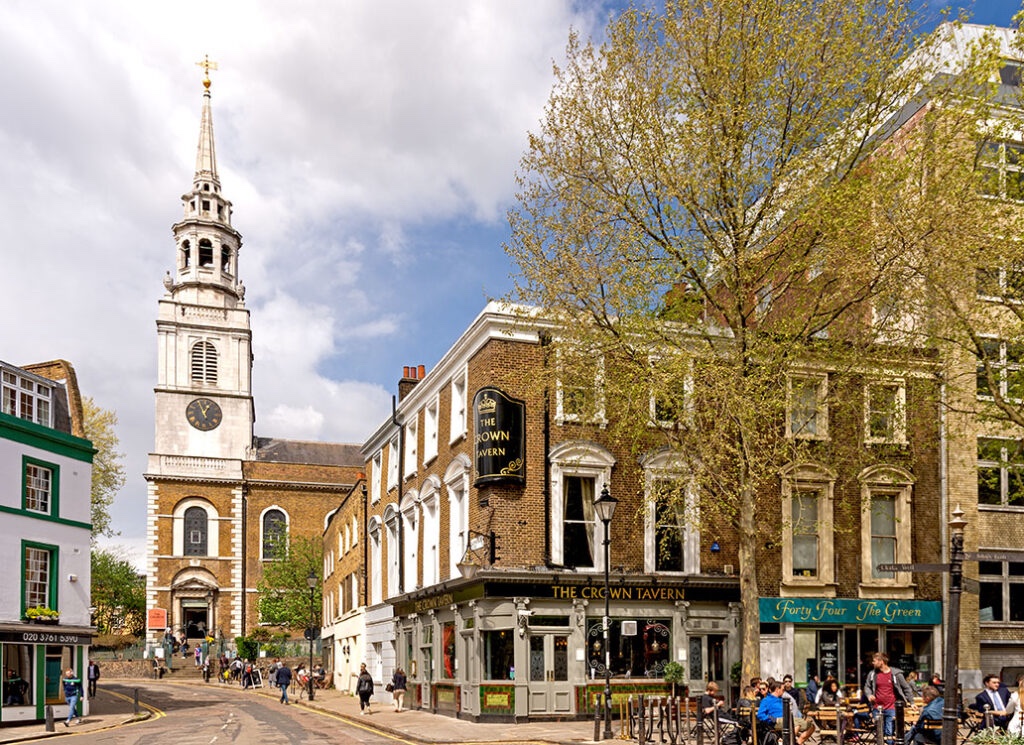
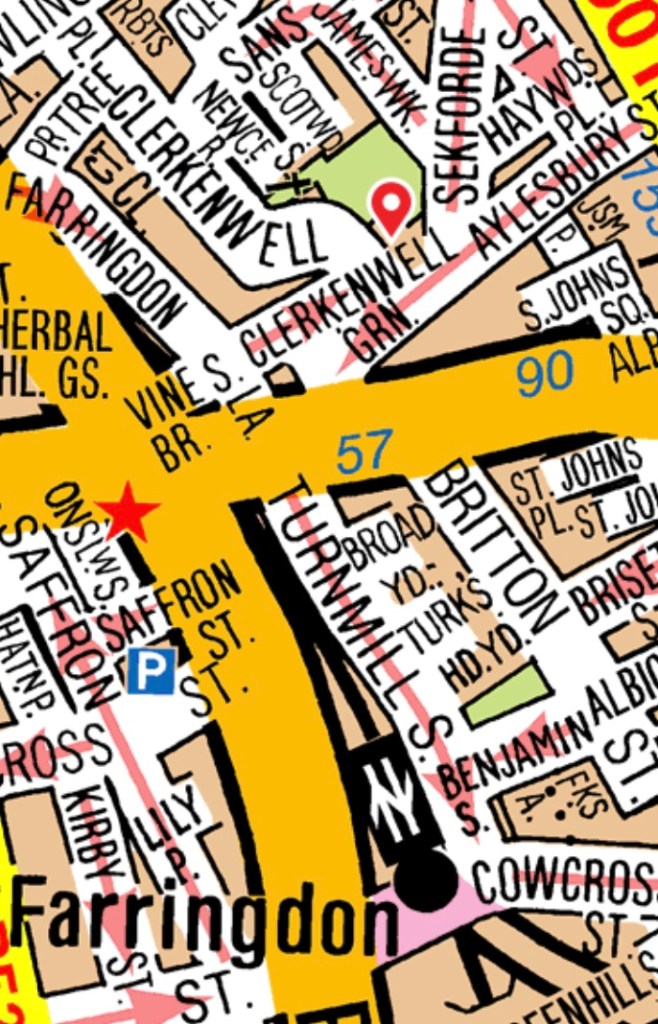


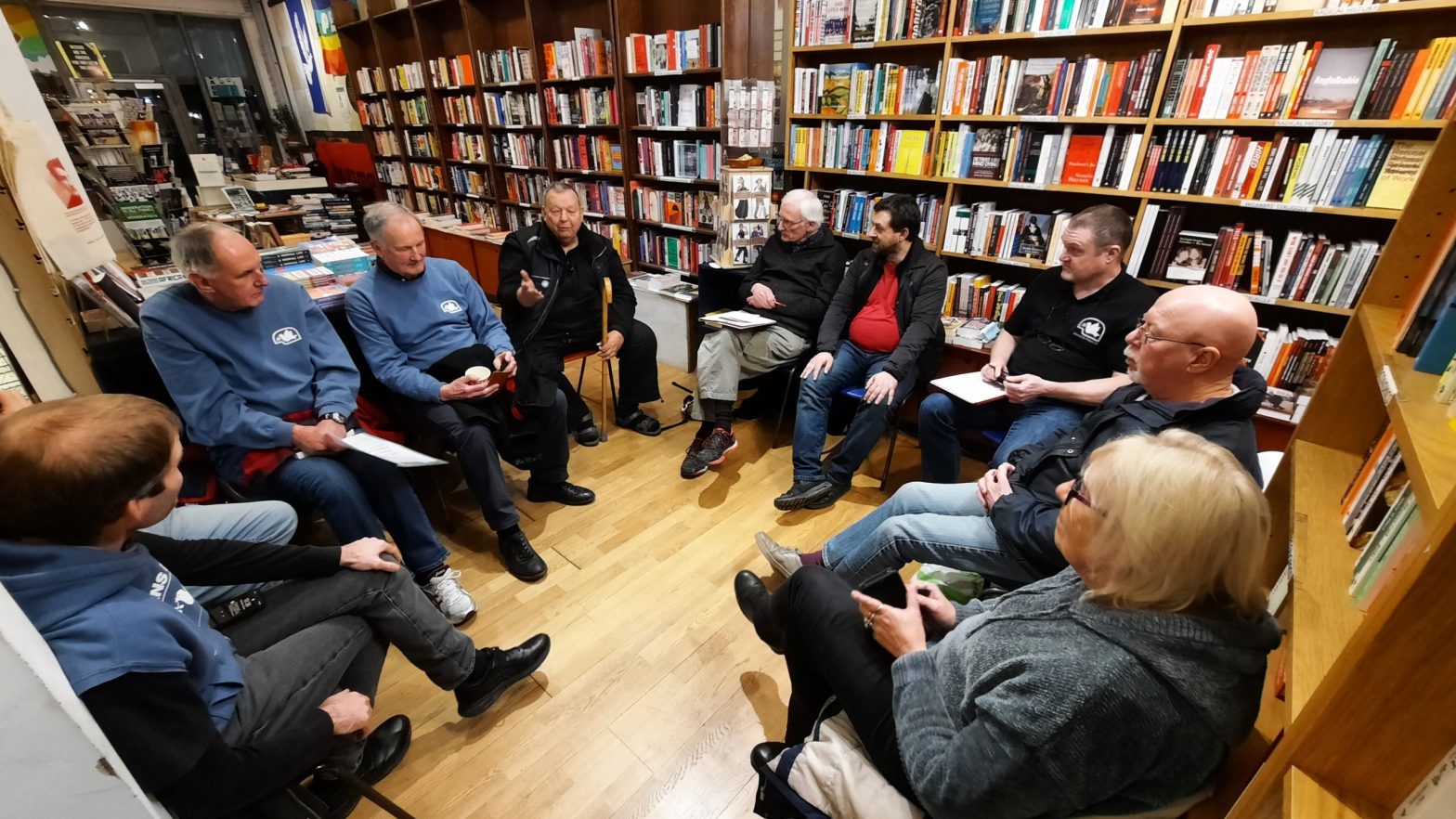

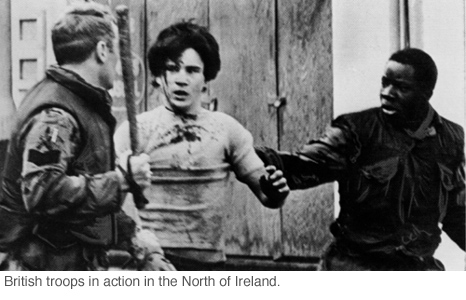
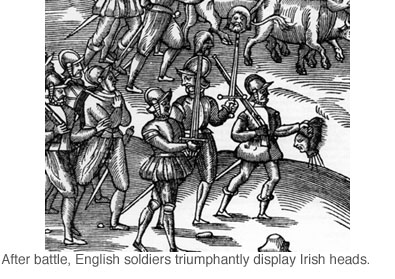


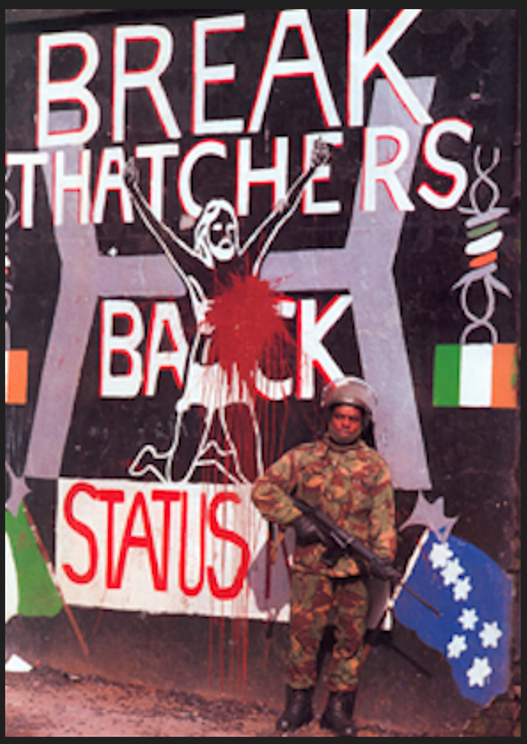
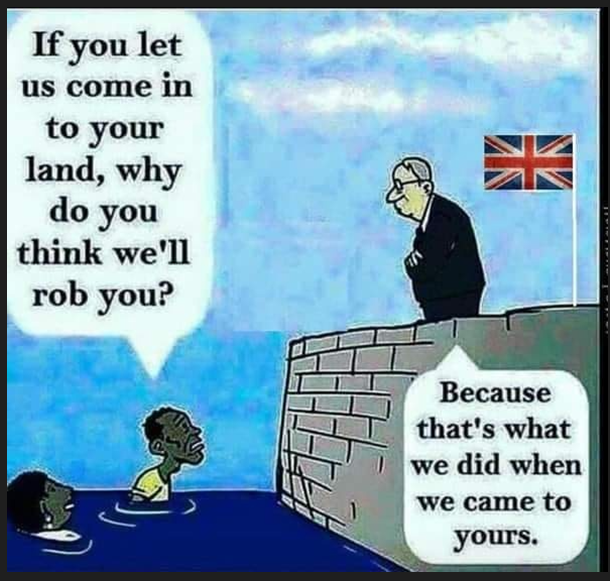

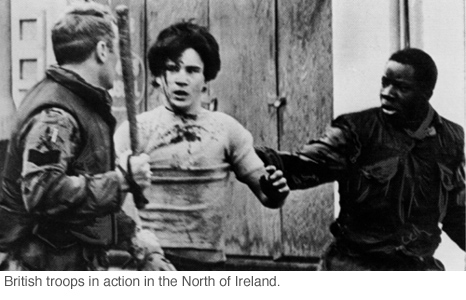
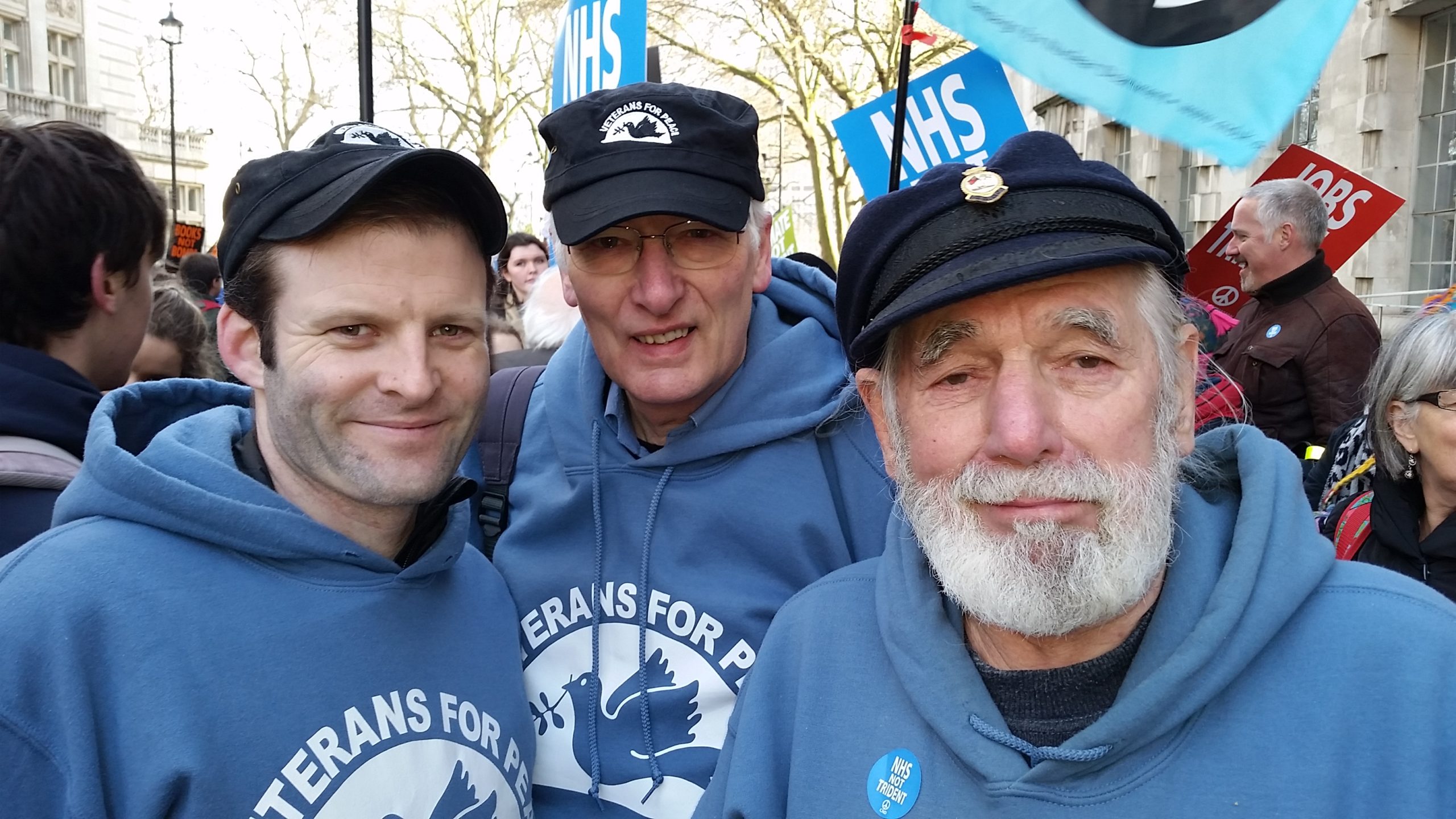

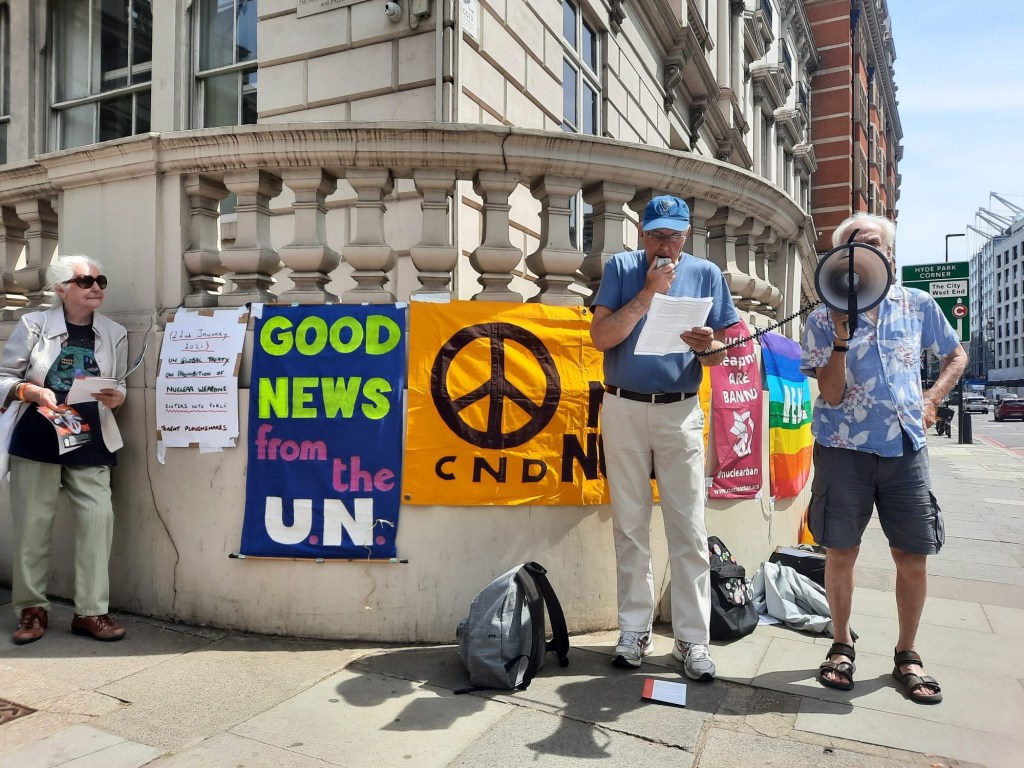
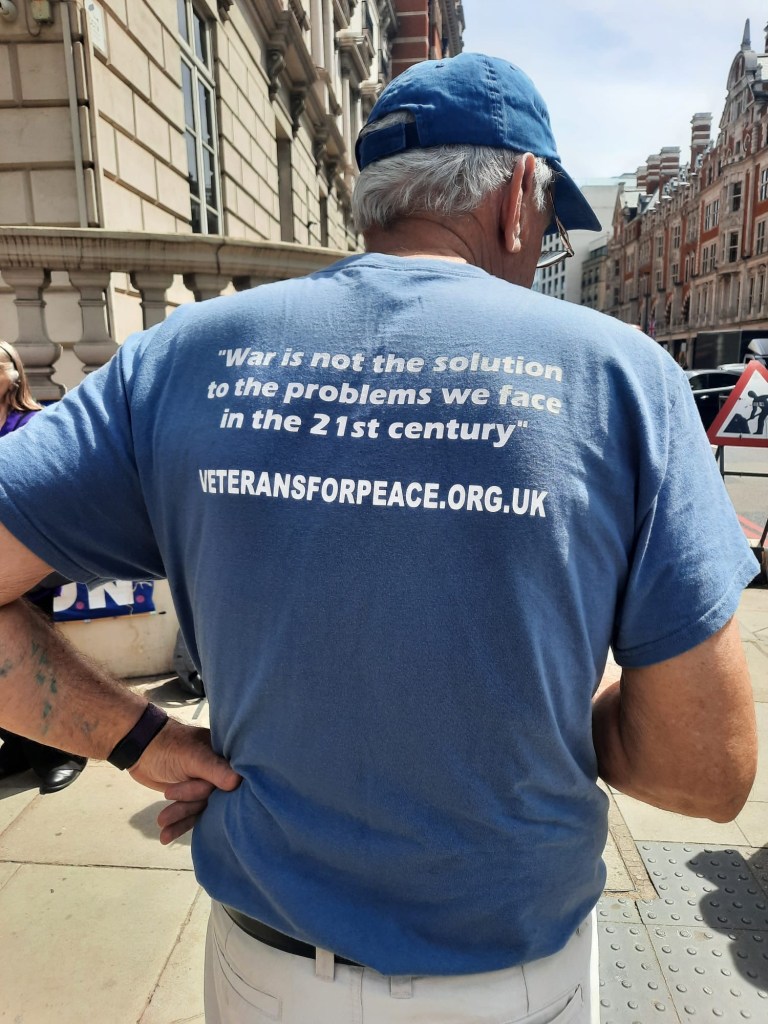
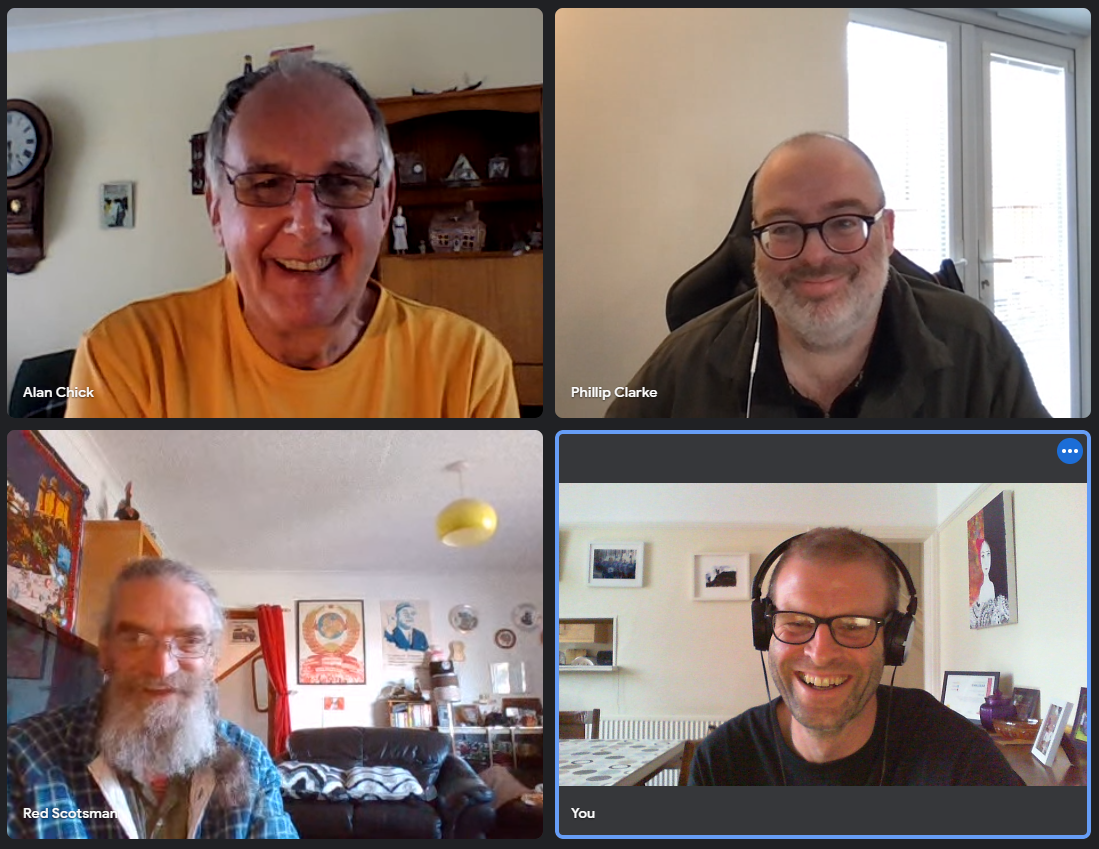


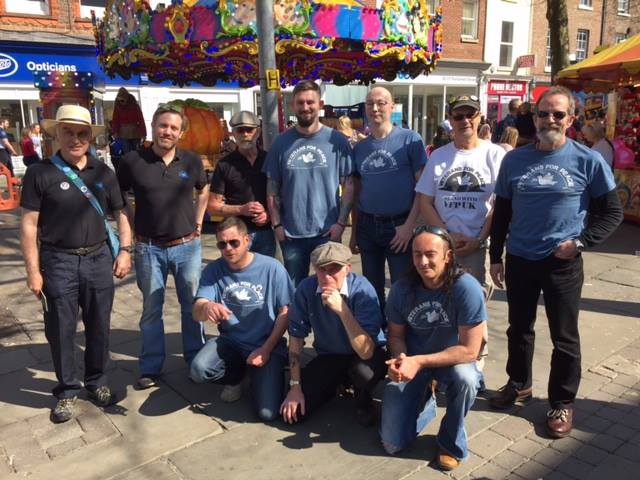
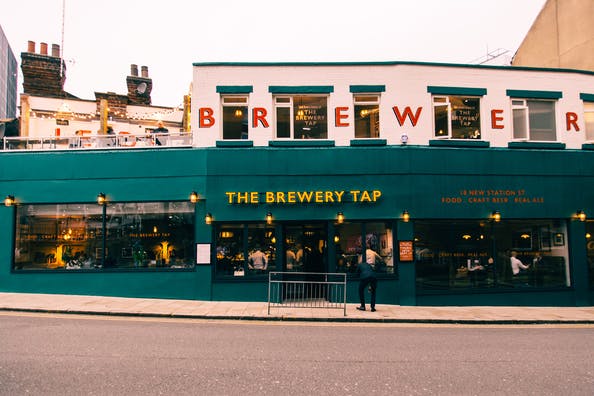


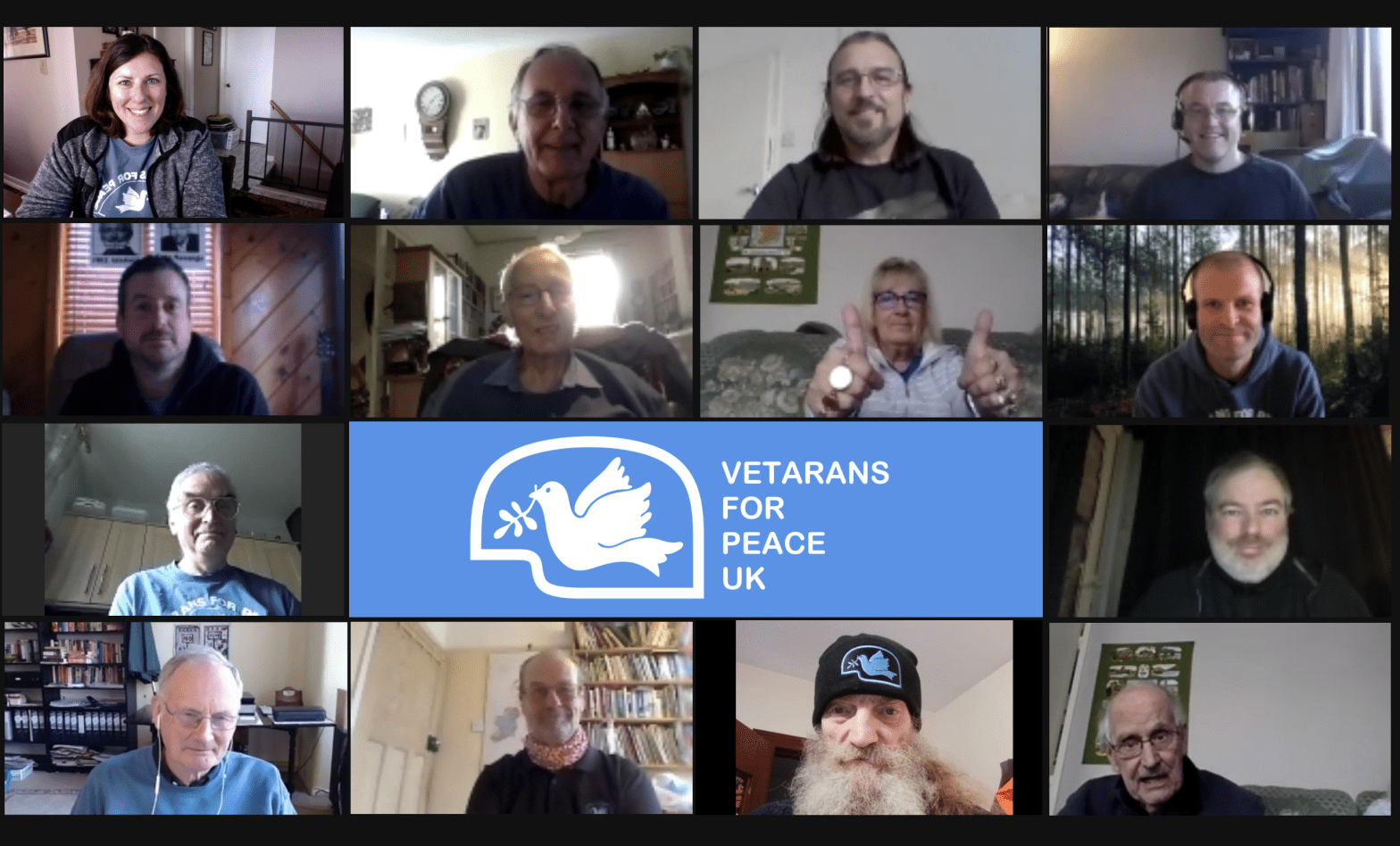
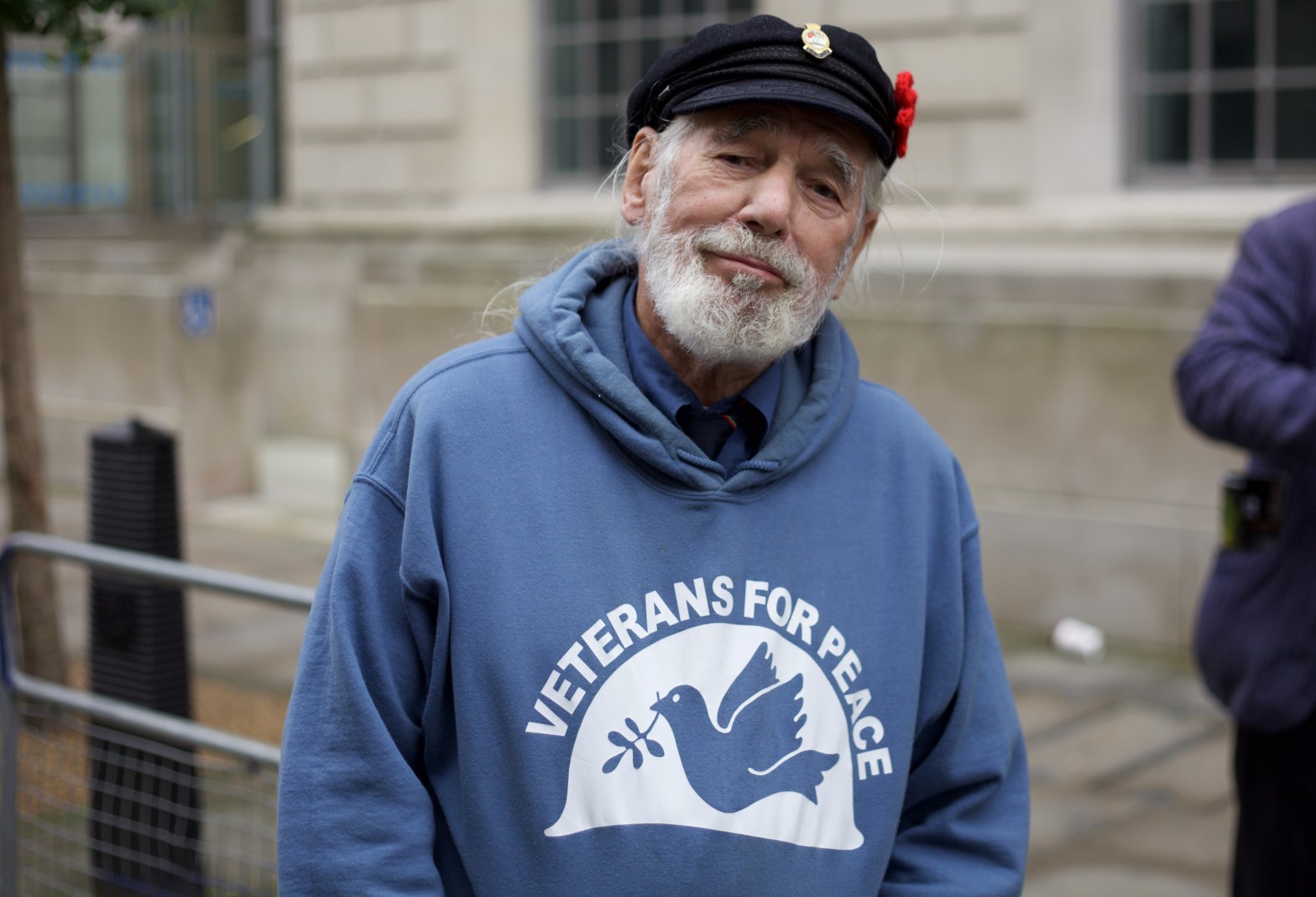
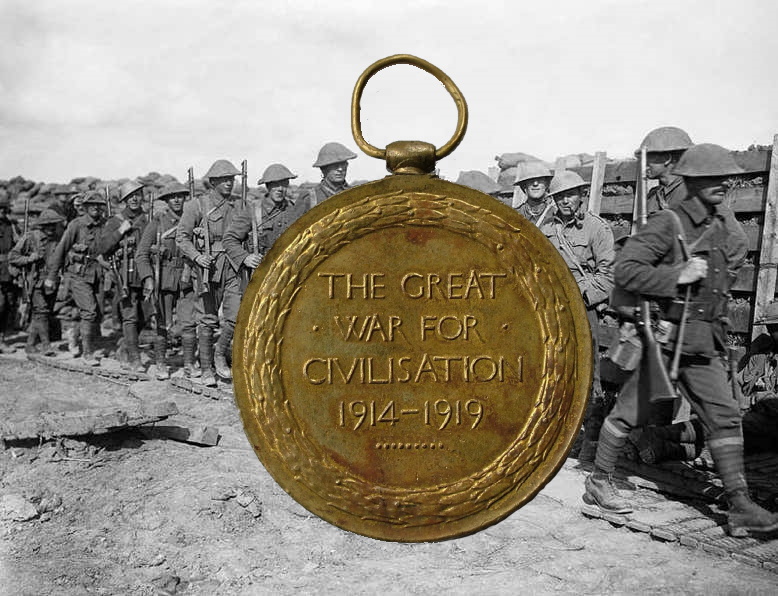

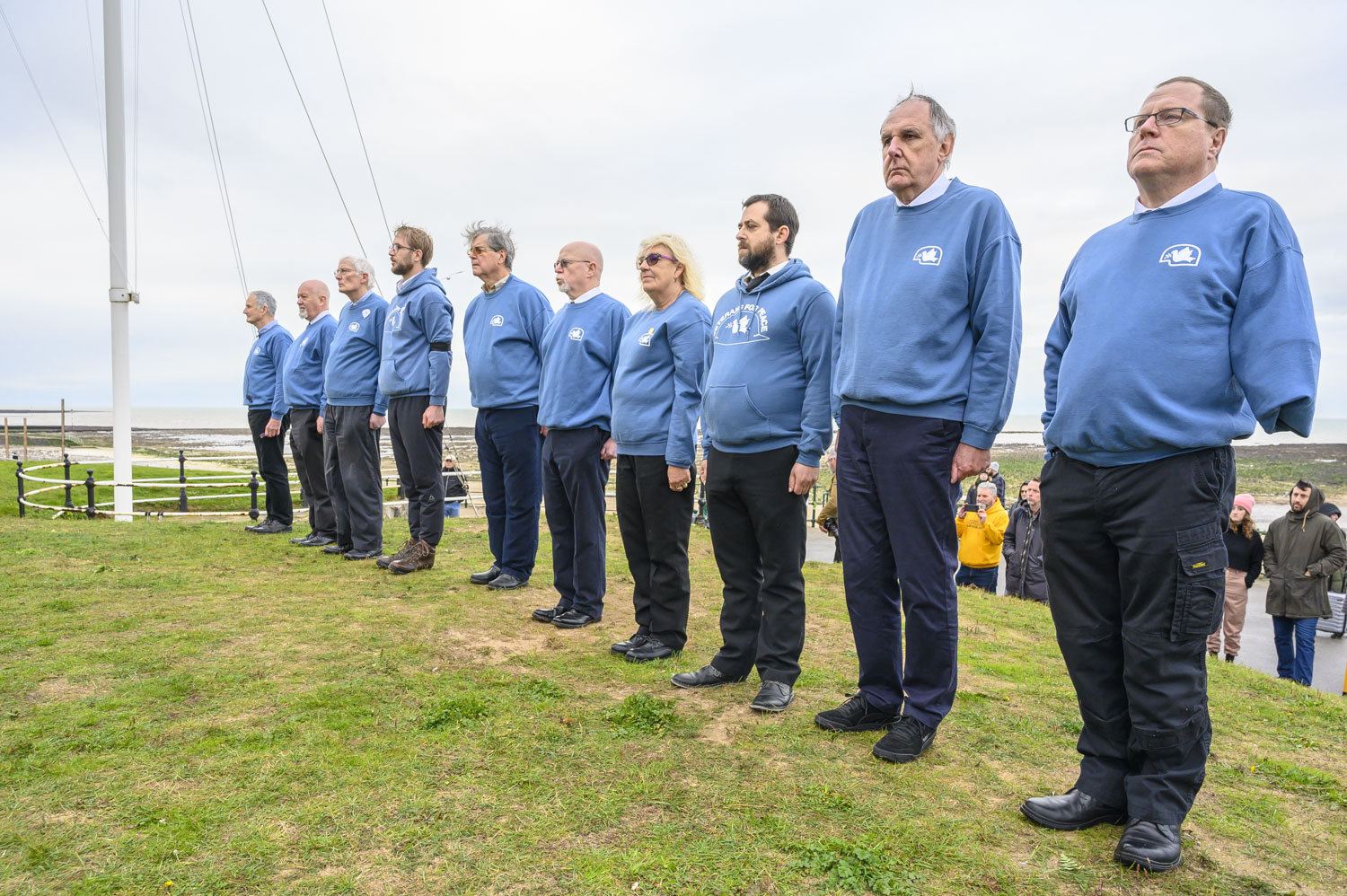
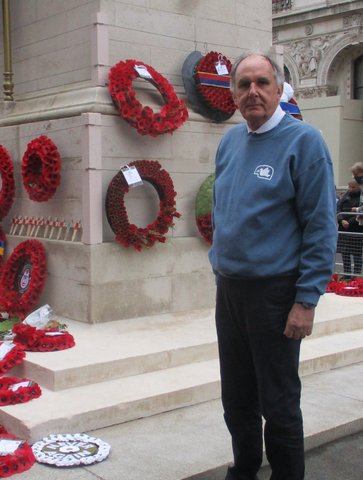
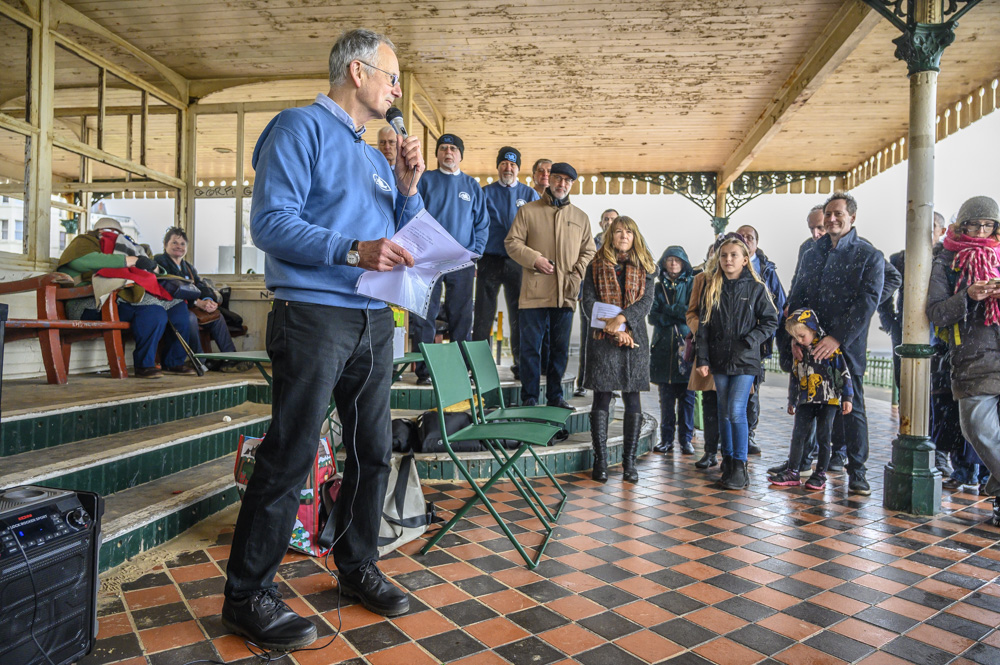

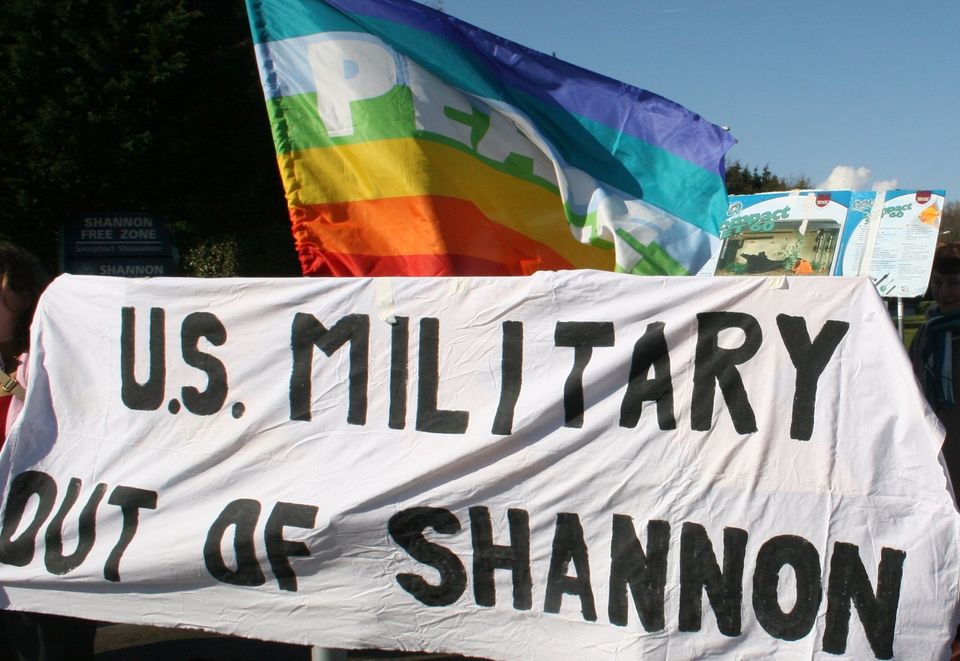


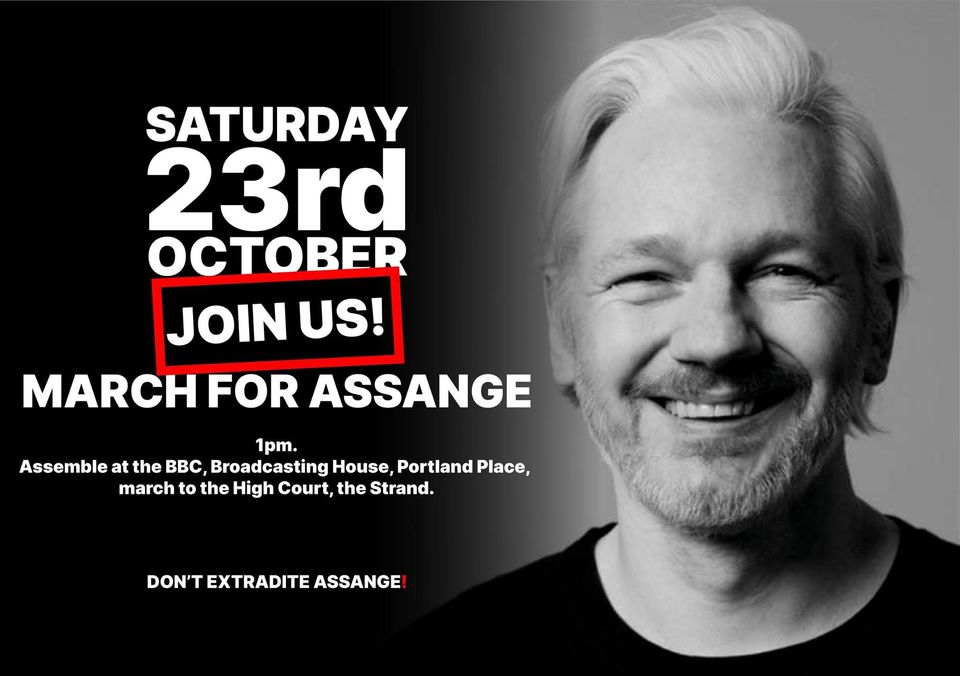


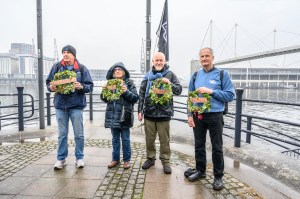
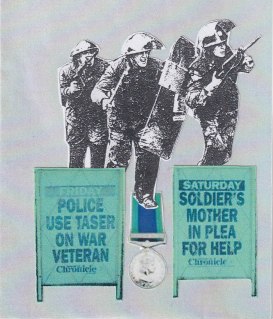
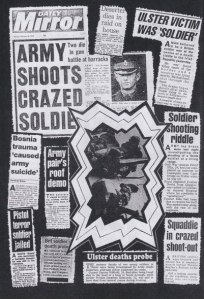
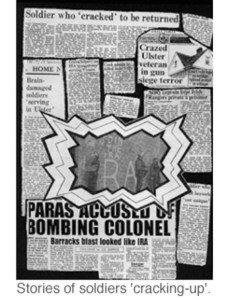 Around that time there had been a continual series of other incidents in Britain involving Northern Ireland veterans. Often described as soldiers ‘cracking-up’, the occurrences involved veterans committing act of violence, sometimes with family members, or to strangers outside. The following are two examples of the type of problems that were happening.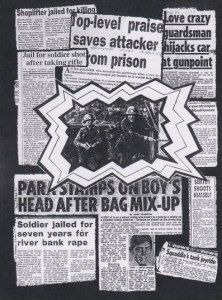
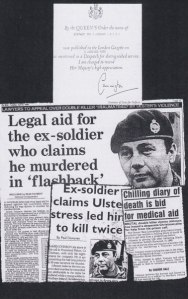
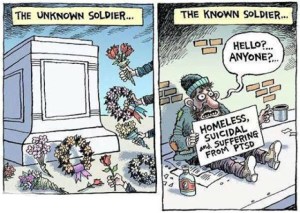
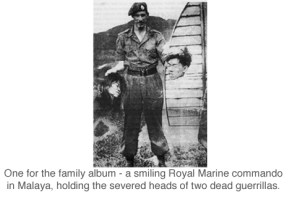
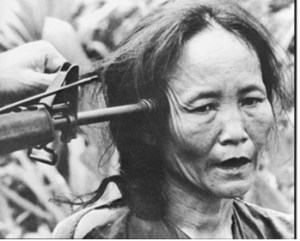
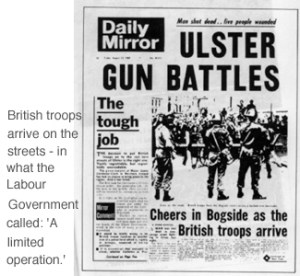
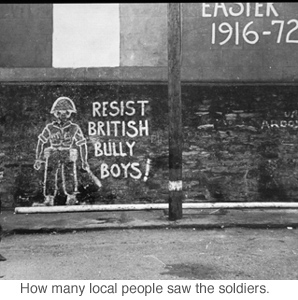
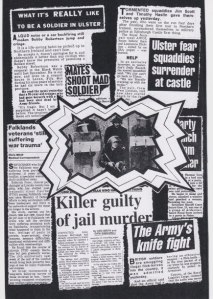

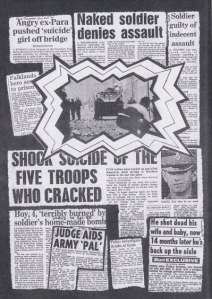
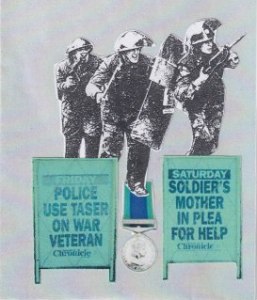





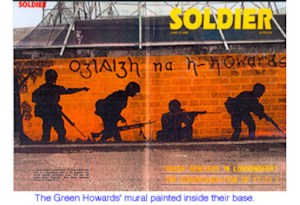
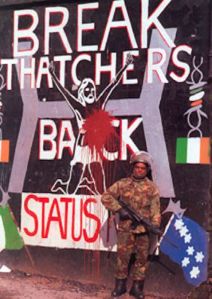
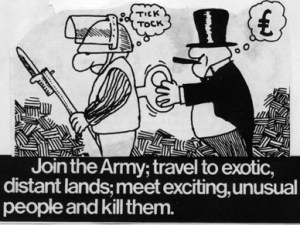

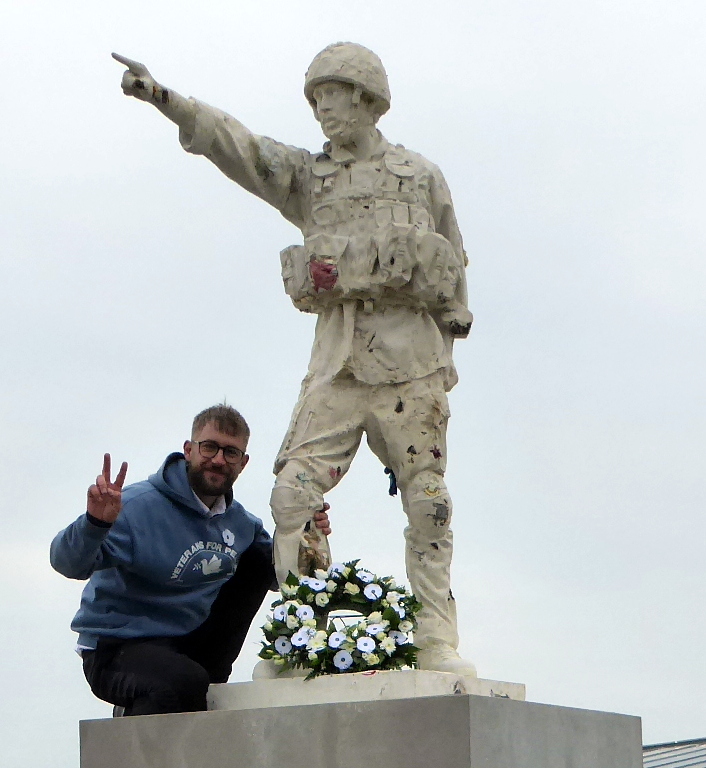


 Veterans For Peace UK