Sending two photos. One is an old postcard of the Cenotaph that was taken in 1932.
The other is of the wonderful Jim Radford. I was fortunate to be able to participate in the 2016 UK VFP Convention and join with both UK and US VFP members in commemorating those who had died in Britain’s numerous wars and occupations.
Best to you and UK VFP for continuing to fight the evil madness that is militarism.
Wage Peace!
Will Thomas Auburn, NH
VFP Chapter 062, the A.J. Muste Chapter
Remembering Armistice Day
By Richard Czaplinski, President of the Will Miller Green Mountain Veterans for Peace, Chapter 57
A hundred years ago, in a railcar in a forest in France, on the 11th hour of the 11th day of the 11th month, November 11, 1918, the armistice that ended hostilities of the first World War was signed. The war officially ended when the Treaty of Versailles was signed on June 28, 1919.
In November, 1919, President Wilson proclaimed November 11 as the first commemoration of Armistice Day with the following words: “To us in America, the reflections of Armistice Day will be filled with solemn pride in the heroism of those who died in the country’s service and with gratitude for the victory, both because of the thing from which it has freed us and because of the opportunity it has given America to show her sympathy with peace and justice1 in the councils of the nations…”
The United States Congress officially recognized the end of World War I when it passed a con- current resolution on June 4, 1926 that also recognized Armistice Day with these words “… it is fitting that the recurring anniversary of this date should be commemorated with thanksgiving and prayer and exercises designed to perpetuate peace 1 through good will and mutual understanding between nations …” By this time, the legislatures of twenty-seven states had already declared November 11 to be a legal holiday.
It wasn’t until 12 years later that an act of Congress on May 13, 1938, made the 11th of November in each year a legal holiday “…a day to be dedicated to the cause of world peace1 and to be thereafter celebrated and known as “Armistice Day.”
In 1954, the 83rd Congress amended the Act of 1938 with Public Law 380 by striking out the word “Armistice” and inserting in its place the word “Veterans.” Later that same year, on October 8th, President Dwight D. Eisenhower issued the first “Veterans Day Proclamation” which began with the words: “WHERE- AS it has long been our custom to commemorate November 11, the anniversary of the ending of World War I, by paying tribute to the heroes of that tragic struggle and by rededicating ourselves to the cause of peace1…”
Fourteen years later, “The Uniform Holiday Bill (Public Law 90-363) was signed on June 28, 1968, and was intended to ensure three-day weekends for federal employees by celebrating four national holidays on Mondays: Washington’s Birthday, Memorial Day, Veterans Day, and Columbus Day. It was thought that these extended weekends would encourage travel, recreational and cultural activities and stimulate greater industrial and commercial production.” Most states did not agree with this decision and continued to celebrate the holiday on its original date. After much confusion, on September 20, 1975, President Gerald R. Ford signed Public Law 94-97 which returned the annual observance of Veterans Day to its original date of November 11.
It is a very interesting historical and cultural phenomenon. From a solemn remembrance of the horrors of war and the war often called “The War to End All Wars” and a sincere desire to work for peace, that day has morphed to an honouring of veterans of all wars and an attempt to make it a three-day weekend to “encourage travel, recreational and cultural activities and stimulate greater industrial and commercial production!”
It is fitting to honour veterans who have sacrificed much, including wounded bodies and minds, to defend the nation. It is another thing altogether to find the right way to recognize the service of veterans who have served in the ill-begotten wars of Vietnam, Afghanistan, Iraq, Libya, Syria, Yemen, and others. Wars that should never have been fought. Veterans who hear the words “Thank you for your service” question what their service was for. In such wars, peace was not and is not being fostered. Death, suffering, and destruction is. For me personally, I sincerely wish that we all could learn to simply live our lives and let others live theirs, avoiding war through ardent, sincere, and wise diplomatic means.
On Sunday, November 11 this year, let us remember Armistice Day (AKA Veterans Day) wherever we are with two minutes of silence at 11:00 am as church bells and chimes everywhere ring out. One hundred years after the Great War that was thought to end all wars, let us remember the horrors of that war and all those that followed and rededicate ourselves to fostering peace.
emphasis added
Note: Quotes are from the Office of Public and Intergovernmental Affairs, US Department of Veterans Affairs ( https:// http://www.va.gov/opa/vetsday/vetdayhistory. asp and Congressional documents.
       “Not long ago we ruled the world
 With cane and bowler hat
     Now all we’ve left is Ulster
        And we’ve trouble holding that.

            The public school taught us to rule
      We’ll keep those natives down
    So don’t call us tyrannical
   We’re loyal to the Crown.”
Verse from an Irish poem.
Arthur Wellesley (1769-1852), the 1st Duke of Wellington, was the ‘great hero’ who defeated Napoleon at Waterloo. Born into an Anglo-Irish family of the Protestant Ascendancy, he was educated at Eton College (founded in 1440) and went on to become the leading officer of the British Army and twice was the British Prime Minister. As a senior officer Wellesley commanded British soldiers during conflicts in France, Spain, Portugal, Denmark, the Netherlands, the Philippines and India.
Wellesley was also an example of the ‘old boys’ who were an integral part of the conquest and rule of the Empire ‘where the sun never sets’. Old empires, like Rome, had seized booty and extracted tribute from those they conquered, later, Spain became the richest European country by plundering gold and silver from South America. The British Empire was bigger than all previous conquests because of the system that lay behind it.
Early empire and the slave trade had brought the accumulation of capital that was used to fund the industrial revolution, which in turn, by exploiting cheap labour at home, had produced surplus goods to be sold for great profits in the parts of empire where indigenous production had been stifled. During Queen Victoria rein (1837-1901) there was a vast expansion of empire, which was supported patriotically by much of the British population. As the Army and Navy, using superior weapons, subjugated increasing areas of land across the globe.
In 1897, Victoria was applauded by large crowds as she travelled from her palace to St Paul’s Cathedral to celebrate her jubilee. Accompanying her in the vast procession were soldiers from all parts of the Empire and, when reporting this event, the ‘Daily Mail’ commented on the troops:
“White men, yellow men, brown men, black men, every colour, every continent, every race, every speech – and all in arms for the British Empire and the British Queen. Up they came, more and more, new types, new realms, at every couple of yards, an anthropological museum – a living gazetteer of the British Empire. With them came their English officers, whom they obey and follow like children. And you began to understand, as never before, what the Empire amounts to … that all these people are working, not simply under us, but with us – we send out a boy here and a boy there, and the boy takes hold of the savages of the part he comes to, and teaches them to march and shoot as he tells them, to obey him and believe in him and die for him and the Queen.”
[Daily Mail, 23rd June 1897].
The ‘boy here’ and the ‘boy there’ were mainly ‘old boys’ produced by the British private-school system. In the past, primogeniture in Britain had tended to restrict opportunities in ruling families to all but the first-born son, but empire and industrialisation opened the way for ‘all gentlemen’ to gain fame and fortune. James Mill described the colonies as being ‘a vast system of outdoor relief for the upper classes’ and, armed with a comprehensive view of their superiority and right to dominance, ‘old boys’ spread out into positions of power and influence both at home and abroad.
This included, within Britain’s Armed Forces, an officer-class that became a crucial part of the old-boy ruling network. In 1878, G. A. Denison, the son of a Nottinghamshire landowner, gave us a good insight into this set-up, when he wrote ‘Notes of My Life’, in which he told of his brothers and sisters:
“Six of us were at Eton, one at Harrow … My eldest brother John, Viscount Ossington … after 30 years of Parliamentary life, became Speaker of the House of Commons … William went from Eton to Woolwich, then into the Engineers … After employment at home and abroad, he became in 1846 Governor of Van Diemen’s Land; Governor-General of Australia, KCB, 1855; Governor of Madras, 1861. Stephen … was for many years Deputy Judge Advocate. Alfred, after some 20 years of laborious, honourable, and successful life in Australia, returned finally to England, and became Private Secretary to the Speaker. Charles was in the 52nd Regiment, and became Colonel in it. He had sundry Staff employments in India; and afterwards … was Chief Commissioner of Civil Service at Madras.
My sister Charlotte … married Charles Manners Sutton, then Judge Advocate General; afterwards, for seventeen years Speaker of the House of Commons.”
In order to perpetuate their rule and counteract critical voices the establishment had developed the Public [actually private] School system. Westminster parliaments were also dominated by old-boys, who used their position to continue the rule of the upper-classes, as indicated in ‘Pictures for Little Englanders’.
By the 19th century nearly all officers came to their regiments via Public Schools, which had become the training ground for all the ruling-class:
“Around 1800 – over 70 per-cent of all English peers received their education at just four public schools, Eton, Westminster, Winchester and Harrow. And in the first half of the nineteenth century, sons of the peerage and the landed gentry together made up 50 per cent of the pupils of all the major public schools … Removed from the private, introspective worlds of home and rural estates, they were brought into protracted contact with their social peers, were exposed to a uniform set of ideas and learnt how to speak the English language in a distinctive and characteristic way.”
[The British Empire, vol. 4, Orbis, 1979].
Boys, boarded at the Public School of choice from 7 or 8 years of age, were inducted into a system designed to break family connections and insert attachments to class, state and empire. The private school system was often cruel, full of emotional abuse and physical brutality, intended to harden the recipients for a life of service and rule. Every year the Public Schools would then release a caste of ‘old boy’ zealots, who set about establishing their place in the ruling structures both at home and across the Empire.
The first victims of the private school process, however, were often insiders – those boys who questioned, or rejected, this treatment. ‘If’ is a film about some non-conformist boys in a Public School, who are provoked into rebellion against the system:
The cadet forces in the private school system were steeped in patriotic traditions and these became the seedbeds for the officer-class. Schools like Eton conveyed to their pupils how a mask of etiquette and civility could obscure harsh and oppressive rule. This concentration of young aristocracy and gentry, in institutions which moulded their perceptions and formed their ideology, helped create a ruthless, cohesive and integrated ruling elite:
“Patriotic duty was stressed in practical ways, as when public-school masters encouraged boys to participate in national subscriptions and to celebrate British military and naval victories. And patriotism of a kind was embedded in the classical curriculum. The emphasis on Greek and Roman authors and ancient history meant a constant diet of stories of war, empire, bravery and sacrifice for the state … Classical literature was doubly congenial because the kind of patriotic achievement it celebrated was a highly specific one. The heroes of Homer, Cicero and Plutarch were emphatically men of rank and title. As such, they reminded Britain’s élite of its duty to serve and fight, but in addition, affirmed its superior qualifications to do so.”
[The British Empire, vol. 4, Orbis, 1979].
In 1864, a Royal Commission stated that Public Schools were: ‘The chief nurseries of our statesmen; in them, and in schools modelled after them, men … destined for every profession and career, have been brought up on a footing of social equality, and have contracted the most enduring friendships, and some of the ruling habits of their lives; and they have perhaps the largest share in moulding … the character of an English gentleman’.
Patriotism & Xenophobia
Eton ‘old boy’, Arthur Wellesley, 1st Duke of Wellington, was a leading representative of the Public School process, both as a soldier of Empire and as a Tory Prime Minister at Westminster. Throughout the empire in which he served there were frequent revolts against English rule. Even in Britain, despite the waves of pro-imperial propaganda, many people had misgivings about the morality of taking and holding the land of other people by armed force.
This often gave rise to contradictory feelings about Britain’s soldiers, which were expressed by Francis Adams in his poem ‘England in Egypt’:
From the dusty jaded sunlight of the careless Cairo streets,
Through the open bedroom window where the pale blue held the palms,
There came a sound of music, thrilling cries and rattling beats,
That startled me from slumber with a shock of sweet alarms.
For beneath this rainless heaven with this music in my ears
I was born, and all my boyhood with its joy was glorified,
And for me the ranging Red-coats hold a passion of bright tears,
And the glancing of the bayonets lights a hell of savage pride.

So I leapt and ran, and looked,
And I stood, and listened there,
Till I heard the fifes and drums,
The fifes and drums of England
Thrilling all the alien air!
And “England, England, England,”
I heard the wild fifes cry,
“We are here to rob for England,
And to throttle liberty!”
And “England, England, England,”
I heard the fierce drums roar,
“We are tools for pious swindlers
And brute bullies evermore!”

And the silent Arabs crowded, half-defiant, half-dismayed,
And the jaunty fifers fifing flung their challenge to the breeze,
And the drummers kneed their drums up as the reckless drumsticks played,
And the Tommies all came trooping, tripping, slouching at their ease.
Ah Christ, the love I bore them for their brave hearts and strong hands,
Ah Christ, the hate that smote me for their stupid, dull conceits –
I know not which was greater, as I watched their conquering bands
In the dusty jaded sunlight of the sullen Cairo streets.
And my dreams of love and hate
Surged, and broke, and gathered there,
As I heard the fifes and drums,
The fifes and drums of England
Thrilling all the alien air! –
And “Tommy, Tommy, Tommy,”
I heard the wild fifes cry,
“Will you never know the England
For which men, not fools, should die?”
And “Tommy, Tommy, Tommy,”
I hear the fierce drums roar,
“Will you always be a cut-throat
And a slave for evermore?”
Unfortunately, in Britain there were louder establishment-supported patriotic voices promoting xenophobia and claiming empire-subjugation as a civilising mission. Many of those who became ‘old boys’ would have read books as children about Great Britain and its Empire. Writers like G. A. Henty, once editor of ‘The Union Jack’ – a ‘One Penny Weekly Boy’s Paper’, wrote adventure books for boys which glamorised colonial warfare.
His fictional ‘old-boy’ characters were put into real life actions and were always ‘honourable’ and ‘manly’ and exuded ‘character’, ‘self-discipline’ and ‘authority’. Yorke Harberton, a ‘typical hero’ who went ‘With Roberts to Pretoria’ was claimed to be:
“A good specimen of the class by which Britain has been built up, her colonies formed, and her battle-fields won – a class in point of energy, fearlessness, and the spirit of adventure, and a readiness to face and overcome all difficulties unmatched in the world.”
[The British Empire, vol. 4, Orbis, 1979].
Henty, who was the eldest son of a stockbroker mine-owner, hated trade unions and was openly racist. He wrote his books to foster ‘the imperial spirit’, stating that ‘the Negro is an inferior animal and a lower grade in creation than the white man’. For many British youngsters, indoctrination started even earlier, with pro-imperial themes appearing in nursery books like the ABC for Baby Patriots:
A is the Army
that dies for the Queen;
It’s the very best Army
That ever was seen.

I is for India,
Our land in the East
Where everyone goes
To shoot tigers and feast.

N is the Navy
We keep at Spithead,
It’s a sight that makes foreigners
Wish they were dead.
While the rank-and-file soldiers came from the poor and colonised, the officer-corps, produced by the private school system, ensured the perpetuation of the status quo. The history of the army can be traced back to Oliver Cromwell’s time, but its enduring character was forged, and the hierarchy strengthened, during the Victorian colonial wars. It was then that the British Army acquired its contemporary reputation among the armies of the major powers of the world as a ‘counter-insurgency’ force.
‘Pictures for Little Englanders’ was a Victorian book for young children. Under a sketch of Kitchener the soldier and Kipling the writer, the following lines were written:
Men of different trades and sizes
Here you see before your eyses;
Lanky sword and stumpy pen,
Doing useful things for men;
When the Empire wants a stitch in her
Send for Kipling and for Kitchener.
In the last years of Victoria’s reign England did send for Lord Horatio Herbert Kitchener, the ‘great warrior hero’ of Khartoum and the battle of Omdurman, who was dispatched to South Africa to deal with the Boers who were waging guerrilla warfare against the British forces. He ordered that Boer homesteads be burnt and the women and children herded into guarded camps ‘to concentrate them’. Over 100,000 ended up in the British concentration camps, in conditions that an Australian reporter called the ‘criminal neglect of the simple laws of sanitation’. By the end of the war 28,000 Boer detainees had died – 22,000 of them were children.
Later, Kitchener became a well-known recruitment icon for WW1, helping to build a mass army for the brutal trench warfare.
The Rule of the ‘Box-Wallah’
In 1942, in a review of ‘A Choice of Kipling’s Verse’ by T. S. Eliot, George Orwell wrote that Kipling: ‘Was the prophet of British imperialism in its expansionist phase … and also the unofficial historian of the British Army’. Orwell continued:
“It is notable that Kipling does not seem to realise, any more than the average soldier or colonial administrator, that an empire is primarily a money-making concern. Imperialism as he sees it is a sort of forcible evangelising. You turn a Gatling gun on a mob of unarmed ‘natives’, and then you establish ‘the law’, which includes roads, railways and a court house … His outlook, allowing for the fact that after all he was an artist, was that of the salaried bureaucrat who despises the ‘box-wallah’ [business-man] and often lives a lifetime without realising that the ‘box-wallah’ calls the tune.”
[Horizon, Feb. 1942].
India, Kipling’s birth place and where he spent his early life, was exploited ruthlessly by the East India Company. Making vast profits for English ‘box-wallahs’ like Sir Josiah Child, Robert Clive and Warren Hastings. Who was educated at Westminster public school during the same time as two future Prime Ministers, Lord Shelburne and the Duke of Portland.
Given its first charter and monopoly privileges under Queen Elizabeth I, the East India Company was first set up in 1600 when 125 London merchants launched the company ‘for the honour of this our realm’. The company’s stock rose nine-fold in the period of Oliver Cromwell, who protected it from competition, allowing the company to set itself up for future expansion:
“The Charter of 1661 recognised the company’s right to tax, and gave it power to wage war against non-Christian peoples. By 1684 Sir Josiah Child was advocating ‘absolute sovereign power in India for the Company’. In the mid-eighteenth century Clive, began to execute this policy, to his own and the company’s great financial advantage.”
[Reformation to Industrial Revolution, by Christopher Hill, Weidenfeld and Nicolson, 1967].
Bengal was brought under East India Company rule after Clive’s victory at the battle of Plassey in 1757 and the land tax was tripled. Countless of ‘the soft Bengalese’ died during the subsequent famine, while the company continued to extract wealth from the country. Many more Indians were to die from war, pestilence and famine in the years to come, including many millions in the last three decades of Victoria’s rule alone:
Others Indians were forced to move to different areas of the Empire, as semi-slave labour. As it expanded, the East India Company manipulated and moulded the indigenous order and rulers to accept company domination and swiftly moved to extinguish any opposition. Divide-and-rule tactics gradually allowed a tiny group of colonial administrators and soldiers to dominate the vast continent and impose their strict central control over the areas occupied.
To enforce its exploitation, the company also formed its own navy and army and built a network of forts, taxing the Indian population to pay for their upkeep. Clive served as a military officer and then governor of East India and he, with other ‘box-wallahs’ like Warren Hastings, used the money they extorted to gain fame and influence back home:
“The great wealth won by the plunder of India enabled the plunderers to buy their way into English politics. Clive himself acquired first a Parliamentary seat, then a peerage. It was alleged that between 1757 and 1766 the company and its employees received £6 million from India as gifts. Warren Hastings prided himself on never defrauding the company: before accepting money, he asked himself only ‘this, whether it would go into a black man’s pocket or my own’. In thirteen years he remitted to England over £218,000 which he had saved from black men. There had been nothing like it in history since the Spanish conquistadors looted the Aztec and Inca civilisations of America in the early sixteenth century.”
[Reformation to Industrial Revolution, by Christopher Hill, Weidenfeld and Nicolson, 1967].
Back in London in 1773, Clive and others were criticised by a parliamentary inquiry for enriching themselves while ‘oppression in every shape has ground the faces of the poor defenceless natives’. Clive, whose military victories had paved the way for company expansionism and made him a great British hero, replied that he was ‘astonished at his own moderation’ for taking so little.
Exonerating him, the House of Commons ruled that while Clive had pocketed £234,000 he had performed ‘great services to the state’. However, Clive found it difficult to refute his detractors and suffering from depression committed suicide the following year. Samuel Johnson wrote that Clive: ‘Had acquired his fortune by such crimes that his consciousness of them impelled him to cut his own throat’.
Arthur Wellesley, 1st Duke of Wellington, was posted to India in 1797 as an army officer and during the next eight years he took part in numerous battles to expand the rule of the East India Company. When he returned to Britain in 1805, he’d amassed a then fortune of £42,000, mostly made up of ‘prize money’ from his campaigns. At home he took a period of extended leave from the army and by the start of the next year was elected as a Tory member of the British parliament.
Great Britain: the World’s Biggest Drug Trafficker
In India, the East India Company extended its operations into China to trade opium for tea. With the company forcing Indian peasants to grow the poppies and harvest the opium crop. By 1830 nearly 450 tons of opium reached China and the next year a House of Commons report stated that: ‘The monopoly of Opium in Bengal supplies the Govt. with a revenue amounting to £981,293 per annum; and the duty amounts to 302% on the cost of the article … It does not appear advisable to abandon so important a source of revenue’.
The Chinese, seeing so many of their people fall victim to opium addiction, desperately tried to stop this drug trade. Britain then resorted to warships and soldiers to crush any resistance in the Opium Wars of 1839-42. The defeated Chinese were forced to hand £2,000,000 and Hong Kong over to Britain and four ‘treaty ports’ opened up China to foreign (mainly British) trade.
The East India Company had lost most of its autonomy under the India act of 1833 and in 1857 its demise was ensured when many native soldiers rebelled. The Indian ‘mutiny’, which rocked British rule in India, was ruthlessly suppressed by British and loyal native troops. Many rebels were executed and some were hanged out of hand, but others were dispatched by a new method:
“Hanging … was usually thought too good for mutineers. When the facilities were available, it was usual to blow them from guns. It was claimed that this method contained ‘two valuable elements of capital punishment; it was painless to the criminal and terrible to the beholder’. The ritual was certainly hideous. With great ceremony the victim was escorted to the parade ground while the band played some lively air. The victim’s back was ranged against the muzzle of one of the big guns and he was strapped into position. Then the band would fall silent and the only sound would be the faint crackle of the portfire, as it was lowered to the touch-hole. With a flash and a roar, an obscene shower of blood and entrails would cover both the gunners and observers.”
[The British Empire, vol. 2, Orbis, 1979].
State drug trafficking expanded after the East India Company was abolished in 1858 and the crown took over direct control of India. While 2,000 tons of opium was exported to China in 1843, this had soared to 5,000 tons by 1866. In 1875 alone £6,500,000 was made from the trade in opium. By then, Britain had become the biggest drug trafficker in the history of the world:
On the 1st of January 1887 Queen Victoria was formally proclaimed Queen-Empress of India, meanwhile Indian peasants continued to die of starvation and in China millions were dying from the effects of opium addiction.
East India House, in the City of London, was one of the nerve centres from which this system had operated. Situated a short distance from the Bank of England, this grand building, with its elaborate facade, stood as a striking monument to ‘imperial achievements’. It was demolished after the company’s demise and it is fitting that the Lloyds building now stands in its place, because, in its own time, the East India Company was an integral part of a global economy:
Opium from India bought tea from China, which was sent to Britain with Indian raw materials like cotton.
Imported raw materials were processed into textiles and other manufactured goods in British factories, which were then exchanged for slaves in west Africa.
African slaves were worked to death on plantations, or traded for sugar and tobacco and/or sold for gold and silver in the West Indies and America.
The profits, plus the gold and silver, helped fund the industrial revolution and the subsequent monopoly of manufactured goods, combined with cheap labour at home, ensured British dominance of world trade.
The sugar, produced by slave labour, was combined with the tea, obtained from opium trading, to produce what became England’s national drink.
An equestrian statue of the Duke of Wellington is now located at the Royal Exchange in London, a short distance from the site of East India House. That old system, which made great fortunes for the upper-classes, was protected by the army and navy, controlled by the officer-class, with its rank-and-file drawn mainly from the Celtic fringe and the urban and rural underclass. With mercenary units of militias and colonial police, recruited from the previously conquered and commanded by old boys, often playing a crucial role.
Pro-imperialist historians often brag that, at its height, the British Empire covered a quarter of the world’s land surface and contained a population of over 400 million. They neglect to tell us, however, that it was drug trafficking and the slave trade that helped put the ‘Great’ into Great Britain, or that the famines in Ireland and India, that caused millions of deaths, were the result of an unyielding market ideology – backed-up by official callousness. In our own age of the US-led new imperialism we should remember that, while profits multiplied in the City of London during the heyday of the British Empire, at home and abroad the poor faced oppression, slavery, misery and death.
Keeping ‘The Scum of the Earth’ In Line
In 1947 the Royal Military Academy of today was set up at Sandhurst, it was built on the site of the former Royal Military College that was founded in 1801 for training army officers. Officers’ commissions could then be achieved by purchase, with the prices ranging from around £400 to £1,000 for a junior officer and £4,000 to £10,000 for a lieutenant-colonel. These were amounts that only the wealthy could afford.
Around the world all armies are hierarchies to some degree, but the British officer-class became super elitist. A tradition of service developed among the younger sons of the well-off, especially among landowning families and often within the same regiments. With the officer corps only open to ‘gentlemen’, the army system was totally undemocratic, full of nepotism and corruption flourished.
The Duke of Wellington, who had once called his men ‘the scum of the earth’, also said of his soldiers: ‘I don’t know what they do to the enemy, but by God they frighten me’. The rank-and-file soldiers were subject to autocratic rule, suffered arbitrary punishment for any perceived misdemeanour. And often money for their equipment and provisions was purloined for officer benefit.
In 1831, Alexander Somerville, a soldier in the Scots Greys, wrote a letter to the press because he was concerned about his regiment’s riot training. It was just over a decade after the Peterloo Massacre and Somerville was apprehensive: ‘That while the Scots Greys could be relied upon to put down disorderly conduct, they should never be ordered to lift up arms against the liberties of the country and peaceful demonstrations of the people’.
Charged with writing a ‘seditious letter’ to a paper, Somerville was sentenced to be flogged with 150 lashes. Flogging was barbaric, as even a few lashes could rip a man’s flesh to the bone. Later, Somerville described his ordeal:
“The regimental sergeant-major, who stood behind, with a book and pencil to count each lash, and write its number, gave the command, ‘Farrier Simpson, you will do your duty’. The manner of doing that duty is to swing the ‘cat’ twice round the head, give a stroke, draw the tails of the ‘cat’ through the fingers of the left hand, to rid them of skin, or flesh, or blood; again to swing the instrument twice round the head slowly, and come on, and so forth. Simpson took the ‘cat’ as ordered; at least I believe so; I did not see him, but I felt an astounding sensation between the shoulders, under my neck, which went to my toe nails in one direction, my finger nails in another, and stung me to the heart, as if a knife had gone through my body. The sergeant-major called in a loud voice, ‘one’. I felt as if it would be kind of Simpson not to strike me on the same place again. He came a second time a few inches lower, and then I thought the former stroke was sweet and agreeable compared with that one. The sergeant-major counted ‘two’. The ‘cat’ was swung twice round the farrier’s head again, and he came on somewhere about the right shoulder blade, and the loud voice of the reckoner said ‘three’. The shoulder blade was as sensitive as any other part of the body, and when he came again on the left shoulder, and the voice cried ‘four’, I felt my flesh quiver in every nerve, from the scalp of my head to my toe nails. The time between each stroke seemed so long as to be agonising, and yet the next came too soon …”
[The Rambling Soldier, by Roy Palmer, Penguin Books Ltd 1977].
Throughout the history of the British Army and Navy, officers were often as frightened of their own soldiers and sailors as they were by any enemy. Requiring instant obedience, they therefore enforced stern discipline to maintain their control. In the army the Mutiny Act had stipulated that soldiers committing ‘crimes’ like mutiny, desertion or sedition should be tried under military, not civil law. Crown forces were then empowered to set up courts-martial to deal with these offences.
Over the following centuries British soldiers were punished in a variety of ways. The ‘wooden horse’, which often caused rupture; the ‘log’, which was an iron weight chained to the leg; ‘pack and porcupine drill’ for hours on end, spread out over days and sometimes weeks. In both the army and navy, of all the punishments after execution, flogging with a cat-o’-nine-tails whip was the most dreaded. ‘Calling out the Militia for Duty’ was a soldier’s song in the Victorian era. In one of the verses the colonel tells his men:
You are her Majesty’s soldiers now,
And if you dare to wrangle,
The cat-o’-nine-tails is your doom,
Tied up to the triangle.
Other rank and file soldiers were often ordered to administer such punishments. They were usually revolted by their participation, like this ex-drummer: ‘At the lowest calculation, it was my disgusting duty to flog men at least three times a week. From this painful task there was no possibility of shrinking, without the certainty of a rattan over my own shoulders from the Drum-Major, or of my being sent to the black hole’.
The ex-drummer then described his flogging of other soldiers:
“After a poor fellow had received about one hundred lashes, the blood would pour down his back in streams … so that by the time he had received three hundred, I have found my clothes all blood from the knees to the crown of my head. Horrified by my disgusting appearance, I have, immediately after the parade, run into the barrack-room, to escape from the observations of the soldiers, and rid my clothes and person of my comrade’s blood.”
[The British Soldier, by J. M. Brereton, Bodley Head 1986].
An anti-recruitment broadsheet from the time showed an illustration of a flogging and ended with the message: ‘YOUNG MEN OF ENGLAND! As you value your own self-respect, don’t let yourselves be bribed by a contemptible bounty of £5 or £6, into voluntarily submitting to this gross degradation. If you do, you must not complain if the punishment of your folly is scored in stripes on your bloody and lacerated back’.
Most of the public gradually became opposed to the corporal punishment of soldiers and sailors. And military recruitment squads were often subjected to a variety of taunts, including: ‘Question – Why is a soldier like a mouse? Answer – Because he lives in constant terror of the cat!’ In Perth, in Scotland, local washer-women carrying stones in their skirts attacked a public military flogging, forcing the officers to flee and administered a ‘handsome flogging’ to the bare posterior of the unfortunate adjutant, whom the women managed to catch.
In 1834, in the face of growing public opposition to the flogging of soldiers, a Royal Commission, headed by Lord Wharncliffe, was appointed to examine ‘Military punishments in the Army’. Anyone with any experience of government reports, will not be surprised to learn that the Royal Commission came down on the side of the establishment consensus and argued in favour of flogging: ‘The opinion of almost every witness whom we have examined, is that the substitution of other punishments for corporal punishment in Your Majesty’s Army, upon actual service, and in the field, is impracticable, and if practicable, would be insufficient for the maintenance of proper discipline’.
The House of Commons was stuffed with members supporting various vested interests, so, when a motion to reform corporal punishment in the armed forces was debated in the House of Commons, unsurprisingly, it was defeated, with 227 votes against and only 94 votes in favour. At Westminster, Eton ‘old boy’ Arthur Wellesley – the Duke of Wellington and the ‘great hero of Waterloo’ – who was a former Army Commander-in-Chief and now a Cabinet member, vigorously supported flogging saying:
“British soldiers are taken entirely from the lowest order of society … I do not see how you can have an Army at all unless you preserve it in a state of discipline, nor how you can have a state of discipline, unless you have some punishment … There is no punishment which makes an impression upon anybody except corporal punishment … I have no idea of any great effect being produced by anything but the fear of immediate corporal punishment.”
[Report from His Majesty’s Commissioners for Inquiring into the System of Military Punishments].
It was Napoleon, Wellington’s great enemy, who described his English opponents as ‘la perfide Albion!’ (Perfidious Albion). The French, whom Wellington’s army often faced in battle, claimed they could distinguish the British dead after a battle by the scars on their backs inflicted by floggings. And British soldiers were flogged so often that they became known throughout Europe as the ‘Bloodybacks’.
During the middle years of the 19th century, soldiers in the British Army were subject to poor living conditions and harsh punishments. While flogging was the most feared punishment for soldiers, the ultimate penalty was execution; usually after a court-martial and by a firing-squad. Both floggings and firing-squads were meant to frighten and intimidate other soldiers and these punishments took place surrounded by elaborate ceremonies with the other soldiers ordered to parade and witness the scene.
In a few instances the wrongdoer was handed over to the civil courts. One such case was that of Patrick McCaffery, an 18-year-old Irish recruit to the Cornwall Light Infantry, in 1860. His story gave rise to the most sung, and perhaps the most subversive, song ever written about a soldier in the British Army. The soldier’s name appeared in a variety of spellings and more recent versions of the song were called McCafferty:
When I was 18 years of age,
Into the British Army I did engage;
I left my home with the good intent
To join the forty-second regiment.

To Fullwood Barracks then I did go,
To serve my time in that depot.
From troubles then I was never free;
My captain took a great dislike to me.

When posted out on guard one day,
Some soldiers’ children came along to play;
From the officers’ mess my captain came
And ordered me to take their names.

I took one name instead of three.
On neglect of duty, they then charged me;
Ten days’ CB with loss of pay,
For doing my duty - the opposite way.

With a loaded rifle I did prepare,
To shoot my captain on the barrack square;
It was my captain I meant to kill,
But I shot my colonel against my will.

At Liverpool Assizes then I stood,
I held my courage as best I could;
But the judge he says McCafferty,
Go prepare yourself for eternity.

Well I had no father to take my part,
Nor loving mother to break her heart;
I had but one friend, and a girl was she;
Who’d have laid down her life for McCafferty.

So come all you officers and NCO’s,
Take some advice from one who knows,
It was only lies and a tyranny,
That made a martyr of poor McCafferty.
While containing slight inaccuracies, like naming the regiment as the 42nd rather than the actual 32nd, the song tells the basic story. McCaffery must have been a remarkably good shot; his one bullet fired at Captain Hanham killed both him and Colonel Crofton, who was walking alongside Hanham on the barrack square. On Saturday, 11 January 1862 in front of a crowd estimated at 30,000 to 40,000 McCaffery was hanged outside of Kirkdale Gaol, in Liverpool.
The crowd were clearly on McCaffery’s side and yelled and hissed at Calcraft, the public executioner. Reports from the time depicted the two officers as bullies, like this article in the ‘Preston Mercury’: ‘We are assured on good authority that (and as impartial journalists we must state the truth, however painful it may be) both Colonel Crofton and Adjutant Hanham have been guilty of great tyranny in the government of the men, to such an extent indeed that the soldiers express sympathy with the murderer. Many instances in proof of this have been related to us’.
Fellow squaddies were certainly sympathetic to McCaffery, because they too had suffered under the harsh discipline and petty harassment that had led to the soldier’s actions and tragic-end. The song has been sung ever since, in various versions, by soldiers in the army – even though it is thought to be a chargeable offence to be caught singing it.
I remember learning the words to this song in 1966-8 on late night buses back to the Tidworth Garrison, after drinking sessions in nearby Salisbury. I was told the song could only be sung when there was nobody [in authority] around. The authorities’ dislike for ‘McCaffery’ was probably compounded by the song being set to the same tune as ‘The Croppy Boy’, an Irish rebel ballad that commemorated the crop-haired United Irish supporters of the French Revolution.
While mainly used in national wars and the conquest of empire, British soldiers were required from time to time to ensure that the rulers’ order was preserved back home. In this task they were helped when Harrow Public School educated Sir Robert Peel set up a professional centrally controlled police force for London in 1829. Peel, who was a political ally of Arthur Wellesley, the Duke of Wellington, had first set up a colonial style armed police force in Ireland, which forged a reputation as a brutal paramilitary body that saw his ‘peelers’ being hated ever since.
The Officer-Class After WW1
The 100 years from Wellington’s victory at Waterloo, to the start of WW1, was an era when around 10,000,000 square miles of territory and about 400 million people were added to the British Empire. Britain became the global hegemonic power and saw itself as the world’s police force. In pro-establishment circles the period became known as ‘Pax Britannica’ (Latin for ‘British Peace’). In fact, during this time, there were only 15 years when Britain’s armed forces were not engaged in bloody conflict in some part of the world.
In the early years of the 20th century, the British establishment had still believed they were ruling the most powerful nation and empire in the world. But they were also aware that threats to their power existed both at home and abroad. Across the Atlantic, the US was out producing Britain in manufactured goods. Closer to home, Germany was doing the same – but also threatening to dominate Europe and even menace parts of the British Empire – and this clash of interests was to end up with a conflict that became known as the ‘Great War’.
Countries in the west had long dominated poorer nations, by using superior modern weapons. Now, in WW1, they were to use this firepower against each other and the trenches became an abyss of artillery bombardments, machine-guns, mustard-gas and barbed-wire. Compared to the General Staff, wallowing in the comparative luxury of safe base areas, junior officers had to share the hell of the front line – and the casualty rate – with the rank-and-file.
These ‘old boy’ low-ranking officers were typical products of their class; highly educated, articulate and confident. But some started to take issue with aspects of the war and a few developed kindred feelings for the soldiers they commanded. Sometimes, short ceasefires were agreed by the opposing front lines engaged in the brutal trench warfare, the most famous of which became known as the Christmas Truce:
Incidents like the Christmas Truce showed that the opponents in the front lines could make friends with each other. That in the right circumstances fraternal actions could take place – both within armies between junior officers, NCOs and the rank-and-file and without between sections of contesting armies. While this brought hope to those who sought peace, it was hated by the war-makers who believed that such actions threatened their objectives.
So, the Generals on all sides quickly made sure that truces, or any such local agreements, were promptly brought to a halt and they tried to ensure they did not happen again. But even in an organisation like the British Army, which was adhering rigidly to a class system, evidence of the junior officer disillusionment and fraternisation with the ‘lower orders’ continued. This often found expression in verse, producing much of the famous WW1 poetry.
Educated at Marlborough College and Cambridge, Siegfried Sassoon, a young infantry officer, was incensed by the jingoistic support for the war back home and he attacked this attitude, especially as expressed in the Music Halls, in his poem ‘Blighters’:
The House is crammed: tier upon tier they grin
And crackle at the Show, while prancing ranks
Of harlots shrill the chorus, drunk with din;
‘We’re sure the Kaiser loves our dear old Tanks!’

I’d like to see a Tank come down the stalls,
Lurching to rag-time tunes, or ‘Home, sweet Home’,
And there’d be no more jokes in Music-halls
To mock the riddled corpses round Bapaume.
Sassoon was called ‘Mad Jack’ or ‘Kangers’ by his men in the Royal Welsh Fusiliers. He was a model front-line officer, leading with such bravado that he had won a Military Cross. In 1917, recovering from war wounds after a spell in a British hospital, Sassoon, who was strongly opposed to aspects of the war wrote: ‘Finished with the WAR: A Soldier’s Declaration’:
“I am making this statement as an act of wilful defiance of military authority, because I believe that the War is being deliberately prolonged by those who have the power to end it. I am a soldier, convinced that I am acting on behalf of soldiers. I believe that this War, upon which I entered as a war of defence and liberation, has now become a war of aggression and conquest. I believe that the purposes for which I and my fellow-soldiers entered upon this War should have been so clearly stated as to have made it impossible for them to be changed without our knowledge, and that, had this been done, the objects which actuated us would now be attainable by negotiation. I have seen and endured the suffering of the troops, and I can no longer be a party to prolonging those sufferings for ends which I believe to be evil and unjust. I am not protesting against the military conduct of the War, but against the political errors and insincerities for which the fighting men are being sacrificed. On behalf of those who are suffering now, I make this protest against the deception which is being practised on them. Also I believe that it may help to destroy the callous complacency with which the majority of those at home regard the continuance of agonies which they do not share, and which they have not sufficient imagination to realise.”
A sympathetic Labour MP read out the declaration in the House of Commons and it was printed in the London Times the next day. Sassoon fully expected to be court martialled, but he hoped to use that process to focus attention on securing a quick end to the war. Instead, a friend and fellow officer, Robert Graves, organised for him to appear before a medical board.
The authorities were happy to go along with this and the board immediately sent him to Craiglockhart War Hospital in Edinburgh as a shell-shock case. This successfully curtailed Sassoon’s protest, as suggestions were then made that his anti-war views came from someone suffering mental problems. After WW1 Sassoon took part in anti-war activity and he joined the Peace Pledge Union.
Bertolt Brecht (1898-1956), a German playwright, served as a medical orderly during WW1. Appalled by the effects of the war, as witnessed by him, he decided to pursue a career in the theatre. Before fleeing Nazis Germany in 1933, Brecht wrote a series of poems and satires about the German Army – which could just as easily have been written about the British Army:
THOSE AT THE TOP SAY COMRADESHIP
Reigns in the army.
The truth of this is seen
In the cookhouse.
In their hearts should be
The selfsame courage. But
On their plates
Are two kinds of rations.
WHEN IT COMES TO MARCHING MANY DO NOT KNOW
That their enemy is marching at their head.
The voice which gives them their orders
Is their enemy’s voice and
The man who speaks of the enemy
Is the enemy himself.
After both World Wars there were protests by soldiers about the time it was taking to be discharged and get home. The British Army, however, now required troops for Empire duty again and did not want to release all the men back to Civvy Street. Post WW1, in India and Ireland, who both had provided men and provisions for Britain’s war effort, protests were made and self-rule sought, which were brutally repressed by British troops.
For the rank-and-file soldiers, over a century after Patrick McCaffrey had been executed, troops in the British Army were still being treated in a similar way, with those running Britain’s modern Armed Forces having retained their ability to force service men and women into a state of blind obedience. The control became more psychological than physical, but ordinary soldiers could still be punished for ‘crimes’ like whistleblowing, going absent without leave (AWOL), dissidence, or even questioning actions they are ordered to perform. Starting, within regiments, with ‘punishment fatigues’, or ‘jankers’, that can lead to detention in the guardhouse, or, for more ‘serious crimes’, end up in a military prison.
Soldiers, who cost the taxpayer a lot of money to recruit and train, were often used as servants and treated in a feudal-type way by their officers. Frank Gilchrist, who joined the Scots Guards and then left the army after fighting in the Falklands, said about his service life:
“I enjoyed the barrack-room camaraderie but couldn’t stomach the officers with their public-school accents and their elitist mentality. After a couple of punishment duties, serving in the officers’ mess, I really saw how the other half lives. They have waiters, and each officer has his own batman, who is an ordinary soldier that has to look after him like a valet. If an officer, at inspection, has dirty boots or his bearskin hat is not quite right, he doesn’t get punished, his batman does. In the Guards, an officer can’t really be punished.”
[Morning Star, 14th Feb. 1989].
The conflict in Northern Ireland was often called the ‘corporals’ war’ because most of the ‘doing and dying’ was done by NCOs and the rank-and-file soldiers. All of the ‘reasoning why’, however, was done by the MoD and the senior officers. In 1990, ‘Gumboots and Pearls’, a guide to coping with being an Army officer’s wife, was published. Written by two wives of serving officers the publication, though light-hearted, did give some insights into the lives of some officers at that time.
A review of the book in the ‘Independent’ paper said: ‘The 120-page book warns prospective recruits – brides marrying into the army – that their husbands are likely to find their wedding night a time of great discovery’. Army officers, the book said, have: ‘On the whole lived from the age of six solely in the company of boys, men and dogs. Indeed, dogs form an enduring part of life in the army’. The Independent’s review went on to state:
“There are more dangers after the men-only parties in the officers’ mess. ‘They all get absolutely ratted and come back waking you up at three o’clock in the morning offering a present like a Mars Bar. Don’t ignore them but help them into bed. Otherwise, they’ll get in with their spurs on and the bedroom will look like a scene of a Bernard Matthews massacre in the morning’. When women are invited to functions, they should avoid ‘bingo’ dresses, those which invite ‘eyes down, look in’ because they raise senior officers’ blood pressure. Politics, religion and sex are taboo subjects at these functions, which means ‘the men talk about the fourth most interesting subject, themselves’. Politics are best avoided anyway because ‘they all support the Tories and their only concern is that the Tories are getting too soft and left-wing’. ‘Don’t even watch a Liberal Party political broadcast, or you’ll be branded a communist forever’.”
[Independent, 20th Sept. 1990].
In the post-WW2 era more of those commissioned as officers were receiving an ordinary education at state schools, but many quickly emulated the elitist attitudes of their mentors – the senior officers from Public School backgrounds. An officer serving in Northern Ireland in 1977, who was opposed to this, stated: ‘More State-educated boys than ever before are being commissioned – though still not into the smartest of regiments, of course. What is so disturbing however, is the way in which all this new blood is so quickly tainted with the social mores and opinions of the past … most of the new entry take to the rigid distinctions that are left like a duck to water’.
Army Barracks, where the ordinary troops live in cramped and spartan blocks, keeps the squaddies isolated from the outside population. The officers keep their hierarchy firmly in place, with the distinctions in the pecking-order being strictly upheld. Army officers, who live in much better and separate accommodation, still come predominantly from public-school (private education) backgrounds and from the upper and middle classes:
“Although only 5% of school-age children attend public schools, half the army’s officer corps still come from the private education sector. Fewer than 6% of officers are working-class men and women who have worked their way up through the ranks. This class division is reinforced by the existence of separate messes and barracks and sometimes even separate entrances to buildings – the lower ranks being required to use the ‘tradesmen’s entrance’ at the rear.”
[Tribune, 17th July 1987, by Peter Tatchell].
Simon Raven wrote the book, Perish by the Sword, about his time as a young officer in the Army. In the 1950s he was at the School of Infantry at Warminster and met a fellow officer, Captain C: ‘C was always very concerned with his men’s welfare, to which he gave genuine consideration (on the face of it, just the kind of competent, thoughtful and public-spirited young officer which a Labour Government would wish to perpetuate in ‘a democratic Army’)’. Raven continued:
“But C’s was scarcely a democratic nature. ‘They are rather like pet animals’, he said to me of his men one day. ‘One must keep them clean and properly fed, so they do not get diseased and are in good working order. One must teach them to react swiftly and without thought to certain external stimuli or signals. Just as you whistle for a dog, so there must be certain simple and easily recognisable forms of words for the men. They must be given a certain amount of genuine affection, so that they feel loved and secure. They must expect, and on the whole receive, justice – a lump of sugar when they have done well, a whipping when they have been disobedient. But they must also realise that there are too many of them for justice always to work dead correctly in individual cases, and that occasional lumps of sugar will go to the idle and mischievous, occasional whippings to the industrious and innocent … And they should be made to recognise the signs one sometimes gives when one simply does not want to be bothered with them’.”
[Perish by the Sword, by Simon Raven].
More officers, however, were disagreeing with the ‘officer-class’ status-quo and some tried to rebel against it. This is not an easy thing to do, however, because to buck the system in such a hierarchical organisation as the British Army is difficult. One such dissenting officer stated that:
“You simply can’t afford, not if you’re career-minded, to be in the slightest way non-conformist or even be suspected of being that way. You have to accept all their values without exception. In the mess there’s a fresh supply of newspapers every day: but it’s the unusual or exceptional mess which will take even such a paper as the Guardian. That’s considered radical and left wing. Similarly with magazines, I’ve never seen a mess in which you’d find the New Statesman. The point I’m making is that officers are mostly the kind of unthinking Tories who consider themselves non-political. That means they’re fundamentally extreme right-wing Conservative … The Army perpetuates the British class system, and it couldn’t exist in its present form without that class system. It has to have the acceptance, without thinking or questioning let alone challenging it, by some men that they’re only fit to be inferiors: with the corollary, the assumption by others that they’re in some way chosen by God as superiors …”
[Soldier, Soldier, ex-officer Malcolm Grant interviewed by Tony Parker, William Heinemann Ltd 1985].
Bourgeois Democracy & the Old-Boy Elite
As an 18-year-old, John Lees had been one of the ‘British Army heroes’ who had fought at Waterloo under the Duke of Wellington, but he then left the army and returned to Oldham in Lancashire and his old job as a cotton spinner. The industrial revolution was transforming manufacturing, but also producing a slum living environment and inhumane working conditions in the new mills and factories. Fewer than 4% of the population had the vote and, up and down the country, there was occurring mass popular meeting calling for parliamentary reform.
In 1819, four years after the battle that defeated Napoleon, Lees joined a crowd of 60,000 people who gathered at St Peter’s Field in Manchester to hear reforming speeches from Henry ‘Orator’ Hunt and other speakers. Three local magistrates, two of whom were Clerics, ordered the Manchester and Salford Yeomanry Cavalry to arrest the speakers. These civilian troopers, backed by the regular army 15th Hussars, drew their sabres and charged the crowd, leaving 11 dead and some 500 injured:
Samuel Bamford, the weaver-poet, had taken part in the protest and stated what he had seen: ‘Sabres were plied to hew a way through naked held-up hands and defenceless heads; and then chopped limbs and wound-gaping skulls were seen and groans and cries were mingled with the din of that horrid confusion’.
[Chronicle of Britain, Chronicle Communications Ltd 1992].
Waterloo veteran John Lees died three weeks later from the injuries he sustained at St Peter’s Field. Ironically, it is probable that his mortal wounds had been inflicted by his former comrades in arms, the 15th Hussars, who were proudly wearing their Waterloo medals as they charged the crowd:
“Before he died John Lees said he was never in such danger at Waterloo as he was at the meeting, for at Waterloo it was man to man but at Manchester it was downright murder. He was not alone in that assessment. Other people seized upon the presence of Waterloo veterans such as himself in the unarmed crowds, and upon the actions of the 15th Hussars … [and] the savage sobriquet ‘Peterloo’ was bestowed.”
[The Peterloo Massacre, by Joyce Marlow, Panther Books Ltd 1971].
Back in Oliver Cromwell’s time the Digger, Gerrard Winstanley, had likened government to ‘a gang of thieves’. Almost two centuries later, in 1835, John Wade produced ‘The Extraordinary Black Book, an Exposition of Abuses in Church and State’. In it, he produced an ‘Analysis of the House of Commons elected in 1830’:
Relations of peers, 256.
Placemen and pensioners, 217.
Officers in the Army, 89.
Officers in the Navy, 24.
Lawyers, 54.
East India interests, 62.
West India interests, 35.
Bankers, 33.
Agricultural interests, 356.
Miscellaneous, 51.
It was clear that little had changed since Winstanley’s time, except perhaps the presentation of a more sophisticated deception of democracy, and Wade went on to state about the MPs: ‘Many of the members belonged to several classes or interests, and have been enumerated in each, which swells the nominal number of individuals. It is apparent that the vast majority were connected with the Peerage, the Army, Navy, Courts of Law, Public Offices, and Colonies; and, in lieu of representing the People, only represented those interests over which it is the constitutional object of a real House of Commons to exercise a watchful and efficient control’.
In 1848 the Chartists organised a mass peaceful protest meeting in London calling for universal manhood suffrage, after which the crowd planned to march to Parliament and deliver a petition signed by millions. The alarmed Government called on Arthur Wellesley, 1st Duke of Wellington, to organise a defence of the status quo, and he stationed Cavalry and infantry units about the city, cannons at Buckingham Palace, armed guards at the Bank of England and steamboats in position on the Thames to move reinforcements around. It then proved impossible to deliver the petition and the protest petered out in heavy rain.
Seven years before in 1841, six years after Wade had produced his ‘Extraordinary Black Book’, the writer, Charles Dickens, wrote a satirical ‘new version’ of ‘The Fine Old English Gentleman’, about the power and corruption of his time:
I’ll sing you a new ballad, and I’ll warrant it first-rate,
Of the days of that old gentleman who had that old estate;
When they spent the public money at a bountiful old rate
On ev’ry mistress, pimp, and scamp, at ev’ry noble gate,
In the fine old English Tory times;
Soon may they come again!
The good old laws were garnished well with gibbets, whips & chains,

With fine old English penalties, and fine old English pains,
With rebel heads, and seas of blood once hot in rebel veins;
For all these things were requisite to guard the rich old gains
Of the fine old English Tory times;
Soon may they come again!
The good old times for cutting throats that cried out in their need,
The good old times for hunting men who held their father’s creed,
The good old times when William Pitt, as all good men agreed,
Came down direct from Paradise at more than railroad speed,
Oh the fine old English Tory times;
When will they come again!
In those rare days, the press was seldom known to snarl or bark,
But sweetly sang of men in pow’r, like any tuneful lark;
Grave judges, too, to all their evil deeds were in the dark;
And not a man in twenty score knew how to make his mark,
Oh the fine old English Tory times;
Soon may they come again!
The bright old day now dawns again; the cry runs through the land,
In England there shall be dear bread - in Ireland, sword and brand;
And poverty, and ignorance, shall swell the rich and grand,
So, rally round the rulers with the gentle iron hand,
Of the fine old English Tory days;
Hail to the coming time!
Dickens wrote the lyrics after Sir Robert Peel became the new prime minister, but they are still relevant to us today and this shows how little things have changed over the centuries. On the surface it would appear that we live in a much more democratic society today, with most of the political gains bought with the blood, sweat and tears of past democrats and militants. But even now, some of the democratic demands made by the Levellers and Diggers in the mid-17th century have still to be achieved.
We still have a long way to go before we can claim that we live in a true democracy and the media, predominately controlled by the state or owned by moguls, has become key to ensuring that only those who are friendly to the interests of big business will get near to the seat of power. In the 1980s I visited both the European Parliament in Strasbourg and the UK one at Westminster to lobby MEPs and MPs on issues I was campaigning on. I was somewhat surprised to see that in both parliaments there were a considerable number of other lobbyists; a few, like me, were raising issues of concern for ordinary people, but the vast majority were lobbying on behalf of big-business, financial institutions and the arms trade.
I was told that this was normal, that the corporate lobbyists were professionals with large budgets, who would take MEPs / MPs out for expensive meals and whisper in their ears about the money they could earn and the jobs they might get if they helped certain ventures. While I knew there were a number of honest and independent minded members in all the parties, I could see the systems being operated in both parliaments was one that facilitated and even rewarded corruption of the highest order.
Just as there were dissenting officers in the armed forces, some MPs at Westminster took a stand against the status-quo, like veteran Tony Benn (1925-2014), who had joined the Home Guard aged 16 during WW2 and later enlisted in the RAF on an emergency commission to train as a pilot officer. After the war he was part of the large ex-services Labour contingent who worked to produce the NHS and the welfare-state to help create ‘the land fit for heroes’ that was promised – but never appeared – after WW1. Benn knew that vested interests still prevailed and, when a Labour MP, he explained how the system still controls us today:
“The British Constitution works in a very subtle way to keep us in our place … And guarantee that the privileges of the powerful are protected from any challenge … The Crown, the Lords, the Honours List and all the paraphernalia of state power play an important part in preserving the status quo … We are not citizens, but subjects, for everyone in authority must, by law, swear an oath of allegiance to the monarch before taking up a position. MPs, Cabinet Ministers, peers, judges, police chiefs, and even arch-bishops and bishops, have to swear their homage to the Crown before they can be enthroned. All those in high office got there by an elaborate system of patronage, all done in the name of the Queen. The actual decision in every case is made by the Prime Minister or other Ministers, giving them immense and unaccountable political power. The power to go to war is a Royal prerogative and Parliament does not even have to be consulted … Compare a British subject with an American, French, German or Irish citizen and you will find they elect their head of state and both houses of their own parliaments. We are only allowed to elect one house of our Parliament while the Throne and the Lords are occupied by hereditary right of patronage.”
[Sunday Mail (Scotland), 21st April 1996].
Before the English Civil War, the church and monarchy had determined most peoples’ lives and afterwards the state gradually assumed the pre-eminent role. The ruling class survived the revolutionary period at the end of the 18th and beginning of the 19th centuries by utilising all the means at their disposal. To maintain their dominance and control, they unleashed a wave of repression, augmented with draconian laws, spies, informers and agent provocateurs. Police forces in Ireland and Britain were initiated and the army and navy reorganised, with establishment control over all the state forces strengthened.
From the early days of empire the ruling class had introduced the ‘old-boy’ system to help perpetuate their power and control – it is still alive and well today. In 1970-71, as Brigadier Frank Kitson, who was educated at Stowe Public School, organised counter-insurgency operations in Belfast and just before Bloody Sunday in Derry, a survey of the establishment elite in the UK found that the following percentages had attended public (i.e. private) schools:
Army – 86% of officers of the rank of major-general and above.
City – 79.9% of directors of clearing banks.
Church of England – 67.4% of assistant bishops and above.
Judiciary – 80.2% of high court judges and above.
Ambassadors – 82.5% of heads of embassies and legations.
Civil Service – 61.7% of under-secretary level and above.
[Life in Public Schools, by Geoffrey Walford, Methuen 1986].
In 1979, Margaret Thatcher – who at the time, while hailing ‘her friend’ General Pinochet, was still calling Nelson Mandela ‘a terrorist’ – formed a Tory government and became Prime Minister. Almost all her Government were from public school and Oxbridge backgrounds:
“The Conservative Cabinet of Margaret Thatcher formed in May 1979 contained sixteen Oxbridge graduates out of twenty-one ministerial appointments; six of them had been educated at Eton before going to university, nineteen at public schools of one kind or another. In all respects these figures showed no real change from a typical Conservative Cabinet fifty years ago. Much the same observation could be made about the background characteristics of the several hundred Conservative MPs in the House of Commons.”
[Rule Britannia, by James Bellini, Jonathan Cape, 1986].
Behind a facade of bourgeois democracy, which gives the illusion of social equality but little of its substance, the ruling-class still maintain their dominance by controlling the state apparatus, including both parliaments at the Palace of Westminster – as well as the security-forces, police, army, navy and airforce. Today, our lives are increasingly dominated by multinational companies as well as the US led ‘New World Order’ and the ‘War Against Terror’, with Westminster Governments subserviently backing this new imperialism and passing acts and laws to placate the corporations’ requirements. While the ‘old boy’ system remains in place in the UK the status-quo will carry on and wars will continue – with members of the armed forces still being sent to foreign lands to kill and die.
VETERANS FOR PEACE UK
VFP UK is a voluntary and politically independent ex-services organisation of men and women who have served in conflicts from WW2 through to Afghanistan. As a result of our collective experiences we firmly believe that: ‘War is not the solution to the problems we face in the 21st century’. We are not a pacifist organisation, however, as we accept the inherent right of self-defence in response to an armed attack.
VFP members have served as officers, NCOs and rank-and-file in the armed forces, but rank, unit, combat experience, age, gender, race, wealth, education, class, religion and nationality carry no status within VFP. We work to influence the foreign and defence policy of the UK, for the larger purpose of world peace – and to restrain our government from intervening, overtly and covertly, in the internal affairs of other nations.
In order to achieve this goal, we are seeking support, across the political spectrum, for the UK to become a permanently neutral country. In this video you can hear the voices of VFP members:
…………………………….
Information compiled and written by VFP member, Aly Renwick, who joined-up aged 16 and served for 8 years in the British Army from 1960-8. His books are available from the VFP Shop:
Aly’s latest novel ‘Gangrene’ depicts the enemies without and within for the ruling-class in the decades after the WW2, when Keynesian style capitalism, with its Welfare State and the NHS, had started to create a more equal society in the UK. This was then overthrown by ‘free market’ neoliberalism with the coming of the ‘Iron Lady’ (Thatcher), which saw individualism lauded, while communities and unions were denigrated. This new, more virulent, form of capitalism then affected – and with its accompanying austerity still affects – everywhere and everyone. ‘Gangrene’ depicts covert operations like Clockwork Orange, Kincora, collusion and others in the undercover ‘dirty war’ in Northern Ireland. And how it, and the Falkland’s War, dovetailed with events in Britain – like the removal of the ‘wets’ and ‘reds’ (Heath and Wilson) and the coming of Thatcher – to culminate with the Miner’s Strike, as modified forms of the security forces’ repressive techniques in Northern Ireland were used against the miners. Read a review of ‘Gangrene’ by Dave Douglass, who was one of the militant miners during the strike:
See the trailer for the film ‘Peterloo’ by Mike Leigh:
The film ‘War School’ reveals the ways in which the British government and armed forces are using a series of coherent and targeted strategies to promote military values to the British public and entice its children into joining the forces. See the trailer:
The film ‘Home Soldier Home’ (1978, 40 mins 16mm) is a film in which ex-soldiers speak about their experiences of the policing of the North of Ireland, in British colonies and back in Britain, intercut with extensive footage of the army in action in Belfast, Aden, Kenya and Aden. It argues the case that the ‘professional’ military is open to right wing political manipulation:
‘The Man Who Knew Too Much’ is a documentary film by Michael Oswald about Colin Wallace, a former Senior Information Officer at the Ministry of Defence, UK. As part of his work Colin Wallace spread fake news, created a witchcraft scare, smeared politicians and attempted to divide and create conflict amongst communities, organisations and individuals. Colin Wallace fell out with sections of the British intelligence community, he was framed for a murder and sentenced to 10 years in prison. See the trailer:
5 QUESTIONS FOR VETERANS FOR PEACE UK
Who are Veterans for Peace UK and why do you work to counter
military recruitment?
In our handbook (available to view on our website – http://www.vfpuk.org), we have in our statement
of purpose a simple statement;
“We veterans of the armed forces, having dutifully served our nation, do hereby affirm our
greater responsibility to serve the cause of world peace.
To this end:
(a). We will work toward increasing public awareness of the costs of war”
What kind of counter-recruitment activities do VFP UK do?
VFP UK have become increasingly concerned about the growing levels of militarisation in the
public arena. The best examples of this are the government using the rebranded ‘Armed Forces
Day’ (previously Veterans Day) as a pseudo-recruitment tool, alongside millions of pounds being
invested by government in promoting ‘military values’ in schools.
In seeking to counter this, VFP UK attend Armed Forces Day events to interact with the public,
offering an alternative perspective on war and its effects. We also look to do the same in schools
and colleges, as well as events and meetings of concerned individuals and organisations we are
invited to attend.
Of particular concern is the Army now being invited into primary schools, where military ‘drill’
and other military training activities are taught to young children. This is drip feeding the
nation’s children with a one sided view of life in the military and requires countering with the
balanced viewpoint offered by veterans who have served in all recent conflicts. VFP UK can,
wherever possible, provide a very different perspective to the often sanitised version being
promoted by the government.
What is VfP’s message for young people and their families about
joining the armed forces?
‘War is not the solution to the problems we face in the 21st century’.
We have this statement on our t-shirts and sweatshirts worn on all VFP UK outreach events.
The purpose and point of any military is to join with and kill or destroy its enemy. The majority
of military training is based on this ethos. If you choose to join the armed forces, no matter what
your chosen role, you will be trained to function in that role as part of the overall system
designed to achieve this aim, and you will be expected to function within this system without
any redress or argument.
VFP UK is not a pacifist organisation, and we do believe that countries have an inherent right of
self-defence. We, therefore, believe our country needs a military, albeit in a very different form
and size, and trained/equipped to defend and not launch wars overseas.
VFP UK always seek to convey our message with openness, friendliness and respect. We will not
assault, verbally or physically, in person or online, those who oppose or disagree with us, even if
they assault us.
What kind of impact do you see your activities having? How do
people respond to you?
VFP UK are a small organisation with a big aim. We believe, despite our limited resources and
membership, we have contributed greatly to raising the issue of peacemaking in our nation (and
elsewhere) through positive and nonviolent actions and words.
On the whole, as veterans, we generally receive a favourable response from the public. We do,
wherever necessary, challenge government and it is fair to say governments everywhere do not
like being questioned about their activities or actions particularly if they are aggressive or costly
in lives or economics.
Do you co-operate with others in your counter-recruitment work?
What do you think it adds having veterans involved?
VFP UK have and will work with and support organisations who share our vision for peace. We
are politically and financially independent, but seek to create strategic partnerships to attain
common goals and purposes. Because our membership is made up of veterans from all services
who have served in nearly every conflict including and since the second world war, we can bring
a perspective and a credibility to the conversation that is balanced and insightful.
We would ask that all veterans consider our message and look to join with us in ending
militarisation and the costly arms race.
Thanks to Ian Johnstone, the North-west co-ordinator of Veterans for Peace UK (VFP UK),
for responding to these questions.
In the past week our Government here in the UK has announced in the latest Defence Review, which they have every five years, that they intend to increase the number of nuclear warheads that we hold from 180 to 240. This comes at a time when the rest of the world, with the exception of the nuclear armed states and their friends, has decided even one warhead is too much. At the United Nations this year the Treaty on Prohibition of Nuclear Weapons entered into force making the possession, threat of use, or development illegal. Our Government has refused to ever sign or ratify this law, and has openly also stated that it is happy to use our weapons in a first strike at a perceived enemy. Many people do not know what happens when a bomb explodes so ignore this, here is why you should not, and make our Government change its mind.
First some background on my knowledge of Nuclear Weapons. I was trained in 1979 as a Warning and Reporting Officer for nuclear strikes. My job was to go out and investigate any enemy strike, to work out how big it was, how much damage was caused, how much down wind fallout was present, and how soon our troops could operate in the area and for how long they could fight before radiation would kill them.
The first weapon to be ever used was at Hiroshima, a 15 kiloton weapon, that is a yield of 15,000 tons of TNT, exploded at a height of approximately 5000 feet. It killed an estimated 149,000 people within 24hrs, and 200,000 by 6 months. More followed over the next 50 years, dying as a result of their injuries or the many cancers that the radiation caused. The second bomb fell on Nagasaki two days later, a ground burst with a yield of 19 Kilotons. 95,000 dead at 24hrs, another 100,000 by 6 months. The difference was due to Hiroshima being hilly with densely packed houses, whilst Nagasaki was flat and spread out. Both cities were packed with refugees from previous carpet bombing air raids, so the final total of dead people could never be known. What is known is that in Hiroshima, 90% of Doctors and Nurses died in the first 24hrs, along with over 80% of firefighters. No telephones worked to call for help. No medical facilities survived.
But it brought about the end of the war didn’t it? No, the Russians invading from the North did. And Japan had been trying to surrender for months but the Americans would not let them until they had been able to use their new weapons and so demonstrate to the world how powerful they were.
So what about our weapons and what would happen if one of the same size was used against us. The American designed W76 warhead that we manufacture in this country has a yield of 100 Kilotons, six times bigger at least than Hiroshima, five times Nagasaki. As a Yorkshireman I have selected our County Town, the city of York as the target, as it is an important railway junction, has lots of military bases, and is our pride and joy. Middle of the day, and an airburst weapon, just like Hiroshima. So what will happen?
At explosion, a fireball, 4miles across, at 1,200,000 degrees centigrade, will hit the floor, destroying every living thing and building within the ring road area. Three major hospitals gone, all firefighting gone, no comms available as the electromagnetic pulse takes out all mobile phones and the fireball all landlines. Out to a radius of 5 miles the radiation of 500 rem will kill up to 90% within a week. The shock wave will destroy all buildings out to 8 mile radius and kill everything in the open, the overpressure of 20lbs per square inch will stop most breathing indoors in shelter, for a period of time, 50% death for survivors. Out to 21 mile radius most buildings will have collapsed 80% will be injured, even if indoors. The thermal radiation will cause third degree burns to anyone in the open up to 48 miles away, and set lots of buildings on fire, even up to 50 miles away. As the fire ball rises it creates a vacuum below, sucking debris high into the air and the positive airblast will become negative with winds rushing back in causing even more devastation. Downwind of the now rising fireball large pieces of highly radioactive debris will begin to fall back to ground, covering a large area. Yorkshire will no longer be able to function. Cities such as Leeds and Hull will be 50% destroyed. Europe will get hit by fallout across the North Sea after two days with only a mild wind from the West. All this from One Warhead.
Let us now respond with our own warheads against whoever did this to us, and cause the same damage over and over again to their cities and people whilst they continue to do the same to us. Within a day Europe would be finished, Britain a charred wilderness, and as the debris from all these blasts spread around the world in the stratosphere, a nuclear winter forms, starving all life in the Northern Hemisphere for years to come. There has to be a better way to solve our problems than nuclear war.
Join the campaigns now being redoubled by peace groups to stop this from ever happening. We need to get rid of these weapons once and for all, and end this threat. “War is never the answer to the problems we face in the 21st century”. Nuclear war has no winners, only losers. Now is the time to stop this madness once and for all. Let us together stop and think, and pressure those in power of all parties to make the right choice to scrap these weapons and be an example to the world by signing the TPNW at the earliest opportunity.
Harry Patch (1898–2009) ‘The last Fighting Tommy of WW1’.
During the early part of Queen Victoria’s reign, there had always been a fair amount of admiration in Britain for the German people and their culture and literature. This began to change in the late Victorian period, especially after the Prussian victory in the Franco-Prussian War in 1870–71. Seeing Germany as an increasingly powerful imperial rival, negative comments about the country now began to appear in Britain and by the early 20th century anti-German feeling was being stirred-up in papers like the ‘Daily Mail’, who in one story bid their readers to refuse service from Austrian or German waiters at restaurants – because they might be spies.
After WW1 started the Allied Powers quickly produced propaganda depicting the Germans as ‘Huns’ – capable of infinite cruelty and violence – and an anti-German mood, fuelled by Government propaganda and the patriotic Music Halls, swept across Britain. This led to some riots, with assaults on suspected Germans and the looting of shops and stores owned by people with German-sounding names. Even pets were not exempt, with the English Kennel Club having to rename the German Shepherd breed of dog, as the ‘Alsatian’.
So strong was this feeling that the British royals were quickly advised to change their names. In 1917, King George V issued a proclamation declaring that he and all the other descendants of Queen Victoria were changing their German surnames – be they Saxe-Coburg-Gotha, Battenberg, Saxony, or Hesse – to Windsor. Facilitated by this Anti-German mood at home, even stronger feelings were whipped-up among the soldiers bound for the front.
Frank Percy Crozier, who became known as a WW1 ‘war-dog’ front-line army commander, later wrote about the combat training of his battalion. Describing the British soldier as ‘a kindly fellow’ he then added ‘it is necessary to corrode his mentality’. Crozier went on to describe his part in the process:
“I, for my part, do what I can to alter completely the outlook, bearing and mentality of over 1,000 men … Blood lust is taught for the purpose of war, in bayonet fighting itself and by doping their minds with all propagandic poison. The German atrocities (many of which I doubt in secret), the employment of gas in action, the violation of French women, the ‘official murder’ of Nurse Cavell, all help to bring out the brute-like bestiality which is necessary for victory. The process of ‘seeing red’ which has to be carefully cultured if the effect is to be lasting, is elaborately grafted into the make-up of even the meek and mild … The Christian churches are the finest ‘blood lust’ creators which we have, and of them we must make full use.”
[A Brass Hat in No Man’s Land, by F. P. Crozier, Cape 1930].
All the combatants in WW1, to one degree or another, stereotyped and vilified their opponents, to generate the bestiality and blood lust though necessary for their men to kill ‘the enemy’. Their success can be seen in the many military graveyards that abound in France in the areas where the fighting took place. As this Eric Bogle song, ‘The Green Fields Of France’, illustrates:
After WW1, Crozier told how he’d ordered his troops to machine-gun allied Portuguese soldiers who were fleeing the Germans. He also wrote about the many other unofficial killings carried out by him, or other officers and NCOs. Crozier said that the rank-and-file soldier: ‘seldom oversteps the mark of barbaric propriety in France, save occasionally to kill prisoners he cannot be bothered to escort back to his lines’.
He then described how he himself had shot a young British officer who had broken and ran: ‘Never can I forget the agonised expression on that British youngster’s face as he ran in terror.’ Crozier then explained his lethal action:
“Oh, I know you will ask why I killed that British subaltern. The answer is more obvious than easy. My duty was to hold the line at all costs. To England the cost was very little. To Colonel Blimp in his club and Mrs Blimp in her boudoir the cost was nothing. To me? Even if the effort did mean murder, the line had to be held.”
[The Men I Killed, by F. P. Crozier, Michael Joseph, 1937].
The establishment did not like Crozier’s descriptions of the ‘Great War’, mainly because he did not obscure the reality of the conflict, or throw a cloak of honour and glory over it. So, attempts were made to discredit him and these increased in the 1930s after Crozier, like the poet and writer Siegfried Sassoon, another WW1 veteran officer, had joined the Peace Pledge Union. Crozier went on to become an admirer of Mahatma Gandhi and supported the League of Nations Union, which wanted a permanent peace agreement among countries based on the provision of a means to settle disputes, ensuring a mutual collective defence and the observance of international treaties.
In August 1937 Crozier died suddenly and ‘The Times’ rejected two brief tributes sent to them from the Peace Pledge Union. Instead they printed an obituary described as ‘ungenerous’ by his widow, which stated: ‘General Crozier, making no allowances for “political expediency”, proved difficult in a series of trying situations and resigned over a question of discipline’.
What ‘The Times’ could not stomach was that one of their ‘war-dog heroes’ not only wanted to tell the truth, but also now, had turned to peace. After all, from an establishment point of view, Frank Percy Crozier had an unblemished war record – as ‘Time Magazine’ pointed out:
“In 1914 he joined the Royal Irish Fusiliers with the rank of Captain. During the next five years he won the D.S.O., C.M.G., C.B., Croix de Guerre with palm, was mentioned seven times in despatches, left the War a Brigadier.”
Crozier’s journey from war-dog to peacenik had been long and torturous. He had believed in war, but turned against it when he saw others use it for gain, power or profit. And, based on what he had seen and done in war, it was a measured belief in peace he ended up with. It is a journey many others who have served have taken since.
Continued Propaganda & Brainwashing
Five decades after WW1, in August 1969, one of the organisations that became a main combatant in the Northern Ireland conflict issued a new training manual for its volunteers. It started with a quote from Mao Tse Tung: ‘Political power comes out of the barrel of a gun’. This instruction book was not, however, produced by any Irish ‘terrorist group,’ but was in fact, the latest volume of the British Army’s secret training manual, ‘Land Operations’.
This 1969 version of Land Operations – Volume III, entitled Counter-Revolutionary Operations – stated its aims as:
“To give general guidance on the conduct of counter-revolutionary operations, whether they are concerned with civil disturbances, terrorism or insurgency in the pattern of revolutionary war. It examines the methods most likely to be used by the instigators of disorders, revolts and insurgency, be they nationalist or communist inspired or based within or outside the territory concerned, and it sets out the general principles on which the security forces, working in close concert with the appropriate civil power, should base their operations.”
[Land Operations, Volume III – Counter Revolutionary Operations, Ministry of Defence, 29th Aug. 1969].
This version of the manual was not about conventional warfare – army vs army – but about occupying and holding territory against the wishes of a hostile population. In 1975 the London listings magazine, ‘Time Out’, obtained a copy of Land Operations and published extracts in its ‘Seven Days’ section:
“We have recently looked at a copy of the Army Land Operations manual … The manual, a loose-leaf text of over 300 pages outlines the attitude of the British Army towards social unrest and in minute detail describes the Army’s choice of responses to it. The manual is marked restricted and as such covered by the Official Secrets Act. But since that Act is now so discredited and since the information contained in the manual can be of no military aid to any enemy, we have decided to publish parts of it, believing it vital that the political issues it raises are open to public debate. The manual shows clearly that the Army regards its operations in Ireland as counter-revolutionary … This will come as no surprise to Ireland watchers, but is contrary to the Army’s press-handout image which portrays its role in Ireland as that of keeping the peace between two bigoted factions.”
[Time Out, 10-16 Jan. 1975].
The manual also indicated that the Army controllers were as ideologically motivated as the IRA and just as committed to use armed force to achieve their objectives. In the past ‘Time Out’ had already given details of the army’s riot training, which were prompted by the Land Operations manual. This included a statement from Terry, a deserter on the run, who had told the magazine about his time in the British Army:
“We’ve all been through riot training as part of our normal training – it was a bit of fun at the time. One half of us pretended to be Irish or the miners – or whoever was on strike at the time – and the other half would just charge into them. We’d think, ‘Today we’ll really get those strikers, or those Irish.’ We really thought like that.” [Time Out, 7-13 April 1972].
A knowledge of Land Operations was crucial to any assessment of the British Army’s role in Northern Ireland, but the top brass and the politicians wanted to keep the contents of the manual secret. Consequently, hidden behind the Official Secrets Act, it was hardly ever mentioned in the British media – denying the British people knowledge of the ideology and strategy behind their soldiers’ training and actions. Operation Banner, the military name for the troops active deployment in Northern Ireland, lasted 38 years from 1969 to 2007.
As stated in its introduction, the Land Operations Volume 3 manual had drawn on the Army’s experiences in previous campaigns:
“Between the end of World War II and 1st January 1969, Britain’s forces have had to undertake a wide variety of military commitments and only in Europe, after the formation of NATO, has there been any real stability. Fifty-three of these commitments have been of the counter-revolutionary type, with only Korea and the short Suez campaign falling outside this category.”
[Land Operations Volume III – Counter Revolutionary Operations, Ministry of Defence, 29th Aug. 1969].
In places like Malaya, Kenya, Cyprus and Aden inquisitive journalists had been kept away from the action, but this was not always possible now. In Northern Ireland, reporters appeared to be everywhere, and the army quickly realised that an ‘information policy’ was required. So, the Army then set about creating a propaganda unit in Northern Ireland:
“In September 1971, soon after the start of internment, the army reorganised its information service in the North, setting up an ‘Information Policy’ department. This was initially headed by paratroop Colonel Maurice Tugwell, whose title was Colonel General Staff (Information Policy). Tugwell had previously been an intelligence officer in Palestine, and had also served in Malaya, Cyprus, Arabia and Kenya … Tugwell’s job as ‘Information Policy’ chief was, … described [as] … ‘not merely to react to the media – or to events – but to take a positive initiative in presenting the news to the best advantage for the Security Forces’ … The army began training officers in how to be interviewed on television, and by the end of 1971 more than 200 officers had been through courses at the Army School of Instructional Technology at Beaconsfield. Here they were taught basic lore, such as always to look at the interviewer to give the impression of sincerity, and told how to answer ‘typical’ TV questions.”
[Ireland: The Propaganda War, by Liz Curtis, Pluto Press 1984 – updated edition published in Belfast by Sásta 1998].
A few individual journalists, however, refused to dissipate their critical faculties, and the Irish and international press sometimes provided an alternative view. Consequently, as Liz Curtis indicated in her book ‘Ireland: The Propaganda War’, at the end of 1971, Land Operations was updated and further ‘public relations’ aims were added:
The requirement to provide information for national and world-wide publication, to convince national and world opinion that the cause to which the army is committed is a good one.
The importance of fostering good relations with the local community.
The need to preserve and improve the image of the army.
Most media coverage in Britain tended to faithfully follow the Army statements. As a BBC News sub-editor stated: ‘I’ve always assumed the official line is we put the army’s version first and then any other’. In Britain this state propaganda was largely successful, but wider afield it had less effect. In Northern Ireland it fooled very few and the conflict continued, not only in the streets and fields, but also for the hearts and minds of the people.
As with the Music-Halls in WW1, there were now other avenues for patriotic propaganda. As British troops first patrolled the streets in Northern Ireland, there was a programme on British TV called The Comedians. The comics would come on one by one to tell jokes for a set time and the bad, or lazy, comedians quickly realised that there were easy laughs to be had.
The main butt of their jokes were grotesque stereotypes of various ethnic minorities in the UK population – and by a long way the most of these gags were about the ‘Paki’, or the ‘Paddy’. A comedian just had to say: ‘There was this Paki’, or ‘This Paddy in his wellies’, and the audience would burst into peals of laughter. The comics didn’t even need to deliver their punch lines and this could only have been achieved via the conditioning of the home population – by the drip, drip, drip of systematic stereotyping in all the media, at a national and local level.
Certainly, as far as Northern Ireland was concerned, the ‘Irish-are-stupid’ labelling was rife enough to attain a result for Britain in the propaganda war. It also compellingly indicated an aspect of how the UK state exerted its control, as the inferred ‘stupidity-of-Paddy’ was added to the supposed proclivity of the ‘Micks-for-violence’, which were then arrayed to explain away the hostility to British soldiers on Irish streets. Rather than having to account for why there might be political opposition.
British politicians knew they required a compliant public at home in order for the army to carry out its operations. Westminster, therefore, described all army acts as ‘Peace Keeping’ and sought to control all media reporting. But their – and the army’s – clear preference was to manipulate the media, rather than suppress it, and the British TV and Papers, in the main, proved acquiescent to the establishment’s projected view of the situation.
So, just as with WW1, there was the propaganda to condition the population for conflict – and following on came the brainwashing of those who would do the fighting. A good example of the latter, occurred in the early days of the conflict in Northern Ireland, when the ‘Sunday Times Insight Team’ examined a publication given to soldiers just before a tour of duty:
“The Army rapidly produced a booklet; called ‘Notes on Northern Ireland’, with the praiseworthy aim of giving its men some idea what the trouble was all about. … The booklet printed in full what purported to be the oath of the IRA’s political wing Sinn Fein. As a case-study in psychosis, it deserves reprinting:
‘I swear by Almighty God … by the Blessed Virgin Mary … by her tears and wailings … by the blessed Rosary and Holy Beads … to fight until we die, wading in the fields of Red Gore of the Saxon Tyrants and Murderers of the Glorious Cause of Nationality, and if spared, to fight until there is not a single vestige and a space for a footpath left to tell that the Holy Soil of Ireland was trodden on by the Saxon Tyrants and the murderers, and moreover, when the English Protestant Robbers and Beasts in Ireland shall be driven into the sea like the swine that Jesus Christ caused to be drowned, we shall embark for, and take, England, root out every vestige of the accursed Blood of the Heretics, Adulterers and Murderers of Henry VIII and possess ourselves of the treasures of the Beasts that have so long kept our Beloved Isle of Saints … in bondage … and we shall not give up the conquest until we have our Holy Father complete ruler of the British Isles … so help me God’.
The interesting point is that the oath was never taken by members of Sinn Fein. Sinn Fein, indeed, had no oath of any kind. The version the Army got dated from 1918, when it was forged by a group of over-heated Unionists. It has since appeared regularly in Loyalist Ulster news-sheets, most recently in Paisley’s ‘Protestant Telegraph’. It bears exactly the same relation to reality as the Protocols of the Elders of Zion – indeed, in its constant dwelling on blood, it has much in common with the Protocols. As a document, therefore, it tells one nothing about Sinn Fein, though quite a lot about the impulses to violence in Unionism.”
[Ulster, by the Sunday Times Insight Team, Penguin Special, 1972].
Although, clearly an attempt to condition the troops and raise their blood-lust, the question might have been asked: ‘How did this piece of blatant Unionist propaganda find its way into a British Army publication, issued to our young soldiers just before a tour of duty?’ The question was never asked, however, and the exposure by the ‘Sunday Times’ did not stop the brainwashing of the troops. As NI veteran, Brian Ashton, described how, just before a tour of duty, his riot-drill was combined with another element of indoctrination:
“The training I experienced created an impression that the Catholic minority were in fact the violent section in Northern Ireland. I’ll quote one instance. We were told to become a funeral march, a Protestant funeral march, and the rest of the troops were told to be Catholics and attack us, and steal the coffin, and we were led to believe this was common practice …”
[BRM Radio, 12th Aug. 1979, full text in Voices For Withdrawal, Information On Ireland, 1980].
Wild West Stockades & Indian Country
In late July 1972, after Operation Motorman – the largest British military operation since Suez in 1956 – soldiers in Northern Ireland forcibly occupied Nationalist areas. Within which the army hastily constructed a series of corrugated-iron and barbed-wire ‘Wild West’ style forts and arriving Regiments were given these ‘patches’ to control and dominate. And once on a tour-of-duty, a soldier was liable to find that his home for the next four or six months was one of these military fortresses in a hostile area.
Cramped into these forts, the soldiers – and the local population outside – viewed each other with a deepening mutual animosity. This report about the Parachute Regiment in a fort situated in the Ballymurphy estate in west Belfast appeared in ‘Soldier’, the official army magazine:
“The grey of the high corrugated iron which fences in Support Company of 2nd Battalion, the Parachute Regiment, is only marginally lighter in shade than the grey of the rendered walls of the houses outside in the dank gloom of a winter Sunday morning on Belfast’s outskirts. The modern counterpart of a Wild West stockade, the ‘wriggly tin’ fortress is surrounded by the ‘Indian country’ of the notorious Ballymurphy estate with its fervent Republican sympathies.”
[Soldier magazine, April 1977].
The soldiers were increasingly trained for an aggressive occupying role, learning from booklets adapted from the MoD’s Land Operations manual. A. F. N. Clarke served with the Paras as a private, an NCO and as a commissioned officer from 1971 to 1978. In his book, ‘Contact’, he described a typical para unit, inside a fort in Ballymurphy in early 1973:
“As time drags on, the whole camp is praying for a contact. For an opportunity to shoot at anything on the street, pump lead into any living thing and watch the blood flow. Toms [soldiers] sitting in their overcrowded rooms putting more powder into baton rounds to give them more poke; some insert pins and broken razor blades into the rubber rounds. Buckshee rounds have the heads filed down for a dum-dum effect, naughty, naughty, but who’s to know when there are so many spare rounds of ammunition floating about. Lead-filled truncheons, magnum revolvers, one bloke has even got a Bowie knife. Most of the NCOs and officers are aware that these things are around and if they aren’t, then they shouldn’t be doing the job. We have spent months and years training, learning from pamphlets called Shoot to Kill, Fighting in Built-up Areas and others. So now, we’re let loose on the streets trained to the eyeballs, waiting for a suitable opportunity to let everything rip.”
[Contact, by A. F. N. Clarke, Pan Books, 1984].
Ciarán De Baróid, in his book, ‘Ballymurphy and the Irish War’, described the experiences of the local people with the soldiers:
“Greater Ballymurphy was placed under 24-hour military occupation by the paratroopers. Patrols of 15 to 20 soldiers, keeping mainly to back-gardens, would race from one position to the next, so that troops were constantly appearing out of entries to search, question, assault and arrest passers-by. The streets were patrolled by Saracen armoured cars, Browning machine-guns trained on any visible resident, along with smaller Ferrets and the heavy Saladins – small six-wheeled tanks sporting machine-guns and a 76mm cannon. Any male leaving the house now risked beatings and humiliation from the patrols that passed at a daytime average of one every five minutes. An 18-year-old youth from Ballymurphy Crescent, who was stopped along with his girl-friend at the Bullring, was spreadeagled against a wall for 20 minutes while the soldiers twisted and squeezed his testicles, goading the young woman with lewd remarks about her boyfriend’s future virility. Another youth was forced to go on his hands and knees in a patch of mud with the Paras calling him a dog and ordering him to bark at his girl-friend. Resistance of any form to this treatment would have resulted in beatings and arrest – and a charge of assault from which there would be no escape in the courts.”
[Ballymurphy and the Irish War, by Ciarán De Baróid, Pluto Press, 1990].
Over a few days in early August 1971, during Operation Demetrius (Internment without trial), eleven civilians in Ballymurphy were killed by paratroopers of the 1st Battalion of the Parachute Regiment. A few months later the same unit, ‘1 Para’, were sent to Derry, where they carried out the Bloody Sunday massacre. Incidents like these in Nationalist areas dramatically increased the flow of young men and women joining the IRA.
Like in other conflicts, Soldiers were given verbal briefings before a tour-of-duty. In the early days these were often a mixture of counter-insurgency and cold-war rhetoric:
“We were also given lectures on the situation out there at the time. Even though we were going to be deployed in a part of Belfast that consists mostly of Protestants – with one small Catholic area – the enemy was firmly defined as being the IRA, and their sympathisers (which meant all Catholics). The republican political arguments were dismissed as being communist, and we were given a lecture on the ‘Russian threat’.”
[British Soldiers Speak Out on Ireland, by veteran Chris Byrne ex-Royal Marine Commando, IOI, 1978].
When this started to become known outside of the army, the MoD became reluctant to divulge the information it was giving to its young soldiers. In 1989 journalist Dennis Campbell visited the Queen’s Regiment at Bassingbourn Barracks in Hertfordshire and talked to a recruit:
“During our conversation about Northern Ireland, which he started, Simon referred several times to ‘fighting the enemy’ and ‘beating the terrorists’. But when I asked who he meant, and what recruits are taught to prepare them about the situation, one of his two officer ‘minders’ stopped him replying and asked me not to discuss matters of ‘operational secrecy’.”
[Guardian, 1st Nov. 1989].
Soldiers & ‘The Bloody Politicians’
Many of the troops in Northern Ireland just kept their heads down and soldiered-on, but the problems on tours-of-duty started to show. On 25th February 1979, Trooper Edward Maggs was shot dead in West Belfast. At the time, his death was front page news, different from the usual couple of sentences, ‘… last night another soldier was killed …’, printed at the bottom of page five.
According to military sources Maggs had been drinking inside the Woodburn Army base when he had suddenly started firing at other soldiers, killing Corporal John Tucker and seriously injuring Lance Corporal David Mellor, before he himself was shot dead by fellow soldiers. Maggs’ father, Douglas, a retired bank official, said:
“We don’t know what went wrong yet. All we’ve been told is that Eddie cracked up, ran amok with a rifle and was shot dead by another soldier to prevent further bloodshed. This wouldn’t have happened if he hadn’t been sent to Northern Ireland for a second time. He was a victim of Northern Ireland just as surely as if he’d been shot in the back by a sniper’s bullet. My son loved the Army, but four months out there last year finished him. He was terrified of going back. He planned to get out before his 21st birthday this September, and he’d applied for a job as a fireman in London. He was a good soldier, and I only hope that some good will come out of this tragedy.”
[Daily Mirror, front page, 26th Feb. 1979].
Maggs’ mother, Pamela, added:
“We adopted Eddie when he was six. Before he came to us his life had been rotten. We gave him all the love we could. He was always crazy about being a soldier, but he was desperately scared of returning to Northern Ireland.”
During the long period of conflict in Northern Ireland, Britain’s political parties prided themselves on their ‘bipartisanship’, paralleling the ‘blind eye’ attitude shown towards Northern Ireland after partition – which led to ‘the Troubles’ in the first place. Bipartisanship meant supporting and not questioning the ruling party’s policy, leading to a puerile level of discussions about the problem at Westminster. A few brave MPs asked pertinent questions and opposed all, or part of, Government policy, but invariably, they were attacked by their own party bosses, other establishment voices, and were vilified by the media.
Like most colonial-style conflicts, Northern Ireland was undeclared, which Westminster hoped might make it a forgotten war. When it refused to go away, most MPs kept their heads down and toed the Government line. Ex-Tory MP Matthew Parris confirmed this, when he later wrote about his time at Parliament:
“In seven years as a government backbencher I do not think I encountered more than a handful of MPs on either side who cared much what happened to Ulster … Most of the rest of us went along, more or less, with the policy of Her Majesty’s Government, whatever that was – ‘not giving in to the men of violence’ – or something. But we tended to find, when Ireland was debated, that we had other things to do. Plainly there was something amiss, not in Ireland – we knew something was amiss there – but here on the mainland. Here was a problem towards whose solution we were voting enormous sums and sending soldiers to die, and somehow, we couldn’t focus on it … I came to the view that if our Leader, Mrs. Thatcher, had announced it as her opinion that Ulster must make its own way, there were around 50 colleagues who would protest, 50 who would bite their lips, and more than 200 who would confess it was what they had always thought but never liked to say. I stick to that assessment now. I also concluded that nobody, including me, was going to be the first to voice such thoughts. And so it was that, though from the day I entered Parliament I never had the slightest doubt that Britain both must and eventually will disengage from Ulster, I never said so.”
[Spectator magazine, 25th Jan. 1992].
While the politicians turned a blind eye towards the conflict, it was evident, even from the early days, that many squaddies were fed up with their role in Northern Ireland. In April 1974, Christopher Dobson – ‘With the troops in Ulster’s ugly world of terrorism’ – filed this report in the Sunday Telegraph, under the heading: ‘ANGER OF ARMY THAT FEELS BETRAYED’:
“To walk along Belfast’s Royal Avenue today is like walking in the past – along Ledra Street in Nicosia when Eoka’s murderers were at work. Venturing into the Bogside in Derry is like taking a patrol into Aden’s Crater district, and dropping by helicopter into a border fort is like visiting a fire-base in Vietnam. So far more than 200 British soldiers have been killed while many more have been maimed. The soldiers’ work is hard, their pay is low and more often than not they receive curses instead of thanks from the people for whom they are dying. There can be no surprise therefore that the average soldier is thoroughly fed up with Ireland and everything to do with it. But what surprised me was the extent and depth of the bitterness that exists among the troops, some of whom are on their fifth tour of duty in Ulster. I met a section who had just returned from an ‘Eagle patrol’ – lifted in by helicopter to set a snap road block. They were tired, dirty and remarkably frank. I said to them: ‘Tell me what it is all about’. Their officers were present and I believe that they were also surprised at the depth of feeling that the troops displayed. Soldiers are expected to grumble, but these men genuinely felt that they were being misused and ill-treated. Their complaints ranged over pay, excessively long hours, of being ‘forgotten’, and in particular the inability of ‘the bloody politicians’ to settle the appalling mess in which the soldiers found themselves targets of both sides. Just as the American soldiers in Vietnam used to divide their existence between ‘the Nam’ and ‘the World’ so do the British soldiers in Ulster, with only the world outside seeming real while they lead a surrealistic existence in an unreal world punctured by the brutal reality of bombs and bullets. They feel that the people outside cannot understand this strange world of theirs and they feel cut off, forgotten. The impression they have is of people in safe England, so very close, watching their television sets, seeing the explosions and the bodies, saying, ‘How terrible’, and then turning to something really interesting like the price of petrol.”
[Sunday Telegraph, 7th April 1974].
While the politicians shirked their responsibilities for the ongoing conflict, it was left to Britain’s front line – the young soldiers, often still in their teens – to keep a lid on ‘the Troubles’. It is hardly surprising that many of those troops felt bitter and resentful. This video showed the grim reality of tours-of-duty in Northern Ireland set with the Status Quo song ‘In The Army Now’:
In 1980, a year after Trooper Edward Maggs had ‘cracked up’ in a Belfast Army base and been shot dead by his fellow soldiers, his father, Douglas Maggs, talked to a London newspaper about his son’s tours-of-duty in Northern Ireland:
“If only he had deserted everything would have been fine. Instead he stayed on and tried to face it. Nine out of 10 men out there must feel as he did. But he was the one to crack – when he had a gun in his hand. The reason for him leaving the Army he loved so much was that he could not face service in Northern Ireland. He dreaded going back there, but it wasn’t just the mere fact that he was in danger. It was the fact that everyone is your enemy out there. No one wants you there – it’s a lost cause like Vietnam. There is no end in sight.”
[Evening News, 26th Feb. 1980].
Pro-Active ‘Tin City’ Training
As British soldiers first arrived on the streets in Northern Ireland, they found themselves in an environment little different from their hometown areas. Previous ‘Emergencies’ had taken place in far off countries, but Northern Ireland was much closer to home, as this Welsh ex-officer recalls:
“Colonial wars were fought in Kenya, Aden and Cyprus and many other places. In each case the troops were told they were keeping the peace, and in each case their presence was disastrous … This war is much closer to home. The people are white, and cannot be dismissed in the shameful way we dismissed our other victims as ‘coons’, ‘ayrabs’ or ‘wogs’. Their towns look just like Cardiff or Glasgow, not some pathetic collection of shanty huts that we can arrogantly despise. Their language is the same as ours, and they can tell us exactly what they think of us instead of babbling away in some incomprehensible native lingo while they lined up like sheep for the slaughter.”
[Y Saeth, Spring 1977, by a Welsh ex-officer NI veteran].
After Operation Banner started, many of the top-brass had thought the army would achieve a swift victory. When it became clear, however, that the British Army was going to be in Northern Ireland for a considerable time, the MoD began preparing the army for a prolonged conflict. So, special training areas, often called ‘Tin Cities’, were then built in serving base areas in Britain and other places like West Germany:
“My Tour with the British Army in Northern Ireland began three months before the RAF transport aircraft touched down on the glistening tarmac at Aldergrove Airport outside Belfast. For those months, the unit had been in Germany on a mock-up council estate. There was a pub full of faceless people, soldiers dressed up in Civ. Pop. (Civilian Population) clothing, a corner of County Down and a riot torn street. It was reminiscent of childhood scenarios in which we were the hunter or the hunted. I enjoyed being the hunted, outwitting and outmanoeuvring, and eventually triumphing over the forces of authority. But I instinctively felt those games were abstractions that bore little relation to what Ireland would really be like.”
[Guardian, 26th Oct. 1988, in Young Guardian section, by ex-soldier Simon Warsap].
First known as IS (Internal Security) training, the drills at these locations later became known as NITAT (Northern Ireland Training Advisory Team) training and many veterans have vivid memories of their time there. Basic training and again in their Regiments had taught soldiers to obey orders without question, even to damaging, or killing, other human beings. But now it was considered that a special aggressive element needed to be added, so, the ‘mock-up’ upped training areas were constructed at British Army bases around the world, like the ‘Killymurphy’ Tin City complex built at Sennelager in West Germany.
In both the first and second World Wars, only a minority of soldiers were thought to have been ‘doing the business’ in seeking to ‘kill the enemy’, many of the others did not even fire their rifles, or if they did, they fired to wound, or miss. For the type of conflict being undertaken in Northern Ireland the creating of blood-lust in the troops was now considered to be not enough on its own – but it, combined with training drills to induce an automatic pro-active violent reaction – were now thought to be required.
The MoD were seeking to counteract their troops becoming inactive in ‘any aggro’, by increasing efforts to dehumanise ‘the enemy’ – and by intensively and repeatedly training the soldiers to be pro-active in hostile situations. The idea was to turn the soldiers’ fear into rage – and with that rage ensure a series of co-ordinated violent actions were put in motion. Then the troops superior violence would trump that of their opponents and ensure that any incidents were resolved in favour of the soldiers.
The ‘Tin City’ upped training became a crucial part of this process and, in elite units, like the Royal Marine Commandos, the training could be extreme:
“The prospect of going to Northern Ireland is very much in soldiers’ heads, all the time. Before you go you do 3 months non-stop training for it … This training is quite different from the usual NATO training. It’s a whole new ball game. It’s urban warfare for a start. Most of my ‘Internal Security’ training was done in the barracks. Each Company (there were four) took it in turns to be ‘rioters’ and ‘terrorists’ one day and the security forces the next. About a month before the actual tour of Northern Ireland we had to spend two weeks at a barracks in Lydd in Kent. It is here that the ‘IS’ training becomes more realistic. Within the barracks there is a mock town consisting of several streets, alleyways and generally resembling any ordinary working-class district. Practical training is given in riot control, house searching, interrogation techniques, sniper positioning and setting up secret observation posts etc., etc. The training is so realistic that every day people were injured. I used to wonder that if this is what happened during training God only knows what will happen when we get there.
Training also covers intelligence and interrogation. In one exercise, on Dartmoor, you are captured and interrogated. It’s very tough and realistic. You are beaten up, sometimes quite badly and they give you the roughest treatment they can actually give you short of putting you in hospital – though that has been known. They believe that you’ve got to know exactly what you’ve got to dish out and the best way to know is by receiving it yourself. You learn how to do these things by being a victim.”
[British Soldiers Speak Out on Ireland, ex-Royal Marine Commando Chris Byrne, Information on Ireland, 1978].
This type of training, for troops about to carry out an occupying role, did prepare the soldiers physically for urban warfare on the streets – and conditioned them mentally for such a conflict. But, most importantly, it created an ‘us-versus-them’ mind-set and instilled a ‘take-the-initiative’ imperative. The drills were practiced until their use became embedded, so that when a soldier pressed the trigger of his rifle his mind was on the implanted routines he was carrying out – and not on considering if his actions might kill another human-being.
The training differed from that used for conventional war, but only because of the circumstances – and according to the situations – that this conflict would be fought over:
“At this very moment [1977], there are British regiments training in England and in Western Germany: exercising in elaborate ‘mock-ups’ of Irish ghettos, complete with custom built houses, pubs and shops. A local population culled from the ranks of the unit being tested is assumed to be totally hostile, and is instructed to behave accordingly. Even the feminine touch is not forgotten. Members of the Women’s Royal Army Corps are specially imported to hurl abuse at the soldiers, presumably to condition them for life in the raw, Creggan or Turf Lodge fashion. There is no doubt that from a military standpoint, the training is effective. It does instil alertness and aggression. It also takes little account of the finer points of dealing with the bulk of a terrified population who actually have to live in the ghettos – for real.”
[Irish Press, by a serving British Officer, 24th and 25th Jan. 1977].
The Army top brass, however, were not slow to realise that soldiers continually involved in a real, if limited, war would become some of the ‘best trained’ in the world. Cynically, many senior officers began to look upon Northern Ireland as a training ground:
“When soldiers moved on to the streets of Northern Ireland in August 1969, Lt-Gen Sir Ian Freeland, General Officer Commanding in the province, gloomily predicted they would be there for 10 years. He thought he was erring on the side of pessimism. But he also foresaw hidden benefits for the new model army, recreated after the end of National Service, in that respect he displayed more prescience … Northern Ireland has given several generations of officers and NCOs the experience of commanding troops in action. Lieutenant-colonels, in their late thirties, responsible for the safety of 500 men in, say, West Belfast or the dangerous border country round Bessbrook Mill, have matured as battalion commanders in the province. The details might be specific to Northern Ireland. But the lessons have a wider application – which found full expression seven years ago in the Falklands. The proficiency of those who landed at San Carlos owed much to their experience in Ulster. The battles for Port Stanley and Goose Green were partly won in Belfast and Londonderry … The hiss of an incoming bullet in the Falls probably trains a soldier more quickly and efficiently than two weeks in a classroom at the School of Infantry, as senior officers privately acknowledge … A new generation of young men have grown up with no memory of life before 1969. To them the Army has always been in Ulster. The Army has thus become not only one of the world’s most experienced in countering terrorism but one whose fighting edge has been finely honed.”
[The Times, by Henry Stanhope, 8th Aug. 1989].
Army captain Mike Biggs experienced the training for Northern Ireland, and the effect it had on the soldiers once they were on a tour of duty:
“They have these model villages where they simulate what it’s going to be like in Northern Ireland. The soldiers go out there, basically geared up to expect these unruly crowds to start throwing things at them. Everyone is under suspicion until they have proved otherwise. And, no two ways about it, there’s the delineation between Roman Catholics and Protestants, and that’s very much borne out in Northern Ireland: as a soldier you are led to believe you can trust Protestants more than Catholics … Then there are talks by intelligence officers which point out what kind of area you’re going to. We went to what they call the ‘cowboy country’ on the border. They stressed it was a difficult place because it was predominantly Roman Catholic and that would mean trouble . When soldiers get out there they find some of the community not as hostile, and there isn’t as much danger, as they were led to believe. I think there is this kind of compensation factor – you get soldiers going out looking for trouble. I remember being out twice trying to smooth over a situation where some of our patrols had antagonised members of the community by using threatening language and behaviour. Another patrol had driven up on the pavement: it had intimidated people just walking on the pavement. There was this idea that ‘we are occupying’ – it was very much like occupying troops: ‘Don’t you dare start complaining, otherwise – up against the wall’.”
[Northern Ireland – Looking Through the Violence, by ex-captain Mike Biggs, Peace Pledge Union, 1993].
The Consequences of ‘Going-On-Auto’
Most successful armies around the world are effective and efficient killing machines. But, as with the ‘war-dog’ General, F P Crozier, during WW1, they find that their recruits are ‘kindly fellows’ – and they still need a process ‘to corrode their mentality’. The system has moved on, however, with more emphasis now being put on psychological processes.
Today’s military experts in the UK claim that soldiers will fight:
For themselves – combative instincts / manly pride / survival.
For their mates – bonding / fear of letting the side down.
For the regiment – tribal honour / loyalty.
For national reasons – Queen and country / patriotism.
From a military point of view the ‘Tin City’ training was proving effective and it did save the lives of soldiers during gun and bomb attacks. But the Army was now producing soldiers who had been coached in pre-emptive actions over and over and over again, until they became so fired-up their drills were etched on the brain – and switched-them-on automatically. And after tours-of-duty veterans would often talk about ‘going-on-auto’, when ‘the aggro had all kicked off’.
Some soldiers, however, adopted a ‘warrior culture’ and became ultra-aggressive, which started to become clear both in Northern Ireland and after the troops returned from tours-of-duty. In his book, ‘Shoot To Kill’, Michael Asher outlined his experiences in the Parachute Regiment and in graphic detail tells about his training and his tours-of-duty in Northern Ireland. He described the tension and the fights that break out between soldiers in this situation – and then describes the extremes that training, conditioning and alienation can bring out in some soldiers:
“One group of soldiers would hold so-called ‘gunge’ contests. They sat round in a circle and tried to outdo each other in acts of gross obscenity, like eating shit and drinking urine. During house searches they vented their anger on their victims, smashing down doors and breaking up furniture, kicking and rifle-butting anyone who resisted, making lewd suggestions to the women of the house and threatening the children … The circumstances of our training, coupled with the peculiar nature of our existence in Northern Ireland – a blend of boredom, frustration and occasional terror – turned us into savages. We begged and prayed for a chance to fight, to smash, to kill, to destroy: we were fire-eating berserkers, a hurricane of human brutality ready to burst forth on anyone or anything that stood in our way. We were unreligious, apolitical and remorseless, a caste of warrior-janissaries who worshipped at the high-altar of violence and wanted nothing more.”
[Shoot To Kill – A soldier’s Journey Through Violence, by Michael Asher, Penguin Books, 1991].
During the ‘Tin City’ training, the most important elements, from the military point of view, was to have the troops react instantly to any threat directed towards them and establish their control over any situation. With this in mind, the IS and NITAT training was designed to maximise soldiers aggression. The drills, lodged in their minds by persistent training, switched them on to directing overwhelming violence to ensure their victory in any clashes.
During this time Westminster politicians were always talking about the ‘peacekeeping role’ of the Army – and the British media were saying ‘what a jolly good job our boys are doing in Northern Ireland’. After the return of units from tours-of-duty, however, there started to occur many instances of serving soldiers’ involvement in incidents of violence, and/or other crimes back home.
A favourite location to rid the troops of the ‘stresses of combat’ were the British Army base areas (pictured in red), situated on the Mediterranean island of Cyprus.
Towards the end of the last century, however, the island began to experience a series of violent incidents caused by soldiers returning from tours-of-duty. And these came to a head in 1994, when three Royal Green Jackets, Alan Ford, Justin Fowler and Jeff Pernell, abducted a Danish tour guide, Louise Jensen. Then they stripped her, sexually assaulted her and savagely beat her to death with an army-issue spade – her head was so badly damaged she could only be identified by a tattoo on her shoulder and a ring on one of her fingers.
The soldiers had fought in the Falklands and just completed a tour-of-duty in Northern Ireland. Rifleman Ford was already on a charge of assault, accused of smashing a beer glass into the face of a British tourist, who required 32 stitches. He was not confined to barracks, however, ‘because the case had not yet come to court’.
Later, during the soldiers’ trial for murder, the ‘Observer’ journalist Mike Theodoulou listened to the evidence:
“Last week, several barmen told the court that, less than two hours before the three allegedly killed the tour guide, they were on a drunken pub crawl in the two-star tourist resort of Ayia Napa and had danced in the streets. They detailed the astonishing quantities of alcohol that were consumed by the three. At one pub alone, Fowler and Pernell drank six or seven pints of beer each and Ford knocked back five or six whiskies, before each had three complimentary tequilas.”
[Observer, 30th July, 1995].
At the trial the soldiers only explanation was that: ‘they wanted a woman’, and they were sentenced to life imprisonment for abduction, rape and manslaughter. Later, their sentence was cut to 25 years each, of which they served 12 years, before being released back to the UK in 2006. A written apology from the MoD on behalf of the British Prime Minister, John Major, was sent to Jensen’s parents.
Just after the crime had been committed, the ‘Observer’ journalist, Theodoulou, had set out to get the soldiers point of view and he visited a bar frequented by British troops:
“And so it is that at Cozzi’s pub, a drunken rifleman – who has just demanded another double vodka and lemonade – thrusts his sunburned nose inches from my face and barks: ‘You fucker, you’re making me really nervous, I mean I’m feeling really fucking aggressive. If you’re a journalist, ask me a fucking question’. Did the Green Jackets like Cyprus? The answer was a quick and simple negative, without even the usual expletive. Most of the rank and file hate the island … Hours after the drunken Green Jacket speaks to me, the whole regiment is called in by their commanding officer and warned not to speak to the press – as another soldier tells me at a different pub the following day. Many officers, who enjoy more gentlemanly pursuits such as polo, rambling and helping local charities, also cannot wait to leave. ‘This incident was incredibly embarrassing after our superb record in Northern Ireland’, said one officer bitterly. ‘Who remembers the medals we got there for gallantry now?’.”
[Observer, 30th July 1995].
Excessive drinking, or drugs, often played a large part in these occurrences, which were also taking place in, or around, army garrison towns in Britain. After the numbers of these incidents began to stack-up, the ‘Sunday Times Insight Team’ started an investigation into the events in 1997:
“The number of convictions in civilian courts – the most reliable independent indicator of serious army crime, according to legal experts – shows that offences involving drugs and violence committed by soldiers have increased dramatically. In 1995, the latest year for which figures are available, there were 289 convictions. Of these, there were 38 convictions for drugs offences – an increase of 80% on the previous year. Figures released this weekend by the office of the judge advocate general, Judge James Rant QC, reveal that the crime wave has hit all the big army garrisons in Britain. Bulford in Wiltshire, headquarters of the army’s Third Division, has the worst record. In six years to the end of 1996, local courts-martial heard 77 cases involving serious crimes of violence and drugs, Aldershot, headquarters of the Parachute Regiment, had 73 courts-martial cases; Catterick, an infantry training garrison, logged 71. David Howell, a former military prosecutor, said the number of courts martial in Aldershot reflected the type of soldier in the Parachute Regiment: ‘If you train these people to the peak of fitness and tell them how to attack an enemy and then they take a lot of drink, little disagreements are bound to lead to an incident’, he said.”
[Sunday Times, 15th June 1997].
Over time it became clear that some soldiers – back after tours-of-duty – had resorted to the violence that was rooted in them during their army training and active service. The concentrated ‘Tin City’ training, especially, had created an instilled reaction in the troops, so they’d respond immediately in an aggressive and co-ordinated way when they were shot at, or caught up in any other aggravation. This impetus to aggressive violence, however, was never removed from their brains and with some soldiers it began to pop-up again automatically in places like Cyprus, or the army garrison areas in Britain.
Bringing the Violence Home
In the 1980s and 1990s, while collecting information for my book, ‘Hidden Wounds: The problems of Northern Ireland veterans in Civvy Street’, I discovered that some ex-soldiers were prone to ‘going-on-auto’ back in Civvy Street. Automatically switching-on to violence to resolve domestic, or public, disputes. And veterans began to feature in ever increasing numbers in the criminal justice system.
There have been, of course, many veterans who have settled back into life back home, seemingly unaffected by their service in conflict situations. Some even used their experiences of tours-of-duty to good effect in Civvy Street. Nigel Benn and Terry Marsh were ex-soldiers and Northern Ireland veterans who became world champion boxers, with both being fierce fighters who often overcame more skilful opponents by sheer aggression.
Marsh fell out with his promoter Frank Warren and was arrested for his attempted murder – after Warren was shot and wounded outside a pub in Barking. Richard Ferguson, who defended the ex-Royal Marine Marsh at the trial, said that Marsh had served with the Marines in Northern Ireland before he went on to become a professional boxer. Mr Ferguson then told the jury:
“If Terry Marsh was the gunman it’s not an attempted murder trial we would have been hearing but a murder trial. He has been fired upon in reality and has tested his skill, courage and nerve in the boxing ring. If he had been the gunman there would have been a different result. There would have been no wasted live cartridges at the scene. I put it to you that we would have had Marine’s training with two rapid shots followed by a third into the body prostrate on the ground. There would have been no mess, no excitement, no fumbling if a trained Marine had done this.”
[Daily Record, 6th Nov. 1990].
Terry Marsh was subsequently acquitted and set free. In 1989, the year before Marsh’s trial, Nigel Benn, who was then the Commonwealth middleweight boxing champion, was asked: ‘Did he ever feel afraid in the ring?’ He replied:
“Christ, I remember the day we arrived in Ulster. All the Rambos in our regiment [1st Battalion Royal Regiment of Fusiliers] were loving it – they were crazy – they thought this was all some film, like. I knew it was no film. For every single moment I was there, for two whole bloody years, I was terrified, man, sheer terrified! Even today, man, when I hear a click, my ass hits the floor! I lost four of my best mates there, blown to bits, and I wonder now just what the hell it was all for. No, man, I have no fears in the ring, absolutely none at all. After two years crawling around Tyrone and South Armagh, it don’t frighten me none!”
[You, the Mail on Sunday magazine, 23rd April 1989].
Many of Benn’s fights were short lived contests:
Nigel Benn and Terry Marsh had both left the army and Northern Ireland behind and gone on to find fame and fortune in the boxing ring. Benn, who liked a ‘good tear-up’, was so aggressive that many people thought he had something driving him.
Perhaps, it was the same thing that drove a number of other Northern Ireland veterans into violence and jail? Because many veterans, who’d experienced the ‘Tin City’ drills, became desensitised and brutalised by their training and tours-of-duty. Some, who turned to crime in Civvy Street using their combat skills for personal gain, ended up being convicted of violent crimes and serving time in British prisons.
In the mid-80s a gang, known as the Rambo Raiders, carried out a series of robberies on Glasgow pubs armed with sawn-off shotguns, a rifle and a revolver. The gang wore camouflaged combat jackets with black and green hoods. When caught, the gang leader veteran Kenneth Ross, who had served in Northern Ireland, was jailed for 15 years:
“Kenneth Ross, a former soldier, was the leader of a gang of Rambo Raiders who terrorised Glasgow pubs in a 13-month robbery spree … Ross … had been found guilty of nine charges of assault and robbery, fraud, possession of weapons, aiming a sawn-off shotgun at a detective with intent to murder him … With him in the dock were: Donald MacDonald, 19, … another former soldier, detained in a young offenders’ institution for eight years on six assault and robbery charges … In court yesterday the judge, Lord Cullen … addressing both Ross and MacDonald, who had served in Ulster with their former regiment, The Queen’s Own Highlanders … said it was disheartening to find their Army skills had been put to such ill use in order to gain easy money … Ethel Ross [Kenneth’s mother] … referring to the fact that her son would receive a long jail sentence … added … ‘The Army has really changed him. You know … they just give them guns and tell them to go out and shoot people’.”
[Daily Record, 23rd Jan. 1987].
Some veterans, looking for work and adventure, became mercenaries and fought for dubious regimes and causes in various parts of the world. Others, hired out their killing skills at home. In 1987, ex-soldier Patrick Timlin was convicted for carrying out assassinations: “A former soldier called the ‘cut-price killer’ because of his willingness to shoot people was convicted yesterday of a murder plot against leading Sikh moderates in Britain … Timlin, of Lillington, Warwickshire, was paid just £6,000 to carry out two shootings in London. He killed one Sikh moderate – Mr Tarsem Toor, aged 55 – and partially blinded the second – Mr Singtar Singh Sandhu, aged 48 – by shooting them in the head with a sawn-off shotgun …”
[Times, 30th Oct. 1987].
In 1994, ‘The Guardian’ published an article which explained how ex-soldiers were increasingly becoming involved in professional crime, according to police, probation officers and welfare workers:
“Some are using skills acquired in the army to carry out armed robberies with military precision … A probation officer with four former soldiers serving sentences for armed robbery as clients, says many ex-servicemen are unprepared for civilian life. Speaking of an ex-soldier serving a three-year sentence for robbery, she said: ‘No one had prepared him for the fact that there were no jobs around. He was used to a regular salary and had a wife and child to support. They come out with terrific expectations and then find out that life isn’t like that’. Three other former soldiers who had served in Northern Ireland are now serving six-year sentences for the armed robbery of a post office. They had suffered traumas from their experiences in Northern Ireland, she said, but had received no counselling.”
[Guardian, 21st Nov. 1994, by Duncan Campbell and Kevin Rushby].
Just before tours-of-duty, during their upped training, a concept was implanted in soldiers brains – that extreme violence was required to solve problems. This was coupled with a type of training that equipped them with the ability to switch-on – and instantly dish it out. On the one hand, in the military, this created effective soldiers, on the other hand, in Civvy Street, it made veterans who were often difficult and sometimes dangerous.
With their civilian mentality ‘corroded’ by army training and no effort made to return them to being ‘kindly fellows’, some ex-soldiers turned to crime and used their imbedded violence for personal gain. Those examples, however, were just the tip of the iceberg of such events among combat troops. Most incidents of violence from returning veterans were occurring not for criminal gain, but often happened spontaneously, in private at home, or during confrontations that had broken out in public places.
The percentage of ex-service personnel serving time in the British prison system rocketed. In September 2009 NAPO – the Trade Union and Professional Association for Family Court and Probation Staff – published a briefing paper that concluded that 8.5% of the prison population, nearly 8,000, were ex-military and that 6% of those on probation and parole, about 12,000, were also veterans. The NAPO report went on to state:
“… nearly half were suffering from diagnosed or undiagnosed post-traumatic stress disorder (PTSD) or depression. The principal offence was one of violence, particularly in a domestic setting. The vast majority … did not receive adequate support or counselling …”
After all wars, there is further conflict after the war, as the veterans return and try to settle again back home. After WW1, for instance, the promised ‘land fit for heroes’ had never materialised – and many veterans then had also faced another battle, just to endure in Civvy Street. And veterans, commemorating their fallen comrades, marched in London behind banners saying: ‘Never Again’, with many attaching pawn tickets beside their medals.
At the start of WW2, which began just over two decades after ‘the war to end all wars’ had ended, the British Government were still paying out £2 million to ‘shell-shocked’ old-timers of WW1. While many other veterans were still locked up in prisons, or mental institutions.
Both Frank Percy Crozier and Harry Patch had survived serving through the ‘Great War’. In 2005, Patch told about his meeting with the last surviving German veteran of WW1:
“When the war ended, I don’t know if I was more relieved that we’d won or that I didn’t have to go back. Passchendaele was a disastrous battle – thousands and thousands of young lives were lost. It makes me angry. Earlier this year, I went back to Ypres to shake the hand of Charles Kuentz, Germany’s only surviving veteran from the war. It was emotional. He is 107. We’ve had 87 years to think what war is. To me, it’s a licence to go out and murder. Why should the British government call me up and take me out to a battlefield to shoot a man I never knew, whose language I couldn’t speak? All those lives lost for a war finished over a table. Now what is the sense in that?”
In the latter part of his life Harry Patch had become an international icon for world peace and against wars:
Frank Crozier, another WW1 veteran who’d become a ‘war-dog’ General and fed his men lies and propaganda to raise their blood lust, had loyally served most of his life as a mercenary and regular soldier in the service of his country. Before his death he explained what his life as a warrior for Britain and the Empire had taught him:
“My own experience of war, which is a prolonged one, is that anything may happen in it, from the very highest kinds of chivalry and sacrifice to the very lowest form of barbaric debasement … Many people were happy in the outbreak of 1914 – I was one of them. I am now chastened, as I have seen the suffering … It is perfectly clear to me, that in the future, if a rumour of war is ever hushed or noised around, the peoples of the world must all rise up and say ‘No!’ With no uncertain voice.”
Both Patch and Crozier knew, that if future wars were not stopped, then the killings and mayhem would happen all over again, and again and again.
Veterans For Peace UK is a voluntary and politically independent ex-services organisation of men and women who have served in conflicts from WW2 through to Afghanistan.
As a result of our collective experiences we firmly believe that: ‘War is not the solution to the problems we face in the 21st century’. We are not a pacifist organisation, however, as we accept the inherent right of self-defence in response to an armed attack.
VFP works to influence the foreign and defence policy of the UK, for the larger purpose of world peace. We are working to restrain our government from intervening, overtly and covertly, in the internal affairs of other nations.
In order to achieve this goal, we are seeking support, across the political spectrum, for the UK to become a permanently neutral country.
…………………………….
Information compiled and written by VFP member, Aly Renwick, who joined-up aged 16 and served for 8 years in the British Army from 1960-8. Renwick’s books are available from the VFP Shop:
One of Aly’s books ‘HIDDEN WOUNDS: The problems of Northern Ireland Veterans in Civvy St.’ was written about the violence that veterans were bringing home after tours-of-duty in Northern Ireland. Where, from 1969 to 2007, Operation Banner was the longest continuous deployment in British military history, during which troop numbers rose markedly. By the end of the conflict around 300,000 soldiers had served tours-of-duty and, like the Vietnam veterans in the USA, many British soldiers experienced psychological and/or other rehabilitation problems on their return to Civvy Street. ‘Hidden Wounds’, while examining the long history of combat-related PTSD, takes a detailed look at what happened to some of the Northern Ireland veterans and shows how many of them ended up serving time in HM prisons – after committing violent acts in Civvy Street.
‘Northern Ireland to the Max’. See the Tin City training at Lydd in Kent and VFP members talking about their experiences there:
The film ‘War School’ reveals the ways in which the British government and armed forces are using a series of coherent and targeted strategies to promote military values to the British public and entice its children into joining the forces. See the trailer:
In ‘The Ballymurphy Precedent’ (2018) Callum Macrae’s feature documentary tells the story of 11 people killed in Ballymurphy by British paratroopers in 1971 and the struggle by relatives to discover the truth about their deaths. Taking place in the early days of internment, these killings paved the way for those carried out 6 months later in Derry during Bloody Sunday. See the Trailer:
The film ‘The Battle of Algiers’ by Gillo Pontecorvo (1966 B&W 116 mins) is set during the Algerian War for independence 1954-62. It shows the brutal attempts of French paratroopers to crush the uprising. Shot documentary style in grainy newsreel quality, it is regarded as a classic depiction of colonial warfare, as well as a masterpiece of modern cinema:
“Ye hypocrites! Are these your pranks? To murder men, and give God thanks? Desist, for shame! Proceed no further: God won’t accept your thanks for Murther!” Robert Burns, 1793, ‘Thanksgiving For A National Victory’.
For many centuries the people who inhabited the Scottish Highlands mainly lived a rural life in a feudal-style system of clans, who sometimes fought with each other in disputes over land and cattle. After the Union of 1707, however, there came a time when the Highland clans were regarded as a threat to the British monarchy and state. In 1745 a new British national anthem, ‘God Save the King’, was adopted – the 5th verse (which is not sung often nowadays) stated:
Lord grant that Marshal Wade
May by thy mighty aid
Victory bring.
May he sedition hush,
And like a torrent rush,
Rebellious Scots to crush.
God save the King!
The next year, in 1746, the wearing of tartan was outlawed, when ‘Highland dress’ was made illegal under the Dress Act. This was implemented after the battle of Culloden, with the Highlanders being depicted as disloyal, as well as wild and formidable – ever ready to resort to violence to settle a quarrel, or stage revolts. A brutal crackdown ensued, with several punitive expeditions by British state soldiers taking place, forcing many Highland people to flee their native land.
While the fighting qualities of the clansmen was feared, those who had defeated them at Culloden sought to harness this for their own use. There was to be an ever-increasing need for ‘cannon-fodder’ as the Empire was forged and policed, so, the British Army often sought to recruit the martial races they had defeated. The Gurkhas are a later example of this process.
In England, before the Civil War and Oliver Cromwell’s New Model Army, there had been no standing army. Previously, the monarchy had raised armies to fight specific wars, after which these forces were disbanded. A permanent standing army, under Parliament control, gradually emerged from the period of the Civil War and the ‘Glorious Revolution,’ when William of Orange’s forces defeated those of James II.
Most of the rank and file soldiers came from the poor and dispossessed in England. Ironically, many who later filled the ranks were former enemies, including Irish and Scottish clansmen. During both the Highland clearances in Scotland and the famine in Ireland recruitment drives were undertaken.
Most clan chiefs were already incorporated into the establishment, with their sons being educated at English public schools. Dr Johnson noted that these chiefs then: ‘Degenerated from patriarchal rulers to rapacious landlords’. With the Highlands ‘pacified’ and the clan system repressed – then changed to suit the new masters – the enlistment could begin and the Scottish writer, John Prebble, outlined the background to the recruitment and what happened next:
“Highland soldiers were Britain’s earliest colonial levies, first raised to police their own hills, then expended in imperial wars. The Gaelic people of the 18th century, three per cent only of the population, nonetheless supplied the Crown with sixty-five regiments, as well as independent companies, militia and volunteers. … He was often recruited by threat, or sold by the chief he trusted. Promises made to him were cynically broken, his pride was outraged by the lash, by contempt for his fierce attachment to his language and dress. The family he hoped to protect by enlistment was frequently evicted in his absence and replaced by sheep.”
[Mutiny, by John Prebble, Secker and Warburg London, 1975].
Scottish Highland soldiers, whose forbears had been hunted down for wearing their native garb, now wore a shiny new British military tartan to serve the Empire. ‘Ye Heilan Cheils’ is a song about the use of Highland lads in Britain’s wars:
As Prebble wrote: ‘Contrary to romantic belief, the Highlander was rarely a willing soldier, his songs lament the day he put on a red coat’:
If I were as I used to be,
amongst the hills,
I would not mount guard
as long as I lived,
nor would I stand on parade,
nor for the rest of my life
would I ever put on a red coat.
While the navy protected the Empire and its trading routes at sea, it was the army that forced its extension on the ground. During Queen Victoria’s reign, from 1837 to 1901, British soldiers, fighting under the Union Jack, carried out the following colonial campaigns:
Anti-colonial revolt in Canada, 1837; Capture of Aden, 1838; First Afghan War, 1838-42; Against Boers, South Africa, 1838-48; Opium Wars in China, 1839-42; War in the Levant, 1840; War in Afghanistan, 1842; Conquest of Sind, India, 1843; Gwalior War, India, 1843; First Sikh War, India, 1845-6; Against Native Africans, South Africa, 1846-52; North-West Frontier of India, 1847-54; Second Sikh War, India, 1848-9; Second Burmese War, 1852; Eureka Stockade, Australia, 1854; War with Persia, 1856-7; North-West, Frontier of India, 1858-67; Storming of the Taku Forts, China, 1859-60; Maori Wars, New Zealand, 1861-4; Operations in Sikkim, India, 1861; Ambela Expedition, 1863; Yokohama, Japan, 1864-5; Bhutan Expedition, 1865; Expedition to Abyssinia, 1868; Red River Expedition, Canada, 1870; Ashanti War, West Africa, 1874; Expedition to Perak, Malaya, 1875-6; Galekas & Gaikas war, Cape Colony, 1877; North-West Frontier, India, 1878-9; Second Afghan War, 1878; Third Afghan War, 1879; Zulu War, 1879; North-West Frontier of India, 1880-4; Transvaal Revolt or First Boer War, 1880-1; Bombardment of Alexandria, 1882; Expedition to the Sudan, 1884-5; Third Burmese War, 1885; Suakin Expedition, Sudan, 1885; End of the Nile Campaign, 1885; North-West Frontier of India, 1888-92; Minor Operations in India, 1888-94; Siege & Relief of Chitral, India, 1895; Mashonaland Rising, East Africa, 1896; Re-Conquest of Egypt, 1896-8; Tirah Expeditionary Force, India, 1897-8; North-West Frontier of India, 1897-8; Boxer Rising, China, 1900-1.
Besides these conflicts, the Crimean War, 1853-6; the Indian Mutiny, 1857-8; and the Boer War, 1899-1902, involved the British Army in major warfare during this period. William Ernest Henley was an influential English poet, critic and editor of the late Victorian era, who wrote verse that exalted the Empire. In ‘A New Song to an Old Tune’ the suffering of British soldiers was portrayed as a glorious sacrifice:
What if the best of our wages be
An empty sleeve, a stiff-set knee,
A crutch for the rest of life – who cares,
So long as the One Flag floats and dares?
So long as the One Race dares and grows?
Death – what is death but God’s own rose?
Let but the bugles of England play
Over the hills and far away!
Henley did not mention the casualties suffered by the conquered, perhaps, like many others, he did not consider this worthy of contemplation? In contrast, the then dean of St. Patrick’s Cathedral in Dublin, Jonathan Swift, in his poem ‘On Dreams’ commented on ‘the Redcoats’ in Ireland, who were ruthlessly enforcing the Penal Laws and putting down dissent:
The Soldier smiling hears the Widow’s Cries,
And stabs the son before the Mother’s eyes,
With like Remorse his Brother of the Trade,
The Butcher, feels the lamb beneath his blade.
Swift, who was also an Irish author and satirist, became best known for his book ‘Gulliver’s Travels’. Like Swift, many of the subject peoples, over whose countries the Union Jack flew, had their own view of British rule. They called Britain’s flag the ‘butcher’s apron’ and when British politicians boasted that the Empire ‘was the place where the sun never sets’ they added ‘and the blood never dries’.
‘Civilisation’ and ‘Christianity’ were the oft-declared motives for empire, but, for the rich, the Empire was a cash-cow, which was ruthlessly milked for economic exploitation and maximum profit. Great fortunes were made, for instance, from the use and trafficking of slaves and forcing opium on the Chinese people.
In the popular Music Halls, some performers were ardent supporters of Britain’s expansionist wars, including Sir Harry Lauder, a Scottish singer and comedian. While some Scots regarded Lauder as a ‘tartan fool’, Sir Winston Churchill claimed he was: ‘Scotland’s greatest ever ambassador … rendering measureless service to the Scottish race and to the British Empire’. During WW1 Lauder promoted recruitment and campaigned for the war effort, writing:
“I know that I am voicing the sentiment of thousands and thousands of people when I say that we must retaliate in every possible way regardless of cost. If these Germans savages want savagery, let them have it.”
The Run-Down of Empire While Scotland had existed as an independent country up to the Acts of Union in 1707, there had been internal divisions due to the different systems of life and control in the Highlands and Lowlands. The British state victory at Culloden facilitated the suppression of the feudal clan system in the Highlands, which suited the lowland bourgeoisie as much as Westminster. Under the ‘Union’, the Scots then gradually developed a separate national consciousness, but one that was subservient to, and dominated by, a partisan British nationalism – and the money-making Empire.
Up to the present day, there is still a romanticised view of Scotland that can be glimpsed on some shortbread tins; a world of noble stags, on brooding heather covered hills, amid swathes of tartan and claymore wielding kilted clansmen. Ironically, some of this idealised vision was incorporated by the Crown, with the Scottish highland regiments being rigged out with their own distinctive, but made-up, tartan attire. The core loyalty was now with the Union Jack, however, and in the 1960s the military side of this Westminster-loyal tartan kitsch often featured in the ballads of the popular entertainer Andy Stewart.
The Second World War had left the UK almost bankrupt, so, as well as a patriotic ‘we won the war’ feeling, this was a time of the loss of overseas territory that mingled with the austerity brought on by the need for fiscal restraint. In turn, this created the circumstances of economic conscription that saw many youngsters, including myself, join the armed forces. In 1960 Andy Stewart, who was a big fan of Sir Harry Lauder, produced a patriotic hit single called: ‘A Scottish Soldier’:
In the song the soldier’s service ‘far away from his hills of home’ is depicted as ‘battles glorious’ and ‘deeds victorious’. The soldier’s death followed, but there were no explanations, or any questions asked. It was true, of course, that a lot of soldiers were dying then, because from the end of WW2, up to1968, ironically called the year of revolution, the British military had been continually involved in many campaigns of varying intensity, which included:
Greece, 1944-47; Palestine, 1945-48; Vietnam, 1945; Indonesia (Java), 1945-46; India/Pakistan, 1945-47; Aden, 1947; Ethiopia (Eritrea), 1948-51; British Honduras, 1948; Malaya, 1948-60; Korea, 1950-53; Kenya, 1952-56; Cyprus, 1954-59; Aden (border), 1955-60; Hong Kong, 1956, 1962, 1966 and 1967; Suez, 1956; Oman, 1957-59 and 1965-present day (Advisers, secondment of troops and mercenaries); Jamaica, 1960; Cameroons, 1960-61; Kuwait, 1961; Brunei, 1962; Malaysia (North Borneo and Sarawak) 1962-66; British Guiana (Guyana), 1962-66; Aden, 1963-67; Operation Crown, Thailand, 1963-68; Swaziland, 1963; Uganda, 1964; Tanganyika, 1964; Mauritius, 1965-68; Bermuda, 1968.
Most of these were colonial conflicts, because, from 1945, British governments, confronted with freedom demands from national movements in British colonies, used armed force in attempts to crush them. As the red of Empire gradually shrank in our school atlases, most people in Britain took little notice – except when new ‘trouble spots’ sprang to their attention. These engagements were often hidden from view and/or had their events distorted by biased reporting and therefore constitute a hidden history for most of the home population, like this footage from Aden:
Hardly ‘battles glorious’ or ‘deeds victorious’, but this is what happens when you brainwash soldiers into a racist frame of mind – then send them into other people’s countries and order them to assert their authority and take control.
Just as the Victorian wars to build the Empire had been accompanied with waves of jingoism and propaganda, so the run-down followed a similar pattern. The late James Cameron was a journalist who covered many of these colonial conflicts, but his reporting was an honourable exception to the usual jingoistic type of coverage. In an article in ‘The Guardian’, he made these comments about Britain’s small wars, during the rundown of Empire:
“I have spent the greater part of my working life watching British troops being pulled out of places they were never going to leave. The process started in the 1940s, when Mr. Churchill insisted that the British could never leave India, and of course they did. A wide variety of Colonial Secretaries in the years to come made it abundantly clear that their forces would never leave Malaya, or Kenya, or Cyprus, or Aden. All these places were integrally part of an imperial system that could not be undermined and must be protected, and one by one all these places were abandoned, generally with the blessing of some minor royalty and much champagne.
In most cases some rebellious nationalist was released from gaol, or its equivalent – Nehru, Nkrumah, Kenyatta, Makarios – given the ritual cup of tea at Windsor and turned into a President. The thing in the end became a formula, though the process wasted a great many lives and much time and money, and as far as I know on every occasion the formula followed the one before it: We shall not leave; we have to leave; we have left. At no time in our colonial history did one occasion leave any precedent for the next one, except for the statement that we would never pull out, which was always one thing before the last.”
[Guardian, 2nd June 1975].
During these conflicts, cinema news (later TV) took over from the music-halls, and with the press took up the task of imperial cheer leaders with a relish. Cocooned in a media web of ‘Our boys doing a jolly good job in trying circumstances’, ‘peace keepers’ amid ‘bandits’, ‘extremists’ and ‘terrorists’ – the folks back home rarely asked any questions. The truth was usually very different, as these ‘small wars’ were about power, hegemony, natural resources, cheap labour and profits – where intimidation, internment, torture and killings were systematically used by our Armed Forces to protect ‘British interests’.
Ordinary soldiers were not responsible for these colonial conflicts, but did have to serve in them. The military was then made up of regulars and others on National Service (which ended in the early 1960s) and most obeyed their orders and carried out what they saw as their duty. Some, carried away on a tide of indoctrination and jingoism, believed passionately in what they were doing.
In 1977, a disabled Scottish ex-soldier, who signed on as regular soldier just after the end of WW2, wrote about his experiences in some of these small wars. While Andy Stewart had given us a sanitised patriotic version of the ‘Scottish soldier’, this veteran gave us a realistic vision of what service life was really like in the British Army:
“It is getting along to 30 years since I first signed on as a regular. I was out of work, and in trouble with the police. The army was much bigger in those days. Once in it I was convinced there was no way they would get me back to the slums of Glasgow. My own bed and locker. Good clean clothes. Plenty of good grub. Great comradeship from the men in my billet. What more could a young man ask? I had known poverty and hunger all my boyhood days. The army was a great life for me. It is hard for young working-class men to realise the attractions of such a life, unless they have known similar poverty and hunger.
In those days the army fought ‘the dirty commies’. We shot ‘the yellow slant-eyed bastards’ in the hills of Korea, chasing him back to the Yalu River, where ‘some bastard politician’ stopped us from going over and finishing them off for good. We went into the jungles of Malaya, and ‘routed them out’. It cut us to the quick to see ‘that evil bastard’ Chin Peng get all that cash for surrendering. He and his will-o’-the-wisps had given us a lot of trouble and sweat. Now the government was giving him a load of cash. It was crazy. If they’d turned him over to us we would have chopped him up into little cubes and fed him to the dogs that ran around in packs in Kuala Lumpur.
Out in Kenya we hated that ‘black cannibal’ Jomo Kenyatta. The officer from Intelligence who gave us our political lectures (did you know they gave such things in the British army?) told us Jomo wrote for the Commie paper, the ‘Daily Worker’. If we’d caught him in the forests of the Aberdares we would have chopped him up with blunt pangas.
In Cyprus we fought that ‘little murdering bastard’ Grivas. It was strange how nobody would turn the ‘little wall-eyed bastard’ in. It did not matter how much we kicked and beat them. The Greek Cypriots would never divulge his hiding place. Came the day when I copped a packet. It was not pleasant. They took me on a stretcher, all strapped down, and flew me back for medical attention. I was paralysed from the waist down. Every jolt I got caused racking pains to tear through my body. Lying beside me on the plane was a young Scottish lad. He came from my native city of Glasgow. I guess they put him beside me because I spoke ‘Glasca’ like him. Maybe they thought the sound of his native accent would quieten him down. He was as mad as the proverbial mad hatter. When he looked at me out of his mad eyes, I felt myself shrink back in fear. After all, I was only an arm’s length away from him, and partially paralysed.
In different hospitals in various countries, experts prodded and poked me. They caused me a lot of pain. But months later I was still affected with terrific pain if I got any sudden movements. I went back to civvy street like an old man – shuffle-shuffle. It was in the Union Jack Club opposite Waterloo Station that my position was brought home to me. A young soldier like myself was lying dead drunk. His documents had fallen out of his jacket. I saw he had been in places out East that I had just been in. He was discharged just like me. But he could get no work. I felt a wave of despair wash over me. How could I survive? Back in Glasgow I went to sign on at the Labour Exchange. They had no work for ex-killers. ‘So what if you do have ribbons from half a dozen campaigns? We need men who can work all day and every day. You can hardly walk!’ These clerks were all throw-backs to the means test days. They could not even manage a look of pity for a young man with a pale face, all complete with dark rings under the eyes for added effect.
How I hated mankind. Here I was, reduced from being a hard soldier, six feet tall, twelve and a half stone in weight, down to nine stone something. Yet nobody gave a dam about it. Even the ex-Regulars Association would not attempt to find me a job. The fat bastard ex-sergeant major had just the job I could have done. Nobody would help me. I would have to look out for myself. I made it. No thanks to the bastards who run the country. They took my youth and young manhood. Today I still suffer pain. But my muscles have toughened a lot. As of now, they are able to bear me up. But what will happen when I get old and they become less strong? I just don’t fancy the idea of sitting out the remainder of my days in some establishment for infirm soldiers, raving about the days when we were young.
Oh! I forgot to tell you. I could not find a wife. You see, I am rendered impotent. Yip Ming was my last bed-mate. She was a Chinese prostitute I lived with, out in the Far East. She bore me two sons. But I could not marry her. The army would not permit it. She went back to China and I have lost touch with her. My sons will be in their twenties now. Probably they read the thoughts of Chairman Mao and curse their white-skinned father.”
[British Soldiers Speak Out on Ireland, IOI, 1978].
The Lament of Widows In 1881, under the Childers Reforms, a new Highland regiment was created by amalgamating the 91st (Argyllshire Highlanders) Regiment of foot and the 93rd (Sutherland Highlanders) Regiment of foot. The men of the 93rd had been acclaimed as ‘the thin red line’ in the Crimean War. The new amalgamated regiment, called the (Princess Louise’s) Argyll and Sutherland Highlanders, was to forge a reputation as ‘glorious’ and ‘honourable’ as any in the British Army.
The Regiment served with the Highland Brigade in the Boer War, won six Victoria Crosses in the First World War and fought with distinction in the Second World War and Korea. Most regiments in the British Army, however, have an unspoken ethos of: ‘What happens up the sharp-end – stays up the sharp-end’. This creates a ‘hidden history’ of conflicts that is rarely exposed to outsiders, which only emerges in some veteran’s nightmares long after they have ceased serving.
Often, the bad dreams occurred after the soldiers’ involvement in colonial style conflicts. In Northern Ireland in 1972, for instance, two Catholic men, 31-year-old Michael Naan and 23-year-old Andrew Murray, had been found murdered at isolated farm buildings in County Fermanagh. Murray had been stabbed 13 times and Naan 19 times through the heart and chest.
Michael Naan had been a prominent member of the Civil Rights Association and had taken part in a number of protest marches and the pathologist said his wounds were ‘consistent with an attack by someone who had gone berserk’. The murders had taken place in a mixed border area where tit-for-tat killings occurred and a sectarian motive was attributed to the slayings. Loyalists were suspected of carrying out a crime, which became known as the ‘pitchfork murders’, after the alleged murder weapon.
Back in Britain, later in the 1970s, people were horrified by a series of brutal murders of young women, many picked up from ‘red light’ areas in northern English cities. Reading about the latest ‘Yorkshire Ripper’ murder in 1978 had a profound effect on a Scottish ex-soldier. The lurid accounts of the multiple stabbings of the latest victim had evoked memories of a night, six years before, when he had been on a tour-of-duty in Northern Ireland.
The veteran knew who had really carried out those killings of Naan and Murray in 1972 and the similarity between those and the Yorkshire Ripper murders began to prey on his mind. Convinced that the same people must have carried out both the ‘Ripper’ and the Northern Ireland slayings, he contacted the police and gave them full details of those killings in County Fermanagh.
In reality there was no link between the two crimes, but the police were under intense public pressure to catch the ‘Ripper’, so, they began to investigate the ex-soldier’s allegations. Subsequently, in 1980, two former compatriots of the ex-soldier, a staff-sergeant and a sergeant, were tried and jailed for life for the murders of Naan and Murray. When the staff-sergeant confessed to the police he broke down in tears and said:
“I did it. I did the killings. Oh my god. Yes, I did it. I killed them. They would not stop screaming – I have been having bloody nightmares about it …”
A one-year suspended sentence was given to the officer-in-charge, who was described as an ‘exemplary officer’. He had attended Harrow and Sandhurst and came from ‘a distinguished military background’. The officer told the court he’d been in charge, and, although he was not on the patrol himself, he had found out about the killings later. He then admitted why he’d kept quiet:
“I mulled the whole thing over in my mind and decided that for the good of the army and the regiment it must never go any further.”
A rank-and-file member of the patrol, who was a private at the time of the killings, received a four-year sentence for manslaughter. In 1970 he’d been pictured in some papers being inspected by the Queen, while on Royal Guard duties at Balmoral. It also came out during the trial that the murder weapon was not a pitchfork as first thought, but the stabbings were in fact carried out with a bowie knife that one of the soldiers possessed; it subsequently emerged that many of the troops in Ireland carried ‘personal weapons,’ to which those in authority were turning a blind eye.
This information only saw the light-of-day, because a veteran had the events on his conscience and he’d made the wrong connection to the ‘Ripper’ killings. The story did not end there, however, because the veteran who had revealed the information then received several death threats during the trial, which he believed had come from members of his former unit. So, upset and angry, he handed over to the Scottish Sunday Mail paper a dossier containing information on up to forty killings carried out by fellow soldiers in Aden fourteen years previously.
The paper printed many of these in early 1981 and a controversy ensued, with the Sunday Mail being inundated with letters. Serving soldiers complained bitterly about ‘former mates telling tales out of school’ and attacked the paper for printing material detrimental to ‘the honour of the regiment’.
Others, mainly ex-soldiers, wrote in telling how the terrible events in Aden had been on their minds. Unable to forget, they welcomed the opportunity to unburden themselves and some wrote of their own experiences, telling how:
The Yellow Card instructions – which laid out the circumstances in which soldiers could open fire – were abused. To detain an Arab, soldiers were taught to shout ‘waqf’ – pronounced as ‘wakeef’ – meaning halt. If three warnings were ignored troops were then entitled to shoot, but some soldiers treated this as a joke and shouted ‘fuck off’ or ‘corned beef’ instead. Not surprisingly, most Arabs did not understand this and several were just gunned down.
The bodies of Arabs killed by soldiers were taken in a three-ton truck and dumped off a bridge into the bay, some of the dead were suspects who had been arrested, or wounded Arabs who had been taken to the army medical centre. A soldier who had carried out the ‘dumping’ of the bodies stated: ‘Some of the prisoners’ bodies had gunshot wounds, but some had been given injections’.
The army had set up machine-gun emplacements on high ground overlooking the Crater district and some nights – especially if there had been attacks on soldiers – those heavy guns were fired into this deprived area as a punishment. Ripping through the neighbourhood, the heavy velocity bullets must have caused untold deaths and destruction.
Clearly showing the racist way Arabs were viewed by the military, officers had initiated inter-platoon rivalry by awarding Robertson’s Jam ‘golliwog labels’ to each platoon for the killing of an Arab. The labels were pinned to the unit notice board and a veteran recollected: “At one stage my platoon had notched up 13 kills and another platoon were one kill behind. Their corporal even told the privates to use their bayonets, for it was to be that sort of killing. They went into an alley and killed a young Arab who was out after curfew.”
The Sunday Mail passed the dossier to the Scottish Lord Advocate who promised an investigation. But this time there was no pressing reason to examine these events. Two years later the Sunday Mail printed a tiny article saying that the Lord Advocate had decided that ‘no proceedings should be instituted in this case’.
[Sunday Mail (Scotland) 17th Dec. 1978; & the editions of 26th April, 3rd May, 10th May and 17th May 1981. Also see ‘LOST LIVES’ (656 & 657), Mainstream Publishing, 1999].
The military unit involved in those incidents in County Fermanagh and Aden was the Argyll and Sutherland Highlanders. In Aden the 1st Battalion of the regiment had been led by Lt-Colonel Colin ‘Mad Mitch’ Mitchell, a British ‘war hero’, who ‘pacified’ the Crater district and whose ‘strong-arm methods’ were acclaimed by much of the British media.
As the fighting against the rebels in Aden had intensified Andy Stewart was on hand to lend patriotic backing with another hit song, ‘The Barron Rocks of Aden’, set to the military pipe tune of that name. Another song in the same partisan tradition, ‘700 Glengarried Men’, was written by an officer of the Argyll and Sutherland Highlanders about their operations in Aden:
After Aden, the song was used in attempts to stop the regiment being disbanded. The Argyll and Sutherland Highlanders had loyally carried out the dirty work for Westminster and the MoD in various colonial conflicts, but in spite of this, in 2006 – 39 years after the ‘Emergency’ in Aden had ended – the unit was disbanded and amalgamated into the Royal Regiment of Scotland. After leaving the army, Lt-Colonel ‘Mad Mitch’ Mitchell became a right-wing Tory MP.
However, two-hundred-and-twenty years before the Argyll and Sutherland Highlanders were running their operations in Aden, other British state forces were carrying out similar actions in the Scottish Highlands. The ‘Highland Widow’s Lament’ is a song about the repression suffered after the Government’s victory at Culloden in 1746 – and ‘the pacification’ of the Highlands that followed:
Then, it was the Scottish Highlanders who were being stereotyped as a lessor people, denigrated as ‘bloodthirsty vermin’, and forced to migrate from their native homes by the forces-of-the-Crown. But today, how many widows and mothers are there, across the world in many places, including Aden, who are lamenting the loss of their husbands and sons at the hands of more recent soldiers-of-the-Crown, including those in Highland regiments?
The Amnesty Report & the Honest Soldier Aden had been taken over by the British East India Company in 1838/9, after Royal Marines had landed and secured the territory. Regarded as a vital part of the fabric of British world control, it was used mainly to protect the Empire shipping-trade using the Suez Canal. In the 1960s, like in many conflicts of this type, the British administration, using ‘emergency’ legislation, brought in a system of detaining suspects without trial.
In 1966 Amnesty International produced a report chronicling the torture of the detainees in Aden, which included:
Stripping prisoners and forcing them to stand naked during interrogations.
Hitting and twisting genitals and pushing lighted cigarettes against prisoners’ skin.
Keeping prisoners awake in cells by detaining them naked in supercooled cells.
Forcing naked prisoners to sit on poles directed towards their anus.
The British authorities refused any cooperation to the Amnesty representative, Dr S Rastgeldi, as he compiled his report. After it was published it was subject to attacks by the authorities and in the British media. The Sunday Times, for instance printed an article, which suggested that: ‘the Amnesty reputation for “accurate and fair-minded investigation” should be temporarily eclipsed’.
A Scottish soldier, George Lennox, who was a corporal in the Royal Army Ordnance Corps, had been stationed in Aden toward its last years under the Union Jack. He’d witnessed some of the ill-treatment dished out to the detainees and he took exception to the Sunday Times article, because, based on what he had witnessed, he believed the Amnesty Report was accurate.
Lennox was then serving in the BAOR, in West Germany, and he wrote a letter to the ‘Sunday Times’ to criticise their article for attacking the Amnesty Report:
“In the interests of helping to restore Amnesty International’s reputation as an organisation of the utmost impartiality and honesty I should like, as a serving member of the British Forces in Aden at the time of question, to bring to light a few facts which should prove that the allegations of maltreatment of Adeni detainees by British Servicemen and reported by Amnesty, are not without foundation. … It should be made clear at the outset, however, for while I was serving in Aden I was not prepared to make any protest, although fully aware of the methods employed in detaining Adeni suspects at the Ras Morbut interrogation centre which have subsequently been brought into the open by the Amnesty report. If it were not for a deep feeling of moral obligation to come to the aid of Amnesty, in view of the constant inaccurate and unjust reporting by the press since their charges were made known, I doubt if I would have been prepared to do so even now.
On several occasions, whilst on unit guard duty at Fort Morbut (the Ras Morbut interrogation centre was situated in close vicinity to our Guard room — in fact one of our main responsibilities was the patrolling of the perimeter fence), I was witness to the pathetic screaming and howling, sometimes lasting well into the night, of detainees of the interrogation centre. On enquiring in the morning from the guards of the centre I was invariably told, in boastful fashion, of the beatings and tortures which they had had a hand in. The versions told by the guards differ very slightly, if at all, from the charges reported by Amnesty. I have also no doubt in my mind that they were under the instructions of the interrogation officers. I can recall a telephone conversation between one such officer to the guard commander of the centre who instructed to give ‘cell six a rest as he was sure he was about to talk’ but to keep ‘cell three awake’. On one instance however, I personally was witness to a heinous act of brutality equal to the worst reported by the Amnesty representative. It took place at Ras Morbut the day after four suspects were brought in by the Aden Special Branch who had arrested them in connection to the killing and wounding of two RAF servicemen behind the Ma’alla Straight. I was in Fort Morbut on guard duty. At about mid-afternoon I heard screaming coming from the direction of the interrogation centre. Through our Guard Room window, I watched three soldier from a famous infantry regiment in Yorkshire, drag out an Adeni detainee into the exercise yard. There was blood coming from the man’s mouth and he was dressed only in a loin cloth round his waist. The three soldiers, standing about five yards apart, began, in turn, to hit the Adeni. The first soldier was using a five-foot-long broom handle and beating the man about the head and prodding him in his midriff and genitals. He was then passed to the second soldier who hit him with a tin mug commonly used by the Infantry. The third used his fists. The unfortunate wretch fell unconscious twice. He was revived with a fire hose only to be beaten again. This was the only act of brutality I witnessed but you can be assured many more took place. The fact that the sickening screaming occurred usually prior/or immediately after the arrival and departure of the intelligence and interrogation officers makes me convinced of the validity of the reports made by the soldiers themselves and Amnesty International. Furthermore, it was common knowledge, and if I remember rightly the joke of the troops, in reference to the charge of a man having a stick put up his anus as alleged to have happened by Amnesty.
I fully realize the feeling of everyone concerned who have had dealings with Adeni terrorism and that the British administration there will do everything in their power to protect their affairs, but at the same time, why should an organization such as Amnesty International be ridiculed because the truth has been hidden by the same administration …
Yours faithfully
(CPL G.S. LENNOX, RAOC)
Because I am still a serving member of the services and liable to service prosecution I should desire to remain anonymous …”
The Sunday Times did not print Lennox’s letter, but a copy was known to be in circulation soon after at the MoD. A little bit later Lennox was playing rugby at his base in West Germany, when he was arrested and flown in a light plane back to Blighty to end up in a Security Services safe house. Here he was held and interrogated over a few weeks and repeatedly told that that he should not tell any more about what he had witnessed in Aden.
I met up with George Lennox about a decade later at a meeting I’d helped to organise in west London. He, like me, was now in Civvy Street and at the meeting he explained how the troops had operated in Aden in attempts to dominate and control the people there:
“Most of the soldiers who went into the houses of the Adenese, who arrested them, shot them, who even tortured them, never asked the question, ‘Why am I doing it?’ This is not part of your thinking while you’re in the Army. You haven’t got the experience to think for yourself which is one of the reasons why you join the Army, and if you did you’d probably come up with a lot of unsatisfactory answers and I think you would question your role.
So it’s very easy for the politicians to use a military force, those in uniform, to perform tasks such as the Army was doing inside Aden and that was to crush any political opposition. Because the people who are performing that task, who themselves are the people who are being killed and injured, don’t ever question why they’re doing it. That’s always been a fact.
I know that when I was in Aden we never talked about the political situation there. Our level of consciousness, or our level of conversation of talking about the people there was, ‘Oh these fucking wogs’, etc. which was essentially I think to be expected of any army or military personnel under active service. We were conditioned to think in terms of, ‘That is the enemy, this is who we’re fighting’, and never question it.”
[British Soldiers Speak Out on Ireland, edited by Aly Renwick, Information on Ireland, 1978].
The same claims of the abuse and cruelty towards detainees that occurred in Aden, had also been raised before in Malaya, Kenya and Cyprus – later, they surfaced again in Northern Ireland, Iraq and then Afghanistan. While there were differences in the locations and circumstances, the details of the allegations of brutality and torture are remarkably similar. It is clear there is a chasm between the official versions of what happens in these kind of conflicts and what actually occurs.
All this points to the fact that this type of oppression is systematic and is covertly instigated and sanctioned by those in authority – by both Westminster Governments and the MoD. Extreme violence is used to get the desired results, with a blind eye being turned towards it by the higher-ups – with denials issued and cover-ups attempted, if any ill-treatment is exposed. Therefore, if we want to stop torture happening again, the most important link to expose is how the orders and sanctions come down the chain-of-command.
If the exposure of brutal treatment becomes difficult to refute, it is apparent that those at the top do not really care if a few rank-and-file troopers end up in the dock for ‘getting carried away’ and using ‘excessive force’. This will be used, however, only as long as the role of the top brass in the process remains hidden. For an example of this see the film ‘Breaker Morant’ about events during the Boer War, when Australian mounted troops were ordered ‘to take no prisoners’ by the British high command, but subsequently, to facilitate peace talks starting, some were charged with ‘war crimes’ and 2 were shot by a military firing-squad:
Despite the level of repression in Aden it proved to be a failure for the Army’s counter-insurgency methods, and Britain was finally forced to withdraw in 1967. By then, however, Britain was already strongly entrenched in neighbouring Oman, which was under the rule of a despotic Sultan. In 1970, Britain’s grip on the Omani state machine enabled them to mastermind the overthrow of the old Sultan in favour of his son, Qaboos, a Sandhurst graduate. Supposedly more ‘liberal’, he was not any more democratic – and even today Britain continue to ensure the rule of autocratic Sultans.
The casualties suffered by Britain’s forces in Aden amounted to around 120 killed (including over 90 servicemen) and 550 wounded; while the rebels had about 400 dead and 1,750 wounded. The non-combatant civilian casualties are unknown, but are likely to be considerable. Tragically, people in this area are still being attacked today by British made aircraft and missiles, which have been sold to Saudi Arabia by UK armament companies, for huge sums of money.
Reclaiming Our History & the Need for Change Like Aden, Cyprus was another territory taken over by Britain in the late Victorian period, this time to protect the Empire trade-shipping on the Mediterranean side of the Suez Canal. In February 1955 an ‘Emergency’ was declared in Cyprus and the following year British troops opened fire on a demonstration of students and school children in Famagusta. During which 18-year-old Petrakis Yiallouris was killed by a bullet from a soldier’s Sten-gun.
When the British media tried to justify the soldiers’ actions, the Scottish poet, Helen Fullerton, gave an alternative view in her poem ‘Cypriot Question’. In it a Cypriot mother has an imaginary conversation with the mother of a British conscript soldier:
In Famagusta, one February morning
The market place and the streets were full
When crowds of children marched protesting
That General Harding had closed their school:
Then the British Army went into action
With baton charges and tear gas drill
And the children’s stones were met with bullets
For the troops had orders to ‘shoot to kill’.
Ah, British Mother, had you a boy there?
No blame to him for the evil done
Or that a sorrowing Cypriot couple
Lost that day a beloved son
When at eighteen years, in the cause of freedom
Petrakis Yiallouris met his eclipse
Shot through the heart, by a conscript soldier,
‘Cyprus, Cyprus!’ upon his lips.
When the dockers heard it, they struck in anger
And our shops were closed and our streets were still
And we drew around us our little children
Your troops had orders to ‘shoot to kill’;
But they feared Petrakis more dead than living
And they made us bury him out of sight
Fifty miles from the scene of the murder
In lashing rain and by lantern light.
Scotland’s hero, brave William Wallace
They slew for the love he bore his land
And they shot James Connolly as he was dying
And made a mighty crown of the felon’s brand;
They make the widow, they make the orphan,
They shoot the children – it’s come to this:
But ah, British Mother, had they a quarrel
Your conscript laddie and our Petrakis?
Fullerton’s poem was in the tradition of Scotland’s national poet, Robert Burns, who was born 13 years after the highland clans had been defeated at Culloden. He knew about repression, because throughout his life he’d viewed Britain’s role at home and in world affairs. Burns had a radical spirit, which he expressed in some of his poems, like ‘The Tree of Liberty’ and ‘A Man’s A Man for a’ That’. He also strongly opposed the hypocrisy around wars, like in his short poem about a naval skirmish won against French revolutionary forces in 1793, called ‘Thanksgiving For A National Victory’:
Ye hypocrites! Are these your pranks?
To murder men, and give God thanks?
Desist, for shame! Proceed no further:
God won’t accept your thanks for Murther!
Conflicts abroad continue in our own time and the powers-that-be who initiate and conduct our wars, still seek to falsify the history of them and obscure the actions of our troops with a cloak of patriotic ‘honour and glory’. Behind this ‘rally-around-the-flag’ bunkum, they insinuate that any questions, or criticism, will be disloyal and against ‘our boys’. But surely it is in the interests of all of us – service-personnel as well as civilians – that it is the actualities, and not fabrications, which are revealed.
By writing, or speaking, about their experiences, veterans can help to confront those in power with the truth. George Lennox attempted to do so while still serving and came up against an army system that will lie and do anything else to preserve their false narrative of events. Lennox, however, was an honest soldier and although he became a victim himself, his was a valiant attempt to tell the truth and he leaves an example for all of the rest of us.
Another veteran who left lessons for us was Hamish Henderson (1919 – 2002), who was born to a single mother in Blairgowrie, Perthshire, shortly after the end of WW1. Like many others from this time he became determined to see an end to all wars, but two decades later, as Henderson reached manhood, the world was hurtling towards another global conflict.
Just before the start of WW2 he was a visiting student in Germany, where he helped a Quaker network that arranged for refugees to escape the Nazi regime. Back home in Scotland, Henderson was reluctant to join the war, but he realised that if the fight against fascism was to be successful then German military power had to be confronted. So, he served as an intelligence officer with the 51st Highland Division in the Western Desert and then in the invasion of Italy.
Throughout WW2 Britain’s armed forces had continued with their hierarchies intact, but many anti-fascists had joined up to fight Hitler. They did their best to subvert establishment views, circulating books like Jack London’s ‘People Of The Abyss’ and Robert Tressell’s ‘The Ragged Trousered Philanthropists’. Informal discussion groups were also organised and , in Egypt, the ‘Cairo Parliament’, which regularly attracted hundreds of troops to debates, became so radical that the brass-hats eventually suppressed it. It was activity of this sort that helped secure the large, serving and ex-services, vote for Labour after the war had ended.
During the war Henderson collected the songs and poems of his fellow soldiers and produced a substantial amount himself. His poem sequence about the desert fighting in eastern Libya, ‘Elegies for the Dead in Cyrenaica’, expresses a compassionate view of the war. He refused to let his humanity be consumed by the fighting and viewed the ordinary German soldiers as like himself and his companions – caught up in events that were difficult to comprehend and in a conflict that neither wanted.
In his songs Henderson often reflected the feelings of his fellow soldiers in their war against Nazi fascism and one of his best known was ‘The 51st (Highland) Division’s Farewell to Sicily’, which is sometimes shortened to ‘The Banks of Sicily’:
Henderson celebrated the 1945 Labour election victory in a now liberated Rome, but found it difficult to find closure after returning home. He went back to Italy and translated the prison letters of Antonio Gramsci, the socialist philosopher who had died in one of Mussolini’s prisons. Henderson later used Gramsci’s theory of hegemony as a way to view and understand his own home culture in relation to establishment rule in Scotland.
In 1951 the American folklorist Alan Lomax arrived in Scotland and Henderson accompanied him on a tour around the country, which helped to provoke an upsurge of interest in Scottish folk memory, tradition and melodies. Folk clubs became commonplace and traditional songs, as well as new – often political – refrains, became routine. On his retirement, Henderson’s efforts in the field of folklore, and his own vast output of work, was rewarded when he was made an honorary fellow of the School of Scottish Studies.
In 1983 Henderson refused an OBE in protest at the nuclear arms policy of the Thatcher government. He was also aware of the part that Scottish soldiers had played in building and holding the Empire. And one of Henderson’s most notable songs was his ‘Freedom Come-All-Ye’, which he wrote in the Lowland Scots’ common language:
Roch the wind in the clear day’s dawin
Blaws the cloods heilster-gowdie owre the bay
But there’s mair nor a roch wind blawin
Thro the Great Glen o the warld the day
It’s a thocht that wad gar oor rottans
Aa thae rogues that gang gallus fresh an gay
Tak the road an seek ither loanins
Wi thair ill-ploys tae sport an play
Nae mair will our bonnie callants
Merch tae war when oor braggarts crousely craw
Nor wee weans frae pitheid an clachan
Mourn the ships sailin doun the Broomielaw
Broken faimlies in lands we’ve hairriet
Will curse ‘Scotlan the Brave’ nae mair, nae mair
Black an white ane-til-ither mairriet
Mak the vile barracks o thair maisters bare
Sae come aa ye at hame wi freedom
Never heed whit the houdies croak for Doom
In yer hoos aa the bairns o Adam
Will find breid, barley-bree an paintit rooms
When Maclean meets wi’s friens in Springburn
Aa thae roses an geans will turn tae blume
An the black lad frae yont Nyanga
Dings the fell gallows o the burghers doun.
In the fourth line from the end Henderson mentions John MacLean, who was detained under the ‘Defence of the Realm Act’ for opposing the First World War. Harry Lauder had supported WW1 and undertook tours to raise recruits for the killing fields in France, in contrast John MacLean had opposed the ‘Great War’ and called on working class youth not to join up. While Lauder was knighted in 1919 for his services to the war effort, MacLean was harassed, arrested and jailed.
A Scottish socialist of ‘Red Clydeside’ fame, MacLean was jailed five times for his socialist and anti-war activities. He was sentenced to 4 years in jail after his last arrest for ‘sedition’, but at his trial he made a 75-minute speech from the dock, in which he stated why he thought wars like WW1 occurred:
“For the full period of my active life I have been a teacher of economics to the working classes, and my contention has always been that capitalism is rotten to its foundations, and must give place to a new society. I had a lecture, the principal heading of which was: ‘Thou shalt not steal; thou shalt not kill’, and I pointed out that as a consequence of the robbery that goes on in all civilised countries today, out respective countries have to keep armies, and that inevitably our armies must clash together. On that and on other grounds, I consider capitalism the most infamous, bloody and evil system that mankind has ever witnessed …”
Hamish Henderson’s song – in the lines: ‘Broken families in lands we’ve harried, Will curse “Scotland the Brave”, no more, no more’ – suggests that Scottish soldiers should no longer be doing the dirty work of the British state, or Big-business. During and after his service, the WW2 veteran has left us an example, based on truth and a striving for justice, that offers veterans and others, not only a way to reclaim our past, but also a nobler way forward too.
Henderson set ‘Freedom Come-All-Ye’ to the tune of a pipe march, ‘The Bloody Fields of Flanders’, which he heard for the first time in 1944 on the beachhead at Anzio, in Italy. The version here, which includes a photo of Henderson, is sung by Luke Kelly of the Dubliners and contains Scots and English subtitles:
‘Freedom Come-All-Ye’ is Henderson’s most important song, in which the veteran suggests, or hopes, that a wind-of-change will blow through Scotland and the world at large, which will sweep away exploitation and imperialism. The song then rails against the tradition of the Scottish soldier as both imperial cannon-fodder and colonial oppressor. And Hamish Henderson ends his song with an internationalist vision, to which we should all concur, of a future global-society, which is peaceful, multiracial and just.
Postscript: Help Make the UK a Neutral Country Veterans For Peace UK is a voluntary and politically independent ex-services organisation of men and women who have served in conflicts from WW2 through to Afghanistan.
As a result of our collective experiences we firmly believe that: ‘War is not the solution to the problems we face in the 21st century’. We are not a pacifist organisation, however, as we accept the inherent right of self-defence in response to an armed attack.
VFP works to influence the foreign and defence policy of the UK, for the larger purpose of world peace. We are working to restrain our government from intervening, overtly and covertly, in the internal affairs of other nations.
In order to achieve this goal, we are seeking support, across the political spectrum, for the UK to become a permanently neutral country.
………………….
Information compiled and written by VFP member, Aly Renwick, who was born and reared in the Scottish Lowlands. He joined-up at 16 and served for 8 years in the British Army from 1960-8. His books are available from the VFP Shop:
The film ‘Home Soldier Home’ (1978, 40 mins B&W 16mm) is a film in which veterans speak about their experiences of serving tours-of-duty in the North of Ireland, in British colonies and back in Britain, intercut with extensive footage of the army in action in Belfast, Aden, Kenya and Aden. It includes footage of George Lennox talking about his service in Aden:
In the 1980s two books were written suggesting that changes should be made to the military set-up in the UK. The first in 1985, ‘Democratic Defence – a non-nuclear alternative’ by Peter Tatchell took a radical look at the existing status-quo and suggested that our defence forces should be just that and not forces that interfered directly, or clandestinely, in other people’s countries: “Peter Tatchell proposes an alternative to nuclear weapons that is non-provocative, self-reliant, and distinctively democratic. It involves a radical reform of the armed forces, the creation of a community-based citizen’s army, and preparation for non-violent civilian resistance”. The book had a supporting blurb from Bruce Kent, then the general secretary of CND, who later joined VFP.
The second in 1989, ‘A New Model Army’ by Michael Yardley and Dennis Sewell was written by two ex-army officers who pointed out a lot of what was wrong in the existing military set-up – and how they wanted to see it reformed: “Michael Yardley and Dennis Sewell set out to confront by peering through the smokescreen and camouflage to examine the options open to Britain’s Army as it marches into the 1990s. They suggest alternatives which may be necessary if confidence is lost in nuclear weapons – they take a look at the theory of defensive debate – and they also suggest a new perspective on terrorism which threatens to take the upper hand in in the next decade. Finally they take a look inside the institutions of the Army, riddled with a lax morality, racism and a bully-boy mentality”.
Tatchell’s book is more radical, but both books will be of interest to anyone who seeks to change the existing military status-quo. They are available on the internet and second-hand copies can usually be obtained at a fairly low cost.
The Treaty on the Prohibition of Nuclear Weapons,(TPNW), is the first comprehensive global nuclear weapons ban, initially supported in 2017 by 122 countries, that is 2/3 of the membership of the UN.
It entered into force on 22 January 2021. As at 1st February 2021, there were 86 signatories and 52 states-parties, and these numbers continue to grow.
The treaty prohibits signatories from developing, testing, producing, manufacturing, transferring, possessing, stockpiling, using or threatening to use nuclear weapons, or allowing nuclear weapons to be stationed on their territory. It also prohibits them from assisting, encouraging or inducing anyone to engage in any of these activities.
It includes landmark obligations for states-parties to assist victims of nuclear weapons use and testing and a start to remediation of environments contaminated from nuclear weapons use and testing.
It creates a new international standard for nuclear weapons: they are now illegal under international law.
Previous weapons prohibition treaties such as the Chemical and Biological and Anti-Personnel Mine Ban Conventions prove that it is possible to shame countries into compliance even without official endorsement. Weapons possessors that have not joined the treaty cannot escape its influence.
The Background to TPNW
The battle over the introduction of the TPNW raged in the UN for over three years. Accident, miscalculation or design faults were seen as the main threats to be addressed. All 9 nuclear powers boycotted the process and the US led the effort to block TPNW by sending out letters to all signatories to withdraw. Russia, US, UK and France remained united against it, but in contrast China tweeted, “we have always been advocating complete prohibition and we make a continuous efforts towards a nuclear weapon free world”. Details of UK opposition to TPNW.
False claims that TPNW is a threat to the Nuclear Non-Proliferation Treaty (NPT) abound, whereas actually they are completely compatible. However President Obama sent out an order to many countries to desist from supporting the treaty; five of those countries, Belgium, Germany, Italy, Holland and Turkey host nuclear weapons. Japan and South Korea also boycotted the Treaty as naive and dangerous, asserting that it could increase the risk of nuclear use. However Antonio Guterres (Secretary General of UN) has said of the treaty, “It is clear that we will be only be safe on the day that nuclear weapons no longer exist.”
The people’s view is often very different from their governments; for example surveys show that over 70% of Australians, Norwegians, Swedes, Japanese, Finns and Italians and 65% of Americans are now in favour of TPNW. Many supporting programmes such as “Don’t bank on the Bomb” created by the organisation PAX in conjunction with ICAN, are becoming ever more significant and for instance 400 cities in the world have endorsed TPNW, indicating a groundswell of popular opinion in favour of its adoption.
Global financial institutions, bound by international law and keen to establish themselves as responsible investors, will be increasingly hesitant of investing in these ‘controversial’ weapons now they have been delegitimised by the majority of nations. Countries signatory to the treaty will be obliged to refuse any sort of assistance to nuclear-armed states in respect of these weapons.
TPNW challenges the entire logic of deterrence. At the present time we are in a state of extreme peril with the 1947 Doomsday Clock set at 100 seconds to midnight. This is the most dangerous period since the Cuban crisis of 1962 and tensions between the US and China and US and Russia are the worst in decades.
However in the first few weeks of 2021, since the change of the presidency in the USA, there has been a new and significant development in bilateral and multilateral nuclear policy. On 26 January, only 4 days after the TPNW came into force, the United States and the Russian Federation agreed to extend the bilateral cap on U.S. and Russian nuclear arsenals, the New Strategic Arms Reduction Treaty (New START) for five additional years.
Non-nuclear states which are signatories of NPT already have an obligation not to acquire nuclear weapons but the new Treaty also adds that states are not to seek, induce or assist anyone to engage in prohibited activity possession and further use of nuclear arms. This already rules out nuclear arrangements in existing alliances such as NATO and the Asian nuclear alliance of Japan, South Korea and Australia. So far, countries in such alliances have not joined the TPNW, because if there was for example a major power confrontation in Asia, the TPNW would prohibit a state from calling upon a nuclear power to threaten action on their behalf; this would effectively neutralise their nuclear alliance.
Human Centred Security With the introduction of TPNW we see a paradigm shift, away from the security of states and towards human centred security and to an affirmation of international humanitarian and human rights law, and this change is out there for the whole world to see. That is possibly the most important thing about it.
The International Red Cross has stated that nuclear weapons are both morally unacceptable and unreconcilable with international humanitarian law. In 2018 the US Human Rights Commission stated that nuclear weapons are incompatible with UN Article 3 in which every human being has the inherent “Right to Life”. TPNW counters the current framework of exclusive interaction at the state level towards individual human rights. TPNW is a threat to the theory of deterrence because the nuclear threat is illegal. Nukes are not an acceptable basis for security.
This idea reinforces the obligation for nuclear disarmament which is cited in the TPNW preamble and provides a path to a world of free of nuclear weapons. Non-nuclear-weapon states have been calling for decades for nuclear disarmament in the United Nations forum and via the NPT but have seen that nuclear-armed states have not moved in any decisive way to a nuclear free world, in spite of their clear obligations under the NPT. They have therefore decided, with TPNW, to create a new path towards getting nuclear disarmament moving again in conjunction with the NPT.
The TPNW marks the beginning of the end of the military hegemony of the nuclear-armed powers as nation after nation asserts its right to live in a world free of the threat of nuclear annihilation by deliberate act or, far more likely, a miscalculation. In time the nuclear powers may be seen as dangerous outdated anomalies. Is there cause for optimism? Slavery was abolished, women’s rights established, chemical and biological warfare banned, land mines; yes, let’s keep going on behalf of future generations.
Acknowledgements: John Burroughs, Lawyers Committee on Nuclear Policy, New York Peter Kuznick, Professor, History, American University, Washington DC ICAN Website
The new Neutral Country website is now up and running. With details of the campaign and interesting articles on the subject of Neutral Countries.
Please take a look at neutralcountry.uk
“It may be of interest to recall that when the regular army was first raised in the seventeenth century ‘Suppression of the Irish’ was coupled with ‘Defence of the Protestant Religion’ as one of the two main reasons for its existence”. Brigadier Frank Kitson ‘Low Intensity Operations’, 1971.
An army – the name is taken from the Latin ‘arma’ (arms or weapons) and old French ‘armée’ (armed) – is now usually known as the land-based fighting-force of a nation or state. Britain’s ‘professional army’ of today can be traced back to Oliver Cromwell’s New Model Army that emerged during the English Civil War (1642-1651). This was a period of religious and political revolt, but also saw a rejigging and consolidation of establishment rule.
For centuries before, in medieval Europe, the dominant social system was feudalism, in which the nobility held lands from the crown in exchange for their loyalty and military service. The vast majority of the population, as serfs, were forced to live on their lord’s lands to labour for, and pay homage to, their rulers. During times of conflict, the peasants were forced to take up arms in the interests of their masters.
In the 9th and 10th centuries the Vikings from Norway and Denmark had raided and colonised parts of England, Scotland, Wales and Ireland. The conflict continued during struggles for domination between Viking factions and various indigenous leaders. The Vikings had also established themselves in north-west France and in 1066 William, the Duke of Normandy, pursued his claim to the English throne by landing at Hastings with a large army.
After defeating the English King Harold, the ‘Northmen’ (Normans) then set about establishing their control over all of England and dominating much of Scotland, Wales and Ireland. The Normans brought with them a superior type of feudalism that became the most efficient form of administration, jurisdiction and land tenure since the Romans. This system of overlords and vassals meant crushing slavery for the local peasants, while the barons and the monarchy consolidated their land holdings and ruthlessly enforced their dominance.
The Normans extinguished any opposition and absorbed or moulded the old order, which was already hierarchic, to this new class structure in England. The early Norman kings ruled with a curia regis (royal court), but they also found it helpful to have a council of the tenants-in-chief (landowners) and church leaders, which were often activated to approve and fund royal needs, aspirations and wars. Among the landowning barons, various ruling factions competed for the monarchy, they also often fought each other over land, or honour, and for, or against, the King’s rules, or interests.
In 1215, at Runnymede in Surrey, a group of rebel barons forced King John to sign the ‘Articles of the Barons’. This ‘Magna Carta’ (Great Charter), which committed the king to observe the barons’ privileges and consult with them about taxes, was one of the first cracks in the ‘divine rights’ of kings. Gradually, as the monarch’s authority was increasingly challenged, a parliament emerged, with a House of Lords and the House of Commons, which sat in the Palace of Westminster.
There were also frequent indigenous revolts against the feudal ‘Norman Yoke’. Especially against serfdom, excessive taxes, a corrupt judicial system and the dispossession of the poor from public land by an aristocracy who were intent on securing large estates for private profit. In England, the ancestral memory of this resistance has become embodied in folk legend heroes like Robin Hood.
In 1381 workers and peasants from Kent and Essex revolted against a new poll tax for the King’s wars in France. They formed armed bands and marched on London:
John Ball, a radical priest, questioned why there should be lords and vassals by asking: ‘When Adam delved and Eve span, who was then the gentleman?’ Ball then told the rebels:
“Good friends, matters cannot go well in England until all things be held in common; when there shall be neither vassals nor lords; when the lords shall be no more masters than ourselves.”
Some tax collectors and nobles were assassinated, but the revolt was suppressed after its leader, Wat Tyler, was killed. John Ball was captured and hung, drawn and quartered, but the poll tax was removed.
From 1517 the Protestant Reformation swept through Europe as feudalism was on the wane and bourgeois capitalism was emerging. In many countries the Catholic Church had become a principal feudal force, forming a rich and corrupt part of the state apparatus. In the old order the ‘will of God’, which governed many aspects of people’s lives, was passed down through popes, monarchs and an apparatus of church placemen.
Their interpretation of God’s will, unsurprisingly, was often that the poor should accept their lot and obey their betters. But the idea, implicit in the new religion, that an individual could have a direct relationship with God and interpret the divine will for themselves, was a revolutionary one. In times of revolt it imperilled the rulers and for a time threatened to ‘turn the world upside down’.
In England, a more modest Protestantism gradually became established after King Henry VIII, who had his own reasons for rejecting the Papacy, turned his back on Rome in 1534 and made himself head of the Church of England. But Henry, fearful of the radicalism the new religion had exhibited elsewhere, ensured that the new moderate Anglican Church became an integral arm of the Tudor state. Mary Tudor threatened to reinstate the Catholic Church during her brief reign, but Protestantism was consolidated under the reign of Elizabeth I (1533-1603).
As the new religion became dominant in England many ‘martyrs’ were created in bitter struggles for and against it. Patriotism was whipped up to combat ‘Popish plots’ and supporting Protestantism became synonymous with national security and the need for a strong state. Sir Francis Walsingham, an ardent Protestant, became the state spymaster, running many agents both at home and abroad, including the playwright Christopher Marlowe.
The Rise of the New Model Army
Politically, the centralised state that grew under the reign of the Tudors had helped English trade and expansionism to develop. With the merchant centre, London, as the capital, the entrepreneurs and financiers who stood behind this growing commerce gradually increased in power and influence. It was largely this new merchant class that forced Queen Elizabeth I to use her navy to help check Spain’s competing overseas enterprises.
While Elizabeth 1 had been successful in balancing the various ruling interests and factions during her reign, afterwards, differences started to deepen as the coming bourgeoisie gradually contested the dominance of the old feudal monarchy, aristocracy and church. In the 1640s a civil war started in England when these growing capitalist forces, allied with Parliament and some prominent Protestants, challenged the absolute power of Charles I and his nobles.
Oliver Cromwell, a minor landed gentleman, rose to prominence in the fight against the king by bringing organisation, discipline and training to the Parliamentary military forces. His victorious New Model Army was composed mainly of disciplined and determined Puritans. Often, they would sing psalms as they marched into battle.
Cromwell and his backers needed to mobilise the maximum support to defeat the Royalists and the New Model Army contained within its ranks many soldiers from the lower orders, who pursued objectives that were a great deal more radical than those sought by their leaders. Many were Levellers, who believed in the free interpretation of the scriptures and who opposed establishment control of the church. But they were also political – as well as religious – radicals, who advocated free schools and hospitals for all as well as a more equal society:
“Round about 1646, towards the end of the first Civil War, the Levellers emerged as an independent group. There had been peasant revolts in the past. The first claim of the Levellers to originality lay in this, that they organised as a modern party, run on democratic lines, a third force, drawn from the lower middle class, the skilled craftsmen and the small farmers. Their followers ranged from some well-to-do merchants to the weavers of Spitalfields and the lead-miners of Derbyshire.
… The Levellers were the first political party that dared to make complete religious toleration a chief plank in their platform. By 1647 they had behind them most of the rank and file of the New Model Army and many of its junior officers.”
[The Levellers and the English Revolution, by H. N. Brailsford, Spokesman Books 1976].
The Levellers, who got their name from levelling fences and hedges which enclosed former common land, also opposed primogeniture and great estates. They demanded that: ‘All grounds which anciently lay in common for the poor, [and are now enclosed], be laid open again to the free and common use and benefit of the poor’. Gerrard Winstanley, a leader of the Diggers, declared that: ‘In the beginning of Time, the great Creator Reason made the Earth to be a Common Treasury … but not one word was spoken in the beginning that one branch of mankind should rule over another.’
The Diggers, or ‘True Levellers’, who got their name from their attempts to dig-up and plant crops on enclosed land, considered Charles I to be the ‘Norman Successor’ and that his execution would ensure that the ‘Norman Yoke’ had at last been cast off. The Diggers were hated by the rural landowners, as this song by Leon Rosselson shows:
Winstanley, an early environmentalist, who also attempted to organise the rural poor, left these words for those who would come after:
When these clay bodies are in grave
and children stand in place,
This shows we stood for truth
and peace and freedom in our days.
And true-born sons we shall appear
of England that’s our mother,
No priests’ nor lawyers’ wiles to embrace
their slavery we’ll discover.
Inside the New Model Army the Levellers sought to bring an element of democracy to the military and give lower ranking soldiers a voice. To this end they organised to elect soldier representatives, called Agitators, who put forward the rank and file’s point of view. Two were elected from each regiment and they, with two officers from the same unit, would meet and debate with the senior officers (Grandees) on the Army Council:
“We were not a mere mercenary army, hired to serve any arbitrary power of a state, but called forth and conjured by the several declarations of Parliament to the defence of our own and the people’s just rights and liberties. And so we took up arms in judgment and conscience to those ends.”
[Representation, a Leveller document addressed to Parliament].
The modern negative connotation of the word ‘agitator’ comes from the establishments fear and distaste for this early example of rank and file power. The Agitators were part of a Leveller movement who stood for the separation of church from state and for toleration and liberty of conscience among the people – including soldiers in the army.
Women’s Rights
Under feudalism, poor women had been the serfs of serfs and had no rights, with their lives often dependant on their husband’s goodwill. During the Civil War women became active in organisations like the Ranters, Baptists, Diggers, Levellers and Quakers, which were playing a prominent role in both political and religious aspects of the Revolution. Many women started to question the lack of education for females and discussed issues like polygamy and divorce and the Levellers included in their aims greater equality between men and women – that was to be enacted in law.
This was also a time, however, when fear and superstition, which were constant factors under the feudal system, still abounded and Matthew Hopkins was conducting his witch-hunts, which led to the brutal deaths of over 300 blameless women. Despite this, the Civil War, which brought forward these radical groups, also saw an upsurge in women seeking their rights, including equality in family life. Leveller women organised many protests and petitions addressed to parliament, calling for peace, an end to high taxes and the debt laws – and demanded that Leveller leaders, who’d been arrested, should be released.
One of their petitions asked a simple question:
“Have we not an equal interest with the men of this Nation, in those liberties and securities contained in the Petition of Right, and the other good laws of the land?”
The women were often met by armed force, or trampled by horses – and some were locked away in brutal jails. They were lampooned as ‘oyster wenches’ and ‘fishwives’ – and a male Parliament told them to go home and ‘meddle’ with their ‘huswifery’. Nevertheless, many women persevered, and one report claimed that: ‘Sometimes 5,000 women were swarming around Parliament’, with an MP complaining that:
“A multitude of women … came to the very doore of the House and there cryed … “Peace, Peace,” and interrupted divers of the members both as they went in and as they came out of the House and threatened violence to those members who were enemies of peace.”
Years later, in 1649, as the repression grew, a number of the Leveller leaders were arrested – including John Lilburne, popularly known as ‘Honest John’ – who were taken to the Tower of London. A group of 800 women, many wearing Leveller colour ‘sea-green’ dresses, marched in London to protest, which is celebrated in this song written by Rev Hammer:
The Putney Debates
In London, during the autumn of 1647, a significant Army Council meeting took place at St Mary’s Church in Putney. By then the Royalists had been defeated and Charles I captured and therefore the future way the country would be run was on the agenda. The Grandees favoured an accommodation with the king and aristocracy, while the Agitators and Levellers sought a parliament that would take its authority directly from the people – and be answerable to them.
At these ‘Putney Debates’ the arguments were often enunciated in fairly archaic biblical terms, but it was clear that the Agitators stood not only for the rights of soldiers, but also, with the Levellers, for those of the common people. They complained of ‘rotten parliaments’ and argued for ‘An Agreement of the People’ that included many of the Levellers’ demands. While Cromwell and the other Grandees made their stand for ‘The Heads of the Proposals’, which advocated the preservation of property rights and for the rich to retain their privileges and power:
The Army Council voted mainly in favour of the proposals of the Agitators and Levellers and for a general rendezvous of the army, where things could finally be settled. In the meantime, the king had escaped, telling his supporters that ‘A people called Levellers’ were planning to overthrow him. It was suspected that Charles I was planning a second civil war and the need for unity in the face of this threat became paramount.
The Grandees, moving from debate to repression, took advantage of this feeling and planned the army meeting well. The Agitators and Leveller soldiers turned up with a copy of the ‘An Agreement of the People’ in their hats, to show their allegiances. But while on parade Cromwell rode amongst them, snatching the copies of the ‘An Agreement of the People’ and tearing them up. A budding ‘mutiny’ was then firmly supressed and the leaders were court-martialled.
The king was recaptured and held in Carisbrook Castle, but his planned second civil war still took place in 1648. The New Model Army reunited to win the battle all over again, but this time ‘the Man of Blood’, Charles I, was put on trial. Cromwell deserves credit for his part in removing ‘the divine right of kings’ and, in 1649, a major step towards this was achieved with the execution of the king.
The main objective of Cromwell and his backers, however, was to open the way to a type of parliamentary rule that would be dominated by landed and commercial interests, while the Levellers wanted to leap from the old feudal-style system to a true democracy of the people. Attempts to suppress the Agitators, Levellers, Diggers and others had occurred before, but were now stepped up. Cromwell also ordered the New Model Army to prepare for a campaign in Ireland and some regiments refused.
Leveller soldiers produced a broadsheet warning that service in Ireland would suit the designs of the Grandees, which was to reduce the soldiers to ‘a mere mercenary and servile temper.’ Eight years before, one of the periodic revolts against English rule had occurred in Ireland. Thousands of settlers were killed and many more driven from land taken during the plantations. The ‘Protestant massacres’ were much exaggerated in England and Cromwell made great play of these events to work up anti-Catholic and anti-Irish feelings.
So strong was this propaganda that most of the Levellers believed it, especially after they heard that King Charles had made a pact with the ‘rebel’ Catholic Irish leaders. Yet many still stood against Cromwell’s re-conquest of Ireland and a popular Leveller leaflet asked a series of questions:
“Have we the right to deprive a people of the land God and nature has given them and impose laws without their consent?
How can the conquered be accounted rebels, if at any time they seek to free themselves and recover their own?
Whether Julius Caesar, Alexander the Great, William Duke of Normandy or any other great conqueror of the world were any other than great lawless thieves, and whether it be not as unjust to take laws and liberties from our neighbours as to take goods from another of the same nation?
Whether those who pretend for freedom (as the English now) shall not make themselves altogether inexcusable in entrenching upon others’ freedoms, and whether it be not the character of a true patriot to endeavour the just freedom of all men as well as his own?
Whether the English would not do as the Irish have, if the Irish should dispossess and tyrannise over them?”
[Representation, a Leveller document addressed to Parliament].
The leaflet was denounced as ‘treasonous’ for inciting the army to disobedience. Cromwell’s supporters published a counter broadsheet, which said that the Irish were ‘more brutish than the Indians’ and it was the duty of the English to ‘tame such wild beasts’. Bribery was also tried, with Cromwell offering Irish land to soldiers who would fight for him in Ireland.
Mutinies, Executions and War Overseas
While Cromwell had played a dominant role in the struggle against the Royalists, he was strongly against trying to level ‘the ranks and orders of men, whereby England hath been known for hundreds of years.’ In April 1649 a leading Leveller, John Lilburne, heard Cromwell tell the Council of State that if the Levellers were not broken in pieces:
“They will break you; and bring all the guilt of the blood and treasure shed and spent in this kingdom upon your heads and shoulders, and frustrate and make void all that work that with so many years’ industry, toil and pains you have done.”
The evidence that Cromwell got his way still lies in three unmarked graves in Burford churchyard in Oxfordshire, which hold the bones of men who had been part of a Leveller regiment who had refused to fight in Ireland.
There were three major New Model Army mutinies in 1649, the first by 300 men in an infantry regiment, who stated that ‘they would not fight in Ireland until the Leveller’s programme had been realised’. The men were discharged from the army without arrears of pay. In the second, men of a regiment stationed in London at Bishopsgate, made similar demands and were ordered out of London – away from Leveller influence it was hoped.
The third and most serious was by 400 men stationed at Banbury and commanded by Captain Thompson. When they set off for Salisbury to discuss with other regiments their political demands, Cromwell offered to mediate and assured them that force would not be used against them. But then, under the cover of darkness, troops loyal to Cromwell launched an attack on the ‘mutineers’, killing several.
Captain Thompson and some of his troopers escaped, only for him to be killed a few days later by Cromwell’s men who had pursued them. The rest were captured and imprisoned in the church at Burford. Refusing to recant, three, including a junior officer who was Captain Thompson’s son, were selected and taken out and shot as an example, and a warning, to the others who watched from the roof of the church.
The executed men proudly wore the sea-green ribbon of the Levellers on their chests and died upholding their rights as citizen-soldiers and for the liberties of their country. The events at Burford were one of the main steps, as Cromwell, allied to other conservative forces, gradually suppressed the Levellers, Agitators and other radical religious and political groups.
While much of the initial opposition to Cromwell’s Irish war was motivated by economic grievances, like soldiers’ pay and conditions, this was combined with political demands to push on with the revolution in England – and against being made the instrument by which the establishment imposed their will on another country by force.
Another Leveller leader, William Walwyn, was imprisoned in the Tower, from where he made many direct appeals to the conscience of soldiers in the army. One of these was ‘The English Soldier’s Standard, to repair to for Wisdom and Understanding, in these doleful, back-sliding Times: to be read by every honest officer to his soldiers and by the soldiers to one another’:
“‘It will be’, he declared, ‘no satisfaction to God’s justice to plead that you murdered men in obedience to your general.’ They would not be able to answer, as they might have done hitherto, that they had taken life ‘for those just ends, the rights and liberties of the people’. ‘Is there such haste?’ he asks, ‘If you are wise stay a little … Certainly before you go, it will be good for you to see those rights and liberties of the people, for which you took up arms in judgment and conscience, cleared and secured by Agreement of the People, and not to leave them at the mere arbitrary mercy of a Council of State or a packed Parliament’.
… ‘For consider, as things now stand, to what end you should hazard your lives against the Irish. Will you go on still to kill, slay and murder in order to make them [your officers] as absolute lords and masters over Ireland as you have made them over England?
… It has come to a pretty pass with most of your great officers. They would have you to obey their commands, through to the killing and slaying of men, without asking a reason’.”
[The Levellers and the English Revolution, by H. N. Brailsford, Spokesman Books, 1976].
Cromwell pushed ahead with his war in Ireland and crushed the opposition to English rule in a brutal and bloody campaign. In garrisons like Drogheda, which refused to surrender, the inhabitants were massacred. The Irish population of nearly one and a half million was reduced to almost half. Over 600,000 perished by ‘sword and brand’ or the subsequent pestilence and famine.
Over 100,000 ‘captives’ were either forced to join foreign armies or were sold off as slaves to the West Indies and other colonies. Cromwell rewarded his troops with ‘tickets for land’ confiscated from the Irish (many soldiers complained that they were swindled out of ‘their land’ by the Grandees and the carpet-baggers who had followed Cromwell’s conquest).
The Path to Empire
Cromwell’s Army then campaigned to consolidate the whole of the British Isles for the new social order, which the army now represented. English troops also went to the West Indies and America, where their brutal methods of dealing with the Irish proved effective in winning empire. The soldiers, with their voices muted, either obeyed, or faced harsh punishments.
After Cromwell’s death, the Parliamentary forces made an agreement with the aristocracy and the monarchy was restored with Charles II becoming king. His brother James II succeeded him in 1685, but Parliament intervened once again because James was a Catholic and they favoured his Dutch son-in-law, William of Orange, a fervent Protestant. The deposed James went to Ireland and raised an army there and William, who ironically had the blessing of – and financial help from – Pope Innocent XI, followed and defeated James at the battle of the Boyne.
During the Protestant Reformation a number of penal laws against Catholics were implemented in England, some of which remain, in modified form, on the statute books to this day. In Ireland, however, the Catholic Church retained the people’s allegiance and religion took on a special importance there in the conflict between the native Irish and the British invaders. From 1695 the onslaught against the Irish way of life was now also directed against the native religion, and a series of anti-Catholic Acts were implemented in Ireland.
These ‘Penal Laws’ were designed to keep the native Irish in a state of permanent subjection. Under these Acts:
Catholics were not allowed to be armed and they could not own a horse worth more than £5.
A reward of £5 was offered for the head of a priest (the same as offered for the head of a wolf).
Catholics were not allowed to vote and consequently were totally unrepresented in the Irish Parliament.
Catholics were barred from public office.
Catholics were not allowed to maintain schools and their children were not allowed to go abroad to be educated.
Catholics were not allowed to buy land and restrictions were put on them leasing it.
In 1603 Catholics owned 90% of the land in Ireland, by 1778 they owned less than 10%. At the same time Protestant land ownership rose from 10% to over 90%, forming the ‘Ascendancy’ landlord class. Irish agriculture and industry were strictly controlled to service British interests and subsequently famine was endemic in rural areas. The Penal Laws were designed in part to rid Ireland of Catholics, but mainly was meant to reduce them to poverty and ensure they no longer posed a political threat.
The Irish peasantry, cowed and often starving, could then be exploited in feudal-style servitude. In 1776, the English agricultural reformer, Arthur Young, visited Ireland and observed that:
“A landlord in Ireland can scarcely invent an order which a servant, labourer, or cottier dares to refuse to execute. Disrespect or anything tending towards sauciness he may punish with his cane or his horsewhip with the most perfect security…”
By then Ireland was crisscrossed with military garrisons and, as the British Army perfected its techniques and polished its expertise, Ireland became the training ground for the use of soldiers in colonial conflicts. The great expansion of empire that came after had much to do with the lessons learned in that land just across the water. And Ireland’s history became one of repression and resistance, which continues to the present day.
The Soldier’s Catechism
A ‘Soldier’s Catechism’ was produced in 1644 with a printed copy being issued to every New Model Army soldier that fought against the king. It was ‘Written for the Encouragement and Instruction of all that have taken up Arms in this Cause of God and his People; especially the common Soldiers’. Like most texts of the period it was couched mainly in strident theological terms, but it was written to inspire a citizen army – albeit one motivated by a Protestant religious zeal.
In the following centuries, inside what had now become a standard Imperial Army, most British soldiers came from the poor and dispossessed. Ironically, many who filled the ranks were from Ireland and Scotland, as during both the Highland clearances in Scotland and the famine in Ireland recruitment drives were undertaken. Scottish Highland soldiers, whose forbears had been hunted down for wearing their native tartan, now wore a new British military tartan to serve the Empire.
At one time over half of the soldiers in the British Army were Irish, recruited from a population often hostile to British occupation. After the famine (1845–1849) the Fenians began a clandestine armed struggle against British rule and the movement began the task of secretly recruiting serving British soldiers. John Devoy, who led this work, claimed great success: ‘There were in Ireland in 1865 about 26,000 British regular troops. Of these … 8,000 were sworn Fenians.’ In his ‘Recollections of an Irish Rebel’, Devoy went on to state:
“Not less than sixty per cent of the rank and file of the entire British forces were Irish, including those of immediate Irish ancestry born in England and Scotland. … In the British military establishment stationed outside of Ireland, we had 7,000 IRB (Irish Republican Brotherhood) men.”
Over the centuries there were many revolts, both large and small, by soldiers and other service personnel. Often about wages and conditions, also sometimes about Imperial assignments, these mutinies often involved ethnic troops, such as Scottish, Welsh, Irish, Indian or other soldiers recruited from colonies. Sometimes, soldiers’ revolts took the form of friendly interaction with their officers’ enemies:
“In 1867, many Scots supported the Irish Fenian movement on the grounds of a common Gaelic identity. The 73rd Foot stationed near Cahirciveen in Co. Kerry were a mainly Scottish Gaelic-speaking regiment. It is on record that when they moved into action against Colonel O’Connor’s Fenian troops in Kerry, they formed picket lines, having surrounded the Irish, and began conversations with the Irish through the medium of Gaelic. Discovering they had more in common with the Irish than with their English officers, they let the Irish slip through their lines and escape. This was not an isolated incident.”
[The Celtic Dawn, by Peter Berresford Ellis, Constable, 1993].
Most of the British troops were now active abroad and some soldiers became disaffected by issues like pay, conditions and equipment. Sometimes, the alienation spread to conflict, as armed force was used to expand the Empire. Invariably, open mutinies were savagely suppressed, by execution, imprisonment and flogging as the officer-class reasserted their control and authority.
Under iron discipline and frightened of harsh punishments, most soldiers obeyed orders and tried to retain some dignity and honour in the battles they were thrust into. While most serving soldiers carried out ‘their duty’, however, there was always an undercurrent of resentment and opposition. This was apparent in this satire on army life called ‘The Soldier’s Catechism’:
Question. What is your name?
Answer. Soldier.
Q. Who gave you that name?
A. The recruiting-sergeant, when I received the enlisting shilling, whereby I was made a recruit of bayonets, bullets, and death.
Q. What did the recruiting-sergeant promise then for you?
A. He did promise and vow three things in my name. First, that I should renounce all idea of liberty, and all such nonsense. Secondly, that I should be well harassed with drill. And, thirdly, that I should stand up to be shot at whenever called upon so to do …
Q. Rehearse the Articles of thy Belief.
A. I believe in the Colonel most mighty, maker of Sergeants and Corporals; and in his deputy the Major, who is an officer by commission, … and sitteth on the right hand of the Colonel, from whence he will come to superintend the good from the bad. I believe in the Adjutant; the punishment of the guardroom; the stopping of grog; the flogging with cats; and the certainty of these things lasting. Amen.
Q. What is your duty towards your Colonel?
A. My duty towards my Colonel is to believe in him, to fear him, to obey all his orders, and all that are put in authority under him, with all my heart; to appear before him as a soldier all the days of my life; to salute him, to submit to him in all respects whatever; to put my whole trust in him, to give him thanks when he promotes me, to honour him and his commission, and to serve him as a soldier. Amen. …
[The Rambling Soldier, by Roy Palmer, Penguin Books Ltd 1977].
This text bitterly described the realities of life for a soldier and sullenly poked fun at the way the army was structured. It was clearly written, however, from a position of fear and weakness by soldiers who had no voice in what was happening.
Contrast that with the first Soldier’s Catechism, which was produced in 1644 for the New Model Army that fought against the king. This was ‘Written for the Encouragement and Instruction of all that have taken up Arms in this Cause of God and his People; especially the common Soldiers’. Unlike the sarcastic later version, the original 1644 Soldier’s Catechism was written to inspire a zealous citizen army – and the soldiers fighting for a cause they had a voice in and considered just.
The Agitators’ Legacy
Britain’s ‘professional army’ of today can be traced back to Oliver Cromwell’s New Model Army that emerged during the English Civil War. There had been no permanent army in England before then, because in the past the ruling King, or Queen, had raised armies to fight specific wars – after which these forces were then disbanded. A permanent professional standing army, funded and controlled by Parliament, gradually emerged from the period of the Civil War and William’s ‘Glorious Revolution’, which followed.
Now, every year in mid-May, crowds gather at Burford Church, in Oxfordshire, where there is a memorial dedicated to the three Levellers – Cornet Thompson, Corporal Perkins and Private Church – who, on 17th May 1649, were executed for opposing Cromwell and refusing to fight in Ireland. This short film shows members of Veterans For Peace at the Levellers Day event in Burford on Saturday 20 May 2017:
These annual commemorations are organised by the Workers’ Educational Association and in May 1976 Tony Benn addressed the crowd:
“The Levellers grew out of the conditions of their own time. They represented the aspirations of working people who suffered under the persecution of Kings, landowners and the priestly class and they spoke for those who experienced the hardships of poverty and deprivation.
The Levellers developed and campaigned, first with Cromwell and then against him, for a political and constitutional settlement of the Civil War which would embody principles of political freedom that anticipated by a century and a half the main ideas of the American and French Revolutions.
The ideas of the Levellers were thought to be so dangerous because of their popularity then, that, as now, the establishment wanted to silence them …
But the elimination of the Levellers as an organised political movement could not obliterate the ideas which they had propagated. From that day to this the same principles of religious and political freedom and equality have reappeared again and again in the history of the Labour movement and throughout the world.”
[The International Significance of THE LEVELLERS and the English Democratic Tradition, a Spokesman Pamphlet – No.92, May 2000].
The history books tell us that Cromwell was the victor in the English Civil War, but he was also responsible for making sure that the religious and political revolutions were stopped halfway. This ensured that the new establishment kept control of both. Cromwell had turned his back on many of those who had fought with him to defeat the king, helping conservative forces, allied to the City of London, to take control.
The country’s permanent army was then financed by, and became subordinate to, this new state power. After its democratic tradition was overturned for the iron rule of the officer class, the British Army did, then and over the following centuries, undertake colonial expeditions and wars in the interests of its new masters. They are still doing the same thing today, but the Agitators and Levellers, by taking a stand against fighting in Ireland, had shown us that there are distinct divisions between establishment interests and those of the ordinary people on issues like this.
In 1649 William Walwyn had stated this clearly:
“The cause of the Irish natives in seeking their just freedoms … was the very same with our cause here.”
[Reformation to Industrial Revolution, by Christopher Hill, Weidenfeld and Nicolson, 1967].
In his book, ‘The Levellers and the English Revolution’, H. N. Brailsford concluded his introduction with these words:
“The record of the Levellers is one of failure and defeat. But if history still takes account of moral values, it may rate higher than Cromwell’s victories at Drogheda and Wexford the daring of men who risked their lives to prevent the re-conquest of Ireland. The day when a group of Englishmen first publicly asked the question: By what right are we preparing to appropriate the lands and suppress the religion of the Irish? – That day, in the late summer of 1649, deserves to be remembered in our annals.”
In most democratic countries today, the people are citizens who elect all the houses of their parliaments and their own heads of state. In Britain, where we are classed as subjects, not citizens, we get to elect one house of our parliament, while only those appointed, or with hereditary rights, can occupy the Throne and the Lords. All MPs, peers, judges, bishops and even soldiers and the police have to swear their allegiance, not to the people or parliament, but to the reigning monarch.
The decision to go to war can still be a ‘Royal Prerogative’ and Parliament, never mind the people, does not even have to be consulted. The Prime Minister, who makes the actual decision, is not elected to that position by the public, but is given immense and unaccountable political power. Control then is concentrated among the few at the top, while war, after it is declared, is fought mainly by the many at the bottom.
So, when all the paraphernalia of state power is laid bare – including The Crown, the Lords and the Honours List – we can see the important part it plays in preserving the status quo and why we still get ‘rotten parliaments’. The privileges of the powerful are both guaranteed and protected, while subtle ensuring that we, ‘the lower orders’, are all kept in our place. At the Putney Debates the Levellers and Agitators had advocated a single elected representative assembly, under a sovereign people, to be voted in every two years, which could have put England on the path towards a true democratic parliament, so that the power of vested interests would have been destroyed and a country run by the people, for all the people, created.
Instead, three hundred and sixty years ago, the Agitators, Levellers and others were broken by coercion and intrigue, which was highlighted by the executions at Burford and continued during the New Model Army’s bloody campaign in Ireland. This first national army then became totally undemocratic and the voice, views and interests of the ordinary soldiers, and the people of the country, were stilled and muted to this day. It was the suppression of the Diggers, Levellers and Agitators that made the exploitation of the people – in Ireland, other colonies and at home – possible.
Their ideas could not be killed off, however, and have lived on to our own time. The greatest tribute we can pay them is to continue their struggle for a genuine democratic army and country – and raise our voices to demand truth, peace and freedom for all the people of the world.
Postscript: Help Make the UK a Neutral Country
Veterans For Peace UK is a voluntary and politically independent ex-services organisation of men and women who have served in conflicts from WW2 through to Afghanistan.
As a result of our collective experiences we firmly believe that: ‘War is not the solution to the problems we face in the 21st century’. We are not a pacifist organisation, however, as we accept the inherent right of self-defence in response to an armed attack.
VFP works to influence the foreign and defence policy of the UK, for the larger purpose of world peace. We are working to restrain our government from intervening, overtly and covertly, in the internal affairs of other nations.
In order to achieve this goal, we are seeking support, across the political spectrum, for the UK to become a permanently neutral country.
Information compiled and written by VFP member, Aly Renwick, who joined-up aged 16 and served for 8 years in the British Army from 1960-8. His books are available from the VFP Shop:
In my first article I went into details of our first stumbling block, namely our nuclear weapons and the willingness to use them. My second will be the USA, with regard to their bases within the UK, our commitment to the “special relationship”, and NATO.
BASES
In 1942 the USA established a military presence in this country to help us in the fight against Nazi Germany and its Allies. They never went home. They still have a considerable number of military personnel, estimated at around 10,000, on six sites around England, plus 2 other intelligence gathering sites run, I believe by their National Security Agency, the most obvious one being at Menwith Hill, Harrogate. All of these have an RAF title, but very few British military personnel are present. Once past the entry gate they are under American law and rules, and we as British citizens have no right to know what goes on or to pay them a visit. They are supposedly here as a part of NATO now, but we will discuss that shortly, for we need to close these bases if we are to gain Neutrality. This is a Problem now faced by Ireland who allowed the use of a building and runway at Shannon airport to the US military some years ago in breach of their UN treaty on Neutrality. They are still there and show no signs of going.
SPECIAL RELATIONSHIP
Does this really exist? I must admit that I am a really big sceptic on this, even though it is paraded out time and again by successive Prime Ministers. For many people being able to cuddle up to the undoubted military strongman in the world brings a feeling that they will always be there for us, because we have always been there for them. But looking into history this is not always the case, we only recently paid off that portion of our National debt that covered the two world wars of the last century, the USA having loaned us the money to keep fighting, with large interest to pay along the way. We paid off WW2 in 2006, and made the final payment for WW1 on 09 March 2015. The latter had incurred 3.5% interest for the 100 years or so per year. At the moment an extradition trial is still under way for the Journalist Julian Assange, with the USA expecting to win as the treaty we signed with them means they do not need to prove the case to win, they just need to ask. They however make the British jump through hoops to get the request of an American, and still can say no. How “special” is that.
This relationship has also led us into our four most recent wars, namely Iraq, Afghanistan, Libya, and Syria. In each case we joined in not for our own perceived threat, but to give the USA the International support and Alliance it needed to go to war itself. The cost of this has been very high for the UK in terms of wounded and dead servicemen, and for our status in the world, and the cost in those countries attacked, even more. This has got to stop, and Neutrality could be the way.
NATO
To enable us to be neutral we will have to end all mutual defence treaties that we have signed with other countries. If we are going to say that we will not attack anyone who does not attack us, how can we then do so on behalf of another. NATO is the largest such mutual defence treaty we have signed, and will have to be exited. This will also have the big benefit of closing all the military bases that the USA has in this country, and bringing home all our servicemen from their bases overseas in Europe. NATO’s function was set up to oppose the Soviet Bloc, which does not now exist, and still is used as a threat to Russia. By all accounts in the press and on the internet, Russia is way down the list of threats to the UK, so it is time we made peace with them, and all the other countries we have threatened at the same time. Who knows, we might set a trend, with a huge peace benefit.
Michael Elstub served in the British Army, he is currently Chairman of the VFP UK Policy Group.
This project was started some years ago and has remained a core policy for Veterans for Peace UK, but has stalled for the last few years. It is time that this was reinvigorated, especially at this time of global unrest. For too many years the UK has followed a policy of aggression around the globe, protecting our so called “interests”, and prolonging the history of the Empire, whilst all the time our influence has been declining. A new way forward is called for, but what can that be, and how do we achieve it. Neutrality.
In the coming months I will post articles here pointing a way forward, using the work of my predecessors as a framework, and building with my own research and thoughts. I will gladly receive constructive advice and comments, but remember this is a work in progress with a long way to go. It cannot happen overnight.
A DEFENCE STRATEGY FOR THE 21st CENTURY
AGGRESSION IS NOT DEFENCE
When you review the makeup of our Armed Forces it is easy to see that they are designed not to defend these shores, but to project military power all over the globe. You do not defend these shores with two of the largest Aircraft Carriers in the world, even if they have to borrow aircraft and pilots from the USA. These are to threaten an overseas Nation with extreme firepower if they act in their own interests but against ours. And we have a history, a very long one at that, of using our military might as if we ruled the world. There are only 18 countries in the world that we have not invaded or fought wars against over the last few hundred years. Would you believe 31 wars since 1945, and I wouldn’t be surprised if it was more.
Then take a look at our standing as a Nuclear armed Nation. We have continually maintained the ability to destroy the world by ourselves, even though we have reduced our arsenal by 50% over the past 20 or so years as part of the Strategic Weapons Reduction Treaty, but still retain over 200 warheads for our Vanguard fleet of 4 submarines. One of these is at a constant state of readiness in the world’s oceans, and ready to fire at a moment’s notice. Every Prime Minister since we acquired the capability has threatened to launch a first strike against a perceived enemy, and has used this knowing that the response from them could be even larger. It is time to call a halt to this posturing threat of Mutually Assured Destruction. And they are not independent as they would have you believe, but are maintained, and deployed only with the help of the USA. The only part that is British is the boat and its crew.
On top of all this extreme weaponry, we maintain military bases in 14 countries and have personnel deployed in at least 80 countries around the world. This is not a defence policy, it is a war policy where Britain acts to bully the world and has poorly served us especially in the last 20 years. It does not have to be like this.
Declaring the UK as Permanently Neutral is the answer. Why? Because we would have to get rid of all of these terrible weapons to be considered for neutrality. And we have a great chance right now to make a start. The Total Prohibition of Nuclear Weapons Treaty entered into force on the 22nd of January 2021. For the last 4 years the world has finally said enough is enough, and it is time to rid the world once and for all of the threat of global catastrophe. The UK of course did not take part in the negotiation of this treaty, and has stated that it will Never, Ever, sign or comply. Now is the time for us all to act, by pressuring the Government into signing, by writing to MPs, by debating with friends to do the same, by mass protest or local action when allowed again. By keeping up this pressure for as long as it takes, we can start our way to Neutrality, for without it we can never achieve this goal.
Once achieved, we can then move forward to redesign the capability of our forces into defence not attack. The money saved will be huge, nuclear renewal is expected to cost £210 billion at least over the system lifetime, and they are working on it now. Just think what could be done with that money and how, if we do it, how the other 8 nuclear Nations will feel they have to follow. We start now, today, for a peaceful future for the whole planet.
We would not be alone in Neutrality, Ireland, Switzerland, Sweden, Austria, Finland, Liechtenstein, Malta, Serbia, are already there.
Michael Elstub served in the British Army, he is currently Chairman of the VFP UK Policy Group.
Firstly may I wish you a happy New Year and I hope a swift return to front line duties. You did a brilliant job in Northern Ireland, and should have been rewarded, not demoted to the back benches.
My first question concerns the None Proliferation Treaty on Nuclear Weapons. This was proposed by Russia, USA, and ourselves, and came into force in 1970. Article VI reads as follows;
Each party “undertakes to pursue negociations in good faith on effective measures relating to cessation of the nuclear arms race at an early date, and to nuclear disarmament and on a treaty on general and complete disarmament under strict and effective International control”.
In the last 50 years very little has happened. What effort has the Government undertaken recently to live up to these undertakings, if any at all?
Next, as the Treaty on Prohibition of Nuclear Weapons enters into International Law on 22 January 2021, why has the UK Government refused to take part in it’s formation, and refused point blank to sign it or ever abide by it’s rules? Surely this is against the spirit of the above treaty, and Article VI in particular.
I look forward to hearing from you as soon as you are able to glean all necessary information for me.
Aly Renwick is working on a series of articles on the theme of Neutral Country, which it was decided at the 2020 AGM to be our priority campaign.
The articles will be under the menu item of Neutral Country.
The first one is now live, further articles will appear monthly.
1) The Origin of Today’s British Army
A look at events during the English Civil War, when Oliver Cromwell’s New Model Army became England’s first professional army – paid and controlled by Parliament.
2) A Scottish Soldier
A look at how Scots became soldiers in armies controlled by Westminster and describes how some Scottish units subsequently operated in Aden and other colonial situations.
3) Switching Soldiers-on to Violence
A look at military training to kill and how, over the last 50 years, an upped ‘Tin City’ training produced soldiers who automatically reacted aggressively – and how some were bringing home this violence to the UK.
4) Old Boys & the Officer-Class
A look at how the establishment in the UK produced a ruling system based on the Public Schools – that included the majority of senior officers in the British Army.
5) Recruitment, Basic Training & The Regiment
A look at the basic systems the military has in place for recruitment, basic training – and then serving in regimental structures.
6) Problems in Civvy Street
A look at how any veteran, including those who like the military as well as those who had an aversion to it, can have problems when they return to Civvy Street after serving.
7) Racism, Sexism & Homophobia In the Ranks
A look at how outbreaks of hate and abuse occurs among serving personnel, with those who are deemed to be different likely to be the victims – and how existing military mores and operations abroad contribute to this.
Aly Renwick is a published author and has written many articles for VFP UK.
His books; Gangrene, Hidden Wounds and Last Night Another Soldier are available for sale in our shop and offered at the special rate of all 3 three books for £10 pp inclusive.
Firstly I would like to wish a healthy and happy new year to you all, as your Chair of Policy Group for 2021. VFP are a special group of people with a wish to pursue peace here in the UK and around the world, which is something we can all be proud of. With that in mind can I set you all a task. This last week has seen the entry into International law of the Treaty of Prohibition of Nuclear Weapons with 52 Nations now having signed and ratified this. Another 70 have indicated an intention to do so in the future. We of course refused to take part in the process, and the current Government has stated that it will never, ever, agree or comply with this treaty, even though we did sign and ratify the banning of Chemical Weapons, Biological Weapons, Landmines, and Cluster bombs. We as a group should not let them get away with this. So can I ask you all who reside in the UK to write to your MP quoting the following Article VI of the Nuclear None Proliferation Treaty, which we helped formulate, and signed and ratified in 1970.
“Each party undertakes to pursue negotiations, in good faith, on effective measures relating to cessation of the nuclear arms race at an early date, and to nuclear disarmament, and on a TREATY(my emphasis) on general and complete disarmament under strict and effective International control”.
I have already done so with my own MP, and I did not like his response. I have delivered a suitable bollocking of substantial proportions in reply to which I have yet to receive another response.
I first started campaigning for nuclear disarmament in 1979 when still in the Army after NBC Instructor training at Porton Down, and nearby Winterbourne Gunner. We are closer now than ever to getting rid of these awful weapons from the World. Up and ‘at ’em.
Remember this date: Friday the 22nd January 2021. It’s an important date. It’s personal. I think we should push to make it an International Public Holiday.
My father used to say “You can’t put Old Heads on Young Shoulders”, often condescendingly after I’d done something stupid; I resented that saying. But of course, there was a modicum of truth in it. Young Men, full of passion, go off to war at the direction of Old Men. They go for King and Country, they go for God, they go to defend their homes and their families, they go fight the war to end all wars, they go to make the world safe for Freedom and Democracy, they go to liberate an oppressed people and because the enemy is profoundly evil. Like all good lies, there is a modicum of truth in it, at some time or another. Nevertheless, they go, they kill and they sometimes do terrible things and they come back scarred or changed for the worse. War belongs to the bigger world, the world where all things are decided by “Our Betters”, unless of course, we are naïve enough to believe that “we” make all these decisions with our ballot card once in every four years or so. Still, we should never forget, it’s personal.
The Treaty on the Prohibition of Nuclear Weapons (TPNW), is a legally binding international agreement to comprehensively prohibit nuclear weapons.
Negotiated at a conference that took place in March 2017 the U.N. General Assembly adopted the treaty on July 7, 2017 by a vote with 122 states in favour and it was opened for signature by the U.N. Secretary General on September 20, 2017. Ratified by Honduras in late October this year, the treaty reached the requisite 50 ratifications, and hence, is set to enter into force on January 22, 2021. It’s profoundly important.
Even Old Heads can go MAD. At the very beginning of the 1960s, the era of “Peace and Love”, after the US installed Nuclear Warhead missiles in Turkey, aimed of course at Russia, their having had the audacity to experiment with a Socio-Economic alternative to Capitalism, the Soviet Union sought to counterbalance by installing their own Nuclear Warhead missiles in Cuba, which is close enough to the US coast that even American Presidents know where it is. The resulting confrontation brought the world to a chilling realisation; the very real possibility of total, global annihilation. The world was fortunate to have the last sane President at the helm of the Empire. It cost him his life, naturally, but he came to a realisation that the world needed a more rational means of conflict resolution than violent, mutual murder and destruction.
Amid the froth of hippie sex, drugs and rock and roll a good many people around the world were now mindful of the very real and persistent possibility of Mutually Assured Destruction; complete erasure of Humanity and most other life from Planet Earth. Nevertheless, there are still nutters of the Doctor Strangelovemind-set who remain committed to the Ultimate MAD Deterrent. So it’s Us and Them and our only hope is to remain mindful that We are Many, They are Few. They are Psychopaths; people who can inflict Pain, Suffering, Injury, even Death without Empathy, Compassion or Remorse. This is the inescapable Bottom Line, the ugly truth.
To consider the way that some of these people think of this problem we need to look seriously at some of their reactions to the Treaty. In 2017 during the ongoing negotiations of the treaty, a dozen allied ambassadors stood gathered around U.S. Ambassador Nikki Haley in the corridors of the U.N. building in New York, protesting against it. No brownie points for guessing who these ambassadors might represent. For decades the Nuclear Armed States have maintained an exclusive club, deciding who should be admitted and who should not, bullying non-members with the threat of Nuclear Attack ultimately to assert dominance over the world’s most critical and most wastefully abused resources and assuaging public concern with the hollow words of a string of disarmament Treaties. Most ridiculous among them being the Nuclear Non-Proliferation Treaty (NPT); all of its provisions being as optional as corporation tax, even secretly admitting non-parties to the treaty as new members of the club (The Jewish State of Israel).
As we might expect, as the treaty negotiations were in progress all nine of the Nuclear Armed States, the U.S., Russia, the United Kingdom, China, France, India, Pakistan, North Korea (and of course, Israel) boycotted the UN negotiations and the July 2017 vote. A joint statement was issued by the United States, France and the United Kingdom declaring they “do not intend to sign, ratify or ever become party to it” and a similar statement was issued shortly afterwards on behalf of the five permanent members of the U.N. Security Council. Unsurprisingly, Christopher Ford, Assistant Secretary of State for the only state that has ever actually used Nuclear Weapons, called the initiative “obviously a misguided and counterproductive one” and “a colossal mistake”, and later “emptily divisive virtue-signaling”. In a Nuclear Posture Review the Trump Administration labelled it “unrealistic”.
With the ratification by Honduras this year and imminent coming into force next January the club is clearly taken aback. The threat of stigmatizationof the nuclear- armed states and their allies by the signatories of the treaty and global and local nongovernmental organizations has become a matter of concern. As is always the case with politicians and their masters in such a situation, like Octavius after the Assassination of Caesar, they want to present a less hostile attitude and so there is a softening of the rhetoric. Never forget; they come to bury the treaty, not to praise it.
NATO Secretary-General Jens Stoltenberg even said that “at first sight [the Treaty on the Prohibition of Nuclear Weapons] seems attractive” (after which he criticized it).
As the Trump era has driven a Pick-Up Truck through the already fragile provisions to maintain what international peace we have and the coming Biden era promises only a meagre cherry-picking of provisions to restore for what political kudos might be garnered we can be sure that the Armageddon Clock, now measured in seconds, will not be drifting away from Midnight. We face, though many of us fail to see it, a very real existential threat. As we all attend to our own little lives, up here building our treehouses, they are out there among our trees, an insane mob, with their chainsaws.
This is a time and a cause worthy of the global common, a cause for which we should seek the very first truly significant measure of International Solidarity among ordinary Men and Women of ALL Colours and Creeds, a show of strength to face down the psychopaths; an International Public Holiday on the 22nd January marking the coming into force of the Treaty on the Prohibition of Nuclear Weapons.
(Top to Bottom, Left to Right): Dave Gannon (photo w/ Jim Radford), Adrienne Kinne, Alan Chick, Chris Paling, Neil Harvey, Michael Elstub, Danny Beever, Aly Renwick, Liz Heaton, Ben Griffin, John Lynes, Ian Johnstone, Allen Jasson, Julio Torres, Philip Clarke, David Collins, Kathy Coutanche, John Bourton, Michael McCarthy, Walter Heaton
Not pictured: Garett Reppenhagen, VFP US Executive Director
Summary of Items for Follow-Up
Regarding the Neutral Country Priority Campaign: members discussed the importance of this campaign and their support for it; unfortunately, organizing has faltered over the last couple of years and this year with COVID didn’t help. Michael Elstub and Michael McCarthy volunteered to help coordinate a working group. Please reach out to them if you would like to get involved.
Regarding Social Media and Outreach: members discussed the importance of maintaining a solid online presence as a means of getting our message out, now and always. We have social media and skills, but need to help coordinate our presence. Philip Clarke and Julio Torres volunteered to conduct interviews with members for release on our website and social media. Please reach out to them if you would like to participate. They may reach out to you directly.
Regarding Cross-Parliamentary Outreach: members discussed the benefit of reaching out to all political parties with our messaging, as they did last year. David Gannon volunteered to start a channel on cross-parliamentary outreach. Please reach out to David to get involved.
Meeting Agenda and Minutes
Meeting Chair: Danny Beever
Note Taker:Adrienne Kinne
Meet and Greet
Welcome and Thanks
Thank you to everyone for being here today.
Special thanks go to:
Dale and Lisa for the Never Again wreath
Liz and Alan for running the shop this year
David Collins for his web articles
The Trustees, John and Kathryn
Ian Johnstone who worked hard on the Annual Gathering that wasn’t able to be
The PG for the dedication over the past year and keeping things going this year, with special thanks to Neil Harvey for taking on the Membership role
And lastly to Adrienne for helping run the zoom meeting and taking notes/minutes
Zoom Housekeeping
Statement of Purpose
We, veterans of the armed forces, having dutifully served our nation, do hereby affirm our greater responsibility to serve the cause of world peace. To this end: a. We will work toward increasing public awareness of the costs of war. b. We will work to restrain our government from intervening, overtly and covertly, in the internal affairs of other nations. c. We will work to end the arms race and to reduce and eventually eliminate nuclear weapons. To achieve these goals, members of Veterans for Peace pledge to use non-violent means and to maintain an organisation that is both democratic and open with the understanding that all members are trusted to act in the best interests of the group for the larger purpose of world peace. We urge all veterans who share this vision to join us.
Statement of Conduct
We will use our anger at injustice as a positive, nonviolent force for change. 2. We will not assault, verbally or physically, in person or online, those who oppose or disagree with us, even if they assault us. 3. Our attitude, as conveyed through our words, symbols and actions, will be one of openness, friendliness, and respect toward all people we encounter. 4. We will follow the directions of the designated coordinators during public actions. 5. We use consensus-based decision making within our groups. 6. We reject military clothing and symbols. 7. We speak as members of VFP UK but not for VFP UK, unless designated as a spokesperson. 8. Rank, unit, combat experience, age, gender, race, wealth, education, class, religion and nationality carry no status within VFP UK. 9. Sexist, racist, homophobic and other discriminatory language and actions are common within the military; they are not acceptable within VFP UK.
Presenté – We paused to remember our dear friends who have passed this year
Chris Roper
Jim Radford
Year in Review
Support for Julian Assange
Online presence – articles, posters, and videos
Support for Ahmed Al-Babati, call for end of war in Yemen
Zoom social hours and organizing calls
Reorganising in the era of COVID
Financial Report – Alan Chick
Balance of £3,250.64 … balance increased £145.81 over last year.
Members with proof of service on file can contact the Treasurer for full report
To become a monthly sustaining donor, please visit: vfpuk.org/donate
To add Communication Coordinator to Policy Group and merge Membership Coordinator responsibilities into National Coordinator (vote 10-7-1, failed to achieve ⅔ majority) –
Members present discussed the Policy Group taking on the role of Communications Coordinator despite the amendment not passing as it is a vital role to be filled. We will see how it works and possibly resubmit an amendment next year.
Neutral Country Priority Campaign – Open Discussion
Michael Elstub and Michael McCarthy have volunteered to help lead a working group to take on our priority campaign. Members who would like to get involved can reach out to them directly (information to follow).
Break
Policy Group Election
Following members were affirmed as the PG to stand from 1 January 2021
Neil HarveyJulio Torres
Alan ChickMichael Elstub
David Collins
Awards
Liz Heaton
Ian Johnstone
Group Photo – Freeze Frame
Taking VFP UK Forward during COVID – Open Discussion
Discuss ensuring any physical actions are done so responsibly
Boosting our online presence and coordination
Philip Clarke and Julio Torres volunteered to coordinate podcasts/interviews
Any Other Business
Many discussions about our priority campaign, embracing and better utilisation of social media, and cross parliamentary outreach.
Members also discussed the importance of thinking that something is possible. It is proven that thinking something is possible helps the mind and body actually embrace that possibility and makes it, in turn, more easily achievable. We should have a zoom meeting just to further discuss this idea. Please email coord@vfpuk.org if you are interested.
Social Hour
—–
Remembrance Sunday
As discussed, Neil Harvey volunteered to lay the Never Again wreath at the Cenotaph on Armistice Day, November 11, 2020. However, due to a conflict with another groups pre-arranged activities at the Cenotaph, Neil laid the wreath Tuesday Evening, November 10, 2020 – to remember all victims of war, no matter their station, service, or nationality. Presenté
Due to lockdown, VFP UK did not participate in this year’s Remembrance Day ceremony. Instead, we are reposting this video from 2013 as a reminder of the day. Members also laid wreaths and marked the day on their own across the country.
Short film by Reel News showing the walk to The Cenotaph and ceremony carried out by Veterans For Peace UK on Remembrance Sunday 2013.
It is with sadness that we share the news of the death of Jim Radford who died in Lewisham Hospital early this morning after several weeks in intensive care being treated for Covid-19.
Jim leaves behind his family and a huge number of friends, comrades and musicians, all of whom could recall a Jim Radford story. In this brief article I will focus on Jim’s time with Veterans For Peace and leave the other aspects of his life to those who knew him best in those realms.
Jim was born in Hull and recounted to me his experiences of the bombing of that maritime city and his youthful desire to join the fight against Nazi Germany. At the age of 15 he joined the Merchant Navy and sailed to Normandy on the rescue tugboat Empire Larch in direct support of the D-Day landings. After the war Jim went on to serve in the Royal Navy and it was during or shortly after that service that he developed an opposition to nuclear weapons.
I first met Jim in 2011 at an anti-war event hosted by the London Catholic Worker in an old church in Haringey. Later that year I got in touch with him to ask if he would join a new organisation; Veterans For Peace UK. He joined without hesitation and was steadfast from that day onwards.
At our first Remembrance Ceremony outside the Bank of England in November 2011, Jim was one of only three VFP members present. He brought along an old Ex-Services CND banner and not having a VFP banner at the time we marched under that. Jim brought a wealth of experience to our fledgling organisation, offering sound advice based on years of participation within anti-nuclear and peace organistaions.
When the time came in 2014 to form a Steering Group to coordinate the rapidly expanding organisation Jim stepped forward and filled a position for the next two years. Jim was forceful in arguing that we should remain a voluntary organisation with no paid workers. This position became and remains a key characteristic of our organisation.
Jim brought a depth of experience, know-how and common sense to our monthly meetings. He was involved in the planning of our first Remembrance Ceremony at the Cenotaph in 2013 and was one of only a dozen VFP who attended. We marched to The Cenotaph on that Remembrance Sunday without invitation or permission and Jim sang “1916” as crowds of people stood and watched in silence. Jim sang at The Cenotaph every year after that and our numbers grew.
Jim was well known for his singing and regularly contributed with anti-war songs at our actions and meetings. It was as a speaker that Jim impressed me most. His life experience and pragmatic anti-war position was free of complicated narratives or ideological rhetoric. Once in Los Angeles when questioned why he campaigned for peace for so many years without tangible results he replied simply that “it was the right thing to do”.
It would be impossible to mention all of the contributions that Jim made to our organisation in so many different ways over the years. It would be impossible to mention all of the people he has inspired, encouraged, and helped in some way. Below I have shared some pictures and videos of Jim that give an impression of his contribution.
Outside of the meetings, actions and speeches Jim took part heartily at our social gatherings. Always a cheerful, generous and welcoming presence, His capacity for socialising was almost superhuman, able to keep up with members 1/3 his age and still get up early to complete his morning exercises.
It is safe to say that Jim will be missed by members of Veterans For Peace all over the world.
I for one will miss his friendship, his guidance and his comradeship.
Goodnight Jim, you’ve earn’t it mate.
Ben Griffin
Jim singing his chart topping single The Shores of Normandy
This years AGM will take place at 12 O’clock midday on the 7th of November 2020 in the form of a Zoom meeting. Please keep an eye on your email in-boxes as the link will be sent to you via email closer to the time. The link will also appear on the VFP UK “All” and “Events” WhatsApp channels. If you would like to be added to these WhatsApp channels, please get in touch with me via email at chair@vfpuk.org. You will be able to join the Zoom meeting from 11.30am onward. You will find the agenda below.
11:30 Meet and Greet
12:00 AGM
Zoom Housekeeping, Statement of Purpose and Code of Conduct
Chris Roper Presenté
Year in Review
Financial Report
Membership Update
Handbook Amendments
12:30 Priority Campaign Discussion
13:00 Break
13:10 Elections
13:20 Awards
13:25 “Group Photo” (Screen-shots)
13:30 Discussion: Taking VFP UK forward during COVID-19
14:30 Any Other Business
15:30 Social Hour
Handbook Amendments
This year we have only one handbook amendment to be discussed and voted on. It is as follows:
SECTION 7: STRUCTURE
7.2.4 Membership Secretary
Ensures the integrity of our membership records.
7.2.4 Communications Coordinator
Coordinates the running of all online platforms for VFP UK
[The PG has found that it has become necessary to have someone to oversee the running of all of our online platforms. The role of Membership Secretary will be absorbed by the National Coordinator]
The United Nations has confirmed that the 2017 Treaty on the Prohibition of Nuclear Weapons (TPNW) has been ratified by its 50th state party, Honduras, and will therefore enter into international legal force 90 days later, on 22 January. The Treaty bans nuclear weapons production, testing, possession and use, along with other activities that could enable and assist anyone to acquire or use these weapons of mass destruction ever again.
Veterans for Peace UK congratulates Dr Rebecca Johnson, a former Greenham peace activist and first president of the International Campaign to Ban Nuclear Weapons (ICAN, 2017 Nobel Peace Laureate) on this truly remarkable achievement, exactly 75 years on from the founding of the United Nations and the first uses of nuclear weapons against the cities of Hiroshima and Nagasaki.
In stark contrast, the USA, with 5,800 Nuclear Warheads, and the United Kingdom with 215, did not even participate in the negotiation of the Treaty. Neither intends ever to join the treaty. Both voted against the UN General Assembly resolution in 2016 that established the mandate for nations to negotiate the treaty. Both failed to fulfil legally binding disarmament obligations under the Non-Proliferation Treaty.
The ratification of the Treaty marks the beginning of the end of the military hegemony of the nuclear powers, as nation after nation asserts its right to live in a world free of the threat of nuclear annihilation. The UK has now to reconsider its outdated nuclear position or risk increasing international isolation as a nuclear pariah.
Veterans for Peace, including men and women from several countries, will march again on 8th November at the Cenotaph under a banner with two words chosen by the generation that fought in the First World War – “NEVER AGAIN”. Our covenant with them, and countless others who followed, demands that our country now ratifies the TPNW.
Veterans for Peace asserts that “War is not the solution to the problems of the 21st h Century”.
VFP members second demo at Whitehall in support of Al-Babati
At 11.30 on Saturday 26th of September, 4 members of VFP held a second demonstration in Whitehall. Opposite the entrance to Downing St. The members were Liz Heaton, Neil Harvey, Deniz Vuquitrna and Alan Chick.
This was a further demonstration, to the one held previously on the 5th of September, however that one was cut short by us being rather overwhelmed by a demo of people from the Ivory Coast.
Once again this was to support Yemeni born L/Cpl Al-Babati, who had held a demonstration in the same place, to protest about arms sales to Saudi Arabia. The arms are used to continue the war on Yemen. He stated that he refused to continue his military service, while arms sales continued. He blew a whistle every 10 minutes, to signify the death of another child in Yemen.
We again attached some posters to the wall and blew a whistle every 10 minutes, just as L/Cpl Al-Babati had done, we also had the VFP banner which Liz Heaton brought along.
This time we were much more successful, we stayed for about one and a half hours. Many of the people walking past us were on their way to an anti-lockdown demo that was taking place in Trafalgar Square at the same time. They were very enthusiastic about our protest, we handed out many of the VFP cards and one guy asked for a handful of cards to hand out up at Trafalgar Square.
I hope that this post finds you all in good health during these troubled times. It’s certainly been a difficult past 6 months. The VFP UK Policy Group have asked members to please continue to follow the government’s advice to maintain physical distancing and wear a mask in public. These steps have been working to protect the most vulnerable members of our population, and it is important that we maintain our vigilance.
Several upcoming events have been cancelled as a result of an increase in cases of COVID in the UK, and with much uncertainty still at play we have decided to conduct this year’s Annual Gathering on-line utilizing Zoom. VFP USA’s online convention was very successful and is an example of how we can all come together in powerful ways in a virtual world.
We are still planning to send a group to the Cenotaph on Remembrance Sunday – even if it is just a few of us to lay the wreath and pay our respects to all who have lost their lives in war. We will let you know more about these plans as soon as possible.
Regarding this year’s Annual Gathering Meeting:
Please submit any handbook amendment proposals by 1st October;
Please submit your name if you would like to stand for a position on the Policy Group by 15th October;
Amendments and Nominations can be sent to the chair@vfpuk.org.
Two members of the Policy Group will not be standing for re-election due to their relocating outside of the country. If you have the time and the will to stand for the Policy Group, we ask you to do so (providing that you have been a member of VFP for more than 2 years and that you have provided us with proof of service).
Being on the Policy Group is not a position of power, it is a position of servitude but it is also eye-opening and can be extremely satisfying. I know most of our members personally and I know that all of you are capable of fulfilling at least one of the roles in the Policy Group so don’t be afraid to give it a try – it’s a great opportunity to learn with a great group of members.
The Policy Group serves from the 1st of January through December 31st each year. The five positions that will be available are: Chair, National Coordinator, Treasurer, National Events Coordinator and Membership Secretary*.
(*With membership approval, we will be merging the role of Membership Secretary into that of the National Coordinator and adding a Communications Coordinator position. Please stay tuned for more information on this proposed change, which will require a handbook change.)
If you would like to know more about any of these positions then please contact me via email.
Members of VFP standing in solidarity with L/Cpl Al-Babati opposite the entrance to Downing St
At about 11.30 on Saturday 5th of September, members of VFP held a demonstration in Whitehall. Opposite the entrance to Downing St. The members were Liz Heaton, Neil Harvey, David Collins and Alan Chick.
This was to support Yemeni born L/Cpl Al-Babati, who held a demonstration in the same place the previous week, to protest about arms sales to Saudi Arabia. The arms are used to continue the war on Yemen. He stated that he refused to continue his military service, while arms sales continued. He blew a whistle every 10 minutes, to signify the death of another child in Yemen.
We attached some posters to the wall and blew a whistle every 10 minutes, just as L/Cpl Al-Babati had done, we also had a hand held banner mad by David Collins.
However we were soon rather swamped by a demo of people from the Ivory Coast, protesting about corruption in their country. There must have been over a hundred of them. The first group hung banners alongside our posters. Then another large group of them came along with more banners which they hung over our posters, despite our protests. We did not want to have a fight with them, so we went up to Trafalgar Square for a coffee. When we went back to the protest site, they had all gone and so had our posters.
At least we got some photos for the web site and it was good to meet up with old friends.
A serving British soldier, Lance Corporal Ahmed Al-Babati, of 14th Signal Regiment, has been arrested for opposing the ongoing war in Yemen outside of Downing Street. During his protest he blew a whistle for every child killed by airstrikes in which the UK is fully complicit – until he was hauled away by Royal Military Police. He has also made statements denouncing the role the UK has had in supplying Saudi Arabia with munitions.
In the past 5 years the Saudi air campaign against the Houthi population in Yemen has slaughtered and injured many thousands of men women and children and created the world’s worst humanitarian crisis.
Britain not only supplies weapons for this war, it provides the personnel and expertise required to keep the war going. The British government has deployed RAF personnel to work as engineers, and to train Saudi pilots and target finders, and subcontracted the UK arms giant BAE Systems to provide weapons, maintenance and engineers inside Saudi Arabia.
According to John Deverell, a former MoD mandarin and defence attache to Saudi Arabia and Yemen, “Saudi Arabia couldn’t do it without us.” A BAE employee put it more plainly to Channel 4’s Dispatches Program “If we weren’t there, in seven to 14 days there wouldn’t be a jet in the sky.”
Yet after legal action by CAAT, British arms sales to Saudi Arabia were ruled unlawful in June 2019 by the court of appeal in a critical judgment that also accused ministers of ignoring whether airstrikes that killed civilians in Yemen broke humanitarian law. Three judges said that a decision made in secret in 2016 had led them to decide that Boris Johnson, Jeremy Hunt and Liam Fox and other key ministers had illegally signed off on arms exports without properly assessing the risk to civilians. Later, Fox was understood to have privately told at least one MP that he expected that the review process called for by the court would take about 10 weeks – and would not lead to any of the previous licensing decisions being overturned.
On 7th July 2020 it was announced by the Secretary of State for International Trade, Liz Truss, that the UK Government will resume the granting of new licences for arms sales to Saudi Arabia and the other countries in the coalition that are bombing Yemen. How can the brave action by Lance Corporal Ahmed Ali be condemned when a Minister of the Crown acts in contempt of the spirit of the courts. Direct action by the public, which includes serving soldiers, would seem to be the only option.
Ahmed Al-Babati is one of very few serving men and women who have had the courage to defy military protocol in order to speak out against war crimes committed by the British Government. As fellow serving and former soldiers, we have the power to act both to provide direct support for Al-Babati and to explain and publicise the atrocities that he has exposed. The time is now for the immediate cessation of military support and arms sales by the UK to Saudi Arabia.
Chris Roper shortly before being arrested at the Stop the Arms Fair protest, 2017
VFP UK is sad to announce the passing of Chris Roper, following a long battle with cancer that spanned the last years of his life. Despite his illness and pain, he continued to remain commited to peace and social justice activism, and regularly attended events until he was no longer able. He faced his illness with an extraordinary amount of courage.
Chris was an active member of VFP South East and was also a committed member of East London Against the Arms Fair (ELAAF). Chris’ knowledge and participation gave us incredible insight into the Arms Fair and enabled VFP UK to organise more effective actions. His passion in preventing the Arms Fair was second to none and we will carry his passion with us when we organise future events.
Chris Roper joined VFP UK at our 2013 Annual Gathering and quickly became a steadfast and dependable member. He had an eye for detail and played a key role in the drafting of our original by-laws and our VFP UK Handbook, which replaced our by-laws and remain the guiding governance of our organisation.
Ever present at VFP actions in London, Chris was one the few members who marched to The Cenotaph with us on Remembrance Sunday 2013. Chris had a deep well of courage and was able to place himself in situations that others would walk away from.
Veterans for Peace UK (VFP UK) was founded in London in 2011.
Veterans For Peace UK is a voluntary and politically independent ex-services organisation of men and women who have served in conflicts from World War 2 through to Afghanistan.
As a result of our collective experiences we firmly believe that “War is not the solution to the problems we face in the 21st century”.
We are not a pacifist organisation; we accept the inherent right of self-defence in response to an armed attack.
We work to influence the foreign and defence policy of the UK, for the larger purpose of world peace.
Summary
Given that many of the institutions, legal frameworks and skills necessary to increase international understanding and facilitate global co-operation are already in place, our submission focuses on some foreign policy areas where we believe that more effective use could be made of these existing tools. It is vital to strengthen such resources if we are to achieve peaceful co-existence. The starting point for this Review must be a careful re-evaluation of what is needed to provide genuine and sustainable security.
The following are our responses to some of the questions listed in your call for evidence.
THE PROCESS OF THE INTEGRATED REVIEW
The efficacy of the Review’s process
‘What is Security?’ At present there is no established or agreed answer across government departments and policy makers. What does the state want to ‘secure’? From what, from whom and who for? Once these questions are answered we can then determine how we use our resources: human, industrial, technological, financial, to achieve a secure future and incorporate them into developing FCO priorities.
State security currently supersedes human security; the security of each individual to liberty, health, wellbeing and a stable existence free of abuse. The current primary focus of security is on risks and threats concerning ‘enemies’. Conflict then becomes inevitable with an upward spiral of increasingly sophisticated weaponry and combat techniques rather than the pursuit of a stable world based on cooperation and support. We cannot change our approach overnight but we can strategically plan for a change from Armed Forces to Peace and Security Forces and to global cooperation.
The Review should seek to re-evaluate our influence and role in the world and how other countries see us. Do we achieve our objectives through an aggressive expensive and ineffective military posture or project our influence through diplomacy, conflict resolution and cooperation? We need to understand why many communities think Britain is a threat to them, and what that threat means?
The Review should challenge all assumptions made in previous Reviews about what security actually is. Our current policies oblige FCO to focus on conventional perceptions of ‘threat and risk’ at the expense of development and global cooperation which can offer overwhelmingly better value than reliance of military force.
STRATEGY IN UK FOREIGN POLICY
The priorities for UK foreign policy strategy
We focus on four areas of concern:
Security as human and planetary wellbeing and how it can be achieved
Ethical foreign policy and support for the UN
Effective control of the arms trade
Nuclear disarmament
What is Security?
It is generally accepted that the first duty of government is to ensure the security of its people. But what is real human security? The Prime Minister, in his announcement of the Integrated Review 2020, expressed the need to ‘address the risks and threats we face’. And the Chair of the Foreign Affairs Committee rightly comments in his introduction to this inquiry, ‘COVID-19 … underscores the need for collaboration across borders.’ How we shape our foreign policy depends to a great extent on how we define ‘security’.
We believe that ‘security’ should be understood in holistic terms of human and planetary wellbeing. In order to feel safe and secure, people everywhere need the basics of adequate income, food and clean water, housing, health care, education, plus leisure time for rest and relaxation, all underpinned by justice, equality of opportunity, and the rule of law. A comprehensive, visionary set of rights and freedoms was enshrined in the Universal Declaration of Human Rights, and supplemented in the UK by the Human Rights Act.
These human requirements depend in turn on planetary wellbeing. Only a year ago, the worldwide focus was on the climate crisis and the need for drastic change in human behaviour to prevent the planet from becoming uninhabitable. The global focus may have moved to the present COVID-19 pandemic but the threat of climate catastrophe has not disappeared. Both of these crises contribute to another aspect of the threatened apocalypse: the Head of the World Food Programme warns that we are now on the brink of a food pandemic with the prospect of multiple famines of ‘biblical proportions’.
The COVID-19 pandemic will gravely exacerbate global poverty. Oxfam estimates that 500 million more people will be thrown into acute need by the virus and the shutdown. The world will never be peaceful while extremes of poverty and inequality are allowed to exist.
Following their meeting in London in November 2019, NATO leaders in their final statement said, ‘We work to increase the security of all’. Yet nowhere in that statement was there any reference to the climate crisis – surely the biggest threat of all at that time (pre-COVID-19).
Examples of other threats are those posed by cyberwarfare, terrorism, CBW and above all the use, whether by accident or design, of nuclear weapons.
How can Security be achieved?
Security needs to be sustainable. To build true security in the world is to work internationally to remove the causes of conflict and instability, be they climate chaos with resulting competition for scarce resources and ensuing mass migration, or the various other forms of injustice or manipulation and domination. Failure to understand and treat such problems at source results in violent social explosions. Marginalised and repressed communities will rebel; elites will be vulnerable. The endless build-up of weaponry and perimeter-denial technology may appear to provide short-term advantage but does little for long-term peace and justice.
Security for one country at the expense of others is a failed enterprise, morally bankrupt and likely to trigger yet another round of resentment and violence.
Military conflict is not only a humanitarian catastrophe causing unfathomable suffering, it is also an environmental catastrophe, with the inbuilt implications for future suffering and political instability which that entails. War and its preparations contribute significantly to climate change. Scientists for Global Responsibility UK estimates that 6% of global greenhouse gas emissions result from military-related activity. This figure covers the whole cycle: extraction of raw materials and manufacture of equipment and weaponry; trials and training with massive fuel use; maintenance of vast numbers of bases and buildings worldwide; use of fuels and explosives in warfare and resulting fires; extensive rebuilding of devastated infrastructure. Yet there is no obligation on countries to count these military-related emissions or include them in climate change reduction targets. If we are serious about planetary security, this is an area which must be examined.
Ethical foreign policy and support for the UN
To achieve true sustainable security and a peaceful world, a culture of ethical decision-making in foreign policy matters is needed. Britain still has enviable influence in the world – this should not be squandered but could be enhanced by increased integrity in leadership. The establishment of a Minister for Peace and International Co-operation within the Foreign and Commonwealth Office would put these priorities at the centre of policy making.
In ‘strengthening old relationships and building new ones’, the UK should evaluate relationships and alliances carefully, avoiding dubious relationships based on power, profit and manipulation. In recent decades the UK government has allied itself with such dictators as Pinochet, Saddam Hussein, the Assads, Mubarak and the Saudi rulers. By favouring alliances with states which uphold human rights, we could instead set an example to be proud of.
Our government should foster widespread support for the principles of the UN and be guided in all foreign policy matters by the UN Charter and the rule of international law. In this way it can truly be ‘a problem-solving and burden-sharing nation’ with a positive influence for good in the world.
Article 51 of the Charter states that member states can only use force when exercising their right to self-defence and “until the Security Council has taken measures necessary to maintain international peace and security”. Otherwise, Article 2 (4) states that all Members shall refrain in their international relations from the threat or use of force. It should be borne in mind that the use of force as a genuine last resort is rarely likely to be necessary if strenuous efforts at diplomacy are pursued, and if ethical policies have already been followed ‘upstream’.
As one of only five countries with a permanent seat on the Security Council (the P5), the UK should use its special responsibility to promote necessary reforms, thus helping to build a strong, credible and effective UN: essential if we are to build a safer, fairer and more sustainable world.
The P5, along with the 10 other elected member countries of the Security Council can, for instance, vote to authorise the use of force. This democratic system, however, is frequently neutralised by the fact that any permanent member can individually veto any majority decision, thus ensuring that the hegemony of the permanent members continues. The UK should take the lead in removing the veto – this would enormously enhance the credibility of the UN in the eyes of the world.
Urgent support is needed for the UN’s Sustainable Development Goals: the blueprint to achieve a better and more sustainable future for all. They address the global challenges we face, including those related to poverty, inequality, climate, environmental degradation, prosperity, and peace and justice.
Awareness of the value and benefits of the UN is unfortunately extremely low amongst the general population and within schools. Measures should be taken to remedy this. We are unlikely to behave as global citizens if we do not know what the global organisation is and what its rules are. UN Day (24 October) should be celebrated as a public holiday.
Effective control of the arms trade.
An examination of the criteria for the licensing of arms exports appears to bear out the frequently heard claim that the UK has the most robust arms controls in the world. However, it is abundantly clear that the government’s own rules are not adhered to. How else could sales be allowed to countries on the FCO’s own list of countries of concern where human rights are massively violated?
As this committee will know, the Parliamentary Committees on Arms Export Controls (CAEC) is a coming-together of the Defence, Foreign Affairs, International Development and International Trade Select Committees, with each having an interest in arms exports as part of their scrutiny responsibilities. The CAEC should be ensuring that the government abides by the law but the committee is ineffective. Two recent former members of CAEC have stated that the government is breaking UK arms export law and parliament is doing nothing to stop it. Whilst arms manufacture and exports remain a major export earning industry these conflicts of interest will exist to the detriment of the reputation of this country. Many would describe these practices as plainly immoral.
Government must consider the violence of those military campaigns in which UK arms suppliers and military advisers are embedded and of the devastating effects on civilians. For example, the compounded experiences of many children caught up in the violence has given rise to a new medical condition called Human Devastation Syndrome which describes the level of PTSD severity suffered by the children of Syria and other states such as Iraq and Afghanistan.
The commonly held view regarding “defence” in government and foreign affairs was illustrated by the statement made by Gavin Williamson, former Defence Secretary, in December 2018: “The UK could build new military bases around the world after Brexit – this is our moment to be that true global player once more – looking into new opportunities for the armed forces – our biggest moment as a nation since the second world war.
Hence we recommend the introduction of the so called “Robin Cook Act” in which decisions on arms sales, military budgets and military activity are removed to an independent panel of legal experts who care only about compliance with international law, to be interviewed and appointed not by ministers, but by the cross-party Commons Committees on Arms Export Controls, and – like the Bank of England – required to explain publicly their decisions every month.
These changes would entail diversification by arms manufacturers to alternative production. The speed at which re-training and re-tooling can be achieved has been vividly demonstrated during the current Covid-19 crisis in which arms companies produced ventilators at two weeks’ notice and hospitals were built in three weeks. The potential for new manufacturing in the health and green industries was ably demonstrated by Lucas Aerospace workers but wilfully ignored by management in the 1970s. However, it is now being recognised that investment in these and other new peaceful industries is overwhelmingly better value, in terms of well-being for everyone, than militarism. The New Lucas Plan project illustrates the potential in this area.
Nuclear disarmament
We would urge the Prime Minister to reconsider his commitment to retain the nuclear deterrent. In 1968 the UK signed the Nuclear Non-Proliferation Treaty, thereby committing ourselves to nuclear disarmament – a legal duty confirmed by the International Court of Justice in 1996. Now, more than fifty years later, not only do we still have these hideous weapons, we are in the process of acquiring a new system, in clear contravention of that treaty.
To take just one legal instrument, the 1977 Protocol to the Geneva Conventions prohibits both attacks on civilians and also methods of warfare which may be anticipated to cause severe damage to the environment. Nuclear weapons are unable to discriminate between military and civilian targets, so the incineration of millions of people at the touch of a button would be a war crime, as would the accompanying environmental devastation. How can these genocidal weapons be anything but immoral? Isn’t the mere possession, with its implicit threat of use, immoral too? As long as nuclear weapons are in existence, there is always the danger they will be used, whether intentionally or accidentally.
Are these weapons affordable? The UK is at present spending £6 million every day maintaining our current nuclear weapons, and the lifetime cost of the new system will be around £200 billion. By contrast, according to The Guardian 28 March report, advice on protective gear for NHS staff in a pandemic was rejected three years ago owing to the cost of stockpiling. Life-enhancing health, education and welfare budgets have all been drastically cut over several years: how can there be any justification for such vast sums being wasted on what even an increasing number of top military figures describe as ‘militarily useless’?
If we really need nuclear weapons for our security, every other country in the world could put forward the same justification for developing their own systems, arguing rightly that we in Britain have failed to keep our side of the NPT bargain. Will the world really be a safer place when every country possesses its own nuclear arsenal? And what use are they in the face of the real threats we face: climate crisis, pandemics, terrorism, cyber attacks?
Sometimes though, there is progress: on 7 July 2017, the UN voted overwhelmingly in favour of the multilateral Treaty on the Prohibition of Nuclear Weapons (TPNW) which will enter into force when 50 nations have signed and ratified it, probably in 2021. The 2017 Treaty followed a decade of successful lobbying by non-nuclear weapon states concerned about the humanitarian impact of these genocidal weapons, and increasingly frustrated by the lack of progress being made by nuclear-armed states on their international obligations to disarm. Already 81 states have signed and 36 have ratified. The UK did not even participate in the negotiation of the Treaty, does not intend ever to join, and voted against the UN General Assembly resolution in 2016 that established the mandate for nations to negotiate the treaty. The TPNW does not work in opposition to the NPT but complements it. We urge the UK to sign the Treaty: this country can choose to take an ethical stance or eventually be isolated and stigmatised as a violator of international law.
The relationship of the FCO with the other UK Government Departments in foreign-policy strategy
It should be questioned why only FCO, MOD, Prime Minister’s Office and Cabinet Office are fully involved in the Integrated Defence Review? This implies a very narrow focus on security.
It is essential to have a wide range of Departments involved in the Review. The Home Office, DfID, and Departments of Environment, Health, Justice, DEFRA, Education, BEIS should also be feeding into FCO strategies and priorities for foreign policy decision making.
DfID, in particular, has a specific understanding through working to support countries in their development. Its promotion of good governance is invaluable to understanding how conflicts are generated and the need to put an end to social injustices, disenfranchisements, lack of inclusion, isolation and poverty.
UK allies, and how they shape or contribute to the FCO’s strategy
It is essential to consult and have ongoing frank and transparent relationships with a global range of stakeholders. Our security rests on having cooperative relationships between all nations and political parties and regimes and not through building a militaristic defensive response. We need to build trust through understanding and acceptance of difference. To achieve this we need to understand how other countries and peoples view the UK and their approach to foreign policy.
The network of Commonwealth Nations represents a set of key allies that need to be continually consulted with whom equal relationships should be fostered. Many face a multitude of challenges and disadvantages, often brought about through ‘western’ trade and other policies. We have unique connections with them which can foster and deepen democratic processes, understanding of humanitarian needs and development aspirations. All these processes lead to a more secure and stable world and therefore also benefit the UK.
Consultation and ongoing transparent and honest relationships with the UN and regional bodies such as the African Union will also be essential far into the future.
Similarly, consultation and ongoing transparent and honest relationships are essential to develop with states and peoples who are or have been involved in armed conflicts with the UK, in order to understand the different impacts British decisions have had and ways such decisions can be taken differently.
Recommendations for Action by the Government
Re-evaluation of the full meaning of ‘sustainable security’ (Paragraphs 1,2, 5,6,7,9,11,12
Include carbon emissions from all military activity in reports to future UNFCCC Climate Change conferences. (Paragraph 13)
Appoint a Minister for Peace and International Co-operation within the Foreign and Commonwealth Office (Paragraph 14)
Be guided in all foreign policy matters by the UN Charter and the rule of international law (Paragraphs 16,17)
Action to promote UN reform including removal of the right of veto of the 5 permanent members of the Security Council (Paragraphs 18,19)
Action to raise public awareness of the ideals of the UN (Paragraph 21)
Full integration into government policy of the Sustainable Development Goals (Paragraph 20)
Introduction of an independent panel of legal experts to make decisions on arms sales, military budgets and military activity in accordance with international law (Paragraph 26)
Encourage arms manufacturers to diversify into alternative production, research and retraining to support the Green economy (paragraph 27)
Action towards eliminating nuclear weapons from the UK by taking immediate steps to fulfil our obligations under the Nuclear Non-Proliferation Treaty (NPT) and by signing and ratifying the Treaty on the Prohibition of Nuclear Weapons (TPNW) (Paragraphs 28,32).
Thank you to Bill Green, @handsoutofpockets, for creating this powerful message and reminder to all who are thinking about joining the military. Stay informed, stay safe! If you are experiencing trouble, please reach out. Help is there.
WAR IS NOT THE SOLUTION TO THE PROBLEMS WE FACE IN THE 21ST CENTURY – NEITHER IS ALCOHOL
Thank you to Bill Green, @handsoutofpockets, for creating this powerful message and reminder to all who are thinking about joining the military. Stay informed, stay safe! If you are experiencing trouble, please reach out. Help is there.
WAR IS NOT THE SOLUTION TO THE PROBLEMS WE FACE IN THE 21ST CENTURY – NEITHER IS VIOLENCE NOR SELF-VIOLENCE
This year marks the 50th anniversary of Earth Day. While we can’t all go outside and make a stand for climate action, we can take a moment to reflect on the lessons of the past few months.
The COVID-19 virus, which has been wreaking havoc on populations around the world, has also caused a major disruption to business as normal. Automobiles are off the roads in many cities, airplanes aren’t flying, ships aren’t sailing, and in many places the air and water are rebounding. People around the world are finding different ways to keep in touch with one another, whether it be by writing letters, making phone calls, or embracing new methods of online communication that are helping to make the world a smaller place. The truth is that people are incredibly adaptive and so is the earth and our environment.
People are also waking up and demanding change. There have been organized calls for a worldwide ceasefire and an end to sanctions. There are calls to release prisoners, to include Julian Assange who is still being detained in Belmarsh Prison. There have been renewed calls for increased support of the National Healthcare System. There have been calls for a redistribution of wealth to include a universal basic income. Among our demands should be a lasting change in our sustainable habits and laws that regulate pollution and carbon emissions.
COVID-19 makes plain what many of us have known all along – that we need to be different. We need to learn how to live a peaceful, respectful existence with each other and with the world around us. However, decision makers are trying to roll back environmental protections and unleashing industries to dump waste and chemicals that will do long term damage to the climate and public health. These same decision makers have also persisted in going forward with military exercises and arms trades – despite that the money could be put to better use helping society and our planet deal with COVID-19 and all forms of environmental damage. It is our job to help ensure that all the pieces are put together – to include the environmental impacts of war and militarism.
To join the Earth Optimism Digital Summit – From 22 April through 26 April 2020, visit HERE. If you have not yet signed up to be on VFP UK Zoom calls about this and other important topics, please contact us at adrienne@veteransforpeace.org.
“The government has quietly drawn up proposals to lend other countries £1bn of public money so that they can buy British-made bombs and surveillance technology.” – by Jamie Doward
“Rates of alcohol misuse are considerably higher in the UK armed forces than in the general population. Young age is particularly associated with alcohol misuse in the UK armed forces.”
Abu-Hayyeh R,
Singh G. Adverse health effects of recruiting child soldiers. BMJ Paediatrics Open 2019;3:e000325. doi:10.1136/ bmjpo-2018-000325
By Bill Green
“Army adverts tend to prey on peoples’ insecurities and they also fail to mention the many downsides of becoming a soldier.
My goal was to highlight these problems and to remind people that joining the army is a massive commitment. I hope to influence people to look at how Army adverts are overly attractive, especially to an extremely young audience.” – Bill Green, artist, student, concerned human being @___impactdesign___
Message from VFP UK – Our sincere thanks and appreciation to Bill for contacting us and his willingness to share his works, which correspond to issues that deeply align with our mission and goals as an organization. People deserve to know the truth before they enlist, and military recruiters and adverts should be legally obligated to fully disclose all potential outcomes of joining the military. We will be sharing Bill’s poster series over the next week, to be followed with two short videos to be posted to our VFP UK YouTube channel.
Everywhere we turn, people are talking about the coronavirus – whether it be the news, social media, kids’ schools, the supermarket… we are surrounded. Perhaps the concerns are being overblown. I for one don’t trust 99.9% of what the mainstream media or government officials say, so even though I have worked in hospital environments and have a background in public health I have found myself not knowing who or what to believe. I know I am not the only one who wonders who it is safe to trust in our country’s leadership anymore.
This probably doesn’t need saying, but a quick rundown of ways the peoples’ trust has been violated by our governments, mainstream news media, and our leadership in general that I can think of right now would include:
countless wars based on lies
collateral murder
cuts to social welfare programs
cuts to health care programs
out of control housing price inflation
substandard wages
bailouts for banks not people
staggering inequality between the rich and the rest
veterans getting screwed by the very governments that sent us to fight their bullshit wars
veterans getting screwed by charities that purport to raise funds for veterans but don’t
war profiteering
systems that mislead children into joining the military
people in general getting screwed by all of the above
war criminals being allowed to walk freely while people who have blown the whistle on war crimes have been thrown in jail and tortured, psychologically and physically
lies and half-truths about all of the above being reported as news…
The list could honestly go on and on and on, but we all know the situation. And with all of that off my chest, for the actual point of this post:
Perhaps this is why the coronavirus is so scary for many – without trust fear can spiral out of control. I for one have made my own decision not to engage in unnecessary travel, not only for my sake, but for my family’s and the general public’s as well. I realize I am in a privileged position to be able to make that decision. I know some people who are in vulnerable positions have to make that decision. And many people have no choice.
During this time, it is important that we remember who we trust and that we stay connected. For many of us, VFP UK is our family of choice. VFP UK leadership are aware that many of our members may have to self-isolate because they are in a vulnerable group, whether it be based on age or underlying health conditions or both. As a result, we have been exploring alternate ways of keeping in touch while doing our work.
The Policy Group recently made the decision to invest in Zoom, an on-line communications platform. We will be using Zoom to host teach-ins around topics that we care about – whether it be addressing peace work, supporting Julian Assange, educating ourselves and the public about the costs of war, or just learning how we can all support one another in our activism. We can also help regions use it to have on-line regional meetings – which could help our members who live at a distance from others to participate more regularly in the future as well.
The Zoom platform was relatively inexpensive on our end, and the app is free for members to download and participate from their smart phone or computer/laptop (download the app from Google Play or The App Store or visit zoom.us). There is also a dial-in option available so members who aren’t internet savvy can still use a phone to participate.
We are working on a schedule of teach-in topics. In the meanwhile, please put your topic suggestions or questions in the comments below or drop an email to coord@vfpuk.org.
We invite members to volunteer to lead discussion groups as well. This space will be our space. Let’s stay connected and do the work and support one another in the process, even if we can’t all get in the streets for the time being.
“Few studies have examined suicide risk in individuals once they have left the military. We aimed to investigate the rate, timing, and risk factors for suicide in all those who had left the UK Armed Forces (1996–2005).”
“We carried out a cohort study of ex-Armed Forces personnel by linking national databases of discharged personnel and suicide deaths (which included deaths receiving either a suicide or undetermined verdict). Comparisons were made with both general and serving populations.”
“Although the overall rate of suicide was not greater than that in the general population, the risk of suicide in men aged 24 y and younger who had left the Armed Forces was approximately two to three times higher than the risk for the same age groups in the general and serving populations. … The rate of contact with specialist mental health was lowest in the age groups at greatest risk of suicide.”
“Army adverts tend to prey on peoples’ insecurities and they also fail to mention the many downsides of becoming a soldier.
My goal was to highlight these problems and to remind people that joining the army is a massive commitment. I hope to influence people to look at how Army adverts are overly attractive, especially to an extremely young audience.” – Bill Green, artist, student, concerned human being @___impactdesign___
Message from VFP UK – Our sincere thanks and appreciation to Bill for contacting us and his willingness to share his works, which correspond to issues that deeply align with our mission and goals as an organization. People deserve to know the truth before they enlist, and military recruiters and adverts should be legally obligated to fully disclose all potential outcomes of joining the military. We will be sharing Bill’s poster series over the next week, to be followed with two short videos to be posted to our VFP UK YouTube channel.
Be informed before you join!
P.S. We received some feedback that including percentages of increased risk was confusing for some. As a result, the full series (including the poster from Series 1) has been amended to make it more clear who is at more increased risk. Unfortunately, most research does not look at the impacts of military service on women, as there are fewer women serving in the military in relation to men and researchers find it difficult to conduct studies as a result. The reality is that despite what researchers may or may not be able to study, women are also at risk when joining the military. It is also helpful for concerned members of the public to do their own research on these topics. Just know that results vary drastically based upon age and other demographics. And, that some members of the military may do “alright” through the course of their service does not mean that there aren’t other reasons to be concerned about the military’s impact on the environment, destruction of foreign countries, murder of civilians, and being used to make arms dealers around the world very, very, rich – off of the backs of the taxpaying public.
Stay tuned to vfpuk.org for more information about these and other important topics.
“War Is Not The Solution To The Problems We Face In The 21st Century”
Received 14 October 2018 Revised 28 November 2018 Accepted 6 December 2018
Introduction
A report published by Medact in 2016, The recruitment of children by the UK Armed Forces: a critique from health professionals (ref: 1, 2), brought together for the first time evidence highlighting the increased risk of death and injury for those recruited under the age of 18. It revealed the long-term impacts of the British military’s recruitment of children under the age of 18, presented evidence linking ‘serious health concerns’ with the policy and called for a rise in the minimum recruitment age.
What is the problem?
It is impossible to know the exact figure but it is estimated that there are tens of thousands of children in armed groups around the world. The UK is one of only a handful of countries worldwide to recruit children (defined as any person under the age of 18) aged 16 into the armed forces as part of state policy and is the only country in Europe and the only permanent member of the United Nations (UN) Security Council to recruit 16-year-olds. In March 2018, the number of under-18 army recruits was 2290, making up 21% of all army recruits (ref: 3).
For clinicians, the recruitment of adolescents to the military is problematic because:
It denies the rights of the child, in particular the right to the ‘highest attainable standard of health’ and safeguarding from ‘physical or mental violence’, as well as the right to have their best interests as primary consideration in all actions related to them, including by lawmakers (ref: 4).
Military service during adolescence causes specific health harms during this critical period of development.
The arguments for child recruitment are unfounded and unsubstantiated in the face of the evidence.
Ignoring the rights of the child
Young people are permitted to begin the enlistment process at the age of 15 years and 7 months, with 2years of training beginning at the age of 16. Beyond their 2-year training period, they are then expected to serve in the UK Armed Forces for a further 4 years— taking them to the age of 22. Those recruited above the age of 18 are expected to serve just 4 years. Campaigners, health professionals and civil society have long argued that adolescents—who are unable to vote, purchase alcohol and sharp objects such as knives—are too young to be able to make the life-altering decision to enlist into the Armed Forces, and they risk becoming trapped in a decision possibly made at the age of 15. Research has characterised the period of adolescence as a ‘window of vulnerability’ (ref: 5).
Current practices of the UK armed forces for recruiting children capitalise on this ‘window of vulnerability’, and indeed do not meet the criteria for ‘voluntary and informed consent’. Over the past year, details of these practices have been revealed in the media. In June 2018, the Guardian revealed that the Army had been deliberately targeting recruitment advertisements on Facebook at vulnerable 16-year-olds awaiting GCSE results. Furthermore, a briefing document from the Ministry of Defence for Capita, a private company contracted to deliver military recruitment campaigns, referred to the key audience being ‘16 to 24 year olds’ in the lowest three social and economic groups.
Multiple attacks on health and well-being
Adolescence is the ‘period between childhood and adulthood, characterised by rapid development in psychological, social and biological domains’ (ref: 2). Military service during this period has long-lasting and complex effects on health (table 1). As child recruits are more likely than adult recruits to end up in frontline combat roles, they are more likely to experience physical or psychological trauma and to be killed (ref: 2).
Unjustifiable
In the face of such evidence for harm, why does the UK military continue to recruit 16-year-olds? Is the recruitment of adolescents a responsible piece of public policy? The main justification rests on fears of a ‘recruitment shortfall’: the British Army claims the UK is short of 8200 military personnel, with recruitment down by 24% in 2016–2017 and a greater proportion of staff leaving the military. Be that as it may, given the extensive harms described above, to put recruitment figures above the health and well-being of children and adolescents seems misguided and counterproductive for both the Ministry of Defence as a governmental body and wider society.
The second justification espouses economic and occupational benefits to recruits, many of whom come from disadvantaged backgrounds, arguing that the military offers training, discipline and opportunities to ‘rise up the ranks’. Again, we have seen that it is precisely child recruits from disadvantaged backgrounds who are at highest risk of adverse outcomes in the military. Further- more, figures from 2017 show that those recruited under the age of 18 constituted 24% of those who voluntarily left the Armed Forces before completing their service— this also increases the likelihood of lower mental health outcomes (ref: 6, 7). As such, the UK should end its practice of recruiting adolescents to the Armed Forces. It would be both more financially sustainable and better for the mental health and social outcomes of military personnel if the Armed Forces instead invested in the training and well-being of serving personnel.
What can clinicians do?
Clinicians occupy positions of voice and power. The Royal College of Paediatrics and Child Health (RCPCH) states that ‘Paediatricians are committed to a policy of advocacy for a healthy lifestyle in children and young people and for the protection of their rights’. To fully realise this goal for this group, then, what can clinicians do?
Earlier this year, Medact submitted evidence to the Defence Select Committee inquiry into the mental health of UK Armed Forces personnel and veterans, focusing on the health outcomes for those recruited as adolescents (ref: 8). Medact will continue to publish research on this, alongside the scrutinising of past and current recruitment practices aimed at children and minors.
Mental health specialists and paediatricians interested in this issue are invited to feed into Medact’s ongoing research in this area. Paediatricians are encouraged to join the RCPCH Parliamentary Panel for further training around advocacy skills to be able to better represent patient interests. Interested clinicians can find informative resources on these health impacts and policy updates, as well as actions that health professionals can take, on the Medact website.
Contributors The two authors contributed equally to this paper.
Funding Medact received a grant from the Joseph Rowntree Charitable Trust (JRCT) for its peace, security and health work.
Disclaimer JRCT had no involvement in the writing of this Editorial.
Open Access This is an open access article distributed in accordance with the Creative Commons Attribution Non Commercial (CC BY-NC 4.0) license, which permits others to distribute, remix, adapt, build upon this work non-commercially, and license their derivative works on different terms, provided the original work is properly cited, appropriate credit is given, any changes made indicated, and the use is non-commercial. See: http://creativecommons.org/licenses/by-nc/4.0/.
Taken from articles 3 and 24 in the united nations convention on the rights of the child.
Baker KD, Den ML, Graham BM, et al. A window of vulnerability: impaired fear extinction in adolescence. Neurobiol Learn Mem 2014;113:90–100. 10.1016/j.nlm.2013.10.009 [PubMed] [CrossRef] [Google Scholar]
Fear N, Wood D, Wessely S. Health and social outcomes and health services experiences of UK military veterans: a summary of the evidence: Department of Health, 2009. [Google Scholar]
Jones M, Sundin J, Goodwin L, et al. What explains post-traumatic stress disorder (PTSD) in UK service personnel: deployment or something else? Psychol Med 2013;43:1703–12. 10.1017/S0033291712002619 [PubMed] [CrossRef] [Google Scholar]
Hines LA, Jawahar K, Wessely S, et al. Self-harm in the UK military. Occup Med 2013;63:354–7. 10.1093/occmed/kqt065 [PubMed] [CrossRef] [Google Scholar]
Buckman JE, Forbes HJ, Clayton T, et al. Early Service leavers: a study of the factors associated with premature separation from the UK Armed Forces and the mental health of those that leave early. Eur J Public Health 2013;23:410–5. 10.1093/eurpub/cks042 [PubMed] [CrossRef] [Google Scholar]
Gee D. The First Ambush? Effects of army training and employment. UK: Veterans for Peace, 2017. [Google Scholar]
Gee D. The Last Ambush? Aspects of mental health in the British armed forces: ForcesWatch, 2013. [Google Scholar]
Young men who have served in the British Armed Forces are up to three times more likely to take their own lives than their civilian counterparts, research published tomorrow (March 3) has found.
Researchers at The University of Manchester’s Centre for Suicide Prevention linked UK military discharge data between 1996 and 2005 with details of suicides collected by the National Confidential Inquiry into Suicides and Homicides.
The study, published in the journal Public Library of Science (PLoS) Medicine, revealed that ex-servicemen under 24 years old were at greatest risk of suicide, with those in lower ranks and shorter military careers proving most vulnerable.
The report’s authors, Professor Nav Kapur and colleagues, were unable to prove why younger ex-military personnel had higher rates of suicide than men of the same age in the general population but suggest three possibilities.
“One explanation for the higher suicide risk among young ex-military personnel is that those entering military service at a young age are already vulnerable to suicide, which would explain why those serving for a relatively short period of time before being discharged were most likely to take their own lives,” said Kapur, lead author and professor of psychiatry and population health at Manchester University.
“A second explanation is the difficulty a minority of individuals experience making the transition to civilian life.
“However, a third possibility that we could not explore in this study is that exposure to adverse experiences during military service or active deployment played a role in the two to three-fold increase in suicide among young veterans, although many of those most at risk had not completed basic training and therefore had not deployed overseas.”
The study, funded by the Veterans Policy Unit in the UK Ministry of Defence, also found that the suicide risk was highest among young men leaving the Armed Forces within the first two years of discharge.
The risk of suicide was also higher in young women aged under 20 years compared with the general population, but the overall numbers were small.
The overall suicide risk was no greater for ex-military personnel than for civilians when all age groups were considered – 16 to 49 years. Men aged 30-49 years had a lower rate of suicide than the general population.
During the study period 233,803 individuals left the Armed Forces, of which 224 took their own lives. Worryingly, the research also found that veterans had a low rate of contact with mental health professionals in the year before death – just 14% for those under 20 years of age and 20% for those under 24 years.
“Whatever the explanation for our findings, these individuals may benefit from some form of intervention,” said Professor Kapur. “Initial pre-recruitment interview, medical examination and training are important in ensuring military health but it should be recognised that those discharged at any of these stages may be at higher risk of suicide.”
Ends
Notes for editors
In an expert commentary in PLoS Medicine, Jitender Sareen and Shay-Lee Belik (University of Manitoba, Canada), who were uninvolved in the research, highlight one example of a suicide programme that was specifically targeted at an as-risk military population (the US Air Force). They also consider more general public health approaches to suicide prevention.
The University of Manchester and PLoS Medicine encourage journalists to include in your articles the contact details of organisations that offer support to those with suicidal thoughts, such as the Samaritans www.samaritans.org or Befrienders Worldwide www.befrienders.org
Journalists wishing to contact the Ministry of Defence should call/email Paul Leat in the MoD press office on 020 721 87931 / paul.leat284@mod.uk
Media enquiries and interview requests should be directed to:
“Army adverts tend to prey on peoples’ insecurities and they also fail to mention the many downsides of becoming a soldier.
My goal was to highlight these problems and to remind people that joining the army is a massive commitment. I hope to influence people to look at how Army adverts are overly attractive, especially to an extremely young audience.” – Bill Green, artist, student, concerned human being @___impactdesign___
Message from VFP UK – Our sincere thanks and appreciation to Bill for contacting us and his willingness to share his works, which correspond to issues that deeply align with our mission and goals as an organization. People deserve to know the truth before they enlist, and military recruiters and adverts should be legally obligated to fully disclose all potential outcomes of joining the military. We will be sharing Bill’s poster series over the next week, to be followed with two short videos to be posted to our VFP UK YouTube channel.
Be informed before you join!
POST EDITED: Some viewers expressed concern regarding the statistic, 82% increase, and did not know what that number referred to. Bill has updated the poster as a result. Please visit articles posted on vfpuk.org and look into this and other important issues for yourself. Knowledge is power.
On Thursday 20 Feb 2020, VFP UK organised a rally outside Downing Street to demand the release of Julian Assange. It was well attended – not just by VFP members but also by Assange and VFP UK supporters. The VFP UK demo Thursday was held in solidarity with another event organised by the Don’t Extradite Assange campaign on Saturday 22 February. VFP UK members were again in attendance, meeting at Australia House to join the march to Parliament Square and speak out.
Members of VFP UK and supporters are invited to attend a rally being organised outside of Belmarsh this Monday, 24 February, at 9:00am to continue to show support and pressure the UK government to release Assange. If Assange is extradited to the USA, he faces a grim fate, continued torture, an unfair trial, and a possible 175 year jail term if found guilty of exposing the truth.
(Photos above by Neil Harvey)
Make no mistake, Julian Assange has been under attack for the past ten years and more as a direct result of his efforts to ensure the public has access to documents that our governments’ have been withholding from us, and that shed light on the true motivations and impacts of the wars in Iraq and Afghanistan – among many other wrongdoings. The “Collateral Murder” video gave incontrovertible proof that civilians have been targeted by the US Military. Julian Assange and Wikileaks have been an attempt to ensure that the people have the information that they need to hold their government’s accountable. The free press is an important cornerstone of any free democracy. Unfortunately, many news agencies in the UK and USA are now under the control of a very small number of very rich entities. Wikileaks and Julian Assange and a free internet help to restore the balance and put vital information back into the hands of the people.
We need to now, more than ever, stand up for truth.
We need to now, more than ever, stand up for freedom.
We need to now, more than ever, stand up for Julian Assange.
We see ourselves living in a free society. We see ourselves living in an era of free speech. We read articles by journalists who we believe are free to write whatever they (or their editors) see fit. We live in a world where we believe we are being told the truth. If Julian Assange is extradited to the USA, all of this will come to and end. It will be clear that we live in a dictatorship. It will be clear that we live in a world where journalists are unable to speak the truth. We will live in a world where journalists will need to be scared for their lives. If Julian Assange is extradited, our world of freedom is extinct.
If you want to stand up for Julian Assange there are a number of ways you can do so:
Join VFP UK outside Belmarsh Prison from 9am Monday 24 February 2020
Share this article and similar articles as far and wide as you possibly can.
Make no mistake, the threat to Julian is real:
Julian has faced psychological torture during his time in Belmarsh prison. It was so bad that other prisoners being held in Belmarsh rallied behind him and petitioned the prison governor to release him from solitary confinement. 117 doctors have also written to the UK and Australian governments requesting that Assange be transferred from Belmarsh prison to a university teaching hospital for medical assessment and treatment. Faced with evidence of untreated and ongoing torture, they also raised the question as to Assange’s fitness to participate in US extradition proceedings. On May 31, 2019, the UN Special Rapporteur on Torture, Nils Melzer, reported on his May 9, 2019, visit to Assange in Belmarsh, accompanied by two medical experts: “Mr Assange showed all symptoms typical for prolonged exposure to psychological torture, including extreme stress, chronic anxiety and intense psychological trauma. Follow this link to The Lancet to read more about this: https://www.thelancet.com/journals/lancet/article/PIIS0140-6736(20)30383-4/fulltext
If Assange is extradited to the USA, he will face the following charges: Conspiracy to commit computer intrusion (i.e. hacking into a government computer), a relatively minor crime that carries a maximum 5-year sentence if found guilty. The charges stem from the allegation that Assange attempted and failed to crack a password hash so that Chelsea Manning could use a different username to download classified documents and avoid detection. On 23 May 2019, Assange was indicted on 17 new charges relating to the Espionage Act of 1917 in the United States District Court for the Eastern District of Virginia. The Espionage Act charges carry a maximum sentence of 170 years in prison.
The new charges relate to obtaining and publishing the secret documents. Most of these charges relate to obtaining the secret documents. The three charges related to publication concern documents which revealed the names of sources in dangerous places putting them “at a grave and imminent risk” of harm or detention. The New York Times commented that it and other news organisations obtained the same documents as Wikileaks also without government authorisation. It also said it is not clear how Wikileaks’s publications are legally different from other publications of classified information.
Today, members of VFP UK will be convening at Nelson’s Column at 16:30. We will walk down Whitehall where we will hold a vigil for Julian Assange outside Downing Street. VFP Supporters are welcome to join us.
On Saturday 22 February 2020 members of VFP UK will be joining the march from Australia House to Parliament Square that is being organised by Stop the War coalition. VFP Supporters are welcome to join us. For more information, please follow this link:
As you may be aware, Cambridge University students voted this week to ban the presence of firearms from stalls during their freshers’ fair. Ms Stella Swain proposed the motion (see below) in accordance with students’ desire to demilitarize their campus.
‘The presence of firearms and military personnel at freshers’ fair is alarming and off-putting for some students, and has the potential to detrimentally affect students’ mental welfare.’
The amended motion, which limited the ban to firearms, was passed by an overwhelming majority of 75%.
The students said that the presence of military personnel and weapons could be upsetting to students. I could see that being a distinct possibility. We live in a more and more diverse world, and students on campuses may have come from war torn countries, or they may have served in the military before going back to school and been subject to hazing or military sexual assult. Students might have been exposed to domestic violence or gun violence, sad but true. All are valid reasons why it might be upsetting for some people to see military personnel walking around their campus in uniform with (or without) weapons.
I can think of a few more reasons why military recruiters should not be allowed to attend freshers’ fairs. First, the fairs are supposed to be a student-focused event, the intent of which is to help students get to know campus organizations and events so they can get involved. Unfortunately it seems that corporations and other private and public entities, like the military, have gotten a foothold into the fairs for their own purposes. Students should have their own space to organize without external influences.
Second, military recruiters and the military recruitment industrial complex are known to misrepresent the facts about enlistment, misleading would-be recruits with vague promises and outright lies – to include promises that they will not be deployed to a combat zone. They cannot promise that! I have seen military recruitment stalls on Armed Forces days in the UK. They come with fancy high-powered weapons, climbing walls, and displays that make military service look like a game. I once heard a recruiter telling a kid that if they could use a video game controller, then they could operate certain pieces of military equipment. Shame on them. War is not a game!
Third, recruiters are not required to disclose the possible detrimental outcomes related to military service (e.g., increased risk of suicidality, anxiety, depression, post-traumatic stress disorder, alcoholism, sexual abuse, death, exposure to toxic chemicals, and the list goes on and on). Nowadays, most advertisements are required to list the risks associated with their products – this is not true for military advertisements and it should be.
Regardless of my stance on peace, demilitarization, and all things related, I think it is wonderful that students at Cambridge University engaged in dialogue and debate about a topic that they are passionate about, and they had a vote, and they made a decision. Again, that decision was to ban the presence of firearms at freshers’ fairs. They did not say soldiers suck and they hate them. They did not call for the abolition of a standing army as being contrary to peace. They did not demand the nationalization of the weapons manufacturing industry (which has been making billions in government contracts off of gun sales related to the “war on terror”) as a means of taking the profit out of waging war. They simply said that they did not want guns on their campus, during freshers’ fairs, siting that it may upset students. I don’t blame them. I was in the U.S. Army for ten years and I get stressed seeing people in uniform with weapons in inappropriate places.
With all that being said, unfortunately, but not unexpectedly, the attacks on the students’ for making this decision were immediate. Former commander of the British Forces in Afghanistan Colonel Richard Kemp is said to have called the motion ‘pathetic, to say the very least,’ and suggested that it is part of a larger scheme to ‘undermine British society.’ Others have suggested that it demonstrates a lack of respect for the sacrifices soldiers have made on their behalf, without which they wouldn’t have the freedom to go to school let alone vote on such a motion.
I have also heard veterans say that by banning recruiters from freshers’ fair, they are depriving students from access to information about military history, current military events, and other important bits of knowledge that will help them to better understand the world around them. And that it will make it difficult for students to ask questions of recruiters, and explore the possibility of enlisting in the armed forces. Not true on both counts. There are classes and societies for learning; and, if a student wants to learn more about the military, they can contact a military recruitment office.
I really wonder how fragile the ego is of a person who, of all things in the world, interprets students saying they want their freshers’ fair to be about their school, minus the firearms, as an attack or affront directed at all soldiers living and dead.
I attended basic training at Fort Jackson, SC, USA, back in 1994. Of all the things that I learned during those eight weeks, one thing my drill sergeant said as we were about to graduate has always stuck in my mind. To paraphrase, he said: “When you get back home on Christmas leave, remember to put your uniform away.” Back then you weren’t supposed to wear your uniform off base. He went on to explain that he never wanted to see us in uniform walking down the street, acting like we owned the place or that people around us owed us anything. That has always stuck out in my mind. People do not owe us anything for their freedom, that is what makes it freedom.
Veterans For Peace UK Southeast are organizing a public outreach event in support of Julian Assange on 20 February 20. We will be meeeting at Nelson’s Column on Trafalgar Square at 4:30pm and will move directly to Downing Street. The event is intended to show support for Julian Assange and his attempts to promote transparency in government, a necessary component in any free society. The event will be in solidarity with a week of actions scheduled from February 24th onward demanding his release and to block his extradiction to the United States. Members of the public are welcome to join us.
Lately I’ve been thinking a lot about an old friend, somebody I’ve known since my army days, and one of the cleverest and funniest blokes I’ve ever met.
Let’s call him Dave.
Dave left the army while I still had a couple of years to push. For his nine years he’d been rewarded with two stripes and a medal, for active service in Northern Ireland.
I clearly remember the last time I saw him as a serving soldier. I remember how he laughed at us on the day he left. He was headed for the real world and freedom, while we, with our poxy little bedspaces and pork pie haircuts remained prisoners of “the system”.
It was several years before I saw him again, by which time I had myself taken the road to “freedom” in civvy life and struggled daily with the consequences of that decision.
To my surprise Dave arrived at the reunion wearing a crisp dark blazer and regimental tie, his one medal with its purple and green ribbon on proud display. Dave had evolved. He was now an ex-serving soldier, a veteran, and over the years he’d discovered that this actually afforded him more status in the eyes of the world than he’d ever had while in uniform.
Dave was still Dave of course. He’d been a trickster and a rebel in the old days and never worried about the kind of trouble it got him into. But I soon realised that he’d done something with his memories, adjusted them to fit tighter into a different narrative than the one I remembered.
Don’t we all do it to one degree or another?
He’s well into his sixties now, has been a civilian since the age of 27, but still thinks of himself as a “rifleman”. And these days those altered memories have become the cast-iron facts of Dave’s story.
And he has enemies. He sees them everywhere. His enemies are not usually specific individuals. There are no blood feuds or vendettas hanging over his head. He has no gambling debts, and he gets on fine with most of his family, his neighbours, and with the crowd down the pub.
No, the enemies that plague his life are of a more generalised and varied sort and tend to fit handily into particular categories or types. Naming them helps him to focus and makes them easier to identify, especially when pointing them out to others.
In no particular order:
Lefties; Greens; Socialists; Liberals; Vegans; Muslims (inevitably); Immigrants, illegal or otherwise; “Snowflakes” who want to ban golliwogs and fox hunting; White poppy wearers, or those who don’t wear a poppy at all; Guardian readers; Anti-monarchists, especially if Irish or Scottish; Foreigners of all types whose first language isn’t English, (but especially the French);
And army veterans who don’t play the game the way he does.
You get the idea.
Some of those on the list are black or dark skinned, many are not. So whatever else you might accuse him of you could not call him out for being exclusively a racist.
The one thing they have in common is their tendency to stand out for being “different”. Different from Dave, that is. By definition of course, enemies are different from us and observe customs that are not our own. And the epitome of difference is the foreigner.
If that foreigner happens to be a dark-skinned Lefty who hates the Queen, so much the better.
In recent years his list of enemies has grown in leaps and bounds. Brexit gave him an unprecedented opportunity to widen the scope of his hunt. “Remoaners” seemed to be everywhere he looked. Some lived next door or up the street. Shockingly there were even one or two in his own family.
Facebook gave him a platform from which to express his views about those he hated. It also allowed him to connect with like-minded souls with whom he could exchange bits of news to help stoke the fire. But a brief flirtation with the BNP ended when he saw that their violence was too random and ill-disciplined. They hated everyone, even themselves.
Of course these days everyone’s doing it – finding enemies and eviscerating them online that is. But it has a special quality when the hunter is a military veteran. In Dave’s case for example, after leaving the army he simply carried on doing what he’d been trained to do – search for and find the enemy, then do whatever he was able to do to destroy it, almost as though he was carrying out a subliminal instruction.
Although he’d never admit it Dave needs his enemies a lot more than his enemies need him. Having an enemy is important to him, not only to help him define his identity and demonstrate his own worth, but also to provide him with an obstacle against which to measure his system of values .
I doubt that he could manage otherwise. His grievances give him a reason to get up in the morning, get the blood pumping and the adrenaline flowing. The need to have something to react against has become second nature, almost like the daily intake of a drug, helping to reassert his sense of self and the things he stands for. So much so that …
… If there were no enemy he would have to invent one.
I still see Dave from time to time. He’s not the man he used to be, but he’s not a bad person either. He took good care of his kids, loves his grandchildren, and is good company over a couple of pints.
Back in the day we talked about everything under the sun, being still young enough to wonder about the people we could become, the women we would meet and what our kids would grow up to be. Now we talk mainly about the past and our supposed glory days, the only thing we have in common.
And I have to tread very carefully. I walk a fine line. It would take very little for me to become one of Dave’s enemies.
Last year, in 2019, there was in Britain a considerable amount of media coverage of the anti-government protests in Hong Kong. Usually the protesters were praised, while the police who faced them were criticised as oppressive, but fifty-two years before, in 1967, there had been similar protests and repression. At that time, however, Hong Kong was run as a British colony and then it was the protesters who were condemned and the police who were praised.
Hong Kong Island was ceded to Britain after the First Opium War in 1842 and the Hong Kong Police Force was established two years later, with upholding British control as its main task. In 1966 a number of labour disputes escalated into large-scale protests against British colonial rule, which lasted throughout the next year and, after 51 deaths and over 800 injured, a number of social reforms were introduced and the protests gradually ended. Two years later, for their role in curbing the protests, Queen Elizabeth bestowed the ‘Royal’ title on the police – making them the Royal Hong Kong Police Force (RHKPF).
From Tudor times the state in Britain had gradually been constructed into a fiscal system capable of financing the building of an empire on a world scale. Later, global profiteering, including the slave trade and going to war to force drugs (opium) on China – aligned with commerce and taxes, especially on income – provided the surplus money that financed the technological advances of the industrial revolution and led to the expansion of the British Empire.
Adam Smith’s ‘The Wealth of Nations’, published in 1776, had argued for a policy of government non-interference in economic affairs and for giving free rein to the ‘magic hand of the market’, which was to be applied ruthlessly both at home and abroad. The administration of government, centred in Whitehall since the 16th century, was modernised after the Northcote-Trevelyan Report of 1845, which extensively increased the number of civil service mandarins and their departments.
In Britain and Ireland, the suppression of the democratic ideals thrown up by the French Revolution had culminated in the defeat of the United Irishmen. On the first of January 1801 the 500 year-old Irish parliament was dissolved and the Act of Union came into effect. A new flag, the Union Jack, was unfurled – which added the cross of Saint Patrick to those of Saint George and Saint Andrew. The Armed Forces of Britain would take this new symbol of empire to the far corners of the world, as they were used in a long series of engagements to extend the boundaries of British control.
The moves toward a laissez-faire (market-led and regulation-free pure capitalism) economic policy led to the Reform Acts, from 1832, which consolidated the hold of private enterprise over parliament, strengthening the middle class and gave ever-increasing power to the entrepreneurs. In Britain the rural poor and Irish emigrants, flocking into the greatly expanding industrial cities, worked long hours on starvation wages to facilitate the factories prolific output:
Divide and rule, both in Britain and overseas, was used to keep the masses divided and, while the rulers exploited cheap labour at home, plunder, combined with trade monopolies, became the order of the day abroad. At the height of the Empire, Britain, a small island, was ruling nearly a quarter of the world’s land surface and populations numbered in their hundreds of millions. Therefore, a system of enforcing control was initiated that was to include, not only the Army and Navy, but also a local force of colonial armed police – that later would include in Hong Kong the RHKPF.
The Testing Ground
Ireland, as was often the case, became the testing ground for this type of repressive rule and in 1812, Sir Robert Peel, after being appointed the Chief Secretary of Ireland, arrived in Dublin. At that time all of Ireland was a part of the United Kingdom, but there were frequent political protests and actions. Unlike Scotland and Wales, Ireland had never accepted English rule, or its incorporation into the UK, and the country was filled with barracks full of British soldiers.
Peel, a devotee of markets and the Empire, had become an MP in 1809 during the Napoleonic Wars, which were to end with the battle of Waterloo in 1815. Four years later, the Peterloo Massacre in Manchester, saw voices for a more democratic society at home repressed. Peel was also a supporter of law and order having served part-time as a captain in the Manchester Regiment of Militia in 1808.
In Ireland the Army’s direct use of brute force was often proving to be counter-productive and hard to explain away. The troops were anyway continually required for wars in far off places and all this suggested that a new ‘policing force’, mainly drawn from the indigenous population, was required. An armed constabulary, which like the army would operate from fortified buildings and be under central control, but one that would be precise, disciplined and more politically acceptable than soldiers.
As communications improved, the truth was becoming harder to hide and greater efforts were required to provide explanations for the seemingly never-ending outbreaks of anti-government violence in Ireland. The British authorities, who were attempting to attribute all violent acts to ‘bandits’ and ‘outlaws’, considered that making a constabulary the prime upholders of ‘law and order’, rather than the army, could help to maintain this fiction. And therefore diminish potentially embarrassing political protests to issues of crime and criminality.
Peel, who was later to become the UK’s Prime Minister first in 1834/5 and again in 1841/6, initiated the first police service in both Ireland and England. There were, however, major differences in the set-up and running of the constabulary in each country. In Ireland Peel advocated setting up a countrywide police force and two years later the Peace Preservation Force was used for the first time in Middlethird, County Tipperary.
A county constabulary was later added, but the two forces were amalgamated as the Irish Constabulary (IC) in 1836 and brought under central control. Throughout this period, political developments often followed a familiar path, as constitutional politicians like O’Connell and Parnell waged campaigns for land reform and national rights. When peaceful requests, then protests, came up against a wall of hostility, intransigence and repression from the landlords and the British establishment, underground movements like the Young Irelanders and the Fenians emerged to carry on the struggle by violent means.
In 1867 Queen Victoria granted that the prefix ‘Royal’ be added to the name of the Irish Constabulary in recognition of the part the force had played in suppressing the Fenian movement:
‘For the Irish Constabulary, the Fenian uprising brought them unparalleled fame … In Adam’s Police Encyclopaedia the author had this to say: “On Friday, September 6, 1867, at the Constabulary Depot in Phoenix Park, in the presence of the Lord Lieutenant, the Marchioness (afterwards Duchess) of Abercorn attached with her own hands the medals, which were specially struck for the occasion, upon the breasts of those who had specially distinguished themselves. In addition to a medal some were given a sum of money, or a chevron” … Her majesty was “graciously pleased to command” that the force “be hereafter called the Royal Irish Constabulary” and “that they shall be entitled to have the harp and crown as badges of the force”.’
[The Irish Police, by Séamus Breathnach, Anvil Books 1974].
Operating from fortifications and under strict central control, the Royal Irish Constabulary (RIC) was developed as an armed coercive force furnishing the public face of colonial authority:
‘The RIC was from its outset to be controlled by Irish Protestants. It was responsible to the Irish authorities in Dublin who were Protestants or Anglo-Irish. Presumed to be the RIC’s chief challengers were Irish nationalists – mostly (though eventually not exclusively) Catholic – that is, not criminals but political militants.
By making control of Irish nationalism a police rather than a military affair, officials in Dublin and London could relegate the nationalists to the category of mere “bandits”. The challenge to state security could thus be understated. The use of “bandits” to describe insurgents so long as they were a matter for the police, became conventional in many British colonies which adopted the RIC model…’
[Ethnic Soldiers, by Cynthia H Enloe, Penguin Books 1980].
The Police in England
In 1829, after Peel had moved back to Westminster to become the Home Secretary, he initiated a Metropolitan Police force for London. And from the capital of the Empire, ‘British democracy’ was manifested as the model for any legitimate government. The ruling class, however, sought to maintain their dominance at home and abroad, so there was a crucial difference in Britain and Ireland between the ‘force and consent’ (using Gramsci’s characterization) needed to establish the ruler’s hegemony – and consequently how ‘law and order’ was applied.
Inside Britain, while the establishment ensured their interests predominated, Westminster promoted the concept that the state forces were neutral and acted in the interests of all the people. In fact, dissident voices and actions were categorised as being against the ‘national interests’ and ignored or crushed, but as the ruling elite established their dominance and authority, they did create a cohesive state system which most people gradually adhered to.
Following this pattern, the police in Britain developed as an area-based unarmed force which sought the consent of the people among whom they operated. There was a measure of local control over the police, who carried truncheons instead of firearms and whose main task became the prevention of crime (law). In the background were units like the Special Branch – initially formed in 1883 to combat Fenian bombings – and other paramilitary units with access to arms, whose main task was upholding the status-quo (order).
In Ireland, where the legitimacy of British rule was always suspect and never carried the moral authority of state rule back home, the emphasis between force and consent was very much the other way around. The RIC were centrally controlled, armed and acted mainly as a repressive force upholding British rule (order), with the prevention of crime (law) a secondary role.
In 1839, a Commission of Inquiry was looking into the setting up of a police force for England and Wales. After examining the police in Ireland the commission reported that:
‘The Irish constabulary force is in its origination and action essentially inapplicable to England and Wales. It partakes more of the character of a military and repressive force, and is consequently required to act in greater numbers than the description of force which we consider the most applicable, as a preventive force …’
[First Report of the Commissioners appointed to inquire as to the best Means of Establishing an Efficient Constabulary Force in the Counties of England and Wales, 1839].
Views of Colonial Policing
In Ireland, the IC / RIC were recruited from areas outside of the populace they patrolled and they had more than double the numbers of personnel for the density of population than police forces in England. In 1847 an army veteran, Alexander Somerville, who had been flogged for writing a ‘seditious letter’ to a newspaper while serving with the Scots Greys, visited Ireland. Somerville, who came from a poor working class background, was especially incensed by the landlords:
‘A large number of the worst Irish landlords, Somerville believed, had “brought Ireland to a condition unparalleled in the history of nations.” As a class, he thought that they stood “at the very bottom of the scale of honest and honourable men.” Indeed, “the Irish landlord is only a rent eater, and his agent a rent-extractor, neither of them adding to the resources of the farm – not even making roads or erecting buildings”. While in England, rural depopulation was said to be due to the attractions of urban industrial employment, in Ireland such employment was unavailable, and “clearances” were forced, coercive and intolerable. Somerville complained of how the present time was an opportunistic one for evictions: “We have England paying out of English taxes all those armed men, and providing them with bullets, bayonets, swords, guns and gunpowder, to unhouse and turn to the frosts of February those tenants and their families”.’
[Letters from Ireland during the Famine of 1847, by Alexander Somerville – edited by K. D. M. Snell, Irish Academic Press 1994].
Somerville, noting that many of these armed men were police, wrote that: ‘One of the first things which attracts the eye of a stranger in Ireland … and makes him halt in his steps and turn round and look, is the police whom he meets in every part of the island, on every road, in every village, even on the farm land, and on the seashore, and on the little islands which lie out in the sea.’ Somerville continued:
‘These policemen wear a dark green uniform and are armed; this is what makes them remarkable, armed from the heel to the head. They have belts and pouches, ball cartridges in the pouches, short guns called carbines, and bayonets, and pistols, and swords.’
[Letters from Ireland during the Famine of 1847, by Alexander Somerville – edited by K. D. M. Snell, Irish Academic Press 1994].
Garrow Green, an RIC cadet, wrote about his training and explained how it was like being in an army unit:
‘To readers unacquainted with the corps, I may say that it is a military police peculiar to Ireland, and officered in much the same way as the Army … I may say that the Royal Irish Constabulary Depot differs in no respect from an army infantry barracks …’
[In the Royal Irish Constabulary, by G. Garrow Green, Dublin 1905].
Continually fed information from a network of spies and informers the IC / RIC used this intelligence – combined with their local knowledge, which they augmented during policing (law) – to great effect during counter-insurgency offensives (order) against political opponents:
‘The fact is that the really effective influence upon the development of the colonial police forces during the nineteenth century was not that of the police in Great Britain, but that of the Royal Irish Constabulary … From the point of view of the colonies there was much attraction in an arrangement which provided what we should now call a “paramilitary” organisation or gendarmerie armed and trained to operate as an agent of the … government in a country where the population was predominantly rural, communications were poor, social conditions were largely primitive, and the recourse to violence by members of the public who were “against the government” was not infrequent. It was natural that such a force, rather than one organised on the lines of the purely civilian and localised forces of Great Britain, should have been taken as a suitable model for adaptation to colonial conditions.’
[The Colonial Police, by Sir Charles Jefferies, Max Parrish 1952].
Army Barracks, Police Forts & Famine
Throughout the nineteenth century there were barracks for British soldiers all over Ireland. Fermoy, built overlooking the Blackwater River in County Cork, was a huge barracks around which the town was built to service it. The largest garrison, the Curragh, was first established in 1646, built on a large plain near Kildare, the barracks occupied one side of the Dublin road with the race-track on the other.
Ireland became crisscrossed with large army barracks situated at strategic locations, and the smaller, but much more numerous, fortified buildings of the police. During the period of the famine there were 1,600 fortified IC bases throughout the country, situated in villages, towns and cities. Backed by soldiers when necessary, armed IC men assisted in enforcing evictions, protected landlords and their agents, and guarded the foodstuffs that were still being shipped abroad for profit.
An extensive prison network was also constructed, as the system of transporting prisoners was ending and by the time of the famine 26 new prisons had been built to augment the 18 already in existence. In these buildings political prisoners, especially, faced a harsh regime of control, punishments and forced-labour. In 1856, Frederick Engels visited Dublin and gave his view of the country:
‘Ireland may be regarded as England’s first colony … the so-called liberty of the English citizen is based on the oppression of the colonies. I have never seen so many gendarmes in any country and the sodden look of the Prussian gendarme is developed to its highest perfection here amongst the constabulary, who are armed with carbines, bayonets and handcuffs.’
Thirty years later, in 1887, the poet Francis Adams also visited Dublin and recorded this image of the city in his poem: ‘Dublin At Dawn’:
In the chill grey summer dawn-light
We pass through the empty streets;
The rattling wheels are all silent;
No friend his fellow greets.
Here and there, at corners,
A man in a great-coat stands;
A bayonet hangs by his side, and
A rifle is in his hands.
This is a conquered city,
It speaks of war not peace;
And that’s one of the English soldiers
The English call “police”.
Throughout the British Empire there were corrupt and immoral political system and coercive rule. In both India and Ireland there were famines, brought on by the strident use of a market-led economic policy – during which the use of Colonial Police allowed acts of political protest to be depicted as ‘crime’. As over a million Irish people were dying from starvation and subsequent diseases, ships still left Irish ports laden with meat, flour, wheat, oats and barley – to sell for great profits on the market.
This pattern of the army, acting as back-up to a paramilitary police force, became the prototype for maintaining British rule in other parts of the Empire. Sir Robert Peel, who instigated the first police forces in Ireland and Britain, was later the British Prime Minister at the start of the Famine and the starving Irish people who received the attentions of Britain’s armed forces made little distinction between his police, who they called ‘Peelers’, and British soldiers. The nationalist leader Daniel O’Connell called him ‘Orange Peel’ and commented that Peel’s smile was ‘like the silver plate on a coffin.’
The Market & Coercive Policing
Located just a narrow strip of water away, it was inevitable that Ireland would become an early victim to English expansionism. While land and exploitation were the main motive behind the drive to subdue the Irish, there was also a second reason. In the past, O’Neill and Tone had forged links with England’s enemies, Spain and France, who had both landed troops in Ireland. This had fuelled England’s determination to subdue and control Ireland, to ensure it could never again pose a military threat.
William Cobbett, an ex-army sergeant-major, also thought that Britain’s security should be protected, but he knew that the use of repressive laws and military might in Ireland was wrong and counterproductive. He believed that ‘a real union of the hearts’ could be achieved between the people of Britain and Ireland if reason was used instead of force:
‘It is not by bullets and bayonets that I should recommend the attempt to be made, but by conciliation, by employing means suited to enlighten the Irish people respecting their rights and duties, and by conceding to them those privileges which, in common with all mankind, they have a natural and legitimate right to enjoy.’
[Not by Bullets and Bayonets – Cobbett’s Writings on the Irish Question 1795-1835, by Molly Townsend, Sheed and Ward Ltd 1983].
Cobbett, after leaving the British Army, had become a leading voice against injustice and for reform:
Cobbett’s appeals about Ireland fell on deaf ears and even a tragedy like the famine brought no change in policy. In 1846, a new Coercion Act designed to control possible insurrection by the starving Irish people was enacted. It was the eighteenth Coercion Act to be brought in since the 1801 Act of Union. As Lord Brougham remarked, the new bill: ‘Possessed a superior degree of severity’.
Pro-imperialist historians often brag that, at its height, the British Empire covered a quarter of the world’s land surface and contained a population of over 400 million. They neglect to tell us, however, that it was drug trafficking and the slave trade that helped put the ‘Great’ into Great Britain; or that the famines in Ireland and India, which caused millions of deaths, were the result of official callousness and subjugation, during the application of an unyielding political and economic ideology.
Under the oppressive control exercised through Britain’s Armed Forces and centrally controlled colonial Police Forces, profits had multiplied in the City of London during the Victorian heyday of the British Empire. While at home and abroad many ordinary people faced slavery, misery, starvation and death.
The Veterans of WW1
The last days of the Victorian era had seen Britain’s standing, as the premier world power, starting to decline – and it was the resulting rivalry between the core capitalist nations that led to two world wars. All over Europe, at the end of WW1, there were young men who had gone straight into the trenches and who knew no life save that of soldiers. Most of these demobbed veterans had served at the front and many of these men were left traumatised and brutalised by their experiences.
In Germany, some of these disillusioned veterans were recruited into the anti-revolutionary Freikorps (Free Corps) by their former officers, who now used these ex-soldiers to help crush the political left:
George L. Mosse, a Professor of History at the University of Wisconsin, wrote about these WW1 veterans:
‘There was no doubt a ruthlessness, a feeling of desperation, about some of these men who were unable to formulate effective political goals and who rightly or wrongly thought themselves abandoned by the nation whose cause they championed. The suppression of revolution in Berlin or Munich was accompanied by brutal murders, and such murders continued even after the Free Corps had been disbanded, most often committed by former members of the corps. … The 324 political assassinations committed by the political Right between 1919 and 1923 (as against twenty-two committed by the extreme Left) were, for the most part, executed by former soldiers at the command of their one-time officers…’
[Fallen Soldiers, by George L Mosse, Oxford University Press 1990].
These veteran ‘new men’ saw themselves as continuing the comradeship established among the fighting men at the front. In Germany many demobbed veterans were later to join the Nazi Brownshirts of Hitler, himself a WW1 veteran. In Italy they marched on Rome with Mussolini and in Russia they fought on both sides in the civil war.
In 1916, during WW1, British Army firing squads had been busy in Ireland after frustrated Nationalists in Dublin had rebelled against British rule. Martial law was declared, the Easter Rising was crushed and military courts-martial sentenced 15 of the Irish leaders, including Pearse and Connolly, to be shot. Many of the other prisoners were deported to Britain and confined in special prison camps.
After the ending of WW1, in India and Ireland, the mass of the population had become increasingly hostile to British rule. In the UK there was a general election and the Sinn Féin party in Ireland won by a landslide there and started to set up a republican administration. This was banned by the British and many of the new Sinn Féin MPs were arrested and jailed.
The Irish Republican Army (IRA) then began a campaign of armed resistance. Republicans, however, knew that they could not defeat Britain’s forces in battle – but set out to make the country un-governable instead. Michael Collins, using information from a network of agents inside the colonial administration, directed a ruthless and highly efficient campaign of guerrilla warfare – that proved difficult for the British forces to defeat.
As the conflict attracted international attention Britain realised that it was in danger of losing the propaganda battle, especially after the ‘Great War’ in which they had claimed to fight for ‘the rights of small nations.’ So, Britain refused to recognise the conflict as a war and, in an attempt to criminalise the freedom struggle, the RIC was increasingly used as the front-line force – with British soldiers, except in areas of high IRA activity, kept in the background.
In Ireland non-cooperation, coupled with small acts of sabotage, took place on a daily basis and the country became an armed camp. Dublin and other cities were patrolled by troops with fixed bayonets; many of the soldiers had fought in the ‘Great War’ and some said that service in Ireland caused them greater stress than life in the trenches. But within the RIC there were signs of even greater strain, both from moral pressure and the armed IRA attacks, which had caused heavy police casualties with 400 RIC men killed by the end of 1921, compared to 160 soldiers.
In Britain the politicians’ promises ‘to create a land fit for heroes’ for the returning fighting men had not materialised. As in the rest of Europe, they were left to cope on their own, as WW1 front-line veteran George Coppard explained:
‘I joined the queues for jobs as messengers, window cleaners and scullions … Single men picked up twenty-nine shillings per week unemployment pay as a special concession, but there was no jobs for the “heroes” who haunted the billiard halls as I did. The government never kept their promises.’
Instead, like in Germany and Italy some of Britain’s WW1 veterans were recruited again, but this time to fight against the Irish people who were seeking their independence. Rank and file ex-soldiers joined a unit nicknamed the Black and Tans, while a number of their former officers joined a more formidable force, the Auxiliaries. They were both ordered to serve in Ireland with the RIC, to add an extra-brutal physical-force element to their colonial policing operations.
The Black & Tans
The Auxiliaries and the Black and Tans, once recruited and trained, were shipped to Ireland and billeted in RIC barracks – to provide a cutting-edge for repressive operations. Before their arrival the RIC Divisional Commissioner for Munster, Gerald Bryce Ferguson Smyth, had called his men to a meeting at the Listowel police barracks and told them that the British Government had instructed him to implement a new policy, which he enthusiastically outlined:
‘I am getting 7,000 police from England.
If a police barracks is burned, the best house in the locality is to be commandeered.
The police are to lie in ambush and to shoot suspects. The more you shoot the better I will like you … No policeman will get into trouble for shooting any man.
Hunger strikers will be allowed to die in jail – the more the merrier.
We want your assistance in carrying out this scheme and wiping out Sinn Féin.’
Some policemen were against the coming of the Black and Tans and this new aggressive policy. About 500 RIC men tendered their resignations and some walked out after incidents in their barracks. Daniel Francis Crowley, who served in the RIC from 1914 to 1920, explained what happened at the Listowel barracks after Commissioner Smyth had given his men their new orders:
‘Sergeant Sullivan spoke immediately and said that they could tell Colonel Smyth must be an Englishman by his talk, and that they would not obey such orders; and he took off his coat and cap and belt and laid them on the table. Colonel Smyth and the Inspector, O’Shea, ordered him to be arrested for causing dissatisfaction in the force, but nineteen of them stood up and said if a man touched him, the room would run red with blood. The soldiers whom Colonel Smyth had with him came in, but the constables got their loaded rifles off the racks, and Colonel Smyth and the soldiers went back to Cork. The very next day they [the RIC men] all put on civilian clothes and left the barracks.’
[The Irish Police by Séamus Breathnact, Anvil Books 1974].
Many of the RIC men who tried to resign were intimidated, threatened and some were even whipped by the Black and Tans after they arrived. Crowley, who resigned ‘because of the misgovernment of the English in Ireland’, fled the country under Black and Tan threats after his friend Constable Fahey was shot by them. Despite the disaffection within the RIC the ‘new policy’ was quickly put into operation and aggressive actions were launched against the Irish people, with ‘martial law’ declared in areas thought to be sympathetic to the IRA and Sinn Féin:
‘Perhaps the biggest single act of vandalism committed in Ireland by British forces, including the police, took place on 11-12 December 1920, when Cork city’s centre was sacked and burned … Cork, of course, was only one of many areas to suffer under the policies which motivated police and military excesses. Florence O’Donoghue noted that in ‘one month these “forces of law and order” had burned and partially destroyed twenty-four towns; in one week they had shot up and sacked Balbriggan, Ennistymon, Mallow, Miltown-Malbay, Lahinch and Trim …’
[The Irish Police by Séamus Breathnact, Anvil Books 1974].
The Black and Tans and the Auxiliaries became a law unto themselves and went on to gain notorious reputations for waging a campaign of British state-terrorism against the Irish people. Their activities are still remembered in Ireland and rebel songs are still sung about them:
During Victorian times, as more and more soldiers had been required to conquer and subdue for the ever expanding Empire, many had came from previously colonised peoples – including the Welsh, Scottish and Irish. Thomas Macaulay, an historian and Whig politician, writing about the pay of the British soldier said that: ‘it does not attract the English youth in sufficient numbers; and it is found necessary to supply the deficiency by enlisting largely from among the poorer population of Munster and Connaught.’
Most of the British Army’s Irish regiments were named after their unit’s catchment areas, like the Connaught Rangers, the Munster Regiment, the Dublin Fusiliers and the Leinster Regiment etc. In India in 1920, the 1st Battalion of the Connaught Rangers were serving at Wellington Barracks at Jullundur in the Punjab. Most men of this Irish regiment of the British Army were WW1 veterans and some became disturbed by accounts of the Anglo / Irish conflict – the activities of the Black and Tans and Auxiliaries, reported by family and friends back home, became especially resented.
These feelings came to a head when a number of the troops refused to ‘soldier on’ till the Black and Tans were removed from Ireland. The colonel called a parade and made an emotional appeal to the mutineers, recounting the many battle honours won by the regiment, who were nicknamed the ‘Devil’s Own.’ At the end of his speech Private Joseph Hawes stepped forward and spoke: ‘All the honours on the Colours of the Connaught Rangers are for England. There is none for Ireland, but there is going to be one today, and it will be the greatest honour of all.’
It was just over a year since the Amritsar Massacre and some of the men were sympathetic to the Indian independence movement. They felt that they were being used to do in India what other British forces were doing in Ireland. To ensure that their protest would be noticed, the men took control of their barracks. Some wore Sinn Féin rosettes on their army uniforms and the Union Jack was lowered and an Irish tricolour, made from cloth some soldiers had purchased from the local bazaar, was flown instead. The first time the flag of the Irish Republic had been raised abroad.
The Connaught Rangers’ mutiny was put down when the men were surrounded by other army units, arrested and then court-martialled. During the trial Sergeant Woods from England, who had joined in with the men, was asked why events in Ireland should have affected him. Woods, who had won the DCM in France, replied, ‘These boys fought for England with me, and I was ready to fight for Ireland with them.’
Sixty-one men were convicted of mutiny and fourteen were sentenced to death – only one was executed, however, and the sixty other soldiers received long terms of penal servitude. On 2nd November 1920, 22 year-old Private James Daly, who had led an unsuccessful assault on the armoury at Solon in which two of his comrades had been killed, was shot by an army firing squad. He is still remembered in Ireland:
While in India, some of the veterans convicted of mutiny were savagely beaten by NCOs of the Military Provost Staff Corps while in military prison. Then, handcuffed and in leg-irons, they were sent by train to the coast, to await a ship to England where they were expected to complete their sentences. As they boarded a troopship: ‘A curious crowd of both Indians and Europeans watched their embarkation from the quay side, and to these, the men of The Rangers addressed ironic shouts of: “Freedom for small nations? See what you get for fighting for England”!’
[Mutiny for the Cause, by Sam Pollock, Leo Cooper Ltd 1969].
From Dublin to Jerusalem
The British authorities had thought that the policy of using the Black and Tans and Auxiliaries was killing two birds with one stone. On the one hand it rid British society of a possible source of trouble – disaffected veterans – and on the other, pitched them into direct conflict with another more pressing problem – the rebellious Irish. Their aggressive actions in Ireland, however, had greatly increased IRA support, rather than removing it.
In the end, as the war in Ireland ended in stalemate and compromise, the Black and Tans and the Auxiliaries were pulled out in disrepute. In June 1922, the Connaught Rangers and three other Irish British Army regiments, recruited from areas that were now part of the new Irish Free State, were disbanded. The mutineers were released from jail a year later. Joseph Hawes, a Connaught Rangers WW1 veteran, who was one of those imprisoned for mutiny, later said:
‘When I joined the British Army in 1914, they told us we were going out to fight for the liberation of small nations. But when the war was over, and I went home to Ireland, I found that, so far as one small nation was concerned – my own – these were just words.’
Britain was forced to withdraw from most of Ireland, but held on to six of the nine counties of Ulster – by partitioning Ireland and creating Northern Ireland. In which, after 1969, several new decades of ‘The Troubles’ were to reoccur. The use of the Auxiliaries and the Black and Tans in Ireland was an early example, in the modern age, of an imperial powers using special units, outside of the usual command structure, in an attempt to intimidate a population. Foolishly, rather than learn the lesson from Ireland – that oppression often breeds resistance – this practice, of using special units to carry out state-terrorism, would be used more and more in future conflicts.
After being used as fodder for the guns in the ‘Great War’ and then sent to Ireland to fight the Irish, many former veterans and next Black and Tans, or Auxiliaries, were then re-recruited again and sent to Palestine to reinforce the Colonial Police there. Operating under Britain’s Palestine Mandate and the Sykes / Picot Agreement of 1916, from which Britain and France had carved up the territories of the former Ottoman Empire.
Douglas Valder Duff was a WW1 navy veteran, who served with the Black and Tans in Ireland. Afterwards, in 1922 Duff joined up for the Palestine Police Force and, following his promotion to Inspector, he gained a fearsome reputation for applying excessive brute force against the local inhabitants, which became known as ‘duffing-up’ among his fellow members in the Security Forces. Many of today’s upheavals in this area of the world can be traced back to this period and the colonial political double-dealing, coupled with the brutal armed actions of Britain’s colonial police and soldiers at that time.
Forging our Own Chains
Just over two decades after the end of the ‘War to end all Wars’ the world was at war again. The great shock and loss felt by many people after WW1, plus the economic ‘Great Depression’ a decade later, had led to attempts to moderate the effects of aggressive market-led capitalism. In the US Franklin D. Roosevelt’s New Deal and the Keynesian Welfare State, implemented by the Labour Government in the UK after WW2, were examples of this.
This more caring form of capitalism, with its NHS in Britain, started to create a more equal society at home, but it was never applied overseas. By the end of WW2 the USA was established as the world’s leading capitalist power and, after unleashing a ‘Cold War’ against the communists, they also undertook many actions to dominate global resources. Across the world numerous democratically elected governments were ousted by US organised coups d’état, including Iran in 1953, the Democratic Republic of Congo in 1961, Brazil in 1964, Indonesia in 1967, Bolivia in 1971 and Chile in 1973.
Meanwhile, a subordinate and almost bankrupt UK was squeezing its remnants of Empire for more profit, while trying to combat, or at least control, the mounting demands for freedom from colonial rule. Alongside the British Army, colonial Police Forces played a major suppressive role in places like Malaya, Cyprus, Kenya and Aden. Although Westminster claimed their forces were ‘peace keepers’ amid ‘bandits,’ ‘extremists’ and ‘terrorists’, in reality it was a callous process – red in tooth and claw – with free-fire zones, shoot-to-kill squads, brutal prison camps and massacres.
Throughout the ‘Emergency’ in Malaya, for instance, the build up of the Security Forces was on such a large scale that the British Survey of June 1952 stated that: ‘In some areas there is an armed man to police every two of his fellows, and more than 65 for every known terrorist …’ At that time Malaya was producing over a third of the World’s natural rubber and, in 1948, soldiers of the Scots Guards had rounded-up and killed 24 unarmed villagers on a rubber plantation near Batang Kali. As news of the massacre leaked out, the authorities claimed that the victims were ‘bandits’ and ‘terrorists’, who had been shot trying to escape.
In 1953 the High Commissioner of Malaya, General Sir Gerald Templer, stated in his yearly report that a ‘main weapon in the past four years has been … the sevenfold expansion of the Police …’ And Victor Purcell, a former colonial civil servant, observed: ‘There was no human activity from the cradle to the grave that the police did not superintend. The real rulers of Malaya were not General Templer or his troops but the Special Branch of the Malayan Police.’
In 1969, two years after the last British troops were withdrawn from Aden, soldiers were ordered out onto the streets of Derry in Northern Ireland and another round of ‘The Troubles’ started. The colonial policing role had been passed on from the RIC to the Royal Ulster Constabulary (RUC), with King George V, in 1922, granting the force the ‘Royal’ prefix. The RUC were armed and operated from fortified buildings and their personnel were nearly 100% Protestant.
In 1969 the RUC had numbered around 3, 000, a decade later they had a combined strength of 11,500 with 7,000 regulars and reserves of 4,500. A number of RUC special units were also set up, with some being trained for shoot-to-kill operations by the SAS. Others, like the Black and Tans before, became a law onto themselves – with some colluding covertly with Loyalist paramilitaries.
Back in Britain, during the Miners Strike in 1984, police from various areas of the country were organised as a militia against the strikers – in a modified form of what was already occurring in the North of Ireland. Many of the Security Services other covert procedures from ‘Ulster’ were also used, like surveillance, phone tapping and the use of agents, informers and provocateurs. Combined with the media smearing the strikers and the justice system criminalising them, all of this helped to ensure the downfall of the Miners.
A century before, Karl Marx had been a critic of British rule in Ireland and in 1870 he’d observed that: ‘Ireland is the only excuse of the English Government for maintaining a big standing army, which in case of need they send against the English workers, as has happened after the army became turned into praetorians in Ireland …’ Marx meant this as a warning and his words were later shortened into: ‘A nation that oppresses another forges its own chains’.
Once again, over a century later in the 1980s, the conflicts in Northern Ireland and the Falklands, plus the defeat of the mineworkers, were key elements in enabling the ‘Iron Lady’ and her Tory Government to establish Neoliberalism in the UK. The downfall of the Miners was aided by methods and stratagem developed during military operations in the North of Ireland and the defeat of the strike weakened the power of the Trade Unions. All of which was used to facilitate the overthrow of the Keynesian economic system and see it gradually replaced by market-led and regulation-free pure capitalism.
Thatcher’s coming also saw individualism lauded, while communities and unions were denigrated, as this new, more virulent, form of capitalism was established:
Neoliberalism has seen a return to an exploitative word-wide market-led system, which is every bit as immoral and vicious as laissez-faire was in the past. Removing the regulations from financial businesses caused the banking crisis in 2008, which affected – and with its accompanying austerity still affects – everywhere and everyone. In both rich and poor countries divide and rule has returned in full throttle, setting ‘us’ against ‘them’ and vice versa – causing disarray among the many, to the benefit of the few.
Across the world raw materials are extracted and used solely for profit, with no thought given to people, or the environment. The inhabitants of poorer countries find themselves trapped by corrupt governments with starvation wages and adverse working conditions. Many die every year trying to migrate to the richer west, with some trying criminal traffickers – only to find they are enslaved for the sex-trade, or labour gangs.
To uphold the retrenchment of a market-led system, new forms of imperialism are used and the use of the Armed Forces and coercive policing has again become the norm. And now, around the world, strongman leaders abound, often turning to neo-fascist traits and a revived nationalism to stay in power. However, those in whose interests Neoliberalism is imposed are in numbers very much lesser than those it is inflicted on.
So, perhaps the biggest question we all need to ask ourselves is: ‘Why do we allow this type of political and economic system to be dumped on us over and over again?’ Neoliberalism, like laissez-faire in the past, is elitist and un-democratic and seeks to control our lives. It requires repressive policing just to keep it afloat and while it remains, although profits multiply in the pockets of the few, for the rest of us – the vast majority both at home and abroad – we continue to face conflicts, declining living standards, environmental destruction, subjugation, misery, starvation and death.
…………………………
Information compiled and written by VFP member Aly Renwick, who served in the British Army for 8 years in the 1960s.
For a fictionalized account about how the Neoliberal economic and political system came to dominance in the UK read ‘Gangrene’, which can be obtained from VFP at:
Books by Aly Renwick are now available on the VFP online shop.
Alastair (Aly) Renwick was born in Scotland and joined the British Army at sixteen years of age in 1960.
After 3 years in an Army Apprentice School he joined the Royal Engineers and served in West Germany and then in Thailand, Kenya, and Cyprus. He purchased his discharge in late 1968, shortly after a short period in a then passive Northern Ireland, and moved to London to help organise the anti-Vietnam War protests, whose demonstrations he had attended while still a soldier.
He has taken part in peace and reconciliation work in Britain and Ireland, worked with Northern Ireland veterans who are suffering from combat-related PTSD and is now a member of Veterans For Peace UK: veteransforpeace.org.uk
Publications:
Aly Renwick’s first novel, … last night another soldier…, was published by Information on Ireland in 1990. It was acclaimed as one of the five best novels of ‘the Troubles’ in the Irish Post and became ‘required reading’ for ‘postcolonial-studies’ courses in various universities in the US.
In 1999 his book about combat-related PTSD, Hidden Wounds – the problems of Northern Ireland veterans in Civvy Street, was published by Barbed Wire.
Aly’s latest novel, Gangrene, was published by the Merlin Press in late 2017.
‘Gangrene is a powerful, well-crafted thriller; a page turner, written with a chilling atmosphere of realism. It’s not for the faint hearted as for anyone who observed something of the ‘hidden war’ in Ireland, there is a terrifying authenticity.’
Peter Berresford Ellis
Gangrene is like The Ipcress File and The Ragged Trousered Philanthropists morphed into one. It is set during four months in 1994 and the events of the preceding three decades. It thrusts you into the heart of an NHS hospital, a mining community in Nottinghamshire and the dirty war in Northern Ireland.
Here is a review for Gangrene from Dave Douglass, who was one of the leading miners during the strike of 1984/5.
VFP UK condemns the drone assassination strike conducted by the U.S.A. government and military in Iraq on Friday 3 January 2020 and strongly urges the UK Government to do the same.
Following Friday’s assassination of Qassem Soleimani and six others, the risk of war between Iran and the U.S.A. (which will inevitably include British troops) is greatly increasing.
ALL MEMBERS AND SUPPORTERS IN THE LONDON AREA are invited to join us for a demonstration at Downing Street this Tuesday 7 January at 6pm.
We urge all members and supporters of VFP UK to take action to demand a de-escalation of violence and accountability for the dangerous actions of the U.S.A. government.
We also remind all serving members of the Armed Forces that they have a right to refuse to obey illegal and immoral orders.
British Foreign Secretary Dominic Raab claims that the UK is trying to de-escalate tensions in Iran in order to avoid a war. On the other hand, he also said the UK understands the position the US were in and has described Major General Soleimani as a ‘regional menace’ and that “The US has a right to exercise self-defence”.
We, as veterans, know that war is not the solution to the problems we face in the 21st century. In fact, prior to the invasion of Iraq in 2003, it was already known that warfare would lead to countless civilian deaths, and increase international tensions and “terrorism”. The reality is – war is terrorism!
We would like our members to:
Organise in their regional groups to condemn the US actions and urge our government to do the same;
Write to your local MP’s and Newspapers;
If you write a letter, please forward a copy of it to the Policy Group for distribution amongst our members;
Speak at and/or attend local rallies or public events;
Contact your Regional Coordinator or Policy Group members if you have ideas or would like to get involved.
The Annual Gathering opened on Friday 8 November with what has become our traditional opening ceremony – A guided walk hosted by the amazing Mr. James Florey. This year’s walk focused on the theme of the Gathering – The Costs of War. James took us around various locations in the City of London. We started at St. Paul’s Cathedral. James chose this place as, fittingly, it was the place where the idea of VFP UK was born during the Occupy protests of 2011. We visited several stops of note along the route including Guildhall where James had arranged for the new Lord Mayor of London to come out and see the VFP flag! The walk focussed on corporate greed and how this has led to such things as the slave trade (we started it here) and perpetual war for profit as well as the Spa Fields demonstration of December 1816 (De-mobbed Napoleonic war veterans joined a demo & fought their way down from Clekernwell to Bank junction). We visited the monument to the Blitz – an area that was bombed during WWII and left as it was in order to remind us of the human costs of war. James also took us to the site of the Peasants Revolt in 1381 that got into the Tower of London, captured the two most powerful leaders of the land and publicly beheaded them. The Revolt was led & organised by veterans from the 100 Years War. The walk ended at Tower Hill on the spot of the former execution platform. Thanks to James’ hard work, the walking tour was well thought out and led, extremely interesting and very well attended.
Film Night
In the evening, we hosted a screening of the film Kajaki followed by a Q&A session with a couple of the soldiers who were there (one of whom was portrayed as the key character of the film). The Q&A brought forward an interesting question as to how the soldiers feel about war now. The answer given to us by the veteran panellist was along the lines of “I don’t feel I have a right to an opinion about this. I am/was a soldier and I do what I’m told.” This is the automated response so common amongst serving and retired soldiers, and it highlights the importance of our work to show that veterans and soldiers have a right to have an opinion about what it meant to serve, and to ask questions and demand accountability.
Saturday 9 Nov 2019
AGM
On the Saturday, we had our AGM and Public conference. Thanks to Adrienne Beever for the following minutes and Public Conference write-up:
PG Members:
Michael Lyons, Chair
Danny Beever, Events
Adrienne Beever, Membership
Alan Chick, Treasurer
Apologies: Philip Clarke, National Coordinator
Annual General Meeting Minutes
Minutes below accompany PowerPoint Report, which was presented to members in attendance. For a copy of the PowerPoint presentation, please contact Danny Beever at events@vfpuk.org
Housekeeping
Reading of Statement of Purpose
Year in Review
Financial ReportFor a copy of the Financial Report, please contact Alan Chick at treasurer@vfpuk.org
Membership Report
Current members: 258
With Proof of Service: 100
Reminder that members have to reapply to be a member of VFP UK if they haven’t done so already, due to a change in data laws in 2017
Members are aware that proof of service (PoS) is required to stand for the policy group and/or vote on VFP UK matters, and most members are sending in PoS when they join at this time
Please email membership@vfpuk.org if you need to check on your membership status and/or have questions related to proof of service
Discussion – ways to engage the public and get them involved in VFP UK, other than associate membership, which members feel would take away from our credibility as a “veterans” organization – perhaps a “Friends of Veterans For Peace” group, organise speaking events, donate funds, help us get our message out there – to be further explored by the policy group
Recognise that we are a small group, of non-conformists who can see past the bullshit, and who can see how things can be better
Priority Campaign status – Costs of War as background to Neutral Country – complementary, in keeping with statement of purpose and proposal for a positive way forward. If you would like to get involved in the Neutral Country campaign, please email Adrienne Beever at coord@vfpuk.org
Handbook Amendments, passed unanimously by members present at the AGM
Section 7.5 Trustees shall read, “Each trustee has previously served on the Policy Group for at least one term.” [Explanation: This is to widen the pool of candidates available to fill trustee vacancies]
Section 8.3 Term of Office shall read, “Members shall have a term of office lasting one year, beginning January 1st, ending December 31st, and be able to stand for re-election.” [Explanation: Smooths the handover to the new Policy Group by placing the handover date beyond the Annual Gathering]
Aly told us about a group researching PTSD and asked if anyone was interested in giving an interview. Unfortunately, the interview dates are now finished.
Jim Toler told us about his upcoming book and album that is aimed at helping children understand PTSD.
Jim writes: “We are working on a children’s book that deals with Trauma and PTSD. We hope the book may serve as a conversational tool in addressing trauma and related PTSD issues.
We aim to publish the book in a few months which will be announced on the website https://artlifecycle.com
Also, we have 2 CD’s of music coming out. Some will be used in the story “Annabelle’s Lullaby” … (the book)”
Dave Gannon, would like to explore interest among members in lobbying MPs, caucusing within political parties to further VFP UK mission and goals. More follows.
Election of new Policy Group – The following people were affirmed unanimously by members present into the stated positions:
Chair – Danny Beever
National Coordinator – Adrienne Beever
National Events Coordinator – Ian Johnstone
Membership Coordinator – Michael Lyons
Treasurer – Alan Chick
Handover of Ben’s Tasks:
Trustee – to be addressed
Registered address – work in progress
Metro Bank – Treasurer
PayPal – Treasurer
Stores – Liz and Walter Heaton
Shop Keeper – Liz and Walter Heaton
Website
Google
Mailchimp
Zapier
GoDaddy – regarding items g-k, look into setting up a Communication Role and Technical Role, with Alan Chick, Dave Collins and Julio Torres
Other Business
Discuss proposal brought forward by Dave Gannon to explore lobbying public officials/parties in accordance with VFP UK handbook, respecting our political independence.
Anyone interested in lobbying, please get in touch with Adrienne at (before 1 Jan 2020) membership@vfpuk.org (after 1 Jan 2020) coord@vfpuk.org
Conversation continued during public meeting summation
It has been decided that next year’s AGM will be available live via an app called “Zoom”. The VFP USA board of directors effectively uses this app for their board meetings. This saves a lot of money on travel costs and ensures that people who can’t make the meeting in person can join in online.
Awards in recognition of commitment to peace work. Congratulations to:
Michael Elstub
Gerry Osborne
Group Photo
The Costs of War – Public Meeting, Open Discussion
Members and supporters present shared their reflections on the “costs of war” as a building block to support our Priority Campaign, Neutral Country:
We need to increase awareness of how damaging war is – social/political, human, financial, environmental, and opportunity costs
Ruling class pits poor against poor and children against children
NATO ally, Turkey, invades Syria, commits war crimes, our government says nothing
Address war profiteering, nationalize arms industry, take away profit component
Feelings among Veterans of having “been had for a mug”
Moral injury
Our mental health is being traded away for barrels of oil
Prioritize renewable energy, end our dependence on oil/end a reason to wage war
Recruiters target vulnerable populations, with no warning of the possible negative impacts from being in the military/going to war
Toxic masculinity in the military
Soldiers paid very little, crap food/housing, while companies are earning billions of the arms industry/war profiteering – they should pay
First casualty in war – the truth
People are also facing own hardships, local issues and systemic issues are related and we need to show connections
What is good for veterans is good for all and vice versa
Do it yourself politics
Terrorism act of 2000, began to limit rights of people even before 9/11
Experiences of veterans when they leave the service and hardships they face, mental health problems, homelessness, alcohol and drug use and abuse – most charities are rip-offs the steal people’s money, and control the narrative of pro-soldier meaning pro-war/patriotism, while not actually helping veterans
Lack of critical thinking in the public sphere about war and militarism
Discussion of types of control the government uses, to include partitioning people
Next Steps:
Let like-minded organizations know what we want as VFP UK
Get our message out there – set the narrative
Call to nationalize the arms industry
Add voice where we have our own skills
Attend environmental conferences and highlight war and militarism’s impacts on the environment
Lobby members of parliament regarding our goals as an organization, keeping in mind Neutral Country
Truth in recruiting, counter recruiters with our own experiences
Ask questions, engage the public in dialogue
The public conference was concluded with a briefing for the walk to the Cenotaph.
Saturday Evening Social
Members and supporters of VFP UK convened (after a walk in the rain) at the Lost Boys pizzeria in Camden. Here, thanks to Lillian and Mike Lyons, we enjoyed some rather nice cupcakes that had edible photos of Ben, Jo and Gemma Griffin on them. This was followed by some extraordinarily interesting karaoke routines and a private performance by our very own number 1 charting Jim Radford!
Remembrance Sunday 10 Nov 2019
The walk to the Cenotaph is VFP UK’s biggest and most important day of the year. This year was no different. We formed up in Whitehall Place with the original message that WWI veterans carried: “Never Again”. This day was very poignant as it marked 100 years of the Never Again banner. After the traditional wait for the BBC to remove their microphones, Danny Beever had the honour of leading 35 members of VFP and a large number of supporters down Whitehall until we were beside the Cenotaph. Jim Radford sang Lemmy Kilmister’s tribute to the young soldiers who fell during the Battle of the Somme “1916”. James Florey then recited the poem “Suicide in the Trenches” by Siegfried Sassoon. This was followed by the laying of our wreath by Ben Griffin (handmade by VFP supporters Lynzi Hopper and Lisa Smith and by Dale Smith from VFP UK). The last post was played, and we observed a minute’s silence – many of us remembering friends that we have lost through war and also remembering all victims of war. Once the Reveille was played, we headed back up Whitehall to an extremely emotional round of applause.
After the ceremony, we convened at The Marquis pub where VFP UK laid on a buffet for our members and supporters. We also had a raffle for Neutral Country pin number 001 that had been generously donated by VFP UK member Dave Lawrence. The raffle raised £105 which has been put towards our Priority Campaign.
Veterans For Peace UK is an entirely voluntary organisation with no paid workers. I would like to extend my thanks to everybody who makes this organisation happen. From the Trustees, Policy Group and Regional Coordinators, to every single member and all of our brilliant supporters, thank you all from the bottom of my heart. Without you all we would not be here. Thanks also to everyone at Friend’s House who allows us to use their conference rooms for free.
To help Veteran’s For Peace UK continue functioning, please consider donating via: https://vfpuk.org///donate/
The Annual Gathering is an event that fires us all up and motivates every single one of us. Let’s keep this motivation up throughout the entire year. Let’s make Peace happen.
Veterans For Peace marked Remembrance Sunday 2019 in their traditional way, walking to the Cenotaph behind a banner saying “Never Again” and wearing sweaters bearing the words: “War is not the solution to the problems we face in the 21st Century”.
Poem “Suicide in the Trenches” read by James Florey

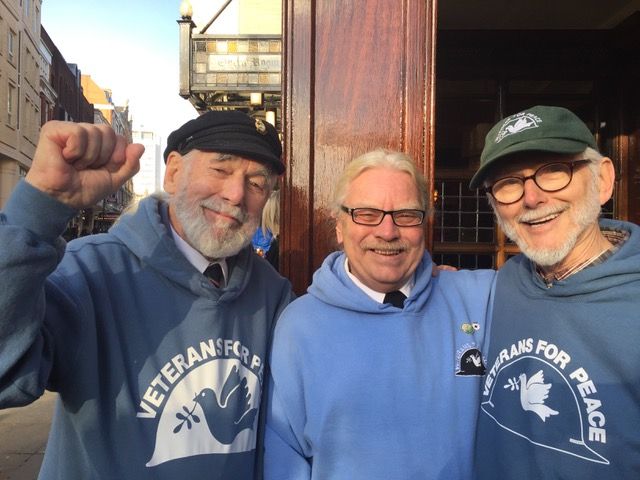


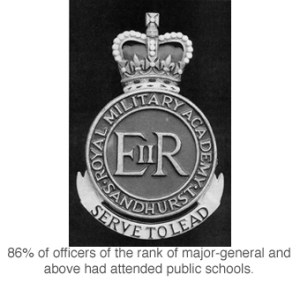
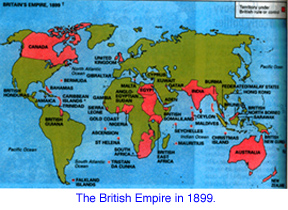
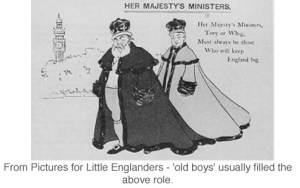
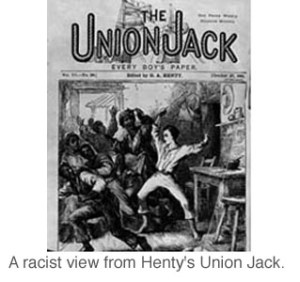
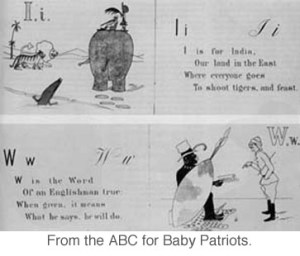
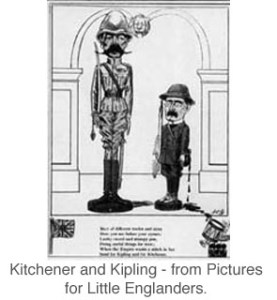
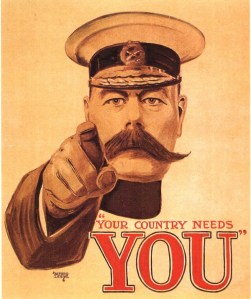
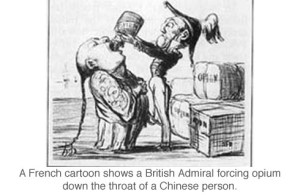
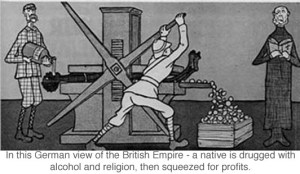
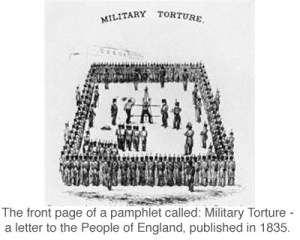
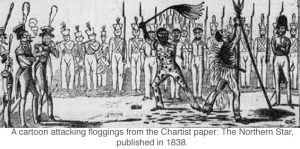
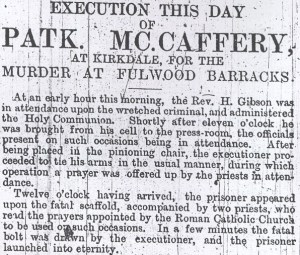
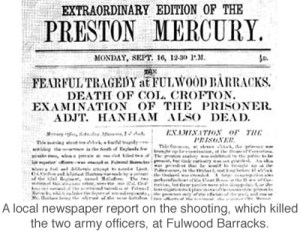
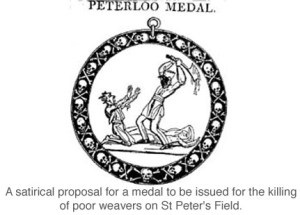
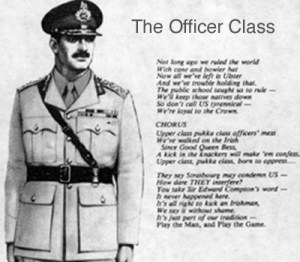
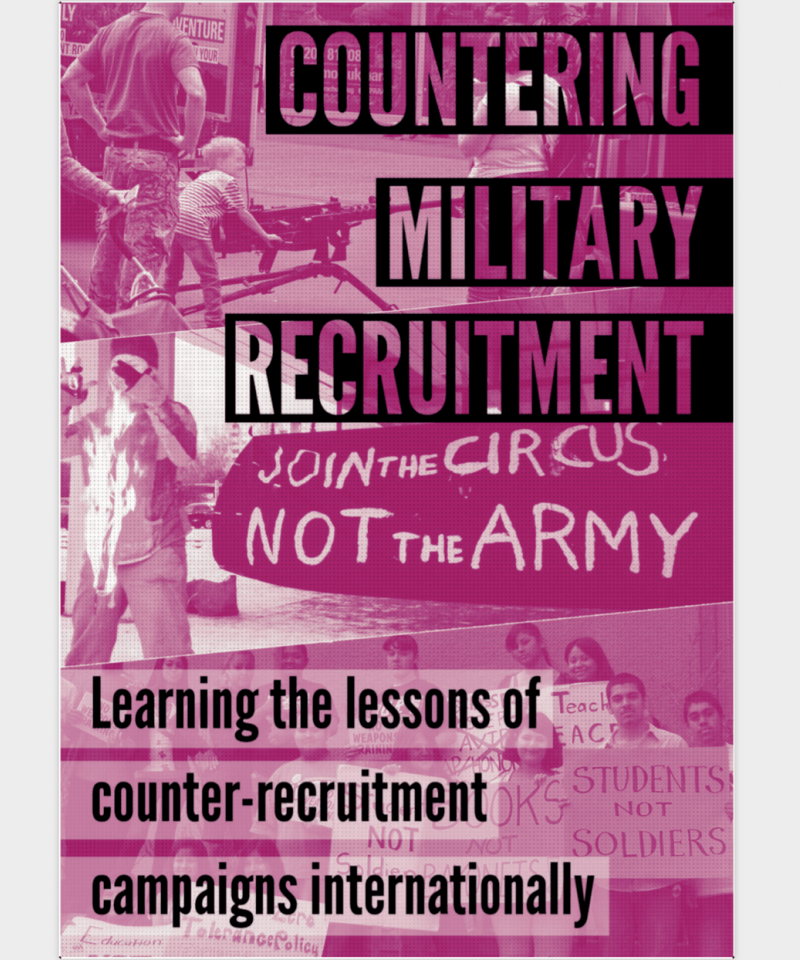
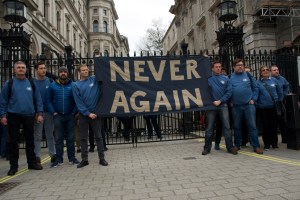


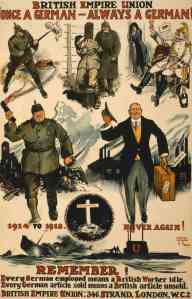
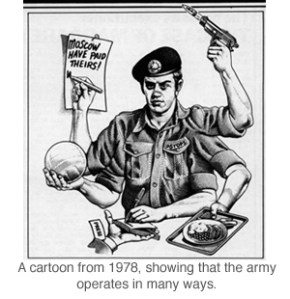

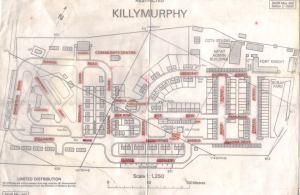
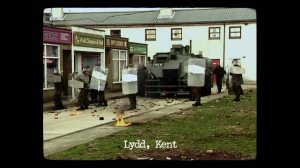
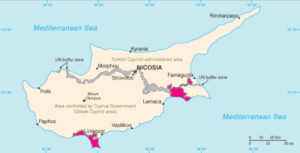
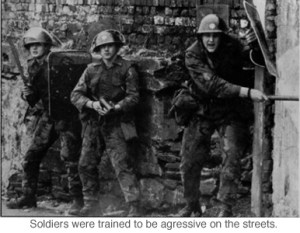
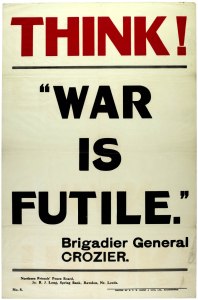

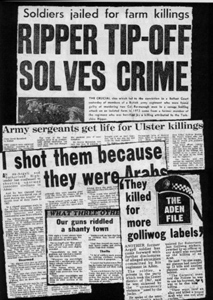
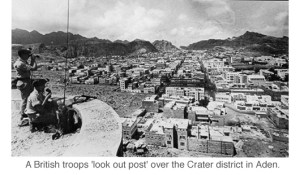
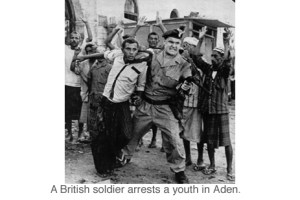


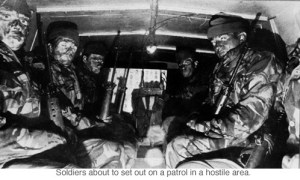


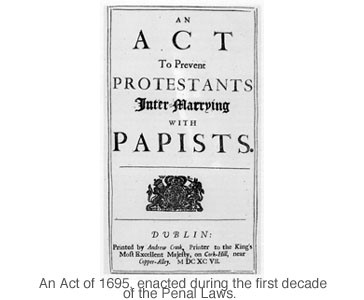
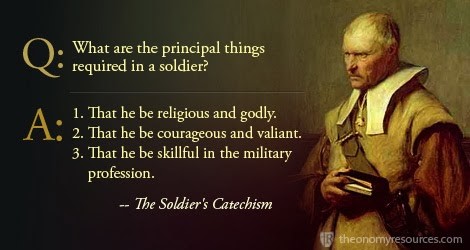

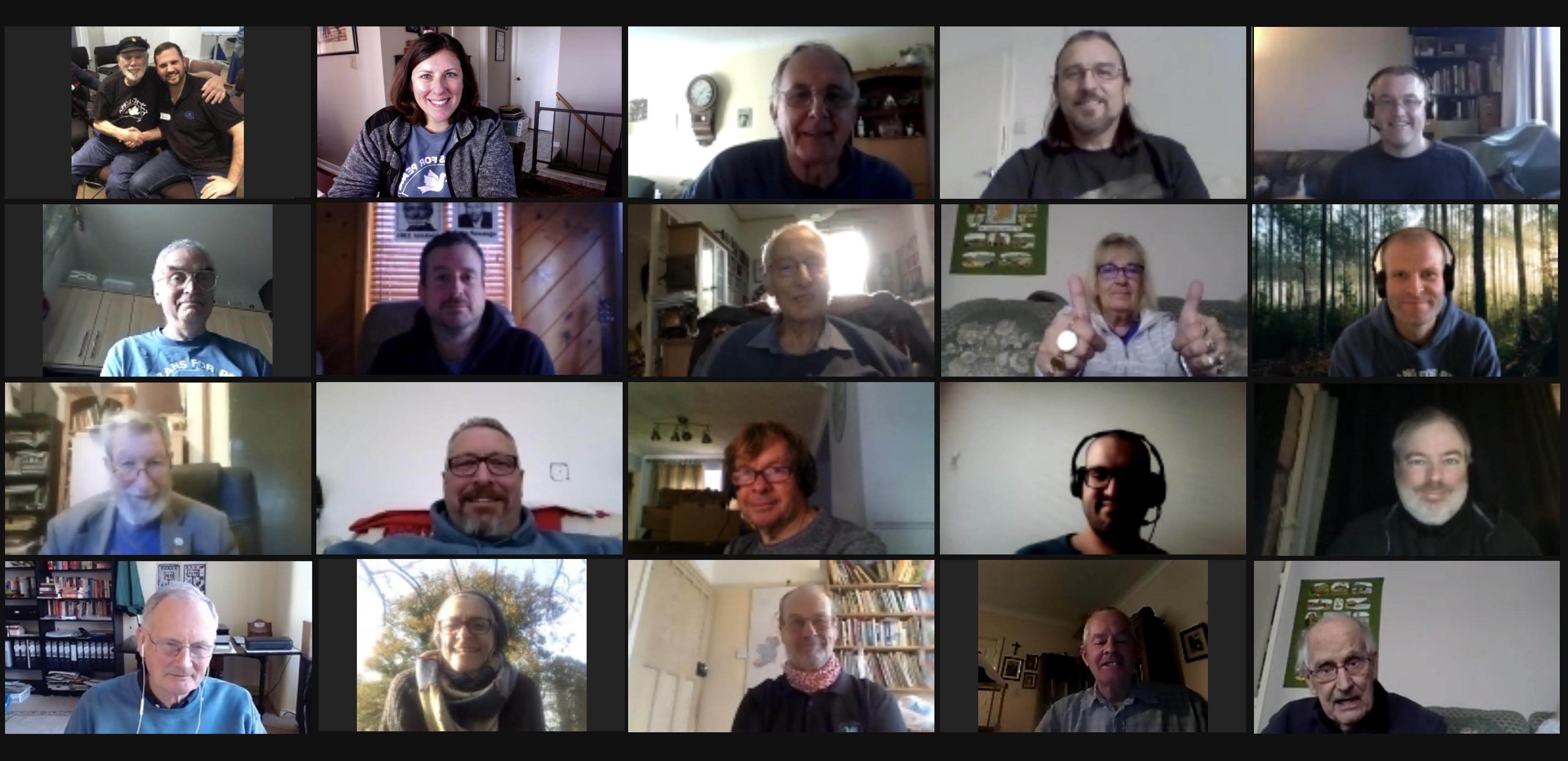

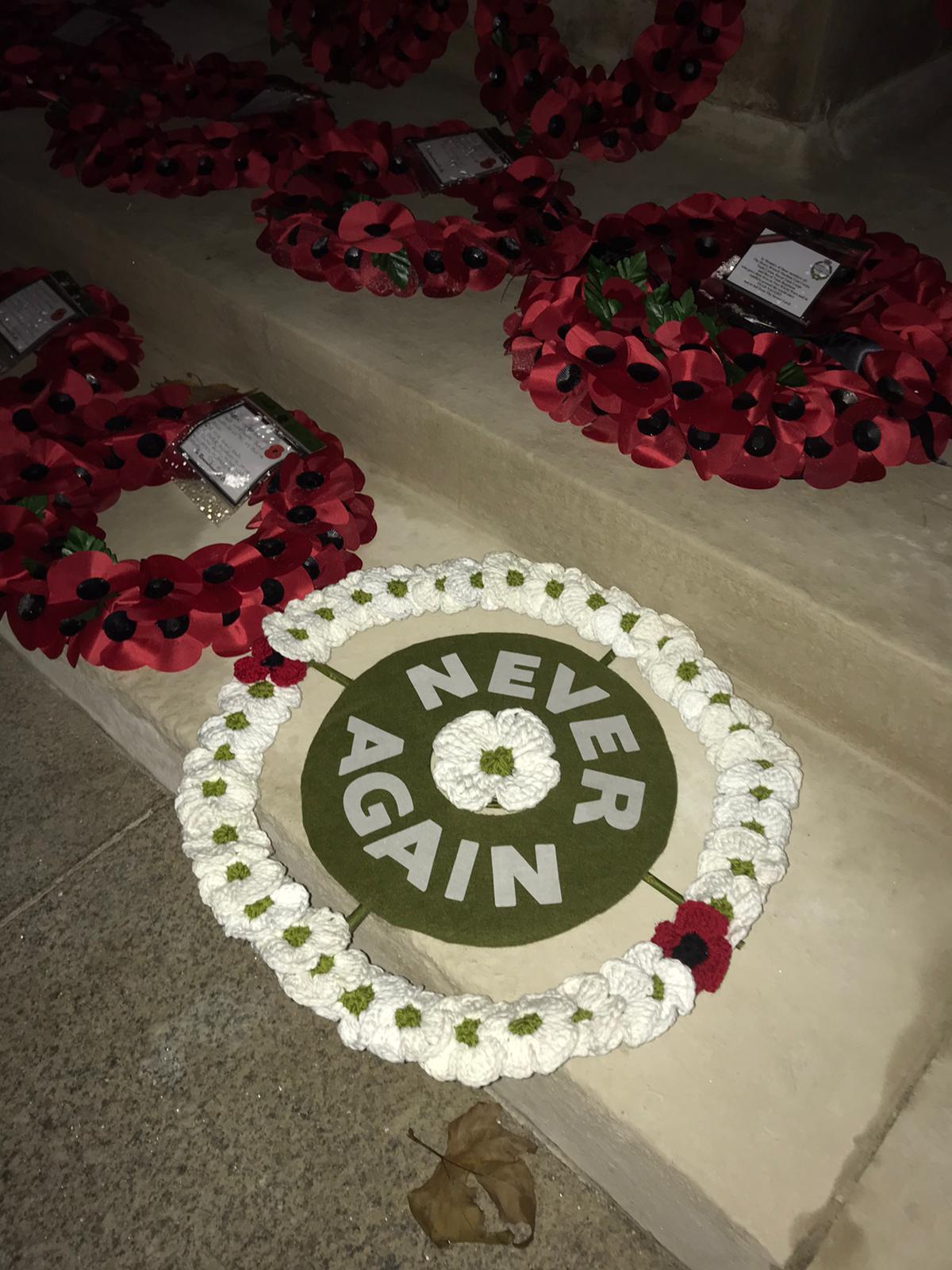
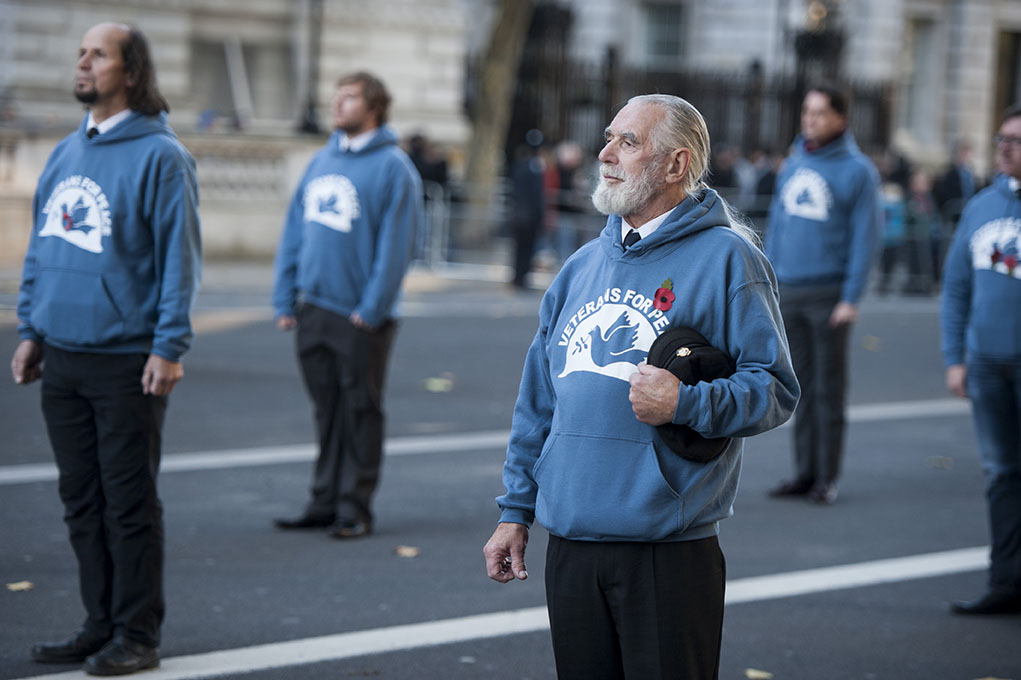
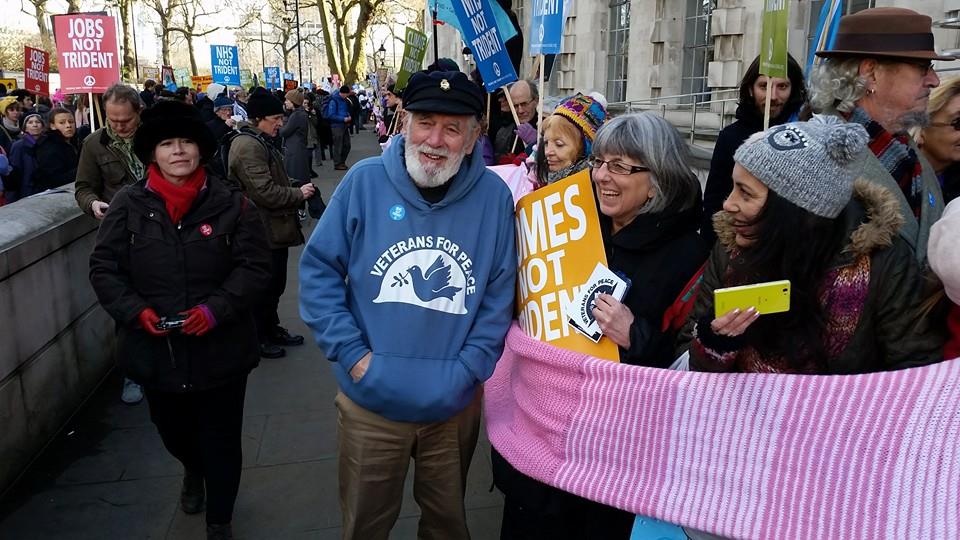


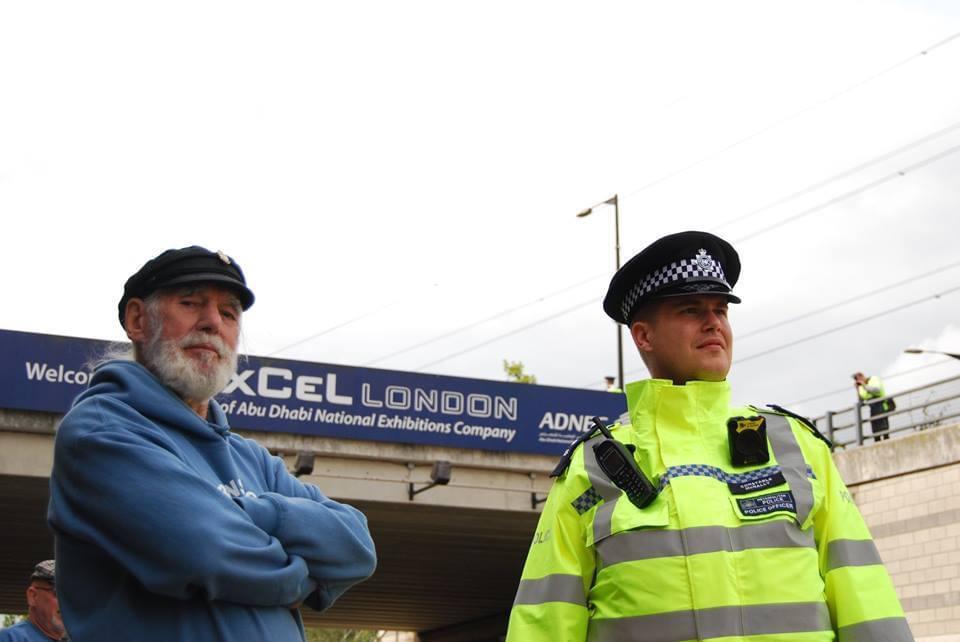


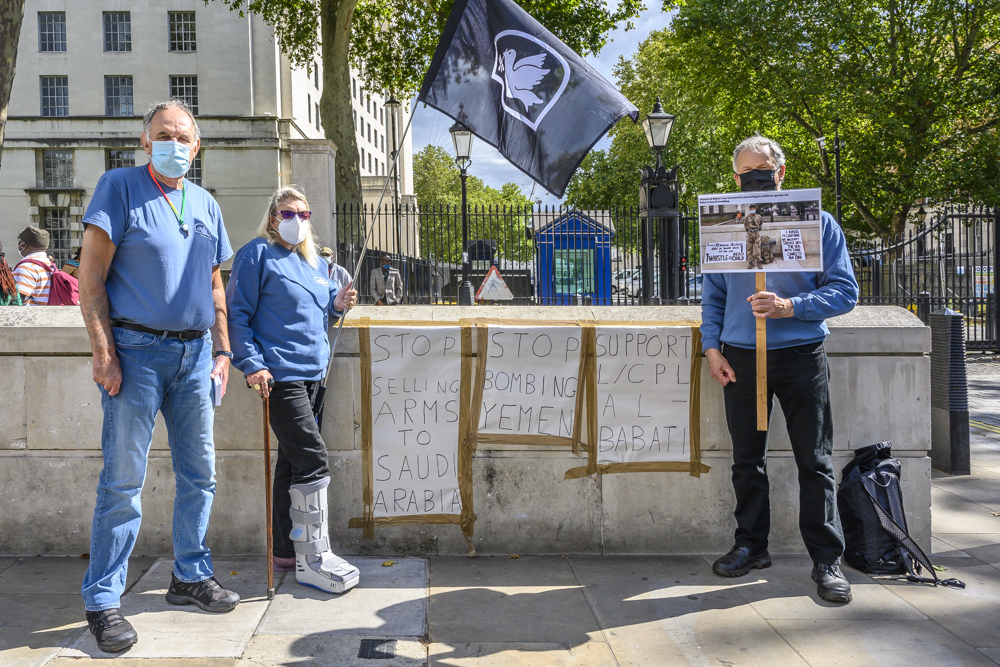
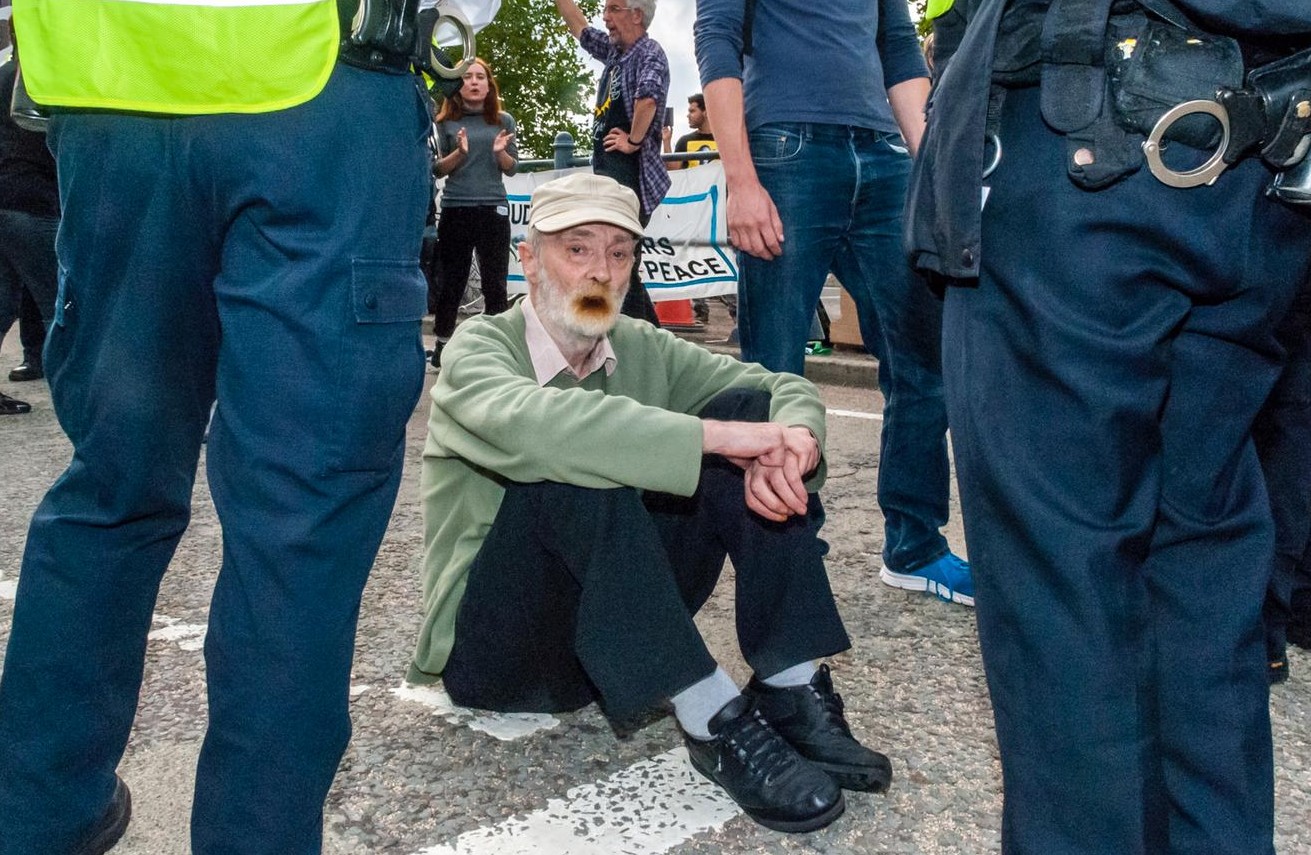
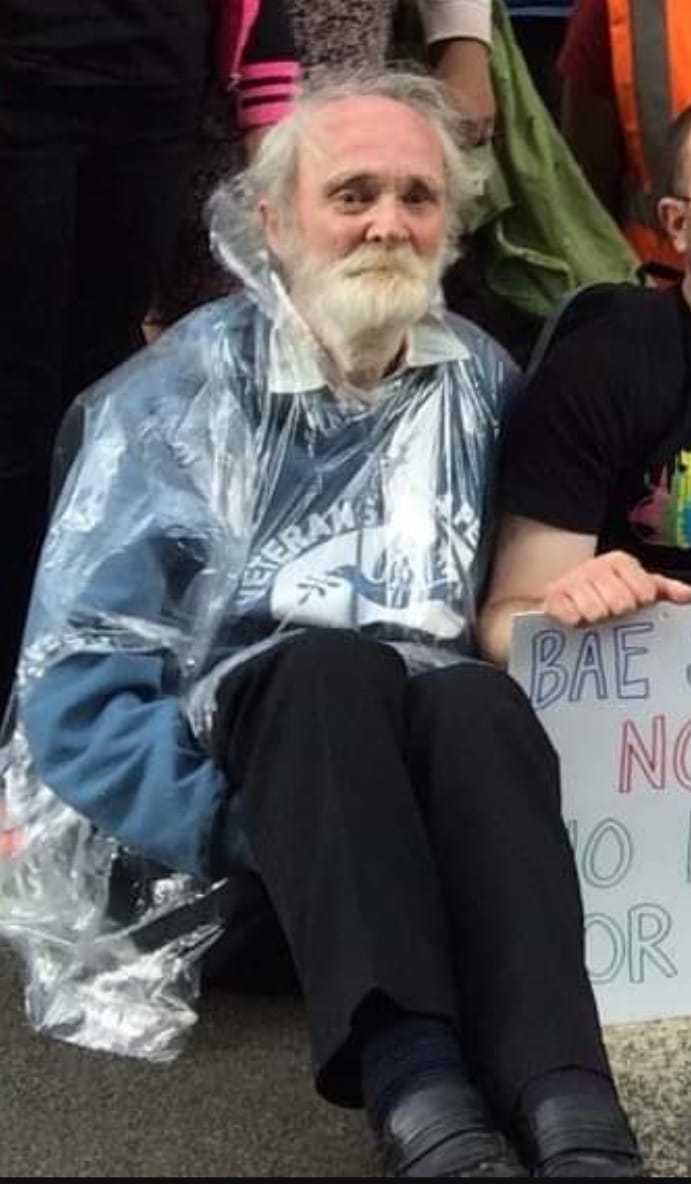


 Veterans For Peace UK